Chang Chi-Fu, Liang Wei-Kuang, Lai Chiou-Lian, Hung Daisy L, Juan Chi-Hung
Institute of Cognitive Neuroscience, National Central University Taoyuan City, Taiwan.
Department of Neurology, Kaohsiung Medical University Kaohsiung City, Taiwan.
Front Hum Neurosci. 2016 Jun 3;10:264. doi: 10.3389/fnhum.2016.00264. eCollection 2016.
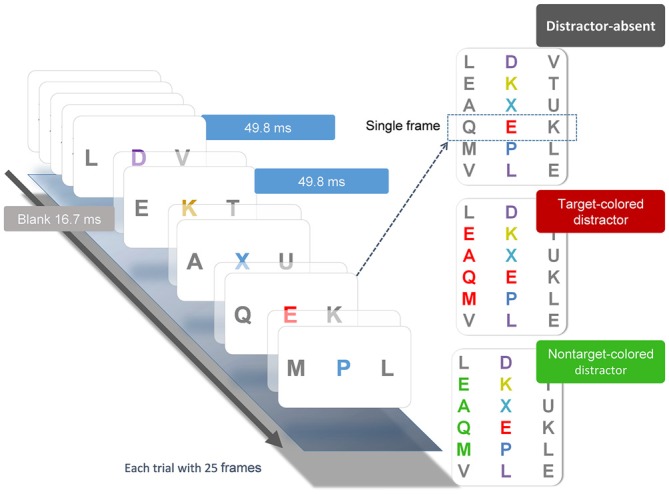
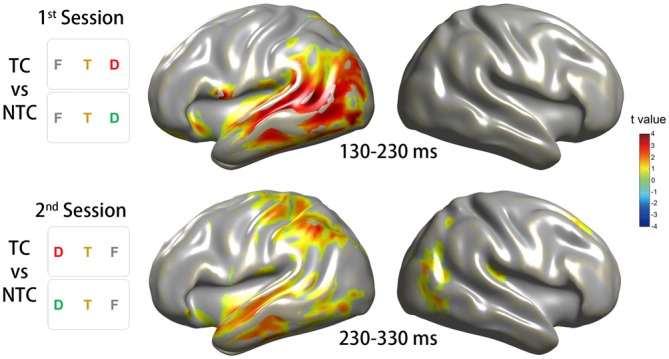
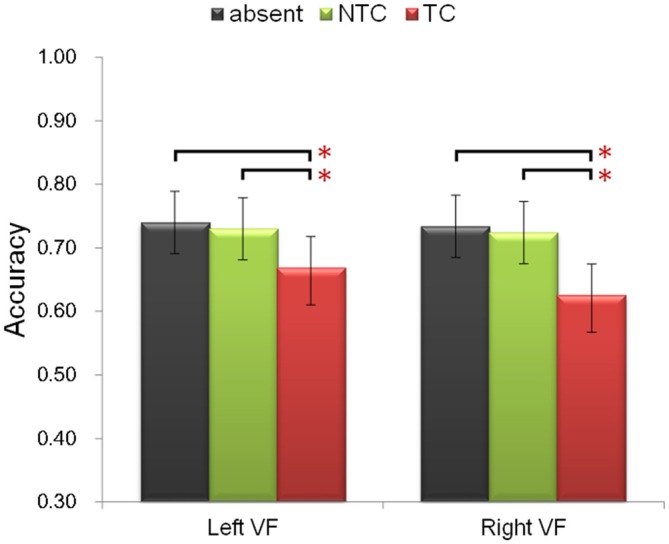
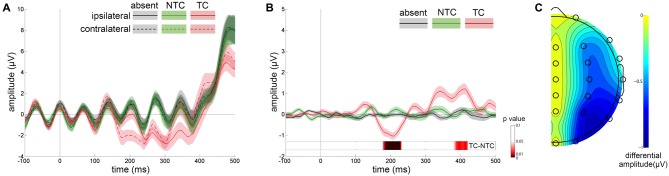
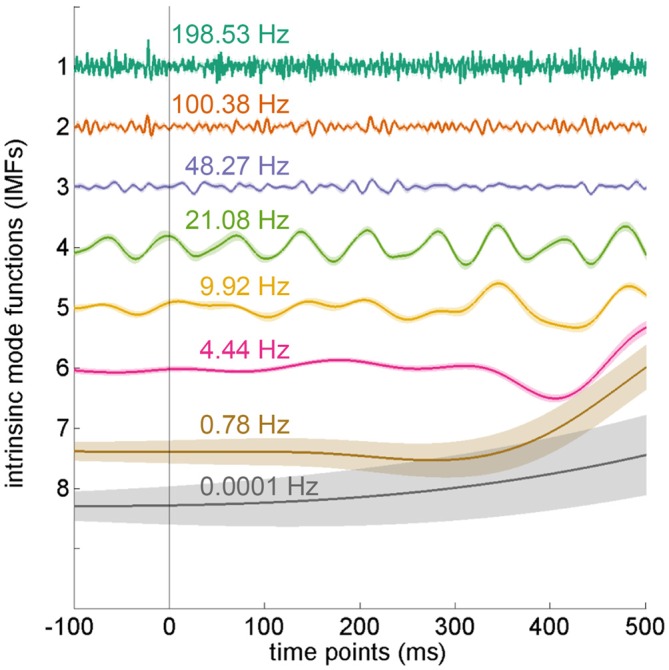
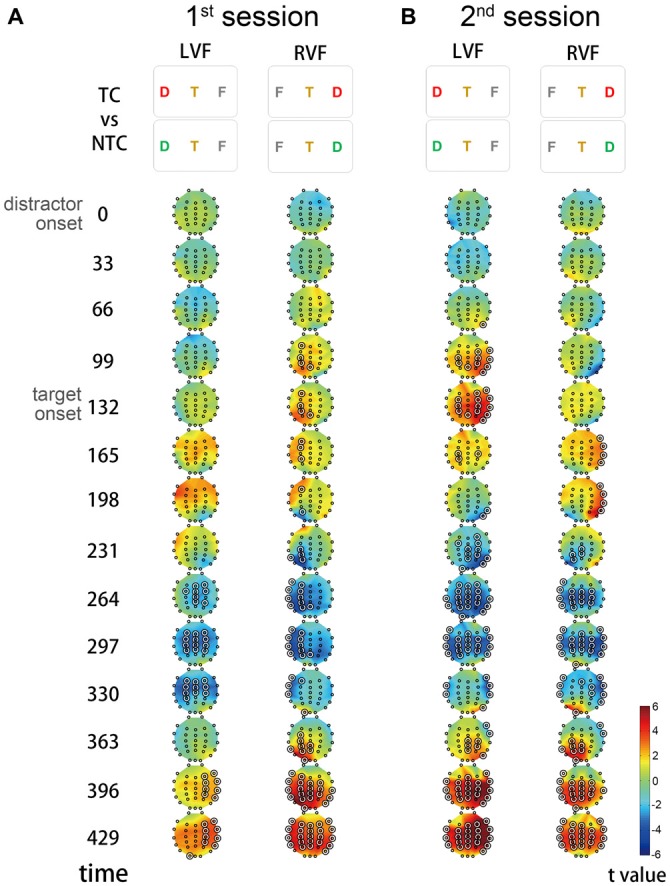
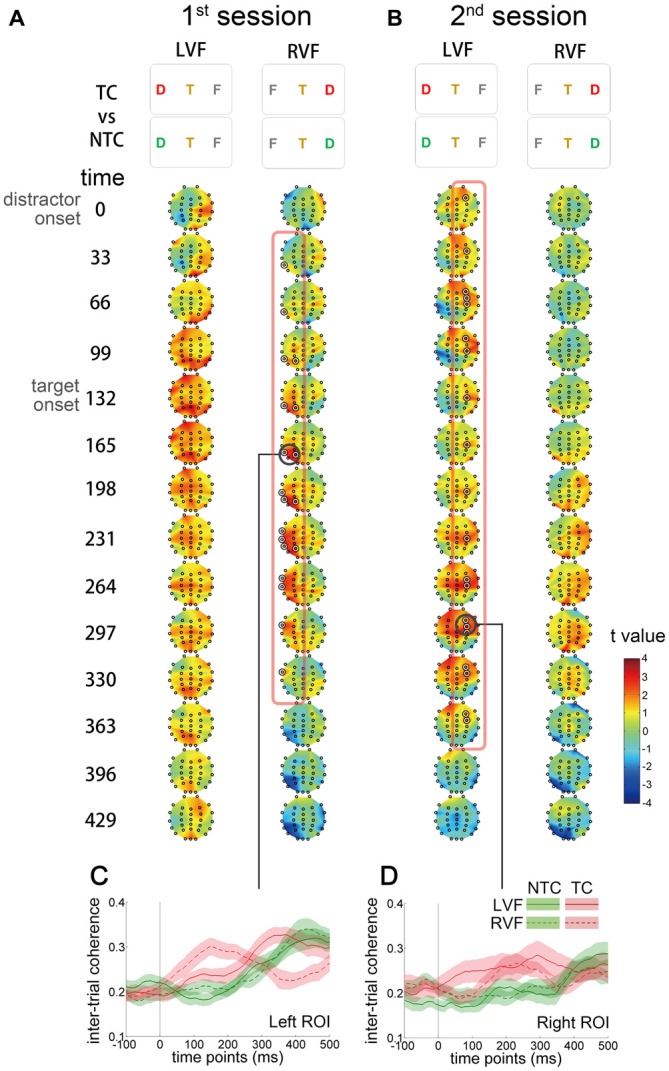
In the visual world, rapidly reorienting to relevant objects outside the focus of attention is vital for survival. This ability from the interaction between goal-directed and stimulus-driven attentional control is termed contingent reorienting. Neuroimaging studies have demonstrated activations of the ventral and dorsal attentional networks (DANs) which exhibit right hemisphere dominance, but the temporal dynamics of the attentional networks still remain unclear. The present study used event-related potential (ERP) to index the locus of spatial attention and Hilbert-Huang transform (HHT) to acquire the time-frequency information during contingent reorienting. The ERP results showed contingent reorienting induced significant N2pc on both hemispheres. In contrast, our time-frequency analysis found further that, unlike the N2pc, theta oscillation during contingent reorienting differed between hemispheres and experimental sessions. The inter-trial coherence (ITC) of the theta oscillation demonstrated that the two sides of the attentional networks became phase-locked to contingent reorienting at different stages. The left attentional networks were associated with contingent reorienting in the first experimental session whereas the bilateral attentional networks play a more important role in this process in the subsequent session. This phase-locked information suggests a dynamic temporal evolution of the involvement of different attentional networks in contingent reorienting and a potential role of the left ventral network in the first session.
在视觉世界中,迅速重新定向到注意力焦点之外的相关物体对生存至关重要。这种由目标导向和刺激驱动的注意力控制之间的相互作用所产生的能力被称为偶然重新定向。神经影像学研究已经证明腹侧和背侧注意力网络(DANs)的激活,这些网络表现出右半球优势,但注意力网络的时间动态仍不清楚。本研究使用事件相关电位(ERP)来索引空间注意力的位置,并使用希尔伯特-黄变换(HHT)来获取偶然重新定向过程中的时频信息。ERP结果显示,偶然重新定向在两个半球上均诱发了显著的N2pc。相比之下,我们的时频分析进一步发现,与N2pc不同,偶然重新定向期间的theta振荡在半球和实验阶段之间存在差异。theta振荡的试次间相干性(ITC)表明,注意力网络的两侧在不同阶段与偶然重新定向发生锁相。在第一个实验阶段,左侧注意力网络与偶然重新定向相关,而在随后的阶段,双侧注意力网络在这一过程中发挥更重要的作用。这种锁相信息表明不同注意力网络在偶然重新定向中的参与存在动态的时间演变,以及左侧腹侧网络在第一个阶段的潜在作用。