Hsu Chun-Wei, Goh Joshua O S
Graduate Institute of Brain and Mind Sciences, College of Medicine, National Taiwan UniversityTaipei, Taiwan; Department of Psychology, University of PlymouthPlymouth, UK.
Graduate Institute of Brain and Mind Sciences, College of Medicine, National Taiwan UniversityTaipei, Taiwan; Department of Psychology, National Taiwan UniversityTaipei, Taiwan; Center for Neurobiology and Cognitive Science, National Taiwan UniversityTaipei, Taiwan.
Front Hum Neurosci. 2016 Jun 10;10:275. doi: 10.3389/fnhum.2016.00275. eCollection 2016.
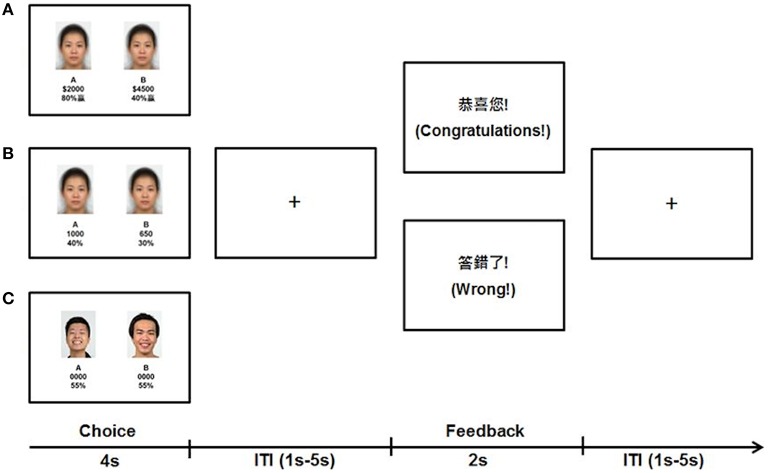
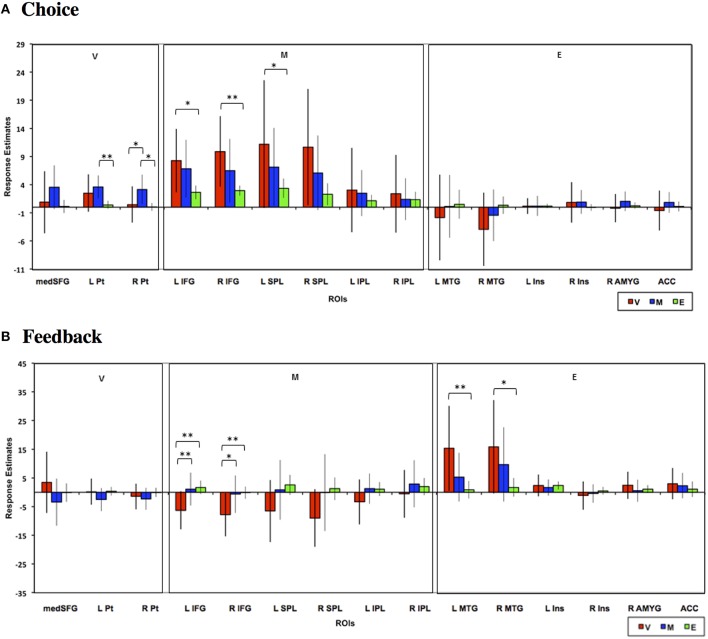
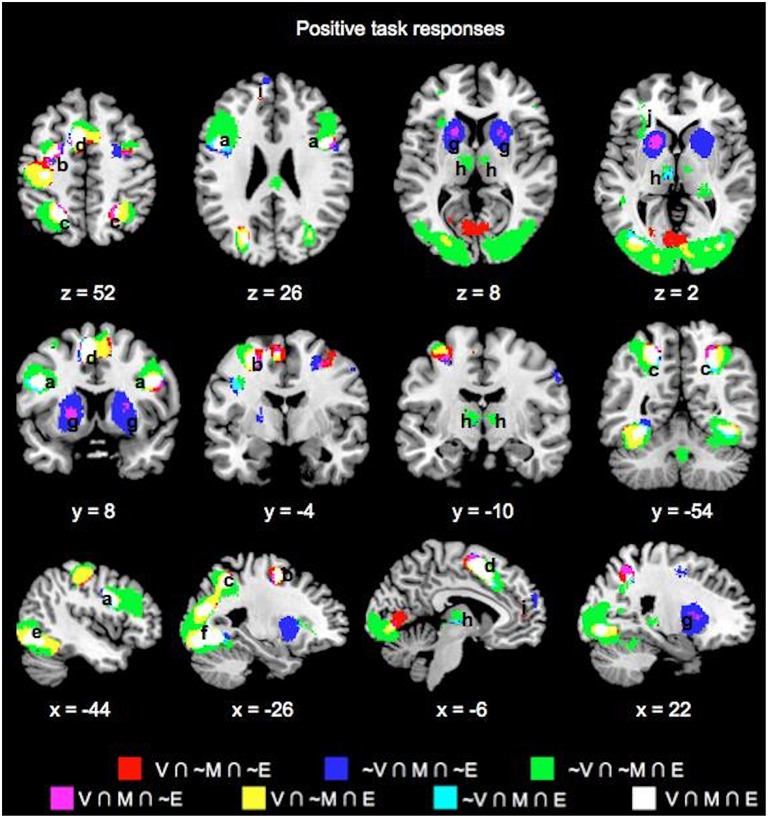
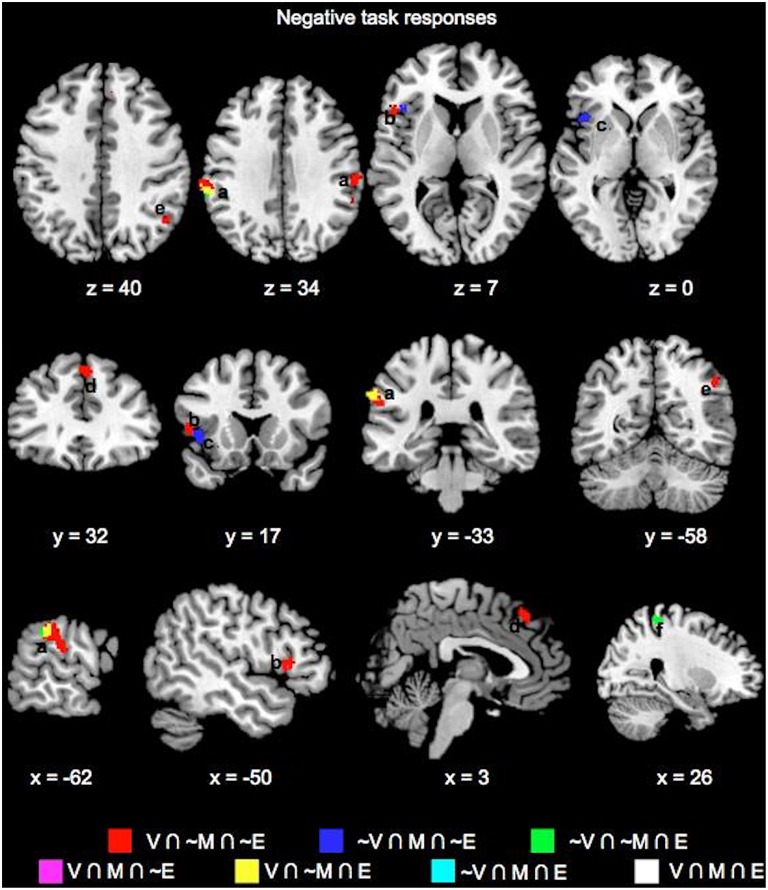
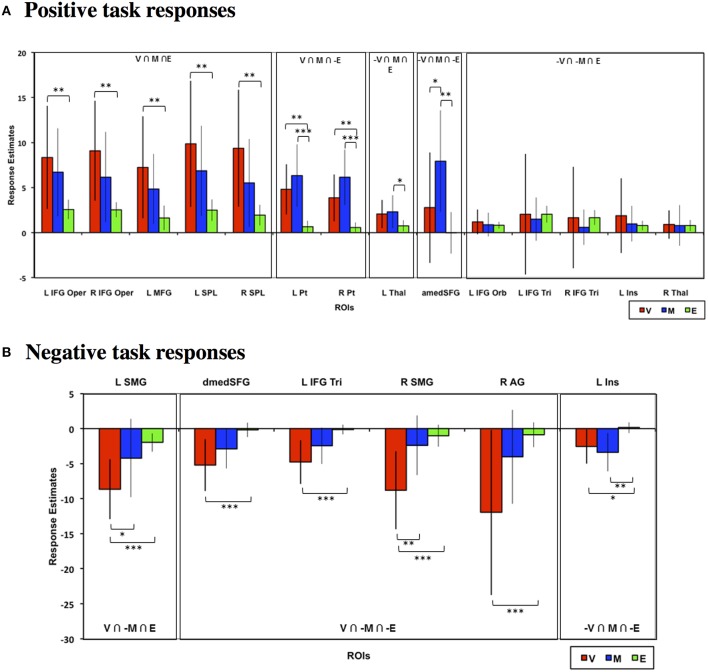
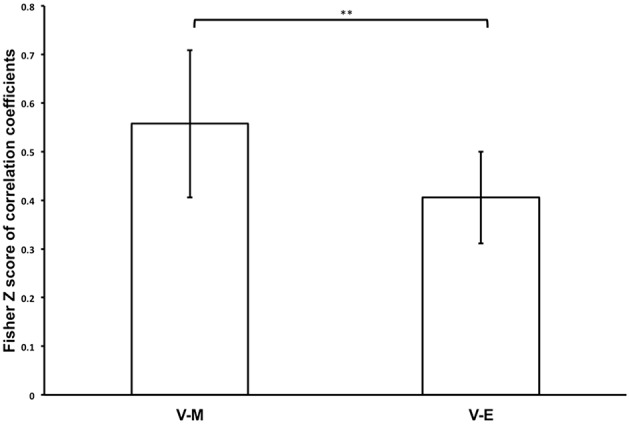
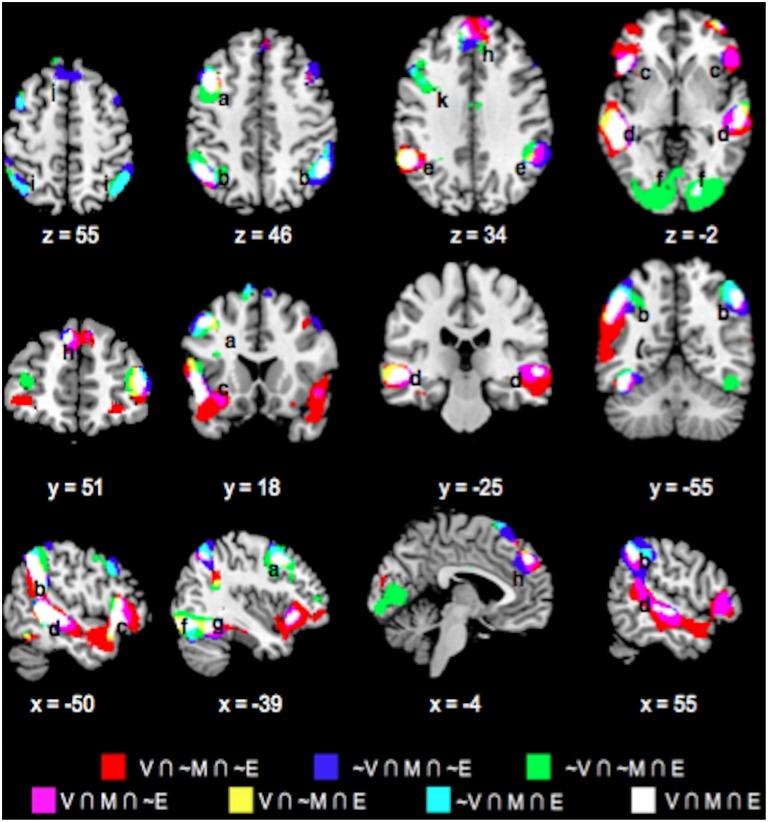
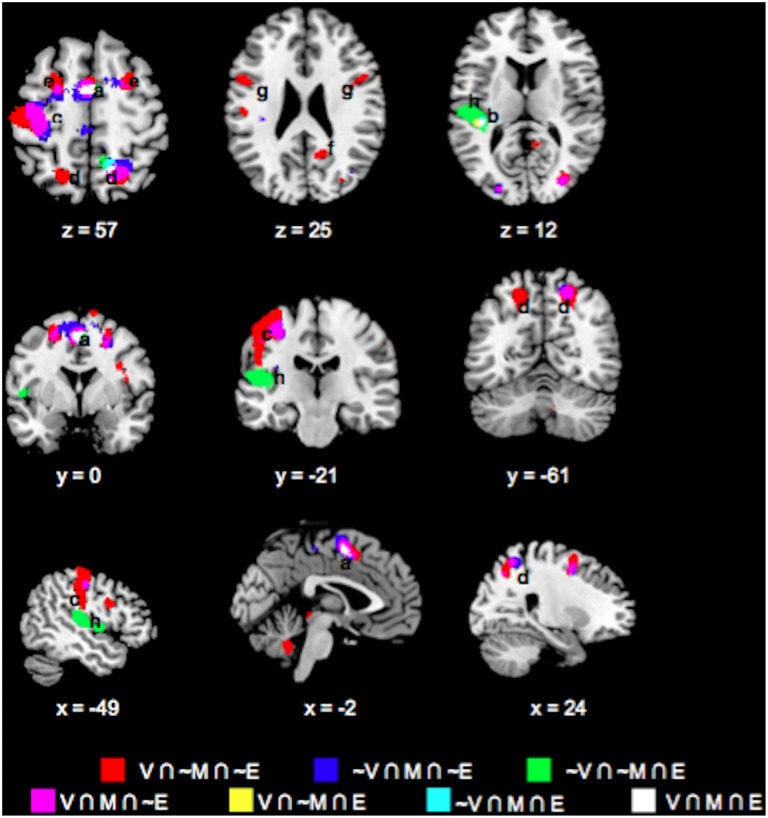
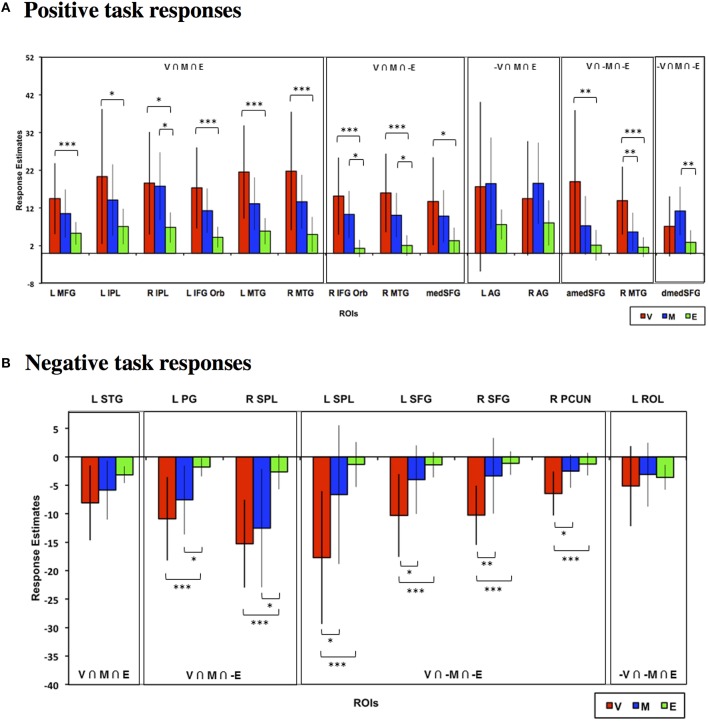
When comparing between the values of different choices, human beings can rely on either more cognitive processes, such as using mathematical computation, or more affective processes, such as using emotion. However, the neural correlates of how these two types of processes operate during value-based decision-making remain unclear. In this study, we investigated the extent to which neural regions engaged during value-based decision-making overlap with those engaged during mathematical and emotional processing in a within-subject manner. In a functional magnetic resonance imaging experiment, participants viewed stimuli that always consisted of numbers and emotional faces that depicted two choices. Across tasks, participants decided between the two choices based on the expected value of the numbers, a mathematical result of the numbers, or the emotional face stimuli. We found that all three tasks commonly involved various cortical areas including frontal, parietal, motor, somatosensory, and visual regions. Critically, the mathematical task shared common areas with the value but not emotion task in bilateral striatum. Although the emotion task overlapped with the value task in parietal, motor, and sensory areas, the mathematical task also evoked responses in other areas within these same cortical structures. Minimal areas were uniquely engaged for the value task apart from the other two tasks. The emotion task elicited a more expansive area of neural activity whereas value and mathematical task responses were in more focal regions. Whole-brain spatial correlation analysis showed that valuative processing engaged functional brain responses more similarly to mathematical processing than emotional processing. While decisions on expected value entail both mathematical and emotional processing regions, mathematical processes have a more prominent contribution particularly in subcortical processes.
在比较不同选择的价值时,人类可以依赖更多的认知过程,如进行数学计算,或者更多的情感过程,如运用情感。然而,在基于价值的决策过程中,这两种类型的过程是如何运作的,其神经关联仍不清楚。在本研究中,我们以受试者内的方式,研究了基于价值的决策过程中所涉及的神经区域与数学和情感处理过程中所涉及的神经区域的重叠程度。在一项功能磁共振成像实验中,参与者观看的刺激总是由数字和描绘两种选择的情感面孔组成。在各项任务中,参与者根据数字的期望值、数字的数学结果或情感面孔刺激在两种选择之间做出决定。我们发现,所有这三项任务通常都涉及包括额叶、顶叶、运动、体感和视觉区域在内的各个皮质区域。关键的是,数学任务在双侧纹状体中与价值任务共享共同区域,但与情感任务不共享。虽然情感任务在顶叶、运动和感觉区域与价值任务重叠,但数学任务在这些相同皮质结构的其他区域也引发了反应。除了其他两项任务外,价值任务所特有的区域最少。情感任务引发的神经活动区域更广泛,而价值和数学任务的反应则集中在更局部的区域。全脑空间相关性分析表明,与情感处理相比,价值处理所涉及的功能性脑反应与数学处理更相似。虽然对期望值的决策需要数学和情感处理区域,但数学过程的贡献更为突出,尤其是在皮层下过程中。