Roberts Hannah, Soto Vicente, Tyson-Carr John, Kokmotou Katerina, Cook Stephanie, Fallon Nicholas, Giesbrecht Timo, Stancak Andrej
Department of Psychological Sciences, Institute of Psychology, Health and Society, University of Liverpool, Liverpool, United Kingdom.
Institute for Risk and Uncertainty, University of Liverpool, Liverpool, United Kingdom.
Front Neurosci. 2018 Dec 20;12:910. doi: 10.3389/fnins.2018.00910. eCollection 2018.
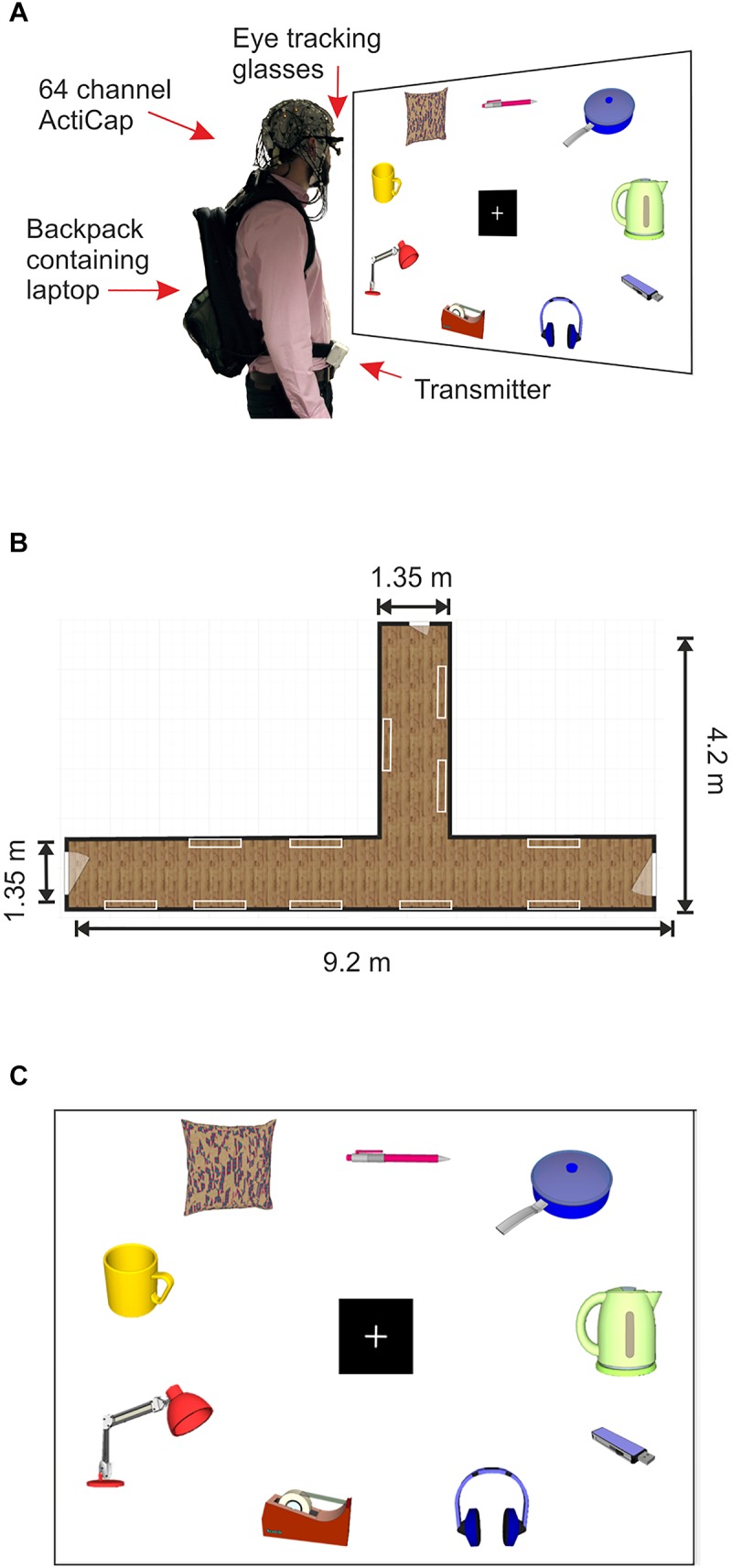
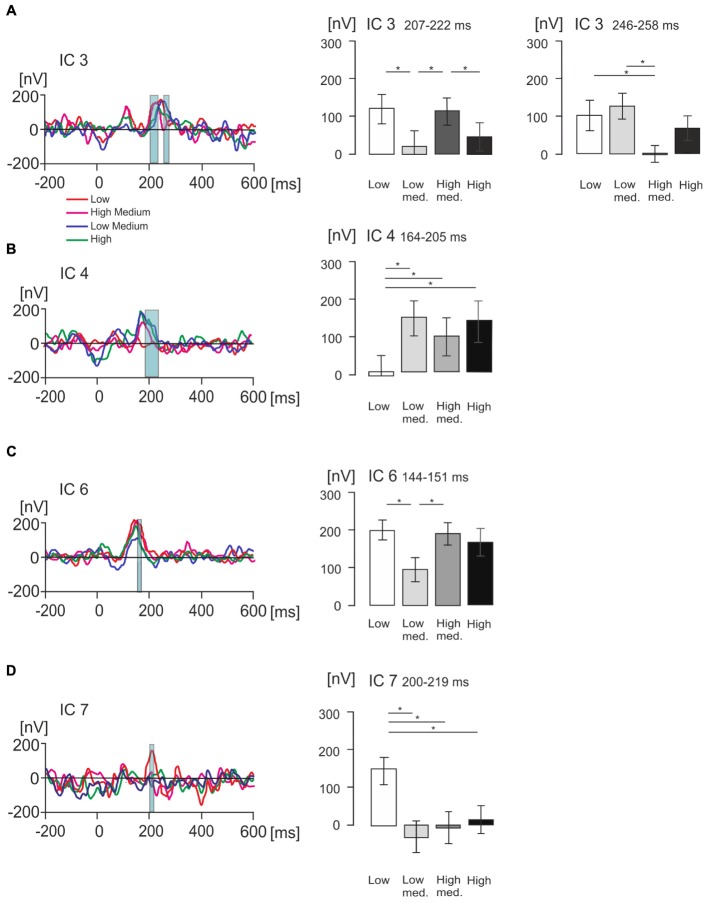
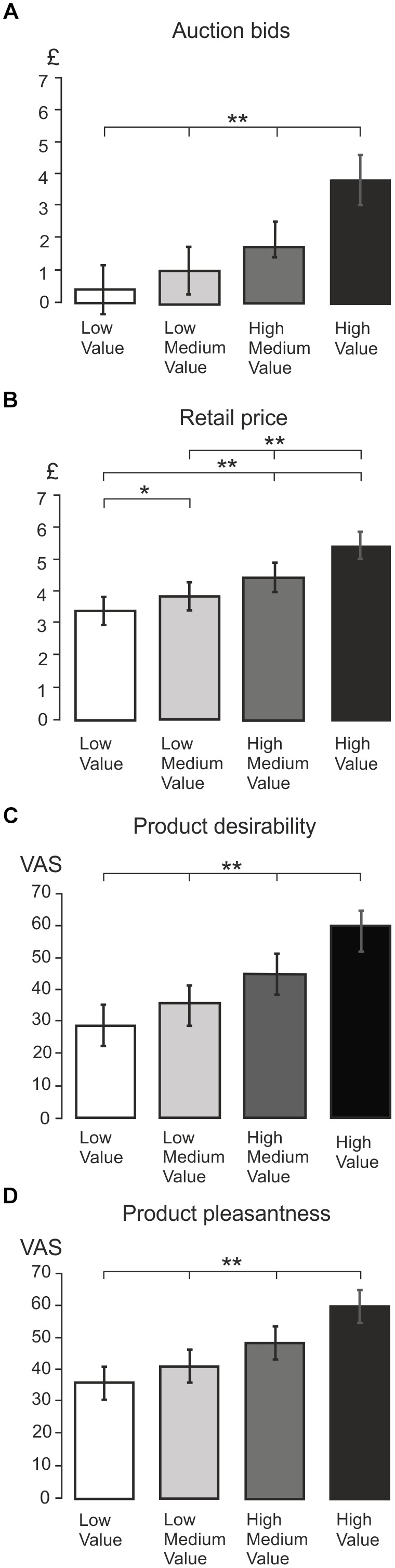
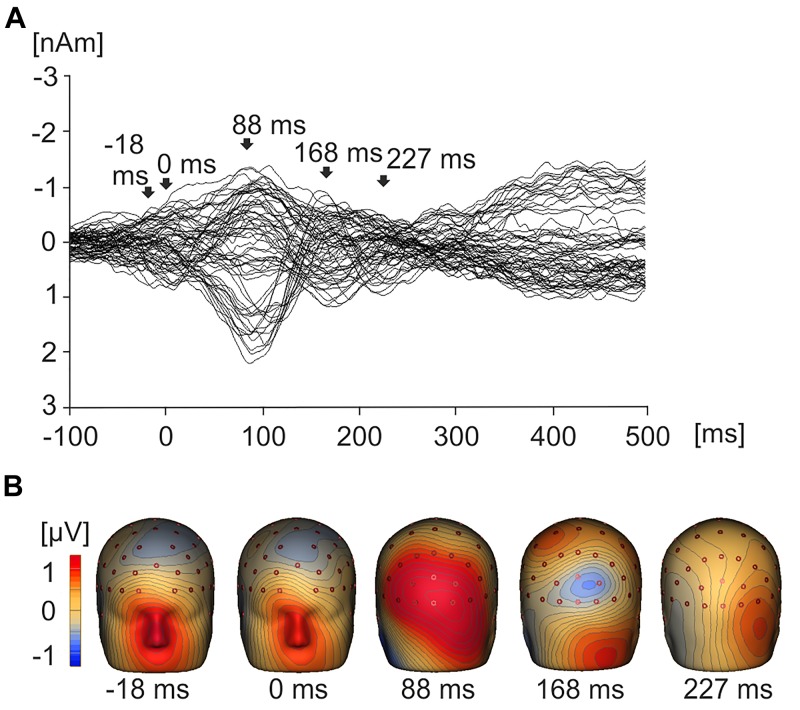
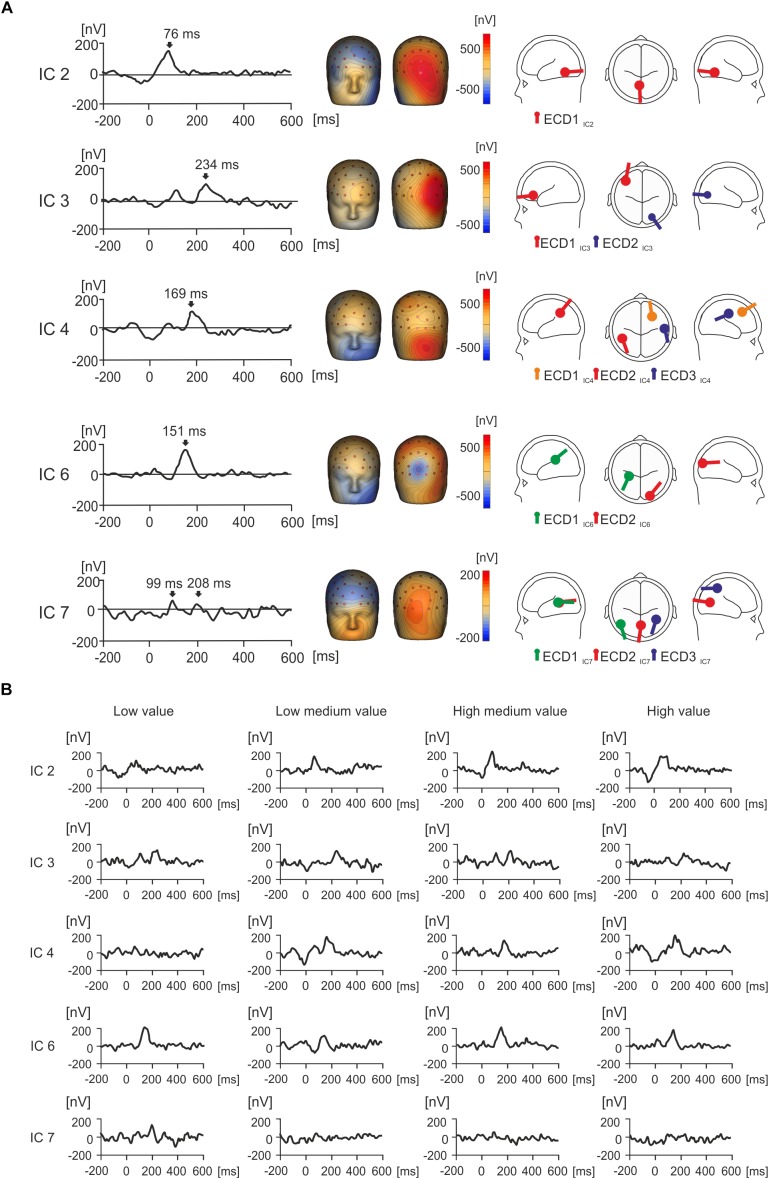
Economic decision making refers to the process of individuals translating their preference into subjective value (SV). Little is known about the dynamics of the neural processes that underpin this form of value-based decision making and no studies have investigated these processes outside of controlled laboratory settings. The current study investigated the spatio-temporal dynamics that accompany economic valuation of products using mobile electroencephalography (EEG) and eye tracking techniques. Participants viewed and rated images of household products in a gallery setting while EEG and eye tracking data were collected wirelessly. A Becker-DeGroot-Marschak (BDM) auction task was subsequently used to quantify the individual's willingness to pay (WTP) for each product. WTP was used to classify products into low, low medium, high medium and high economic value conditions. Eye movement related potentials (EMRP) were examined, and independent component analysis (ICA) was used to separate sources of activity from grand averaged EEG data. Four independent components (ICs) of EMRPs were modulated by WTP (i.e., SV) in the latency range of 150-250 ms. Of the four value-sensitive ICs, one IC displayed enhanced amplitude for all value conditions excluding low value, and another IC presented enhanced amplitude for low value products only. The remaining two value-sensitive ICs resolved inter-mediate levels of SV. Our study quantified, for the first time, the neural processes involved in economic value based decisions in a natural setting. Results suggest that multiple spatio-temporal brain activation patterns mediate the attention and aversion of products which could reflect an early valuation system. The EMRP parietal P200 component could reflect an attention allocation mechanism that separates the lowest-value products (IC7) from products of all other value (IC4), suggesting that low-value items are categorized early on as being aversive. While none of the ICs showed linear amplitude changes that parallel SV's of products, results suggest that a combination of multiple components may sub-serve a fine-grained resolution of the SV of products.
经济决策是指个体将其偏好转化为主观价值(SV)的过程。对于支撑这种基于价值的决策形式的神经过程动态,我们了解甚少,且尚无研究在受控实验室环境之外对这些过程进行调查。当前的研究使用移动脑电图(EEG)和眼动追踪技术,调查了产品经济估值过程中伴随的时空动态。参与者在画廊环境中观看并对家居产品的图片进行评分,同时无线收集EEG和眼动追踪数据。随后使用贝克尔 - 德格鲁特 - 马尔沙克(BDM)拍卖任务来量化个体对每种产品的支付意愿(WTP)。WTP用于将产品分为低、低中、高中和高经济价值类别。研究了眼动相关电位(EMRP),并使用独立成分分析(ICA)从总体平均EEG数据中分离活动源。在150 - 250毫秒的潜伏期范围内,EMRPs的四个独立成分(ICs)受到WTP(即SV)的调制。在这四个对价值敏感的ICs中,一个IC在除低价值之外的所有价值条件下都显示出增强的振幅,另一个IC仅在低价值产品中呈现增强的振幅。其余两个对价值敏感的ICs分辨出SV的中间水平。我们的研究首次在自然环境中量化了基于经济价值决策所涉及的神经过程。结果表明,多种时空脑激活模式介导了对产品的关注和厌恶,这可能反映了一种早期估值系统。EMRP顶叶P200成分可能反映了一种注意力分配机制,该机制将最低价值产品(IC7)与所有其他价值的产品(IC4)区分开来,这表明低价值物品在早期就被归类为令人厌恶的。虽然没有一个IC显示出与产品SV平行的线性振幅变化,但结果表明多个成分的组合可能有助于对产品SV进行细粒度的分辨。