McQuate Sarah E, Young Alexandra M, Silva-Herzog Eugenia, Bunker Eric, Hernandez Mateo, de Chaumont Fabrice, Liu Xuedong, Detweiler Corrella S, Palmer Amy E
Department of Chemistry and Biochemistry, BioFrontiers Institute, University of Colorado at Boulder, Boulder, CO, USA.
Unité d'Analyse d'Images Quantitative, Institut Pasteur, Paris, France.
Cell Microbiol. 2017 Jan;19(1). doi: 10.1111/cmi.12641. Epub 2016 Jul 28.
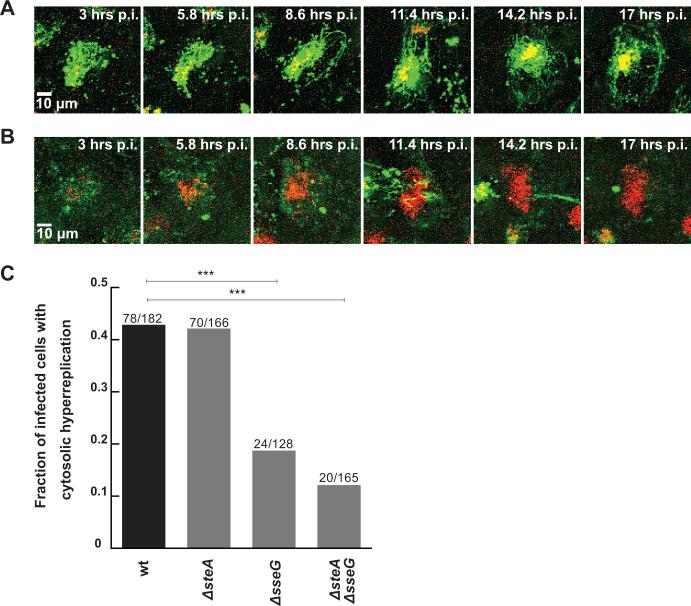
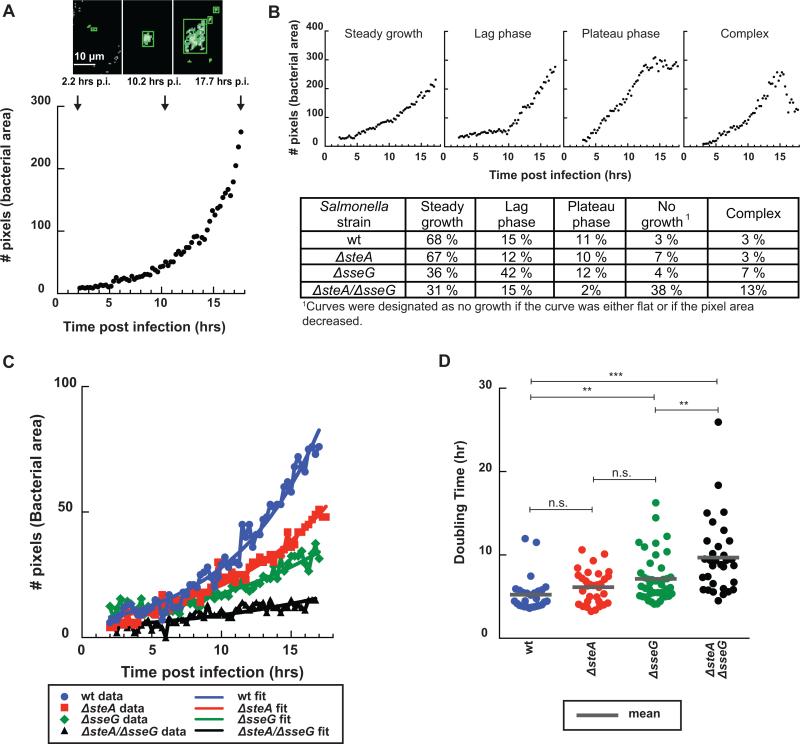
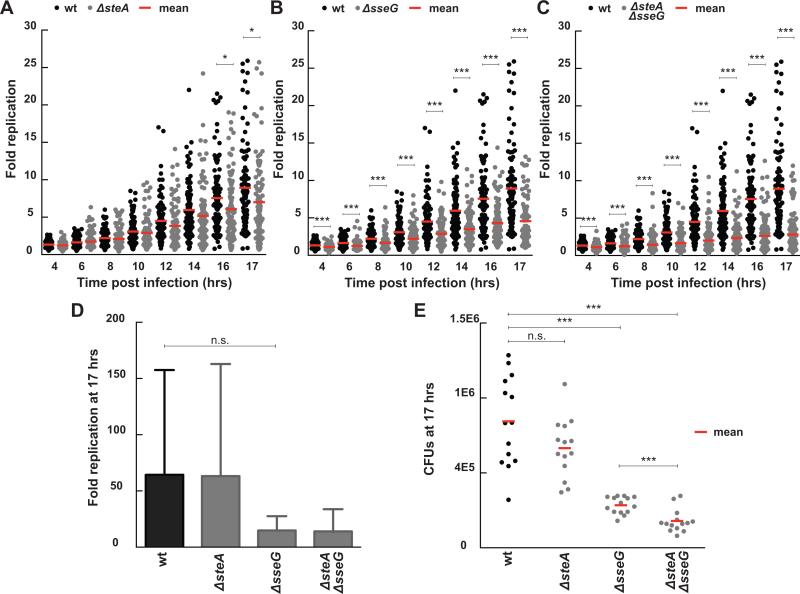
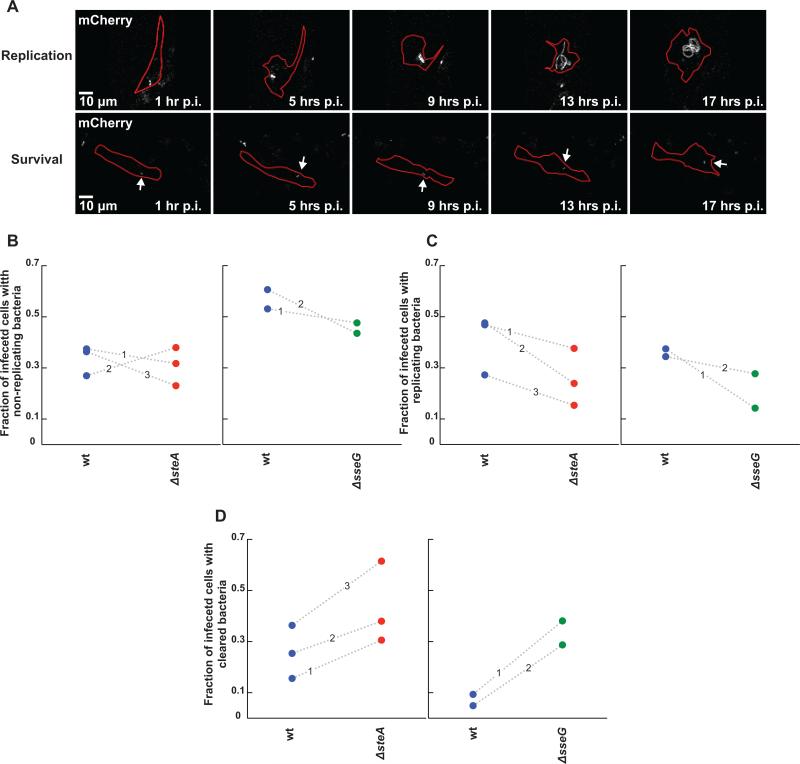
Salmonella Typhimurium is an intracellular bacterial pathogen that infects both epithelial cells and macrophages. Salmonella effector proteins, which are translocated into the host cell and manipulate host cell components, control the ability to replicate and/or survive in host cells. Due to the complexity and heterogeneity of Salmonella infections, there is growing recognition of the need for single-cell and live-cell imaging approaches to identify and characterize the diversity of cellular phenotypes and how they evolve over time. Here, we establish a pipeline for long-term (17 h) live-cell imaging of infected cells and subsequent image analysis methods. We apply this pipeline to track bacterial replication within the Salmonella-containing vacuole in epithelial cells, quantify vacuolar replication versus survival in macrophages and investigate the role of individual effector proteins in mediating these parameters. This approach revealed that dispersed bacteria can coalesce at later stages of infection, that the effector protein SseG influences the propensity for cytosolic hyper-replication in epithelial cells, and that while SteA only has a subtle effect on vacuolar replication in epithelial cells, it has a profound impact on infection parameters in immunocompetent macrophages, suggesting differential roles for effector proteins in different infection models.
鼠伤寒沙门氏菌是一种细胞内细菌病原体,可感染上皮细胞和巨噬细胞。沙门氏菌效应蛋白被转运到宿主细胞中并操纵宿主细胞成分,控制在宿主细胞中复制和/或存活的能力。由于沙门氏菌感染的复杂性和异质性,人们越来越认识到需要采用单细胞和活细胞成像方法来识别和表征细胞表型的多样性以及它们如何随时间演变。在这里,我们建立了一个用于对感染细胞进行长期(17小时)活细胞成像及后续图像分析方法的流程。我们应用此流程来追踪上皮细胞中含沙门氏菌液泡内的细菌复制,量化巨噬细胞中液泡复制与存活情况,并研究单个效应蛋白在介导这些参数中的作用。该方法揭示了分散的细菌在感染后期可聚集在一起,效应蛋白SseG影响上皮细胞中胞质过度复制的倾向,并且虽然SteA对上皮细胞中液泡复制只有细微影响,但它对有免疫活性的巨噬细胞中的感染参数有深远影响,这表明效应蛋白在不同感染模型中具有不同作用。