Michael Smith Laboratories, University of British Columbia, Vancouver, British Columbia, Canada.
Department of Microbiology & Immunology, University of British Columbia, Vancouver, British Columbia, Canada.
PLoS One. 2020 Jun 25;15(6):e0235020. doi: 10.1371/journal.pone.0235020. eCollection 2020.
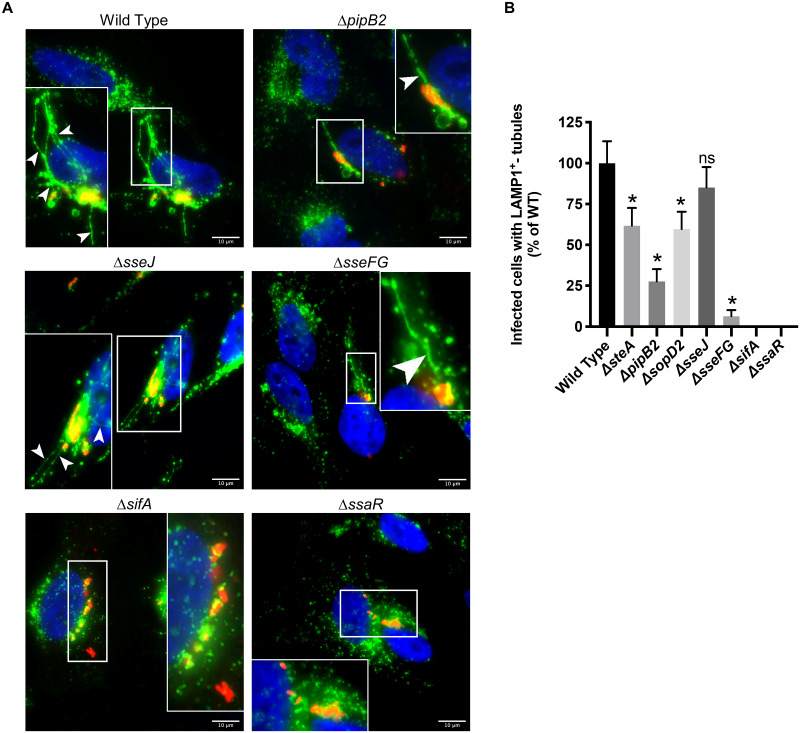
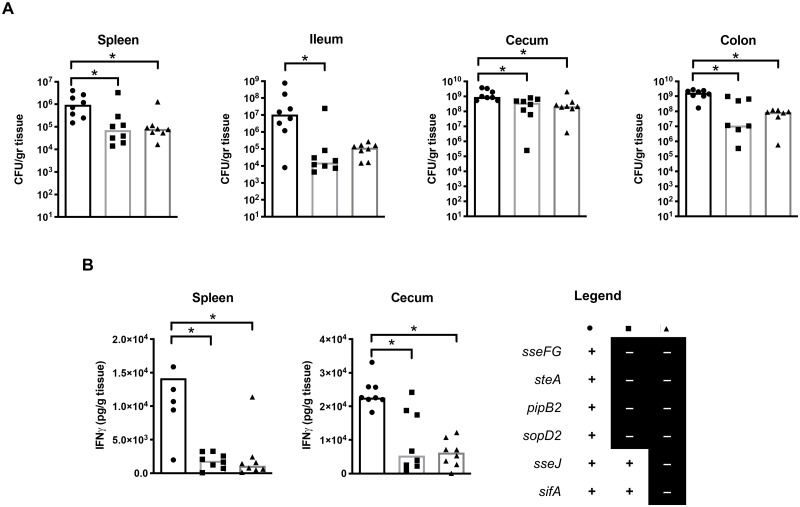
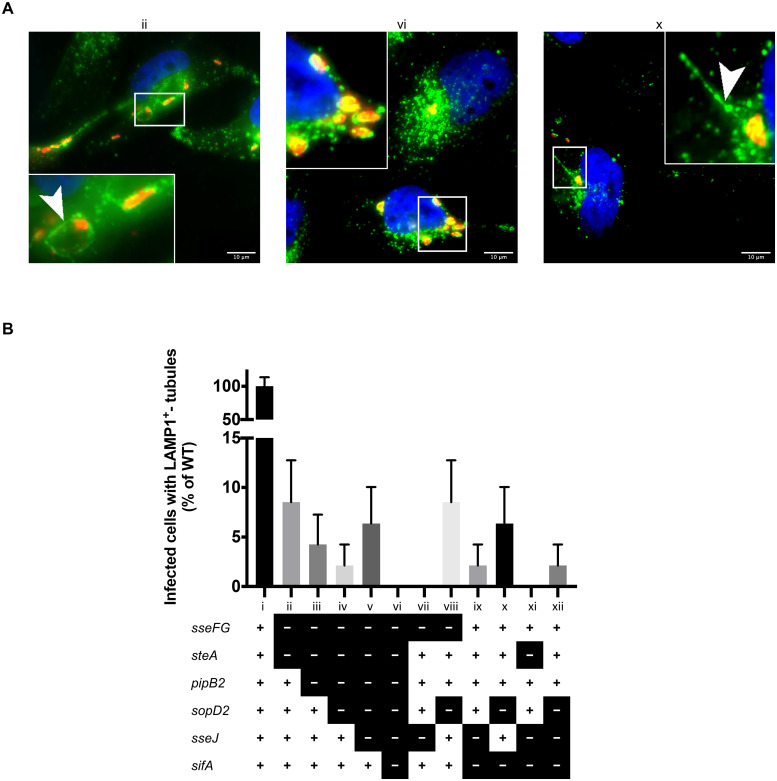
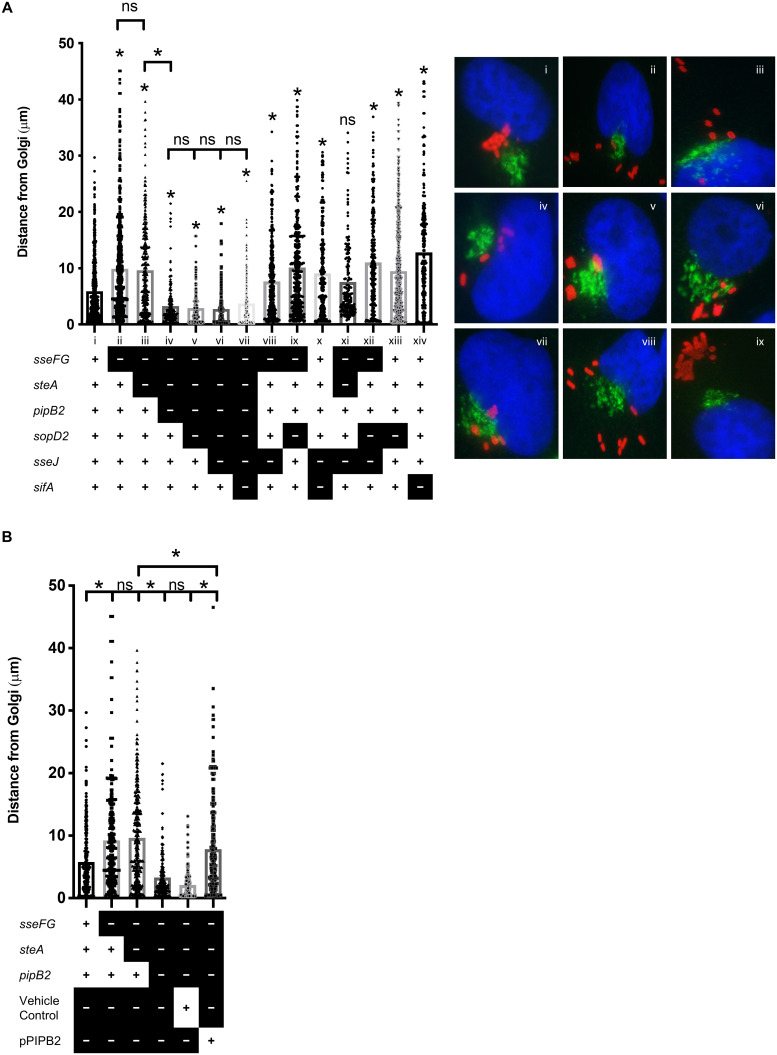
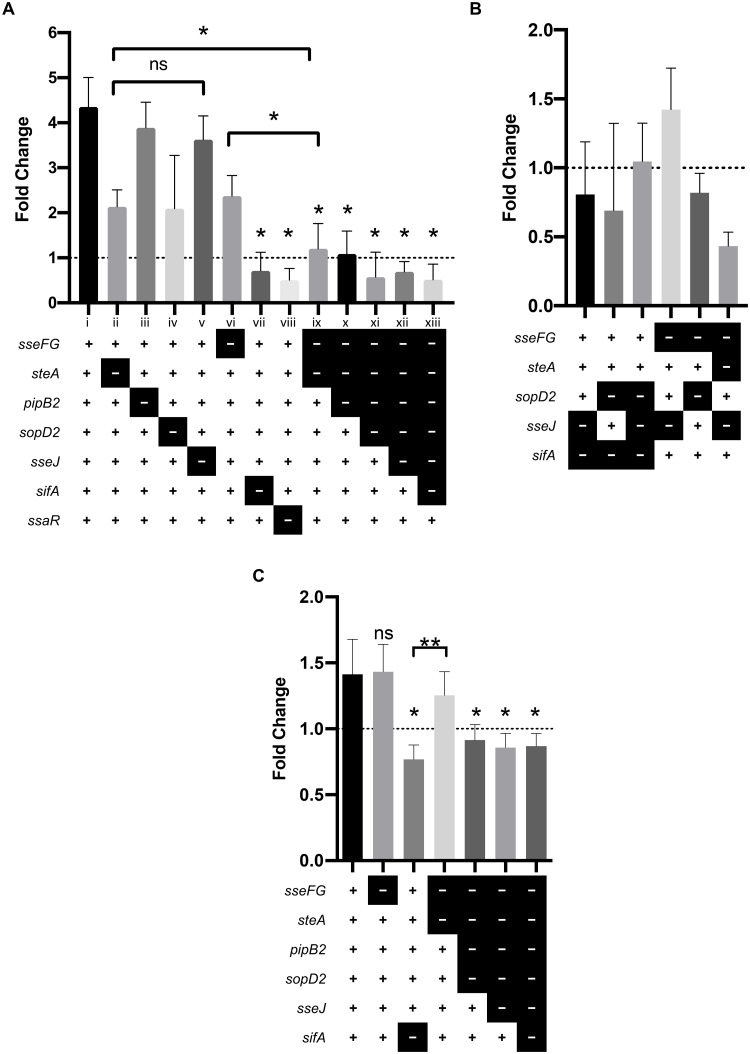
The pathogenesis of Salmonella Typhimurium depends on the bacterium's ability to survive and replicate within host cells. The formation and maintenance of a unique membrane-bound compartment, termed the Salmonella-containing vacuole (SCV), is essential for S. Typhimurium pathogenesis. SCV-bound S. Typhimurium induces formation of filamentous tubules that radiate outwards from the SCV, termed Salmonella-induced filaments (SIFs). SIF formation is concomitant with the onset of replication within host epithelial cells. SIF biogenesis, formation and maintenance of the SCV, and the intracellular positioning of the SCV within the host cell requires translocation of bacterial proteins (effectors) into the host cell. Effectors secreted by the type III secretion system encoded on Salmonella pathogenicity island 2 (T3SS2) function to interfere with host cellular processes and promote both intracellular survival and replication of S. Typhimurium. Seven T3SS2-secreted effectors, SifA, SopD2, PipB2, SteA, SseJ, SseF, and SseG have previously been implicated to play complementary, redundant, and/or antagonistic roles with respect to SIF biogenesis, intracellular positioning of the SCV, and SCV membrane dynamics modulation during infection. We undertook a systematic study to delineate the contribution of each effector to these processes by (i) deleting all seven of these effectors in a single S. Typhimurium strain; and (ii) deleting combinations of multiple effectors based on putative effector function. Using this deletion mutant library, we show that each of SIF biogenesis, intracellular SCV localization, intramacrophage replication, colonization, and virulence depends on the activities of multiple effectors. Together, our data demonstrates the complex interplay between these seven effectors and highlights the necessity to study T3SS2-secreted effectors as groups, rather than studies of individual effectors.
鼠伤寒沙门氏菌的发病机制取决于细菌在宿主细胞内生存和复制的能力。形成和维持一个独特的膜结合隔室,称为沙门氏菌包含空泡(SCV),对于鼠伤寒沙门氏菌的发病机制至关重要。SCV 结合的鼠伤寒沙门氏菌诱导形成从 SCV 向外辐射的丝状小管,称为沙门氏菌诱导的丝(SIF)。SIF 的形成伴随着宿主上皮细胞内复制的开始。SIF 的生物发生、SCV 的形成和维持,以及 SCV 在宿主细胞内的定位,需要细菌蛋白(效应物)向宿主细胞内易位。由沙门氏菌致病性岛 2(T3SS2)编码的 III 型分泌系统分泌的效应物,作用是干扰宿主细胞过程,促进鼠伤寒沙门氏菌的细胞内存活和复制。先前已经有 7 种 T3SS2 分泌的效应物(SifA、SopD2、PipB2、SteA、SseJ、SseF 和 SseG)被认为在 SIF 生物发生、SCV 的细胞内定位以及感染过程中 SCV 膜动力学调节方面发挥互补、冗余和/或拮抗作用。我们通过(i)在单个鼠伤寒沙门氏菌菌株中删除这 7 种效应物中的所有 7 种,以及(ii)基于假定的效应物功能删除多种效应物的组合,对每个效应物对这些过程的贡献进行了系统研究。使用这个缺失突变体文库,我们表明,SIF 生物发生、细胞内 SCV 定位、巨噬细胞内复制、定植和毒力都依赖于多种效应物的活性。总之,我们的数据表明了这 7 种效应物之间的复杂相互作用,并强调了有必要将 T3SS2 分泌的效应物作为一个整体进行研究,而不是对单个效应物进行研究。