Mahboub-Ahari Alireza, Hajebrahimi Sakineh, Yusefi Mahmoud, Velayati Ashraf
PhD of Health Economics, Iranian Center of Excellence in Health Management, Department of Health Service Management, Tabriz University of Medical Sciences, Tabriz, Iran.
Professor of Urology, Iranian Center for Evidence-Based Medicine, Tabriz University of Medical Sciences, Tabriz, Iran.
Med J Islam Repub Iran. 2016 Feb 17;30:331. eCollection 2016.
EOS is a 2D/3D muscle skeletal diagnostic imaging system. The device has been developed to produce a high quality 2D, full body radiographs in standing, sitting and squatting positions. Three dimensional images can be reconstructed via sterEOS software. This Health Technology Assessment study aimed to investigate efficacy, effectiveness and cost-effectiveness of new emerged EOS imaging system in comparison with conventional x-ray radiographic techniques.
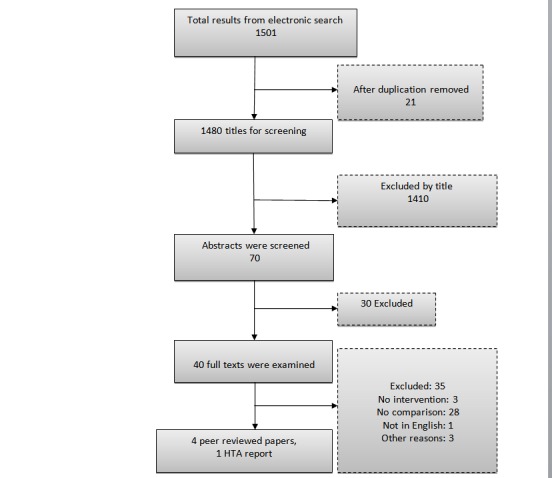
All cost and outcome data were assessed from Iran's Ministry of Health Perspective. Data for clinical effectiveness was extracted using a rigorous systematic review. As clinical outcomes the rate of x-ray emission and related quality of life were compared with Computed Radiography (CR) and Digital Radiography (DR). Standard costing method was conducted to find related direct medical costs. In order to examine robustness of the calculated Incremental Cost Effectiveness Ratios (ICERs) we used two-way sensitivity analysis. GDP Per capita of Islamic Republic of Iran (2012) adopted as cost-effectiveness threshold.
Review of related literature highlighted the lack of rigorous evidence for clinical outcomes. Ultra low dose EOS imaging device is known as a safe intervention because of FDA, CE and CSA certificates. The rate of emitted X-ray was 2 to 18 fold lower for EOS compared to the conventional techniques (p<0.001). The Incremental Cost Effectiveness Ratio for EOS relative to CR calculated $50706 in baseline analysis (the first scenario) and $50714, $9446 respectively for the second and third scenarios. Considering the value of neither $42146 as upper limit, nor the first neither the second scenario could pass the cost-effectiveness threshold for Iran.
EOS imaging technique might not be considered as a cost-effective intervention in routine practice of health system, especially within in-patient wards. Scenario analysis shows that, only in an optimum condition such as lower assembling costs and higher utilization rates, the device can be recruited for research and therapeutic purposes in pediatric orthopedic centers.
EOS是一种二维/三维肌肉骨骼诊断成像系统。该设备旨在生成站立、坐姿和蹲姿下高质量的二维全身X光片。三维图像可通过sterEOS软件重建。这项卫生技术评估研究旨在调查新出现的EOS成像系统与传统X光射线照相技术相比的疗效、有效性和成本效益。
所有成本和结果数据均从伊朗卫生部的角度进行评估。临床有效性数据通过严格的系统评价提取。作为临床结果,将X光发射率和相关生活质量与计算机X线摄影(CR)和数字X线摄影(DR)进行比较。采用标准成本核算方法来确定相关的直接医疗成本。为检验计算出的增量成本效益比(ICER)的稳健性,我们进行了双向敏感性分析。采用伊朗伊斯兰共和国2012年人均国内生产总值作为成本效益阈值。
相关文献综述强调缺乏关于临床结果的严格证据。由于获得了美国食品药品监督管理局(FDA)、欧洲合格认证(CE)和加拿大标准协会(CSA)认证,超低剂量EOS成像设备被认为是一种安全的干预措施。与传统技术相比,EOS的X射线发射率低2至18倍(p<0.001)。在基线分析(第一种情况)中,EOS相对于CR的增量成本效益比计算为50706美元,在第二种和第三种情况中分别为50714美元和9446美元。考虑到42146美元既不是上限值,第一种和第二种情况都未达到伊朗的成本效益阈值。
在卫生系统的常规实践中,尤其是在住院病房中,EOS成像技术可能不被视为具有成本效益的干预措施。情景分析表明,只有在诸如更低的组装成本和更高的利用率等最佳条件下,该设备才可在儿科骨科中心用于研究和治疗目的。