Forstnerič Vida, Ivičak-Kocjan Karolina, Ljubetič Ajasja, Jerala Roman, Benčina Mojca
Department of Synthetic Biology and Immunology, National Institute of Chemistry, Ljubljana, Slovenia.
Centre of Excellence EN-FIST, Ljubljana, Slovenia.
PLoS One. 2016 Jul 8;11(7):e0158894. doi: 10.1371/journal.pone.0158894. eCollection 2016.
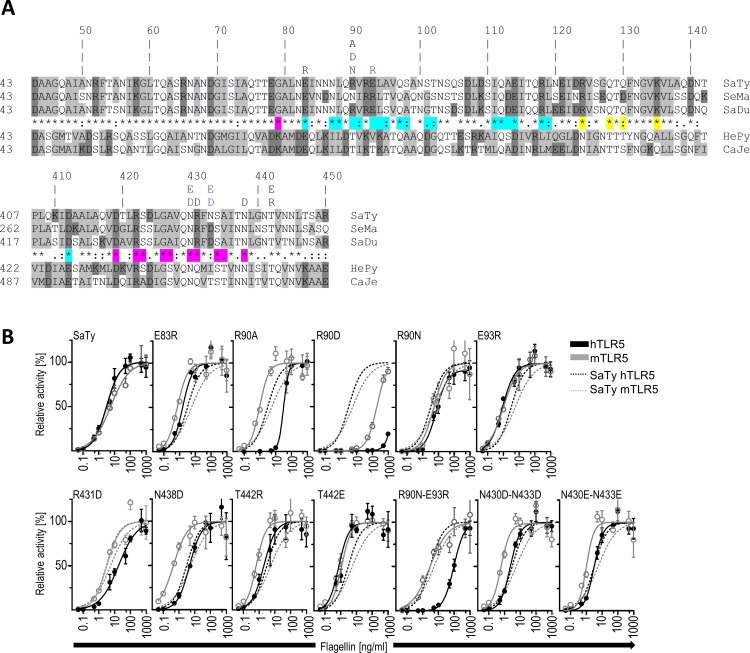
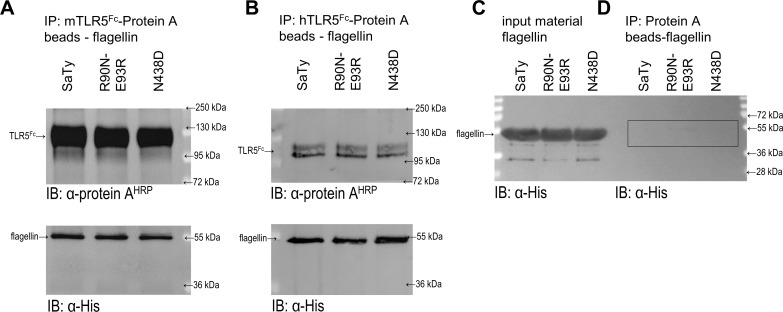
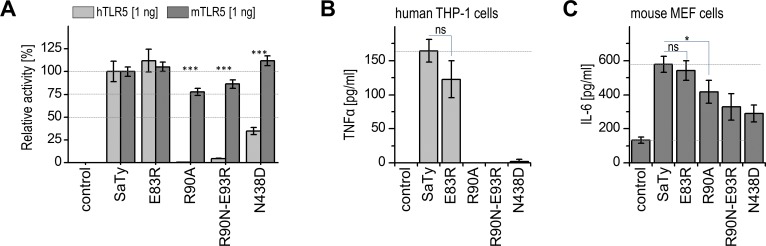
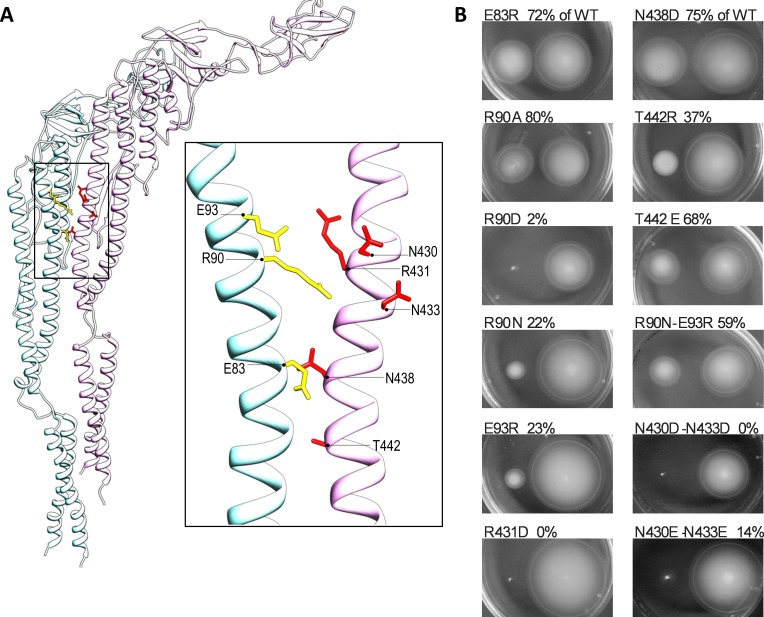
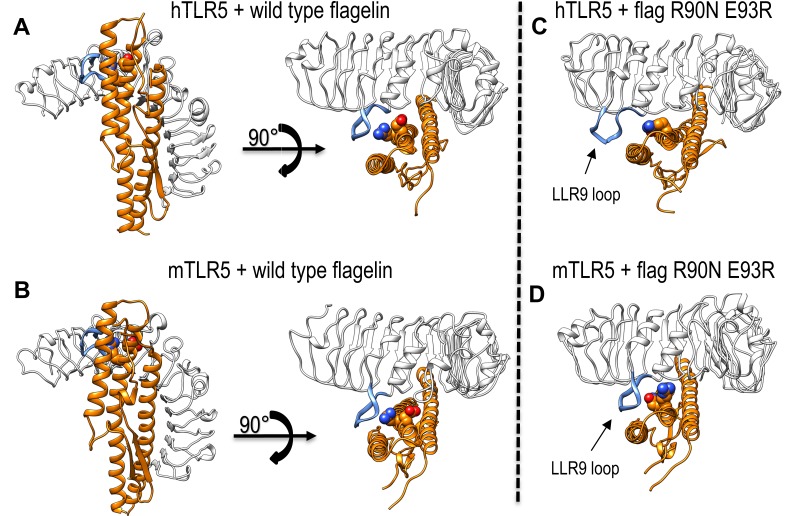
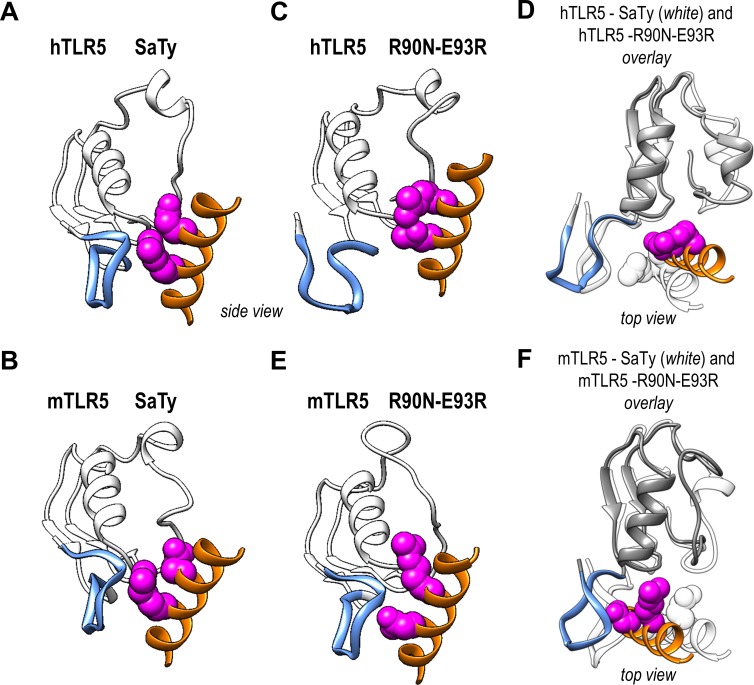
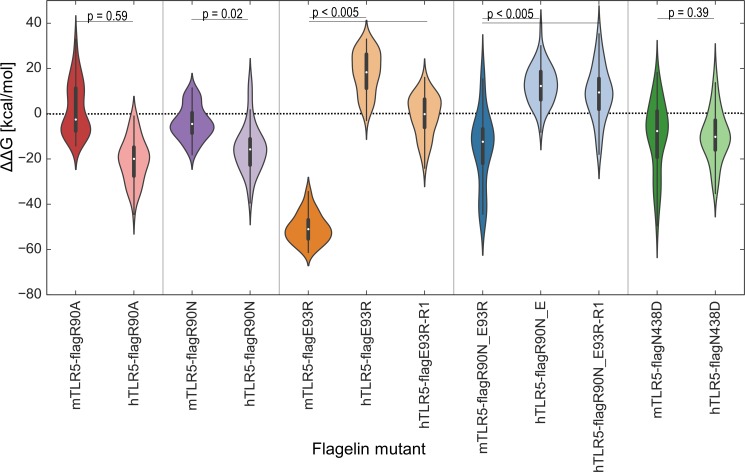
Toll-like receptor 5 (TLR5) is a receptor of the innate immune system that recognizes flagellin from certain bacterial species and triggers an inflammatory response. The Salmonella dublin flagellin in complex with zebrafish TLR5 has been crystallized previously. In the present study, we extrapolate the structure of this complex using structure-guided mutagenesis to determine the recognition modes of human and mouse TLR5 receptors and demonstrate species-specific differences in flagellin recognition. In general, the recognition mode of the mouse receptor can be said to be more robust in comparison to that of the human receptor. All-atom molecular dynamics simulation showed differences between the two receptors within the primary binding region. Using a functional motility assay, we show that although the highly conserved area of the flagellin analyzed in this study encompasses key structural requirements for flagella formation, a direct correlation between immune recognition and structure on the level of amino acid residues is not observed.
Toll样受体5(TLR5)是先天免疫系统的一种受体,它能识别某些细菌种类的鞭毛蛋白并引发炎症反应。先前已使都柏林沙门氏菌鞭毛蛋白与斑马鱼TLR5形成的复合物结晶。在本研究中,我们利用结构导向诱变推断该复合物的结构,以确定人和小鼠TLR5受体的识别模式,并证明鞭毛蛋白识别存在物种特异性差异。一般来说,与人类受体相比,小鼠受体的识别模式可以说是更稳定。全原子分子动力学模拟显示了两个受体在主要结合区域内的差异。使用功能性运动分析,我们表明,尽管本研究中分析的鞭毛蛋白高度保守区域包含鞭毛形成的关键结构要求,但未观察到免疫识别与氨基酸残基水平结构之间的直接相关性。