Boyd David F, Sharma Amit, Humes Daryl, Cheng-Mayer Cecilia, Overbaugh Julie
Division of Human Biology, Fred Hutchinson Cancer Research Center, Seattle, Washington, United States of America.
Pathobiology Graduate Program, University of Washington, Seattle, Washington, United States of America.
PLoS Pathog. 2016 Jul 11;12(7):e1005727. doi: 10.1371/journal.ppat.1005727. eCollection 2016 Jul.
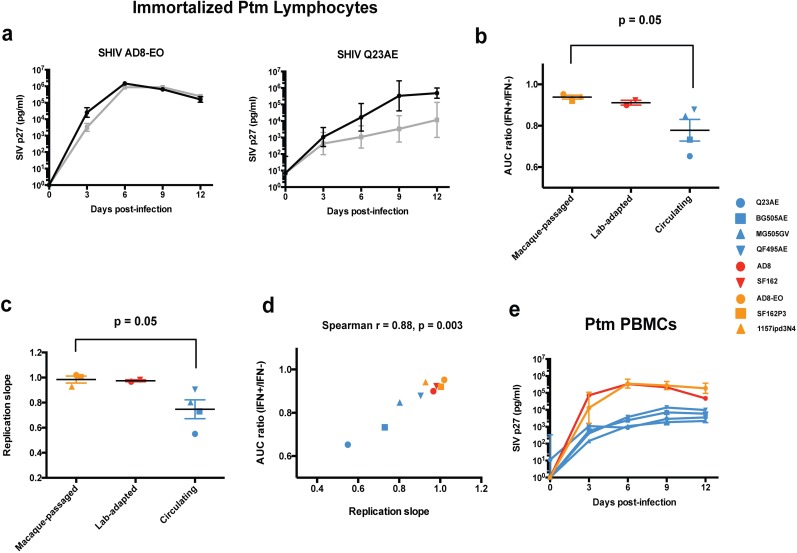
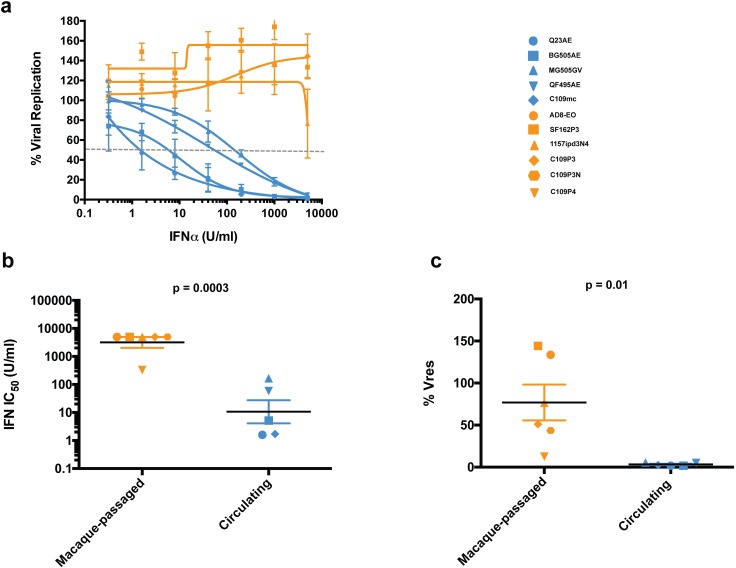
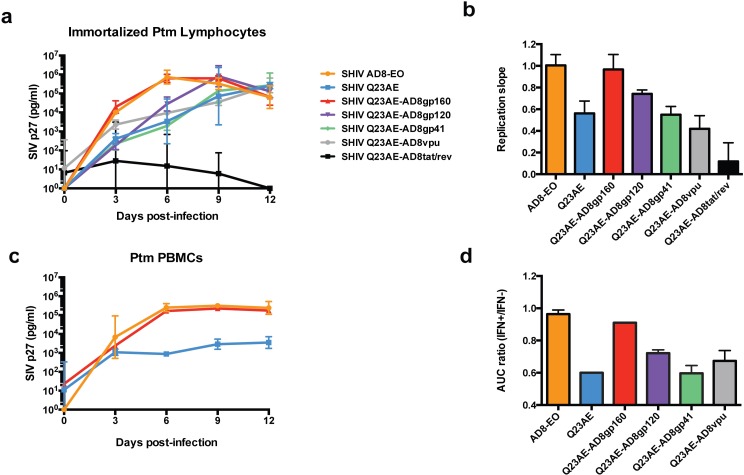
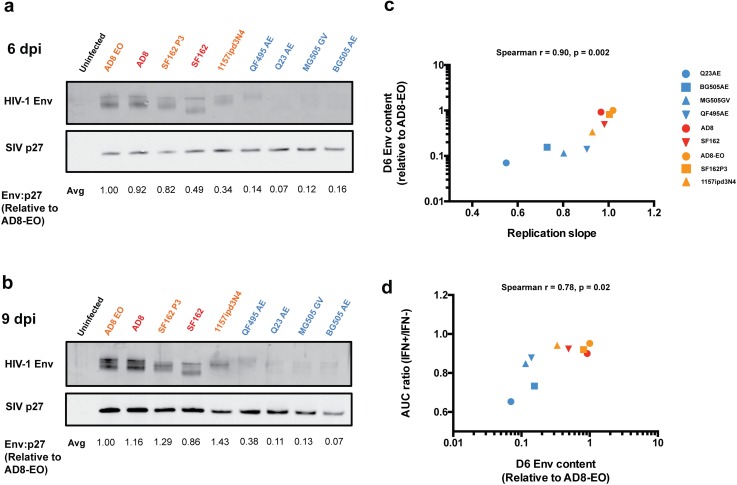
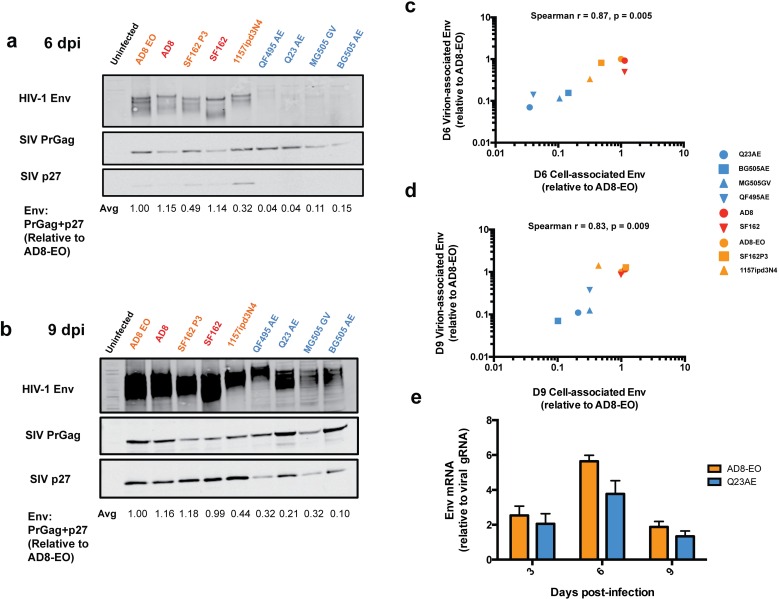
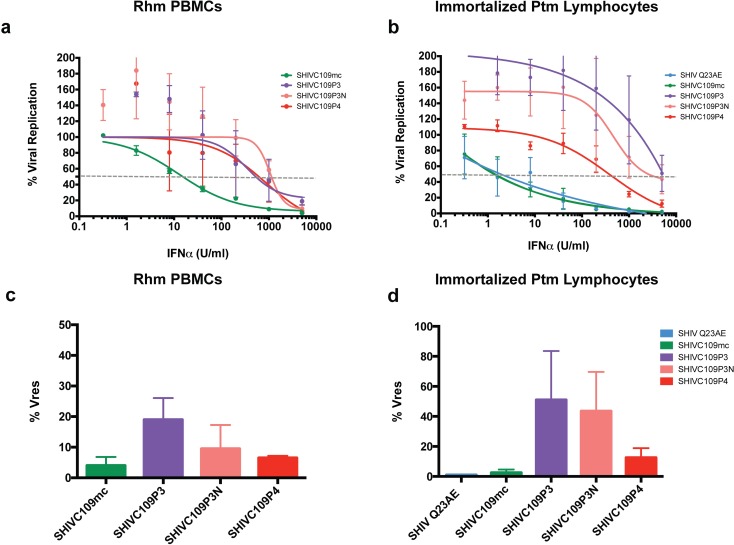
Lentiviruses are able to establish persistent infection in their respective hosts despite a potent type-I interferon (IFN-I) response following transmission. A number of IFN-I-induced host factors that are able to inhibit lentiviral replication in vitro have been identified, and these studies suggest a role for IFN-induced factors as barriers to cross-species transmission. However, the ability of these factors to inhibit viral replication in vivo has not been well characterized, nor have the viral determinants that contribute to evasion or antagonism of the host IFN-I response. In this study, we hypothesized that the host IFN-I response serves as a strong selective pressure in the context of SIV/HIV chimeric virus (SHIV) infection of macaques and sought to identify the viral determinants that contribute to IFN-I resistance. We assessed the ability of SHIVs encoding HIV-1 sequences adapted by serial passage in macaques versus SHIVs encoding HIV sequences isolated directly from infected individuals to replicate in the presence of IFNα in macaque lymphocytes. We demonstrate that passage in macaques selects for IFNα resistant viruses that have higher replication kinetics and increased envelope content. SHIVs that encode HIV-1 sequences derived directly from infected humans were sensitive to IFNα -induced inhibition whereas SHIVs obtained after passage in macaques were not. This evolutionary process was directly observed in viruses that were serially passaged during the first few months of infection-a time when the IFNα response is high. Differences in IFNα sensitivity mapped to HIV-1 envelope and were associated with increased envelope levels despite similar mRNA expression, suggesting a post-transcriptional mechanism. These studies highlight critical differences in IFNα sensitivity between HIV-1 sequences in infected people and those used in SHIV models.
慢病毒能够在其各自的宿主中建立持续感染,尽管在传播后会引发强烈的I型干扰素(IFN-I)反应。已经鉴定出许多能够在体外抑制慢病毒复制的IFN-I诱导的宿主因子,这些研究表明IFN诱导的因子在跨物种传播中起到屏障作用。然而,这些因子在体内抑制病毒复制的能力尚未得到充分表征,对逃避或拮抗宿主IFN-I反应的病毒决定因素也了解不足。在本研究中,我们假设宿主IFN-I反应在猕猴感染SIV/HIV嵌合病毒(SHIV)的情况下是一种强大的选择压力,并试图确定导致IFN-I抗性的病毒决定因素。我们评估了编码在猕猴中连续传代适应的HIV-1序列的SHIV与编码直接从感染个体中分离的HIV序列的SHIV在猕猴淋巴细胞中存在IFNα时的复制能力。我们证明,在猕猴中传代选择出了对IFNα具有抗性的病毒,这些病毒具有更高的复制动力学和增加的包膜含量。编码直接来自感染人类的HIV-1序列的SHIV对IFNα诱导的抑制敏感,而在猕猴中传代后获得的SHIV则不敏感。这种进化过程在感染最初几个月(此时IFNα反应较高)连续传代的病毒中直接观察到。IFNα敏感性的差异映射到HIV-1包膜,并且尽管mRNA表达相似,但与包膜水平增加有关,提示存在转录后机制。这些研究突出了感染人群中的HIV-1序列与SHIV模型中使用的序列在IFNα敏感性方面的关键差异。