Emory Vaccine Center, Yerkes National Primate Research Center, 954 Gatewood Road, Atlanta, GA, 30329, USA.
Department of Pathology and Laboratory Medicine, Emory University, 954 Gatewood Road, Atlanta, GA, 30329, USA.
Curr Top Microbiol Immunol. 2017;407:31-63. doi: 10.1007/82_2017_33.
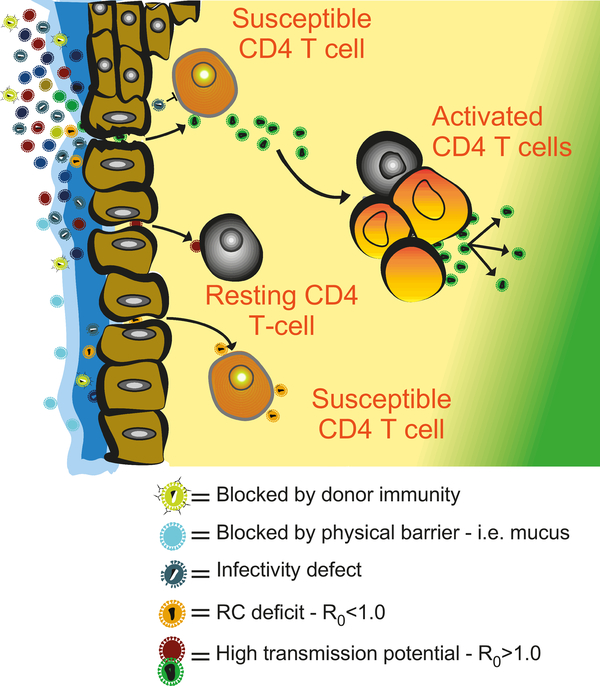
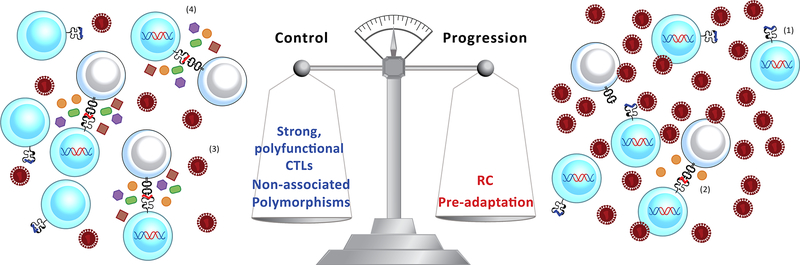
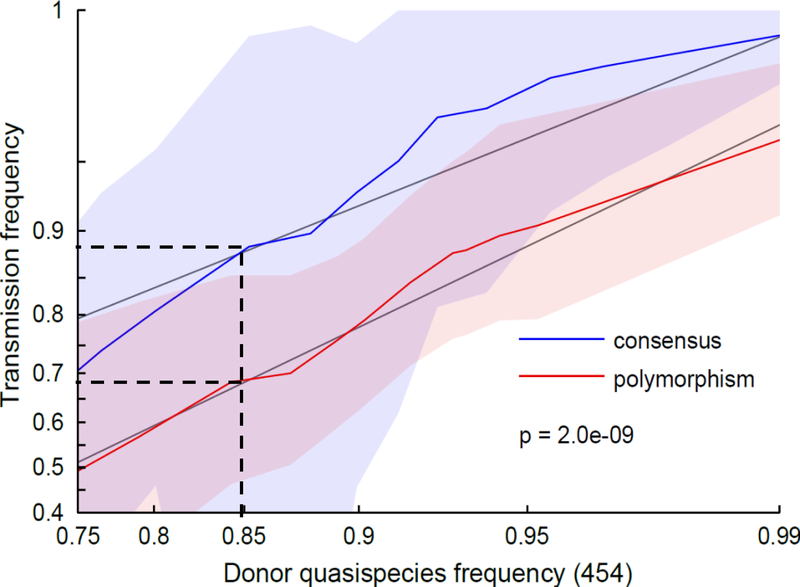
In this chapter, we will review recent research on the virology of HIV-1 transmission and the impact of the transmitted virus genotype on subsequent disease progression. In most instances of HIV-1 sexual transmission, a single genetic variant, or a very limited number of variants from the diverse viral quasi-species present in the transmitting partner establishes systemic infection. Transmission involves both stochastic and selective processes, such that in general a minority variant in the donor is transmitted. While there is clear evidence for selection, the biological properties that mediate transmission remain incompletely defined. Nevertheless, the genotype of the transmitted founder virus, which reflects prior exposure to and escape from host immune responses, clearly influences disease progression. Some escape mutations impact replicative capacity, while others effectively cloak the virus from the newly infected host's immune response by preventing recognition. It is the balance between the impact of escape mutations on viral fitness and susceptibility to the host immunogenetics that defines HIV-1 disease progression.
在本章中,我们将回顾 HIV-1 传播的病毒学以及传播病毒基因型对随后疾病进展的影响的最新研究。在大多数 HIV-1 性传播的情况下,单一遗传变异体,或来自传播伴侣中存在的多样化病毒准种的非常有限数量的变异体,会建立系统性感染。传播涉及随机和选择性过程,因此通常情况下,供体中的少数变异体被传播。虽然有明确的选择证据,但介导传播的生物学特性仍未完全定义。然而,传播的原始病毒的基因型反映了先前对宿主免疫反应的逃避和适应,显然会影响疾病的进展。一些逃逸突变会影响复制能力,而其他突变则通过阻止宿主免疫系统识别来有效地将病毒从新感染的宿主中隐藏起来。决定 HIV-1 疾病进展的是逃逸突变对病毒适应性和对宿主免疫遗传学易感性的影响之间的平衡。