Han Brenda Yuyuan, Foo Chuan-Sheng, Wu Shuang, Cyster Jason G
Department of Microbiology and Immunology, University of California at San Francisco, San Francisco, California 94143, USA; Howard Hughes Medical Institute, University of California at San Francisco, San Francisco, California 94143, USA;
Department of Computer Science, Stanford University, Stanford, California 94305, USA.
Genes Dev. 2016 Jul 1;30(13):1509-14. doi: 10.1101/gad.279406.116.
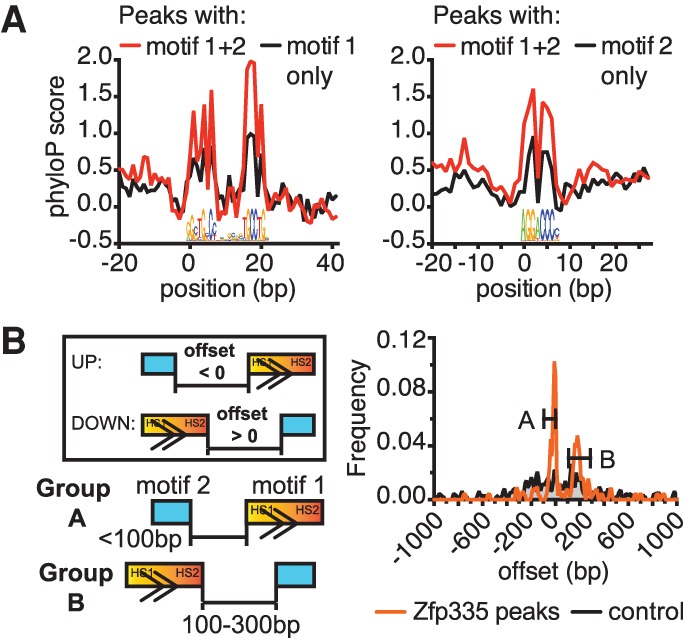
The complexities of DNA recognition by transcription factors (TFs) with multiple Cys2-His2 zinc fingers (C2H2-ZFs) remain poorly studied. We previously reported a mutation (R1092W) in the C2H2-ZF TF Zfp335 that led to selective loss of binding at a subset of targets, although the basis for this effect was unclear. We show that Zfp335 binds DNA and drives transcription via recognition of two distinct consensus motifs by separate ZF clusters and identify the specific motif interaction disrupted by R1092W. Our work presents Zfp335 as a model for understanding how C2H2-ZF TFs may use multiple recognition motifs to control gene expression.
具有多个Cys2-His2锌指(C2H2-ZFs)的转录因子(TFs)对DNA识别的复杂性仍未得到充分研究。我们之前报道过C2H2-ZF转录因子Zfp335中的一个突变(R1092W),该突变导致在一部分靶标上的结合选择性丧失,尽管这种效应的基础尚不清楚。我们表明,Zfp335通过不同的ZF簇识别两个不同的共有基序来结合DNA并驱动转录,并确定了被R1092W破坏的特定基序相互作用。我们的工作将Zfp335作为一个模型,用于理解C2H2-ZF转录因子如何利用多个识别基序来控制基因表达。