Petit Audrey, Cambon Linda
Chaire de recherche en prévention des cancers, UMR6051, CRAPE, EHESP, Rennes, France.
EHESP, 20 Avenue George Sand, 93210, Saint-Denis, France.
BMC Public Health. 2016 Jul 11;16:552. doi: 10.1186/s12889-016-3225-4.
Smart devices and mobile applications are now an integral part of all aspects of everyday life. They are particularly numerous in the field of health, contributing to the movement called ehealth. What is the potential role of these devices as prevention supports? The purpose of this article is to provide an exploratory analysis of the use, efficacy and contribution to conventional prevention strategies.
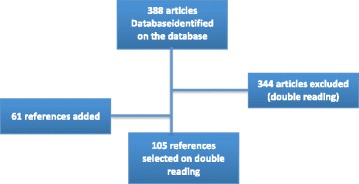
To address this issue, we conducted a scoping-review on the basis of 105 publications from the fields of medicine and human sciences.
Three dimensions of the use of smart devices in the field of health were identified: 1/a quantification tool allowing the users to measure their activities; 2/a tool of self-positioning in the community; 3/an interface between the medical world and the population, modifying the hierarchy of knowledge. However, few published studies have investigated the determinants of the efficacy of these devices and their impact on individual behaviours and professional health practices.
Based on the hypothesis of possible integration of these devices in prevention policies, it would be interesting to investigate two research issues: how and under what psycho-socio-environmental conditions can smart devices contribute to the adoption of positive health behaviours? To what degree does the use of smart devices modify the health care professional-patient relationship? Finding answers to these questions could help to define the real place of these devices in prevention strategies by determining their complementarity with respect to other prevention strategies, and the conditions of their efficacy on behaviours and inequalities.
智能设备和移动应用程序如今已成为日常生活方方面面不可或缺的一部分。它们在健康领域尤其众多,推动了所谓的电子健康运动。这些设备作为预防支持手段的潜在作用是什么?本文旨在对其使用、功效以及对传统预防策略的贡献进行探索性分析。
为解决此问题,我们基于医学和人文科学领域的105篇出版物进行了一项范围综述。
确定了智能设备在健康领域使用的三个维度:1/一种量化工具,允许用户测量其活动;2/一种在社区中自我定位的工具;3/医学领域与民众之间的接口,改变了知识的层级。然而,很少有已发表的研究调查这些设备功效的决定因素及其对个体行为和专业健康实践的影响。
基于这些设备可能融入预防政策的假设,研究两个问题会很有意思:智能设备如何以及在何种心理社会环境条件下能够促进积极健康行为的养成?智能设备的使用在多大程度上改变了医护专业人员与患者之间的关系?找到这些问题的答案有助于通过确定它们与其他预防策略的互补性以及它们对行为和不平等现象产生功效的条件,来界定这些设备在预防策略中的实际地位。