Lofruthe Niklas, Gallitz Inka, Traeger Lisa, Bäumer Nicole, Schulze Isabell, Kuhlmann Tanja, Müller-Tidow Carsten, Steinbicker Andrea U
Department of Anesthesiology, Intensive Care and Pain Medicine, University Hospital Muenster, University of Muenster, Muenster, Germany.
Department of Medicine A, Hematology, Oncology and Pneumology, University Hospital Muenster, Muenster, Germany.
PLoS One. 2016 Jul 12;11(7):e0158599. doi: 10.1371/journal.pone.0158599. eCollection 2016.
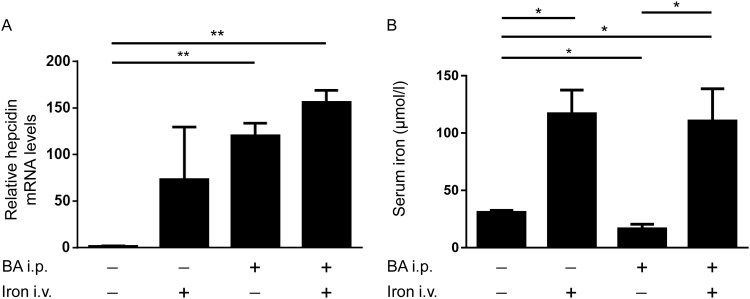
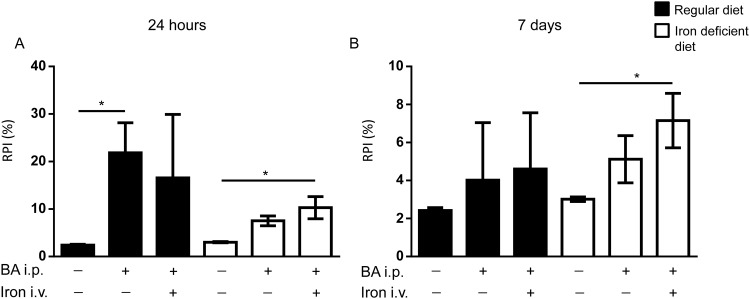
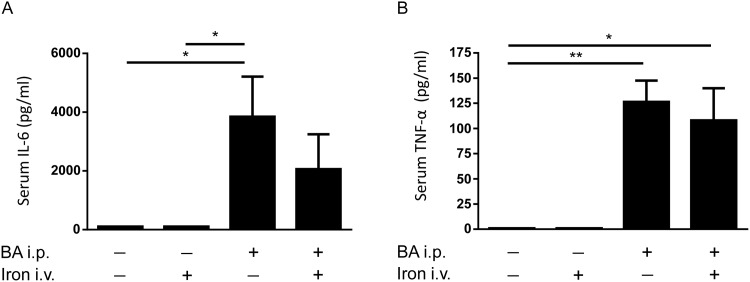
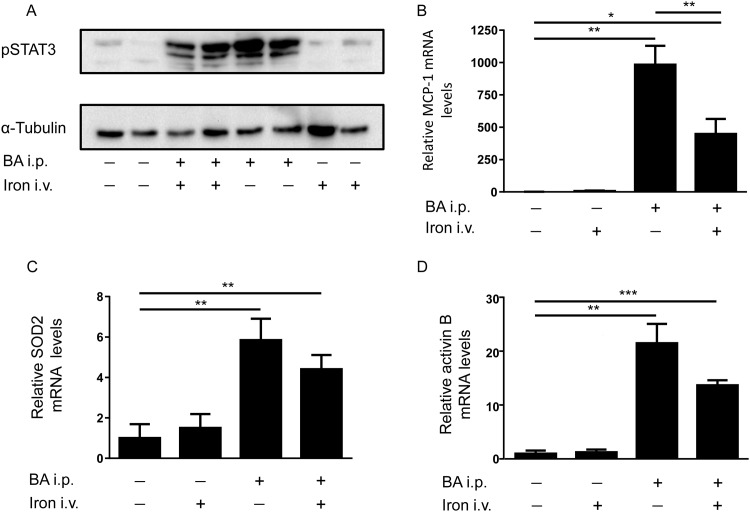
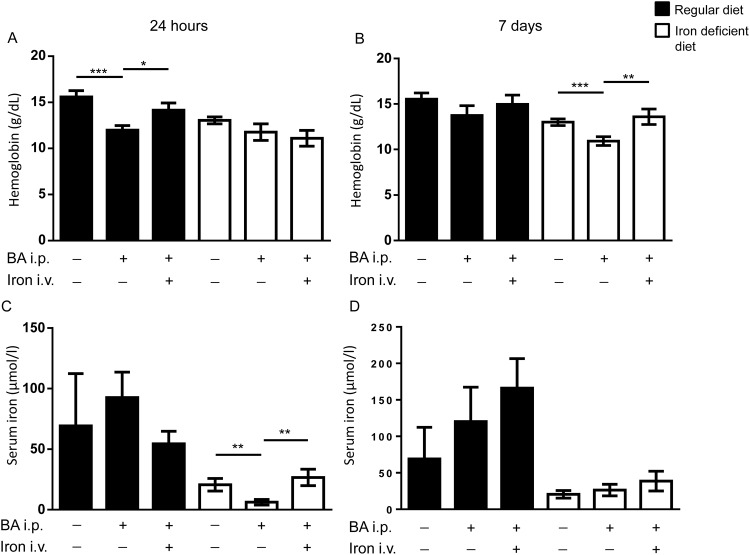
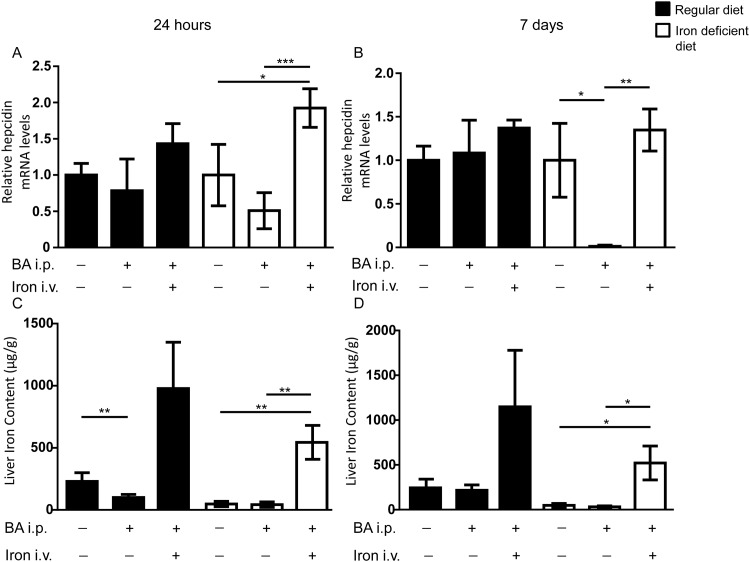
Intravenous iron supplementation is an effective therapy in iron deficiency anemia (IDA), but controversial in anemia of inflammation (AI). Unbound iron can be used by bacteria and viruses for their replication and enhance the inflammatory response. Nowadays available high molecular weight iron complexes for intravenous iron substitution, such as ferric carboxymaltose, might be useful in AI, as these pharmaceuticals deliver low doses of free iron over a prolonged period of time. We tested the effects of intravenous iron carboxymaltose in murine AI: Wild-type mice were exposed to the heat-killed Brucella abortus (BA) model and treated with or without high molecular weight intravenous iron. 4h after BA injection followed by 2h after intravenous iron treatment, inflammatory cytokines were upregulated by BA, but not enhanced by iron treatment. In long term experiments, mice were fed a regular or an iron deficient diet and then treated with intravenous iron or saline 14 days after BA injection. Iron treatment in mice with BA-induced AI was effective 24h after iron administration. In contrast, mice with IDA (on iron deficiency diet) prior to BA-IA required 7d to recover from AI. In these experiments, inflammatory markers were not further induced in iron-treated compared to vehicle-treated BA-injected mice. These results demonstrate that intravenous iron supplementation effectively treated the murine BA-induced AI without further enhancement of the inflammatory response. Studies in humans have to reveal treatment options for AI in patients.
静脉补铁是缺铁性贫血(IDA)的有效治疗方法,但在炎症性贫血(AI)中存在争议。游离铁可被细菌和病毒用于复制,并增强炎症反应。目前可用于静脉铁替代的高分子量铁络合物,如羧基麦芽糖铁,可能对AI有用,因为这些药物能在较长时间内释放低剂量的游离铁。我们测试了静脉注射羧基麦芽糖铁对小鼠AI的影响:将野生型小鼠暴露于热灭活的流产布鲁氏菌(BA)模型中,并给予或不给予高分子量静脉铁治疗。在注射BA后4小时,然后在静脉铁治疗后2小时,炎症细胞因子被BA上调,但未被铁治疗增强。在长期实验中,小鼠喂食正常或缺铁饮食,然后在注射BA后14天给予静脉铁或生理盐水治疗。在BA诱导的AI小鼠中,铁治疗在给药后24小时有效。相比之下,在BA-IA之前患有IDA(缺铁饮食)的小鼠需要7天才能从AI中恢复。在这些实验中,与注射BA的载体处理小鼠相比,铁处理小鼠的炎症标志物没有进一步诱导。这些结果表明,静脉补铁有效地治疗了小鼠BA诱导的AI,而没有进一步增强炎症反应。人体研究必须揭示AI患者的治疗选择。