Al-Mamun M Abdulla, Akter Zerin, Uddin Md Josim, Ferdaus K M K B, Hoque K M F, Ferdousi Z, Reza M Abu
Department of Genetic Engineering and Biotechnology, Protein Science Lab, University of Rajshahi, Rajshahi, 6205, Bangladesh.
Department of Pharmacy, Faculty of Science and Engineering, International Islamic University Chittagong, Chittagong, 4203, Bangladesh.
BMC Complement Altern Med. 2016 Jul 12;16:211. doi: 10.1186/s12906-016-1185-y.
Ricinus communis (Euphorbiaceae) has previously been reported to possess analgesic, antihistamine, antioxidant and anti-inflammatory activities. This study was designed for isolation, characterization and evaluation of antibacterial and anti-proliferative activities of R. communis seed protein.
The concentration and molecular weight of R. communis seed protein were estimated by SDS-PAGE and spectrophotometric analysis, respectively. Lectin activity was evaluated by hemagglutination assay on mice blood. In vitro susceptibility of four human pathogenic bacteria including Escherichia coli, Pseudomonas aeruginosa, Enterobacter aerogenes and Staphylococcus aureus was detected using disk diffusion assay, and minimum inhibitory concentration (MIC) value was determined using micro-dilution method. A total of twenty four Swiss albino mice containing Ehrlich's ascites carcinoma (EAC) cells were treated with the crude protein of R. communis at 50 and 100 μg/ml/d/mouse for 6 days. Growth inhibitory activity of R. communis seed protein on EAC cells was determined by haemocytometer counting using trypan blue dye and DAPI (4΄,6-diamidino-2-phenylindole) staining was used to assess apoptotic cells.
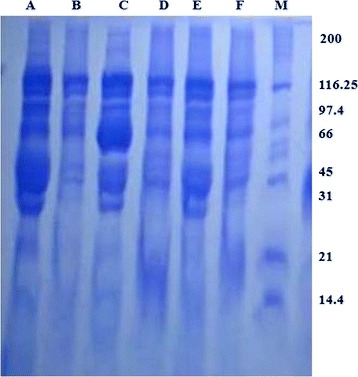
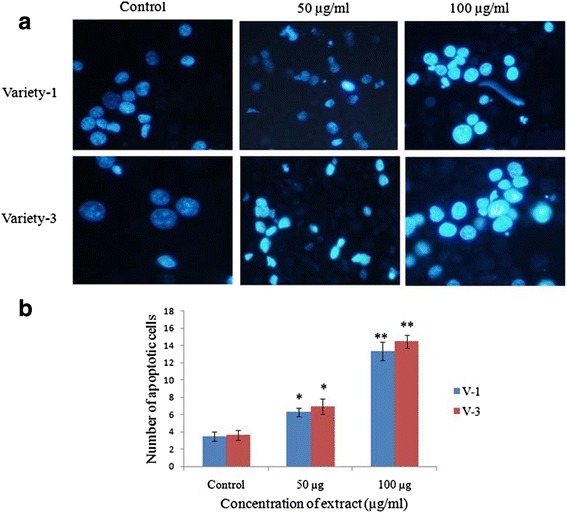
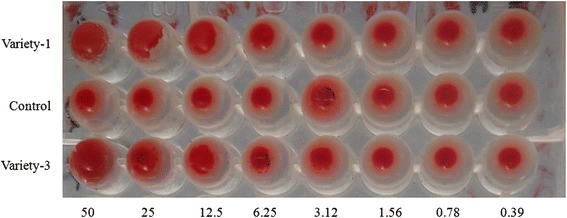
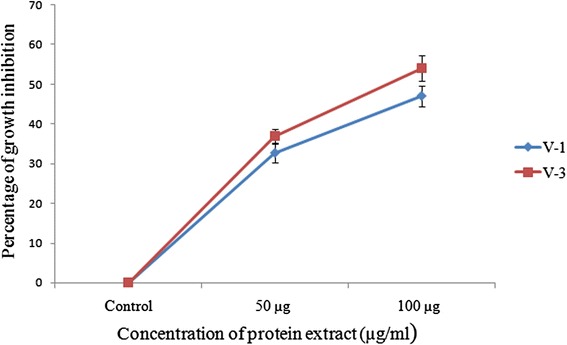
The protein concentration of six R. communis (castor) varieties ranged between 21-35 mg/ml and molecular weight between 14-200 kDa. Castor protein agglutinated mice blood at 3.125 μg/wall. The seed protein shows considerable antimicrobial activity against E. coli, P. aeruginosa and S. aureus, exhibiting MIC values of 250, 125 and 62.5 μg/ml, respectively. Administration of seed protein led to 54 % growth inhibition of EAC cells at 100 μg/ml. DAPI staining indicates marked features of apoptosis including condensation of cytoplasm, nuclear fragmentation and aggregation of apoptotic bodies etc.
Our study suggests that the lectin rich R. communis seed protein has strong antibacterial and anticancer activities.
此前有报道称蓖麻(大戟科)具有镇痛、抗组胺、抗氧化和抗炎活性。本研究旨在分离、鉴定和评估蓖麻籽蛋白的抗菌和抗增殖活性。
分别通过SDS-PAGE和分光光度分析估计蓖麻籽蛋白的浓度和分子量。通过对小鼠血液进行血凝试验评估凝集素活性。使用纸片扩散法检测包括大肠杆菌、铜绿假单胞菌、产气肠杆菌和金黄色葡萄球菌在内的四种人类病原菌的体外敏感性,并使用微量稀释法确定最低抑菌浓度(MIC)值。将总共24只携带艾氏腹水癌(EAC)细胞的瑞士白化小鼠,以50和100μg/ml/天/小鼠的剂量用蓖麻粗蛋白处理6天。通过使用台盼蓝染料的血细胞计数器计数来确定蓖麻籽蛋白对EAC细胞的生长抑制活性,并使用4΄,6-二脒基-2-苯基吲哚(DAPI)染色来评估凋亡细胞。
六个蓖麻品种的蛋白质浓度在21-35mg/ml之间,分子量在14-200kDa之间。蓖麻蛋白在3.125μg/孔时凝集小鼠血液。种子蛋白对大肠杆菌、铜绿假单胞菌和金黄色葡萄球菌显示出相当强的抗菌活性,MIC值分别为250、125和62.5μg/ml。在100μg/ml时,种子蛋白的给药导致EAC细胞生长抑制54%。DAPI染色显示出明显的凋亡特征,包括细胞质浓缩、核碎片化和凋亡小体聚集等。
我们的研究表明,富含凝集素的蓖麻籽蛋白具有很强的抗菌和抗癌活性。