Zou Yan, Qin Fengxian, Chen Jifei, Meng Jie, Wei Liuhua, Wu Chunlin, Zhang Qiaoyun, Wei Dong, Chen Xiang, Wu Hao, Chen Xiaoli, Dai Shengming
Medical Science Laboratory, The Fourth Affiliated Hospital of Guangxi Medical University, Liuzhou, Guangxi, 545005, P.R. China.
Oncotarget. 2016 Aug 9;7(32):52032-52044. doi: 10.18632/oncotarget.10496.
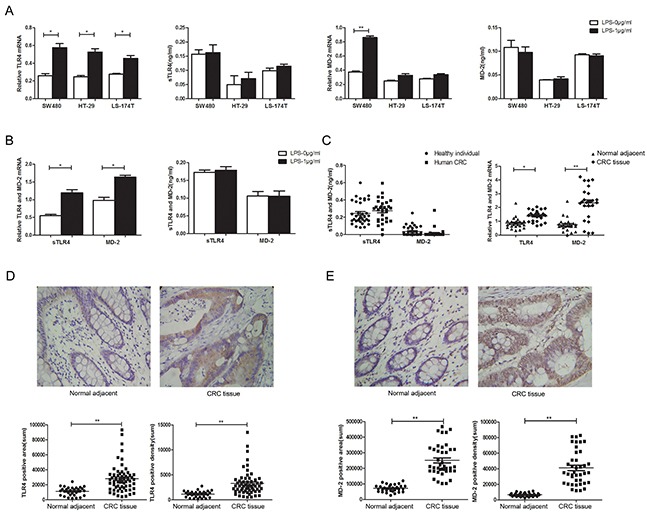
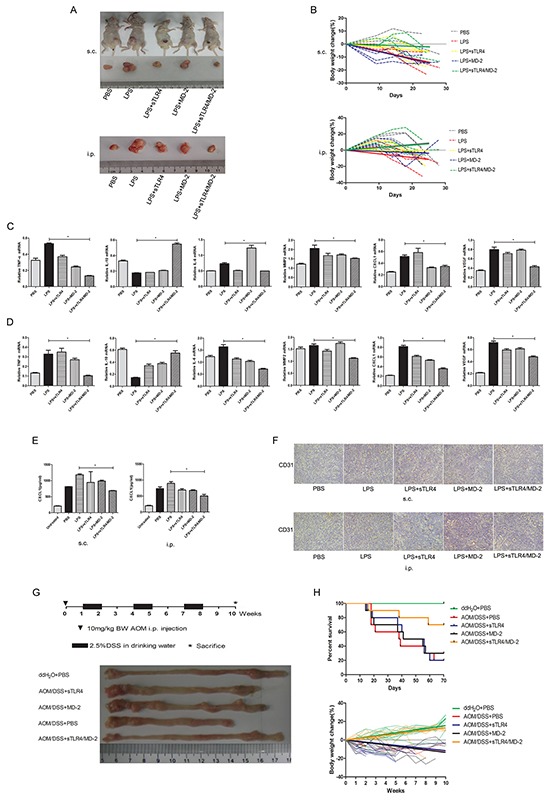
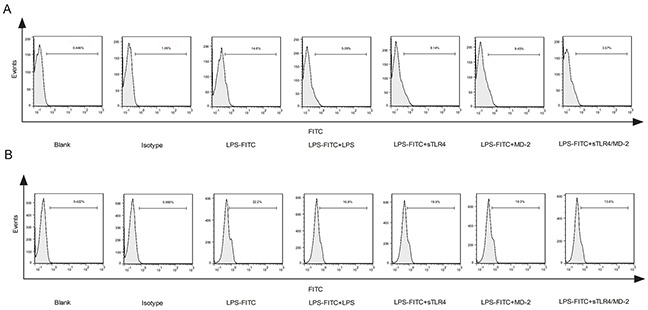
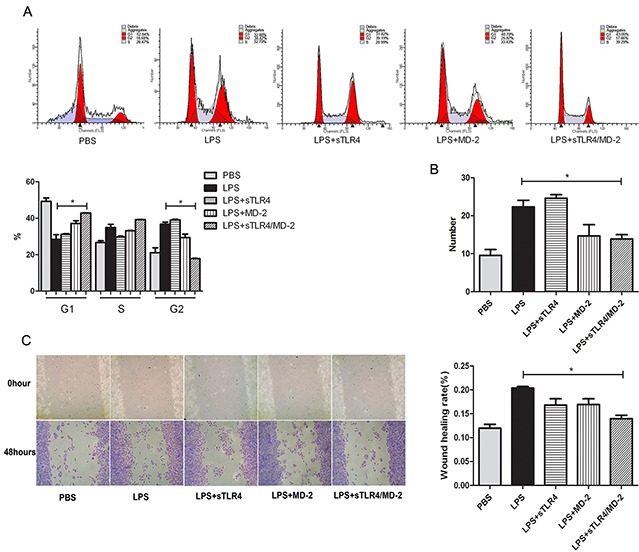
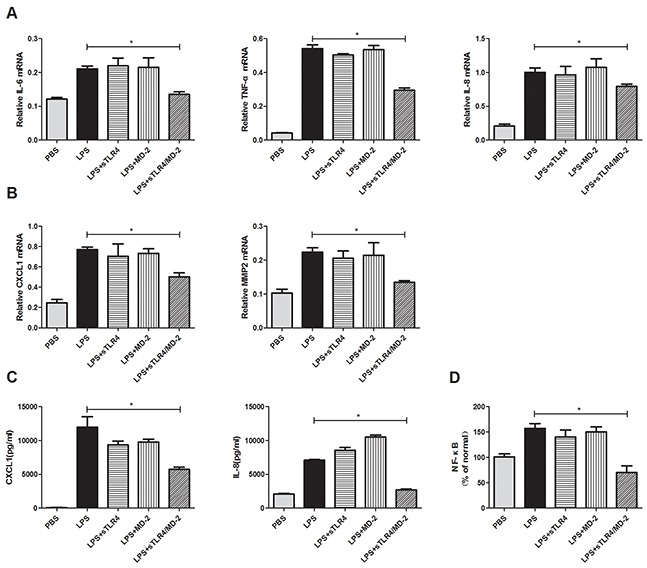
Colorectal cancer (CRC) is aggressive and associated with TLR4-MD-2 signaling. Toll-like receptor 4 (TLR4) and myeloid differentiation protein 2 (MD-2) were highly expressed in human CRC. The soluble form of extracellular TLR4 domain (sTLR4) and MD-2 may have important roles in binding lipopolysaccharide (LPS). In this study, sTLR4 and MD-2 protein and prepared sTLR4/MD-2 complex were synthesized successfully to restrain LPS-TLR4/MD-2 activation by competing with cellular membrane TLR4 for binding LPS. The sTLR4/MD-2 complex can significantly attenuate LPS induced pro-inflammatory and migration cytokine production in vitro and in vivo, and inhibit the effect of LPS on the cell cycle, migration and invasion of human CRC cells in vitro. Administration of sTLR4/MD-2 complex protected mice from tumor both in xenograft and implantation metastasis model. The sTLR4/MD-2 complex treated mice had smaller tumor, less body weight loss and lower expression of inflammatory cytokines. Here, the azoxymethane/dextran sulfate sodium salt (AOM/DSS) murine model was used as an experimental platform to simulate the physiological and pathological processes of cancers associated with chronic intestinal inflammation. AOM/DSS-induced tumors were inhibited in mice treated by sTLR4/MD-2 complex. It is demonstrated in our study that sTLR4/MD-2 complex could inhibit CRC by competing with binding LPS, raising the complex's possibility of a new prevention agent against CRC.
结直肠癌(CRC)具有侵袭性,且与Toll样受体4(TLR4)-髓样分化蛋白2(MD-2)信号传导相关。Toll样受体4(TLR4)和髓样分化蛋白2(MD-2)在人类结直肠癌中高表达。细胞外TLR4结构域(sTLR4)和MD-2的可溶性形式可能在结合脂多糖(LPS)中发挥重要作用。在本研究中,成功合成了sTLR4和MD-2蛋白以及制备的sTLR4/MD-2复合物,通过与细胞膜TLR4竞争结合LPS来抑制LPS-TLR4/MD-2激活。sTLR4/MD-2复合物可在体外和体内显著减弱LPS诱导的促炎和迁移细胞因子的产生,并在体外抑制LPS对人结直肠癌细胞的细胞周期、迁移和侵袭的影响。在异种移植和植入转移模型中,给予sTLR4/MD-2复合物可保护小鼠免受肿瘤侵害。经sTLR4/MD-2复合物处理的小鼠肿瘤较小,体重减轻较少,炎症细胞因子表达较低。在此,使用氧化偶氮甲烷/葡聚糖硫酸钠(AOM/DSS)小鼠模型作为实验平台,以模拟与慢性肠道炎症相关的癌症的生理和病理过程。sTLR4/MD-2复合物处理的小鼠中,AOM/DSS诱导的肿瘤受到抑制。我们的研究表明,sTLR4/MD-2复合物可通过竞争结合LPS来抑制结直肠癌,增加了该复合物作为新型结直肠癌预防剂的可能性。