Apesteguía Sebastián, Smith Nathan D, Juárez Valieri Rubén, Makovicky Peter J
Área de Paleontología. Fundación de Historia Natural 'Félix de Azara', CEBBAD, Univ. Maimónides, Buenos Aires, Argentina.
Dinosaur Institute, Natural History Museum of Los Angeles County, Los Angeles, United States of America.
PLoS One. 2016 Jul 13;11(7):e0157793. doi: 10.1371/journal.pone.0157793. eCollection 2016.
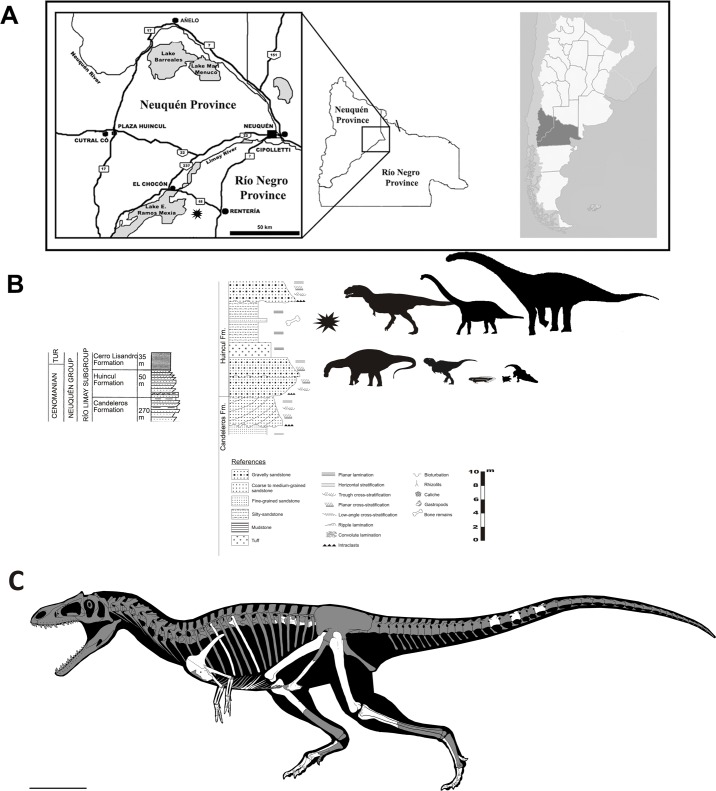
Late Cretaceous terrestrial strata of the Neuquén Basin, northern Patagonia, Argentina have yielded a rich fauna of dinosaurs and other vertebrates. The diversity of saurischian dinosaurs is particularly high, especially in the late Cenomanian-early Turonian Huincul Formation, which has yielded specimens of rebacchisaurid and titanosaurian sauropods, and abelisaurid and carcharodontosaurid theropods. Continued sampling is adding to the known vertebrate diversity of this unit.
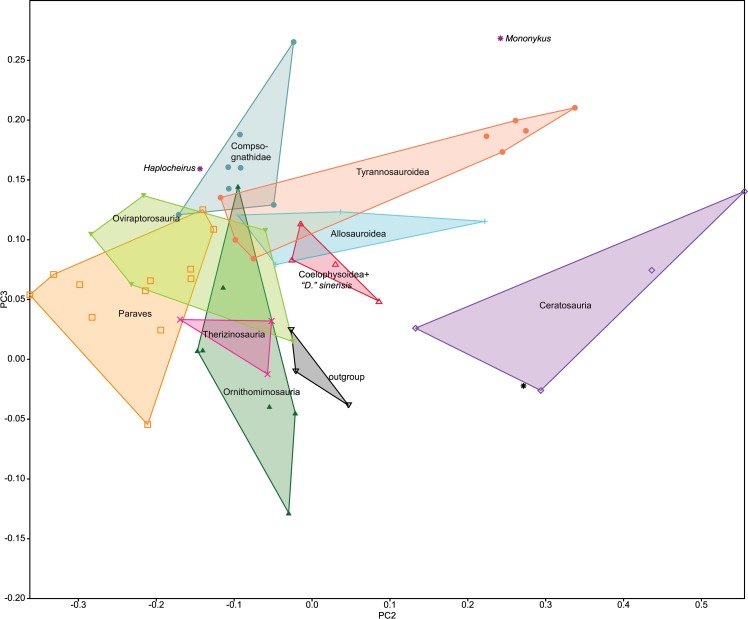
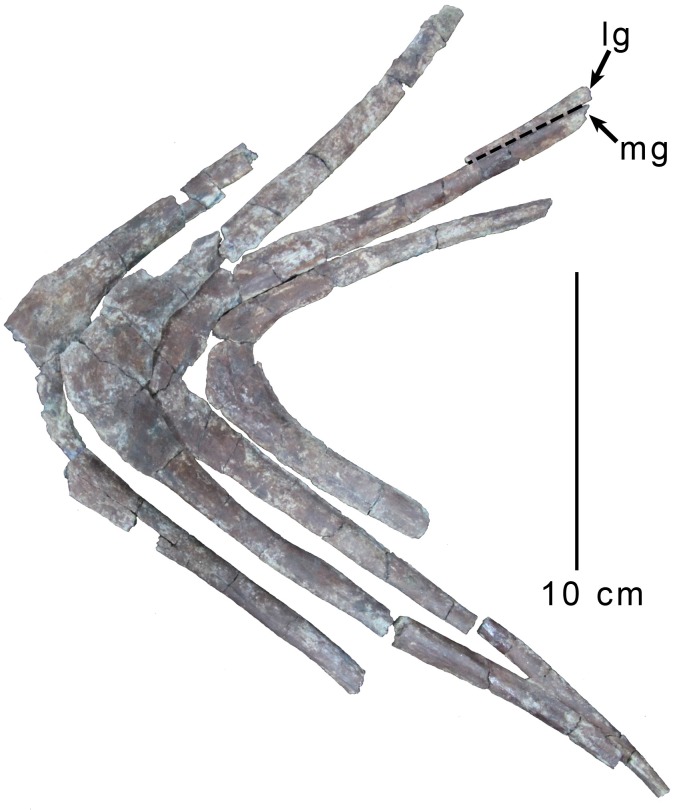
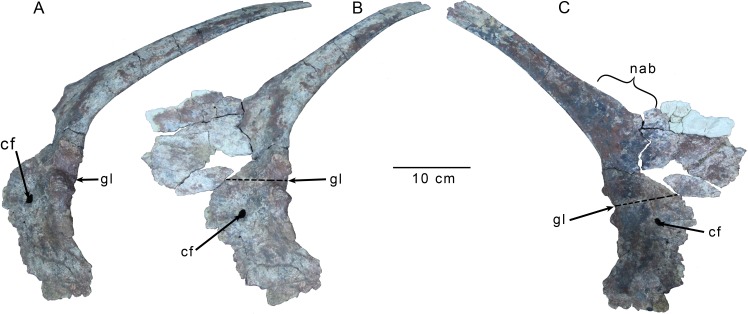
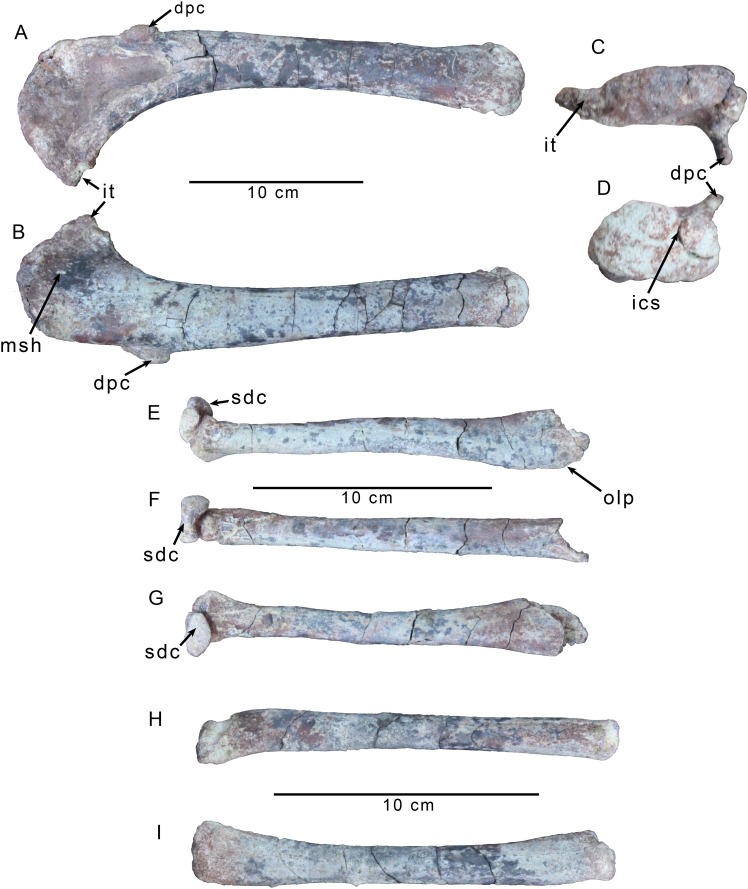
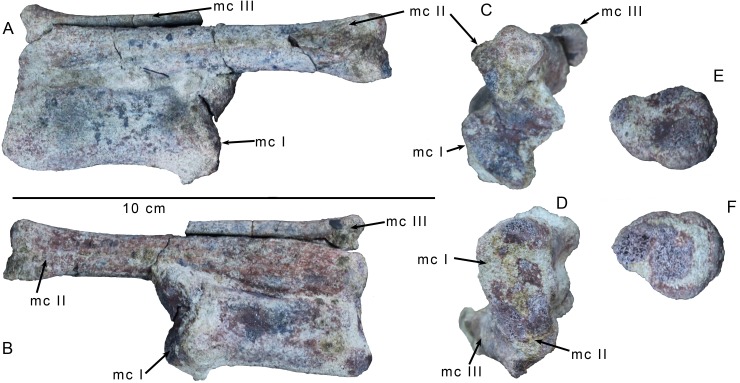
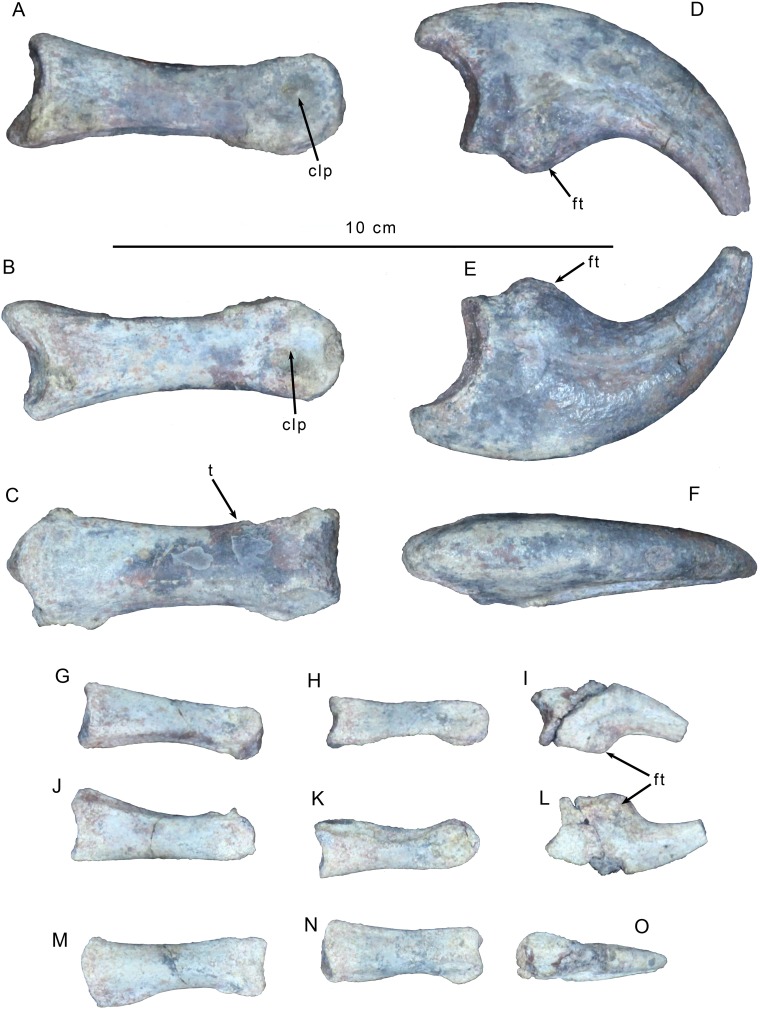
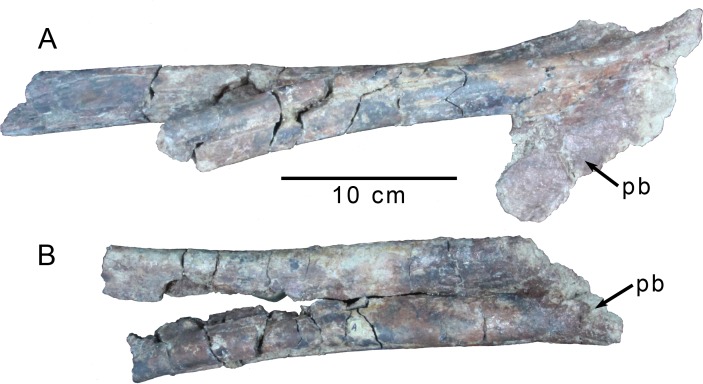
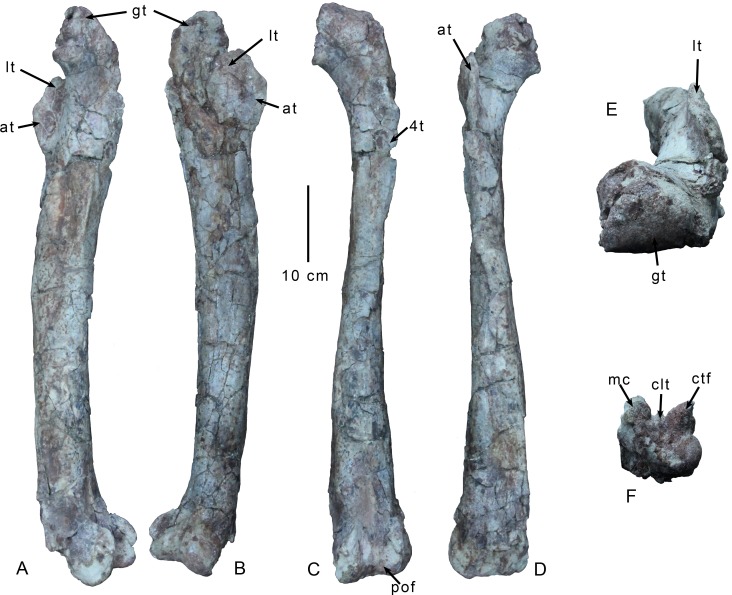
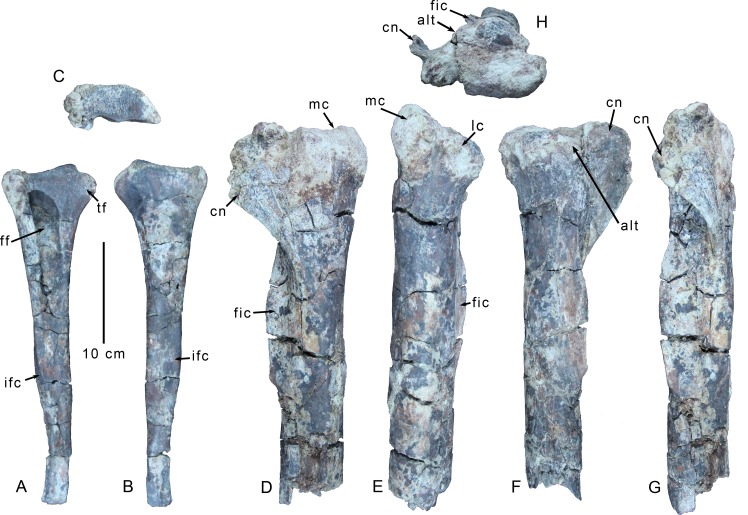
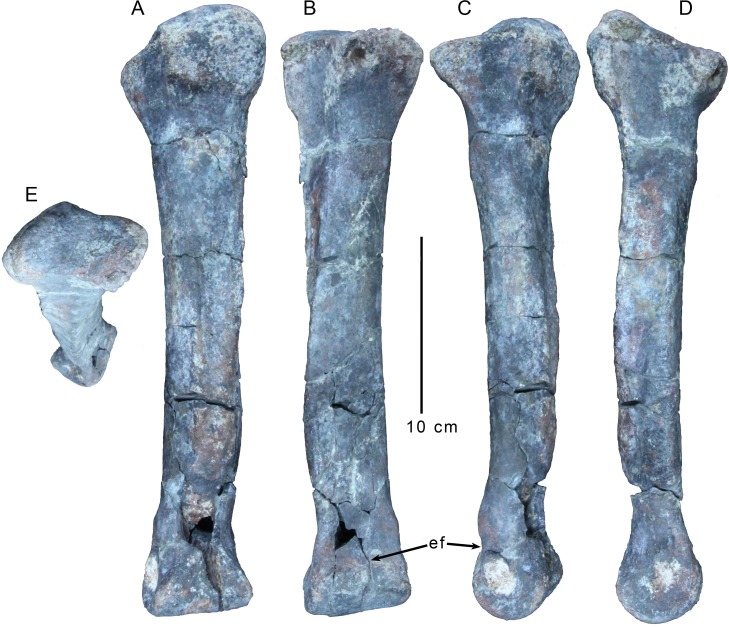
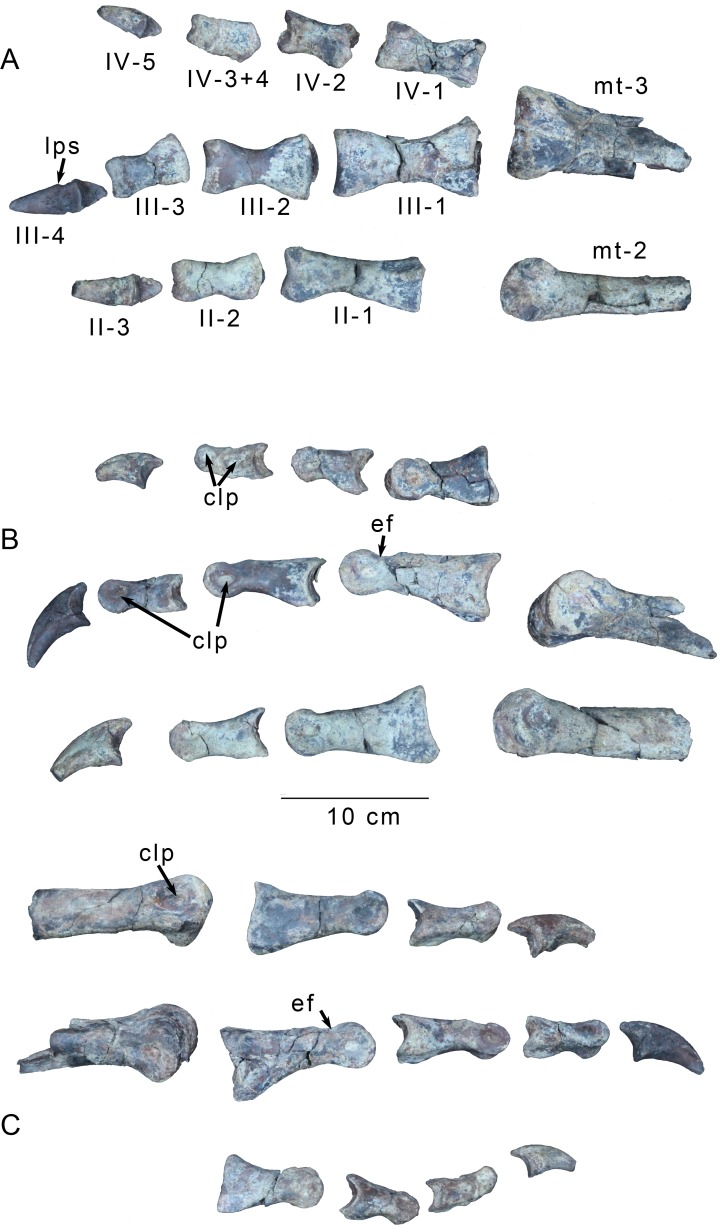
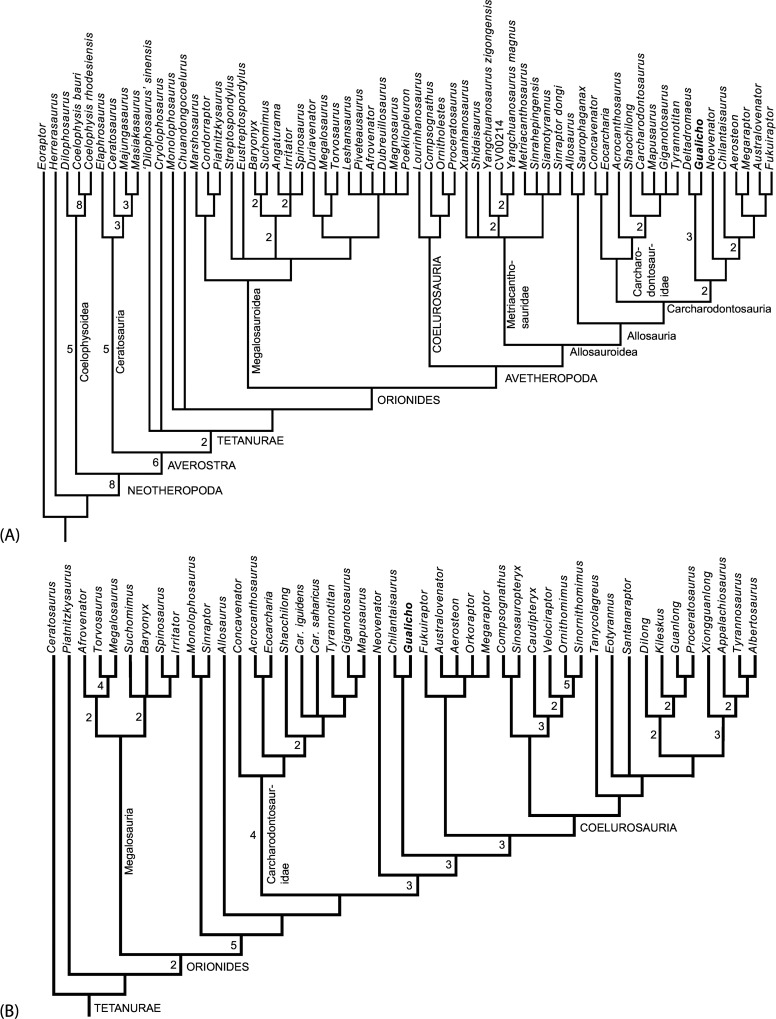
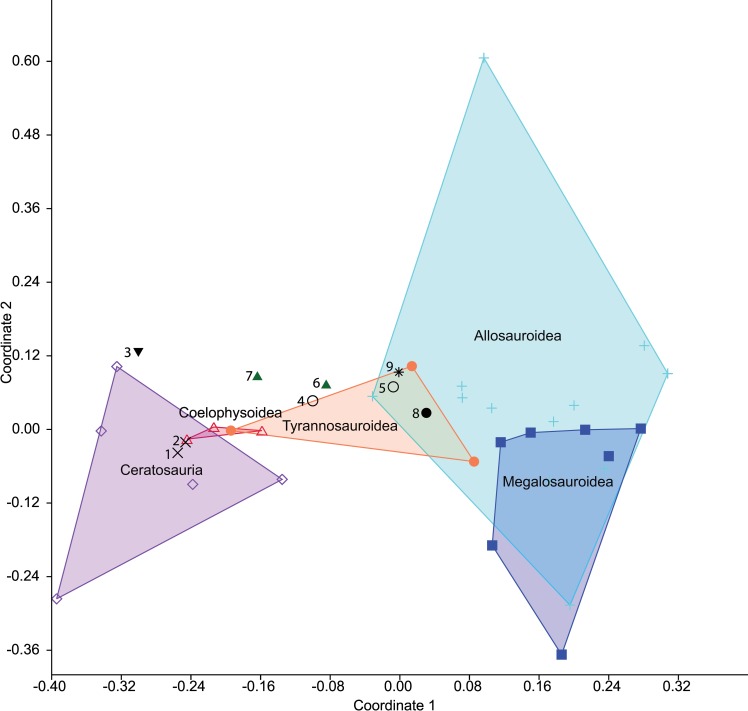
METHODOLOGY/ PRINCIPAL FINDINGS: A new, partially articulated mid-sized theropod was found in rocks from the Huincul Formation. It exhibits a unique combination of traits that distinguish it from other known theropods justifying erection of a new taxon, Gualicho shinyae gen. et sp. nov. Gualicho possesses a didactyl manus with the third digit reduced to a metacarpal splint reminiscent of tyrannosaurids, but both phylogenetic and multivariate analyses indicate that didactyly is convergent in these groups. Derived characters of the scapula, femur, and fibula supports the new theropod as the sister taxon of the nearly coeval African theropod Deltadromeus and as a neovenatorid carcharodontosaurian. A number of these features are independently present in ceratosaurs, and Gualicho exhibits an unusual mosaic of ceratosaurian and tetanuran synapomorphies distributed throughout the skeleton.
CONCLUSIONS/ SIGNIFICANCE: Gualicho shinyae gen. et sp. nov. increases the known theropod diversity of the Huincul Formation and also represents the first likely neovenatorid from this unit. It is the most basal tetatanuran to exhibit common patterns of digit III reduction that evolved independently in a number of other tetanuran lineages. A close relationship with Deltadromaeus from the Kem Kem beds of Niger adds to the already considerable biogeographic similarity between the Huincul Formation and coeval rock units in North Africa.
阿根廷巴塔哥尼亚北部内乌肯盆地的晚白垩世陆相地层产出了丰富的恐龙及其他脊椎动物化石群。蜥臀目恐龙的多样性尤其高,特别是在晚森诺曼阶—早土伦阶的温库尔组,该地层产出了雷巴契龙科和泰坦巨龙类蜥脚类恐龙,以及阿贝力龙科和鲨齿龙科兽脚类恐龙的标本。持续的采样增加了该地层已知的脊椎动物多样性。
方法/主要发现:在温库尔组的岩石中发现了一种新的、部分关节相连的中型兽脚类恐龙。它展现出了独特的特征组合,使其有别于其他已知兽脚类恐龙,这为建立一个新分类单元——新猎龙(Gualicho shinyae)属及种提供了依据。新猎龙拥有双指手部,第三指退化为掌骨夹板,这让人联想到暴龙科,但系统发育分析和多变量分析均表明双指现象在这些类群中是趋同演化的。肩胛骨、股骨和腓骨的衍生特征支持这一新的兽脚类恐龙作为与它近乎同时代的非洲兽脚类恐龙三角洲奔龙的姐妹分类单元,以及作为新猎龙科鲨齿龙类。其中许多特征在角鼻龙类中独立出现,而新猎龙展现出了分布于整个骨骼的角鼻龙类和坚尾龙类共有的独特镶嵌特征。
结论/意义:新猎龙增加了温库尔组已知的兽脚类恐龙多样性,同时也代表了该地层首个可能的新猎龙科恐龙。它是最基干的坚尾龙类,展现出了第三指退化的常见模式,这种模式在其他一些坚尾龙类谱系中是独立演化的。与来自尼日尔凯姆凯姆组的三角洲奔龙的密切关系增加了温库尔组与北非同期岩石单元之间本就相当显著的生物地理相似性。