• 文献检索
  • 文档翻译
  • 深度研究
  • 学术资讯
  • Suppr Zotero 插件Zotero 插件
  • 邀请有礼
  • 套餐&价格
  • 历史记录
应用&插件
Suppr Zotero 插件Zotero 插件浏览器插件Mac 客户端Windows 客户端微信小程序
定价
高级版会员购买积分包购买API积分包
服务
文献检索文档翻译深度研究API 文档MCP 服务
关于我们
关于 Suppr公司介绍联系我们用户协议隐私条款
关注我们

Suppr 超能文献

核心技术专利:CN118964589B侵权必究
粤ICP备2023148730 号-1Suppr @ 2026

文献检索

告别复杂PubMed语法,用中文像聊天一样搜索,搜遍4000万医学文献。AI智能推荐,让科研检索更轻松。

立即免费搜索

文件翻译

保留排版,准确专业,支持PDF/Word/PPT等文件格式,支持 12+语言互译。

免费翻译文档

深度研究

AI帮你快速写综述,25分钟生成高质量综述,智能提取关键信息,辅助科研写作。

立即免费体验

CXCR3阻断抑制T细胞向皮肤迁移并预防斑秃的发生。

CXCR3 Blockade Inhibits T Cell Migration into the Skin and Prevents Development of Alopecia Areata.

作者信息

Dai Zhenpeng, Xing Luzhou, Cerise Jane, Wang Eddy Hsi Chun, Jabbari Ali, de Jong Annemieke, Petukhova Lynn, Christiano Angela M, Clynes Raphael

机构信息

Department of Dermatology, College of Physicians and Surgeons, Columbia University, New York, NY 10032;

Department of Pathology, Columbia University, New York, NY 10032; and.

出版信息

J Immunol. 2016 Aug 15;197(4):1089-99. doi: 10.4049/jimmunol.1501798. Epub 2016 Jul 13.

DOI:10.4049/jimmunol.1501798
PMID:27412416
原文链接:https://pmc.ncbi.nlm.nih.gov/articles/PMC5031416/
Abstract

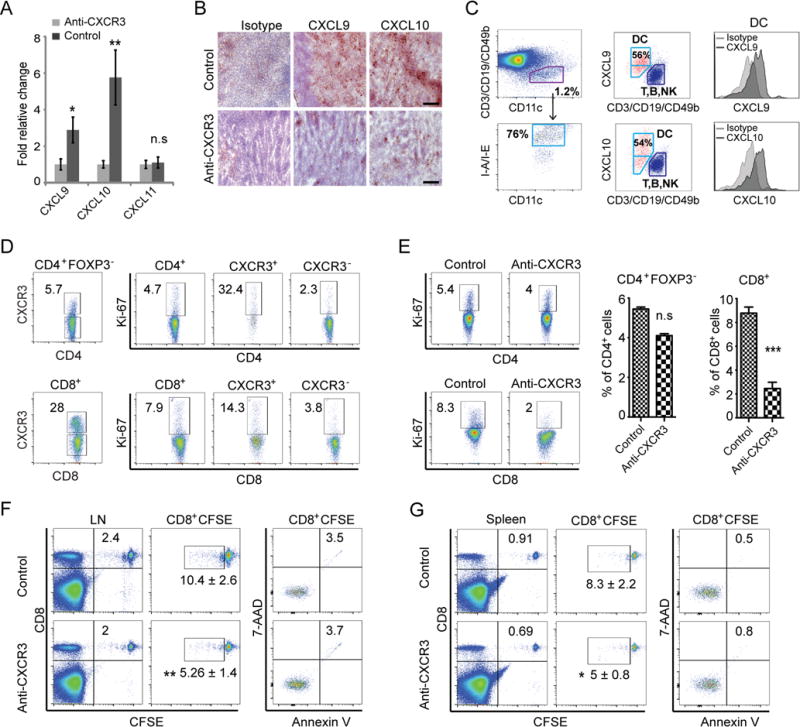
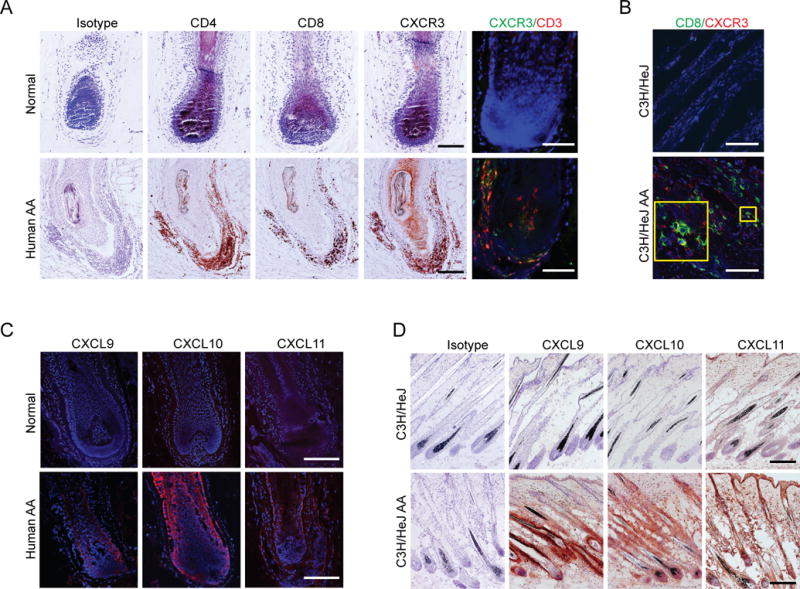
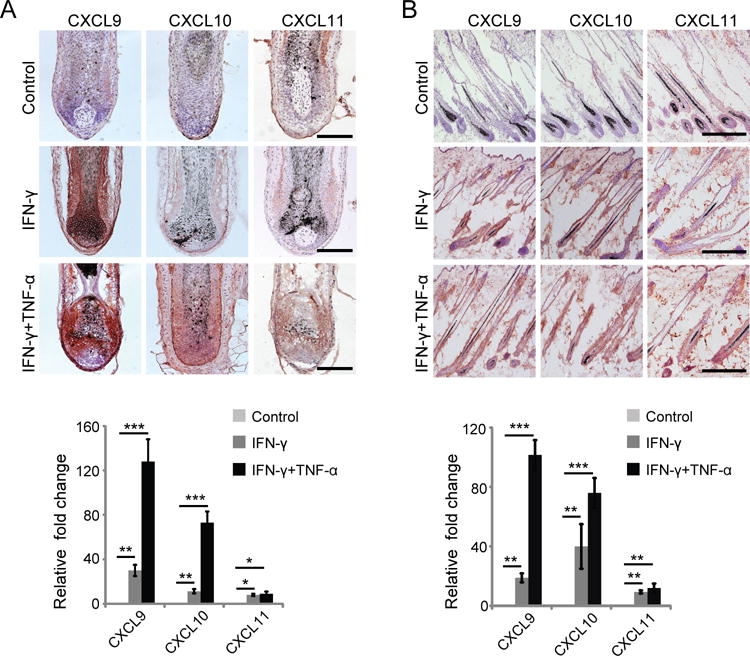
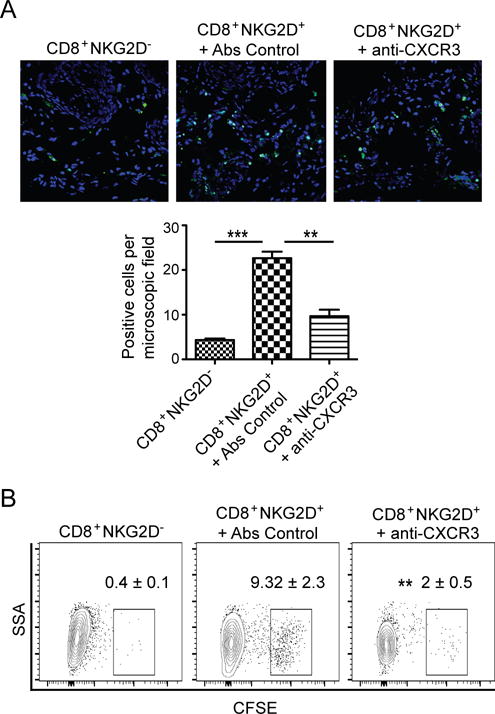
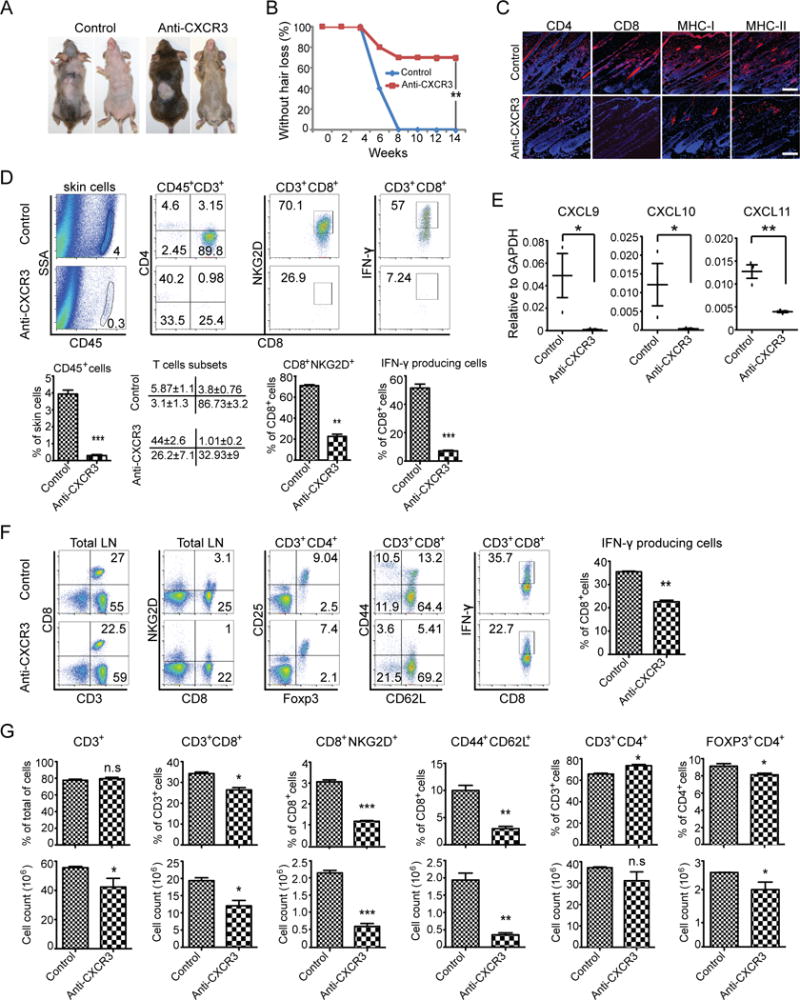
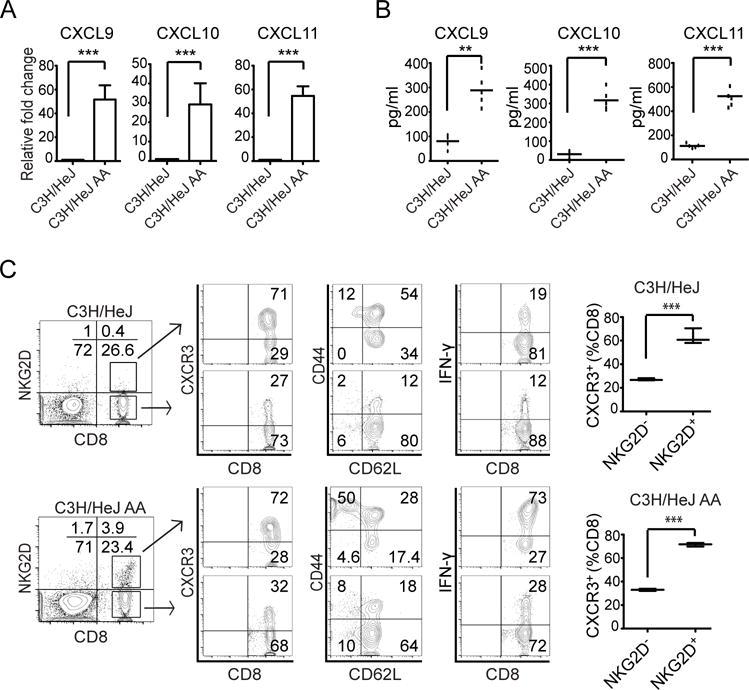
Alopecia areata (AA) is an autoimmune disease of the hair follicle that results in hair loss of varying severity. Recently, we showed that IFN-γ-producing NKG2D(+)CD8(+) T cells actively infiltrate the hair follicle and are responsible for its destruction in C3H/HeJ AA mice. Our transcriptional profiling of human and mouse alopecic skin showed that the IFN pathway is the dominant signaling pathway involved in AA. We showed that IFN-inducible chemokines (CXCL9/10/11) are markedly upregulated in the skin of AA lesions, and further, that the IFN-inducible chemokine receptor, CXCR3, is upregulated on alopecic effector T cells. To demonstrate whether CXCL9/10/11 chemokines were required for development of AA, we treated mice with blocking Abs to CXCR3, which prevented the development of AA in the graft model, inhibiting the accumulation of NKG2D(+)CD8(+) T cells in the skin and cutaneous lymph nodes. These data demonstrate proof of concept that interfering with the Tc1 response in AA via blockade of IFN-inducible chemokines can prevent the onset of AA. CXCR3 blockade could be approached clinically in human AA with either biologic or small-molecule inhibition, the latter being particularly intriguing as a topical therapeutic.

摘要

斑秃(AA)是一种毛囊自身免疫性疾病,会导致不同程度的脱发。最近,我们发现产生干扰素-γ的NKG2D(+)CD8(+) T细胞会主动浸润毛囊,并导致C3H/HeJ AA小鼠的毛囊破坏。我们对人和小鼠斑秃皮肤进行的转录谱分析表明,干扰素途径是参与斑秃的主要信号通路。我们发现,干扰素诱导趋化因子(CXCL9/10/11)在AA病变皮肤中显著上调,此外,干扰素诱导趋化因子受体CXCR3在斑秃效应T细胞上上调。为了证明CXCL9/10/11趋化因子是否是AA发病所必需的,我们用CXCR3阻断抗体处理小鼠,这在移植模型中阻止了AA的发生,抑制了NKG2D(+)CD8(+) T细胞在皮肤和皮肤淋巴结中的积累。这些数据证明了一个概念验证,即通过阻断干扰素诱导趋化因子来干扰AA中的Tc1反应可以预防AA的发生。CXCR3阻断在人类AA中可以通过生物制剂或小分子抑制剂进行临床应用,后者作为一种局部治疗方法尤其引人关注。
https://cdn.ncbi.nlm.nih.gov/pmc/blobs/de3e/5031416/59059a22b91b/nihms794947f6.jpg
https://cdn.ncbi.nlm.nih.gov/pmc/blobs/de3e/5031416/833ebc27891f/nihms794947f1.jpg
https://cdn.ncbi.nlm.nih.gov/pmc/blobs/de3e/5031416/57f56411255b/nihms794947f2.jpg
https://cdn.ncbi.nlm.nih.gov/pmc/blobs/de3e/5031416/3bd1a769e2ae/nihms794947f3.jpg
https://cdn.ncbi.nlm.nih.gov/pmc/blobs/de3e/5031416/f37ebc5c970e/nihms794947f4.jpg
https://cdn.ncbi.nlm.nih.gov/pmc/blobs/de3e/5031416/f9527e35d630/nihms794947f5.jpg
https://cdn.ncbi.nlm.nih.gov/pmc/blobs/de3e/5031416/59059a22b91b/nihms794947f6.jpg
https://cdn.ncbi.nlm.nih.gov/pmc/blobs/de3e/5031416/833ebc27891f/nihms794947f1.jpg
https://cdn.ncbi.nlm.nih.gov/pmc/blobs/de3e/5031416/57f56411255b/nihms794947f2.jpg
https://cdn.ncbi.nlm.nih.gov/pmc/blobs/de3e/5031416/3bd1a769e2ae/nihms794947f3.jpg
https://cdn.ncbi.nlm.nih.gov/pmc/blobs/de3e/5031416/f37ebc5c970e/nihms794947f4.jpg
https://cdn.ncbi.nlm.nih.gov/pmc/blobs/de3e/5031416/f9527e35d630/nihms794947f5.jpg
https://cdn.ncbi.nlm.nih.gov/pmc/blobs/de3e/5031416/59059a22b91b/nihms794947f6.jpg

相似文献

1
CXCR3 Blockade Inhibits T Cell Migration into the Skin and Prevents Development of Alopecia Areata.CXCR3阻断抑制T细胞向皮肤迁移并预防斑秃的发生。
J Immunol. 2016 Aug 15;197(4):1089-99. doi: 10.4049/jimmunol.1501798. Epub 2016 Jul 13.
2
CXCL10 produced from hair follicles induces Th1 and Tc1 cell infiltration in the acute phase of alopecia areata followed by sustained Tc1 accumulation in the chronic phase.头皮产生的 CXCL10 在斑秃的急性期诱导 Th1 和 Tc1 细胞浸润,随后在慢性期持续积累 Tc1。
J Dermatol Sci. 2013 Feb;69(2):140-7. doi: 10.1016/j.jdermsci.2012.12.003. Epub 2012 Dec 26.
3
Alopecia areata is driven by cytotoxic T lymphocytes and is reversed by JAK inhibition.斑秃由细胞毒性 T 淋巴细胞驱动,并可被 JAK 抑制逆转。
Nat Med. 2014 Sep;20(9):1043-9. doi: 10.1038/nm.3645. Epub 2014 Aug 17.
4
Altered T cell subpopulations and serum anti-TYRP2 and tyrosinase antibodies in the acute and chronic phase of alopecia areata in the C3H/HeJ mouse model.斑秃 C3H/HeJ 小鼠模型急性和慢性期 T 细胞亚群改变及血清抗 TYRP2 和酪氨酸酶抗体。
J Dermatol Sci. 2021 Oct;104(1):21-29. doi: 10.1016/j.jdermsci.2021.09.001. Epub 2021 Sep 3.
5
Interferon-gamma-deficient mice are resistant to the development of alopecia areata.γ-干扰素缺陷小鼠对斑秃的发展具有抗性。
Br J Dermatol. 2006 Sep;155(3):515-21. doi: 10.1111/j.1365-2133.2006.07377.x.
6
Alopecia areata: Animal models illuminate autoimmune pathogenesis and novel immunotherapeutic strategies.斑秃:动物模型揭示自身免疫发病机制及新型免疫治疗策略。
Autoimmun Rev. 2016 Jul;15(7):726-35. doi: 10.1016/j.autrev.2016.03.008. Epub 2016 Mar 10.
7
Controlled delivery of T-box21 small interfering RNA ameliorates autoimmune alopecia (Alopecia Areata) in a C3H/HeJ mouse model.在C3H/HeJ小鼠模型中,T-box21小干扰RNA的可控递送可改善自身免疫性脱发(斑秃)。
Am J Pathol. 2008 Mar;172(3):650-8. doi: 10.2353/ajpath.2008.061249. Epub 2008 Feb 2.
8
SOCS3 treatment prevents the development of alopecia areata by inhibiting CD8+ T cell-mediated autoimmune destruction.细胞因子信号转导抑制因子3(SOCS3)治疗通过抑制CD8 + T细胞介导的自身免疫性破坏来预防斑秃的发生。
Oncotarget. 2017 May 16;8(20):33432-33443. doi: 10.18632/oncotarget.16504.
9
Plasmacytoid dendritic cells as a possible key player to initiate alopecia areata in the C3H/HeJ mouse.浆细胞样树突状细胞可能是 C3H/HeJ 小鼠斑秃发病的关键因素。
Allergol Int. 2020 Jan;69(1):121-131. doi: 10.1016/j.alit.2019.07.009. Epub 2019 Aug 17.
10
Transfer of CD8(+) cells induces localized hair loss whereas CD4(+)/CD25(-) cells promote systemic alopecia areata and CD4(+)/CD25(+) cells blockade disease onset in the C3H/HeJ mouse model.在C3H/HeJ小鼠模型中,转移CD8(+)细胞会导致局部脱发,而CD4(+)/CD25(-)细胞会促进系统性斑秃,CD4(+)/CD25(+)细胞则会阻止疾病发作。
J Invest Dermatol. 2005 May;124(5):947-57. doi: 10.1111/j.0022-202X.2005.23692.x.

引用本文的文献

1
Modulating immune responses in alopecia: therapeutic insights and potential targets of antisense oligonucleotides.调节斑秃中的免疫反应:反义寡核苷酸的治疗见解和潜在靶点。
BMC Immunol. 2025 Apr 3;26(1):26. doi: 10.1186/s12865-025-00685-9.
2
Biopotency and surrogate assays to validate the immunomodulatory potency of extracellular vesicles derived from mesenchymal stem/stromal cells for the treatment of experimental autoimmune uveitis.鉴定间充质干细胞来源的细胞外囊泡的免疫调节效力的生物效价和替代测定法,用于治疗实验性自身免疫性葡萄膜炎。
J Extracell Vesicles. 2024 Aug;13(8):e12497. doi: 10.1002/jev2.12497.
3
Deciphering the Complex Immunopathogenesis of Alopecia Areata.

本文引用的文献

1
Treatment of an alopecia areata patient with tofacitinib results in regrowth of hair and changes in serum and skin biomarkers.用托法替布治疗斑秃患者可导致毛发再生以及血清和皮肤生物标志物的变化。
Exp Dermatol. 2016 Aug;25(8):642-3. doi: 10.1111/exd.13060.
2
Alopecia areata is driven by cytotoxic T lymphocytes and is reversed by JAK inhibition.斑秃由细胞毒性 T 淋巴细胞驱动,并可被 JAK 抑制逆转。
Nat Med. 2014 Sep;20(9):1043-9. doi: 10.1038/nm.3645. Epub 2014 Aug 17.
3
CXCL10 is critical for the progression and maintenance of depigmentation in a mouse model of vitiligo.
解析斑秃的复杂免疫发病机制。
Int J Mol Sci. 2024 May 22;25(11):5652. doi: 10.3390/ijms25115652.
4
Type-2 immunity associated with type-1 related skin inflammatory diseases: friend or foe?与1型相关皮肤炎症性疾病相关的2型免疫:是友还是敌?
Front Immunol. 2024 May 29;15:1405215. doi: 10.3389/fimmu.2024.1405215. eCollection 2024.
5
Inhibition of T-cell activity in alopecia areata: recent developments and new directions.斑秃中 T 细胞活性的抑制:最新进展和新方向。
Front Immunol. 2023 Nov 6;14:1243556. doi: 10.3389/fimmu.2023.1243556. eCollection 2023.
6
mTOR signaling in hair follicle and hair diseases: recent progress.毛囊与毛发疾病中的mTOR信号传导:最新进展
Front Med (Lausanne). 2023 Sep 4;10:1209439. doi: 10.3389/fmed.2023.1209439. eCollection 2023.
7
Functional interrogation of lymphocyte subsets in alopecia areata using single-cell RNA sequencing.单细胞 RNA 测序技术在斑秃中对淋巴细胞亚群的功能研究。
Proc Natl Acad Sci U S A. 2023 Jul 18;120(29):e2305764120. doi: 10.1073/pnas.2305764120. Epub 2023 Jul 10.
8
A virtual memory CD8 T cell-originated subset causes alopecia areata through innate-like cytotoxicity.一种源于虚拟记忆 CD8 T 细胞的亚群通过类似先天的细胞毒性导致斑秃。
Nat Immunol. 2023 Aug;24(8):1308-1317. doi: 10.1038/s41590-023-01547-5. Epub 2023 Jun 26.
9
Aberrant inflammasome activation as a driving force of human autoimmune skin disease.异常的炎性体激活作为人类自身免疫性皮肤病的驱动因素。
Front Immunol. 2023 May 30;14:1190388. doi: 10.3389/fimmu.2023.1190388. eCollection 2023.
10
Differential impact of environmental factors on systemic and localized autoimmunity.环境因素对系统性和局部自身免疫的影响差异。
Front Immunol. 2023 May 22;14:1147447. doi: 10.3389/fimmu.2023.1147447. eCollection 2023.
CXCL10 对于白癜风小鼠模型中色素脱失的进展和维持至关重要。
Sci Transl Med. 2014 Feb 12;6(223):223ra23. doi: 10.1126/scitranslmed.3007811.
4
The expression of chemokine receptor CXCR3: relevance to disease activity of rheumatoid arthritis.趋化因子受体 CXCR3 的表达:与类风湿关节炎疾病活动的相关性。
Mod Rheumatol. 2003 Jun;13(2):114-20. doi: 10.3109/s10165-002-0209-2.
5
What causes alopecia areata?什么导致斑秃?
Exp Dermatol. 2013 Sep;22(9):609-26. doi: 10.1111/exd.12209.
6
Differential expression of CXCL1, CXCL9, CXCL10 and CXCL12 chemokines in alopecia areata.斑秃中CXCL1、CXCL9、CXCL10和CXCL12趋化因子的差异表达
Iran J Immunol. 2013 Mar;10(1):40-6.
7
CXCL10 produced from hair follicles induces Th1 and Tc1 cell infiltration in the acute phase of alopecia areata followed by sustained Tc1 accumulation in the chronic phase.头皮产生的 CXCL10 在斑秃的急性期诱导 Th1 和 Tc1 细胞浸润,随后在慢性期持续积累 Tc1。
J Dermatol Sci. 2013 Feb;69(2):140-7. doi: 10.1016/j.jdermsci.2012.12.003. Epub 2012 Dec 26.
8
CXCR3 chemokine receptor-ligand interactions in the lymph node optimize CD4+ T helper 1 cell differentiation.CXCR3 趋化因子受体-配体相互作用在淋巴结中优化 CD4+ T 辅助 1 细胞分化。
Immunity. 2012 Dec 14;37(6):1091-103. doi: 10.1016/j.immuni.2012.08.016. Epub 2012 Nov 1.
9
Increased expression of Cxcr3 and its ligands, Cxcl9 and Cxcl10, during the development of alopecia areata in the mouse.在斑秃小鼠模型的发病过程中,趋化因子受体3(Cxcr3)及其配体Cxcl9和Cxcl10的表达增加。
J Invest Dermatol. 2012 Jun;132(6):1736-8. doi: 10.1038/jid.2012.17. Epub 2012 Feb 23.
10
A selective and potent CXCR3 antagonist SCH 546738 attenuates the development of autoimmune diseases and delays graft rejection.一种选择性强效CXCR3拮抗剂SCH 546738可减轻自身免疫性疾病的发展并延缓移植排斥反应。
BMC Immunol. 2012 Jan 10;13:2. doi: 10.1186/1471-2172-13-2.