Er C, Skjerve E, Brun E, Framstad T, Lium B
Norwegian Veterinary Institute,Oslo,Norway.
Norwegian University of Life Sciences,Campus Adamstuen,Oslo,Norway.
Epidemiol Infect. 2016 Nov;144(15):3148-3165. doi: 10.1017/S0950268816001424. Epub 2016 Jul 14.
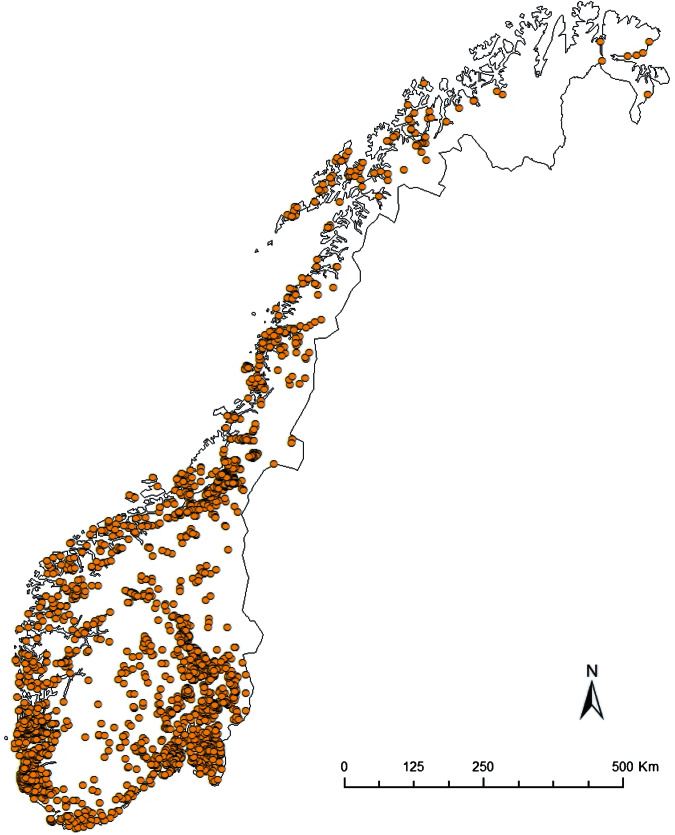
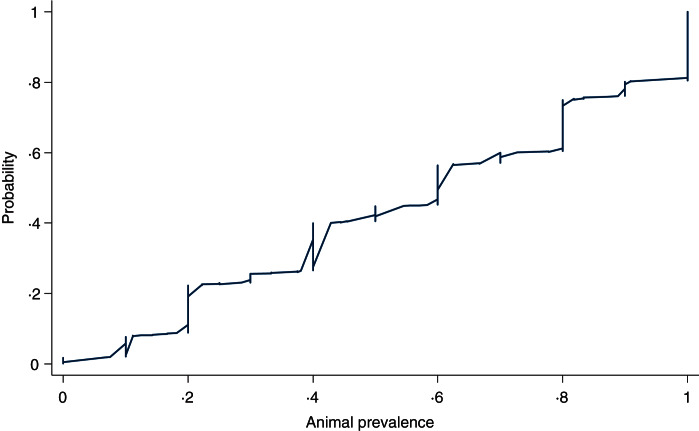
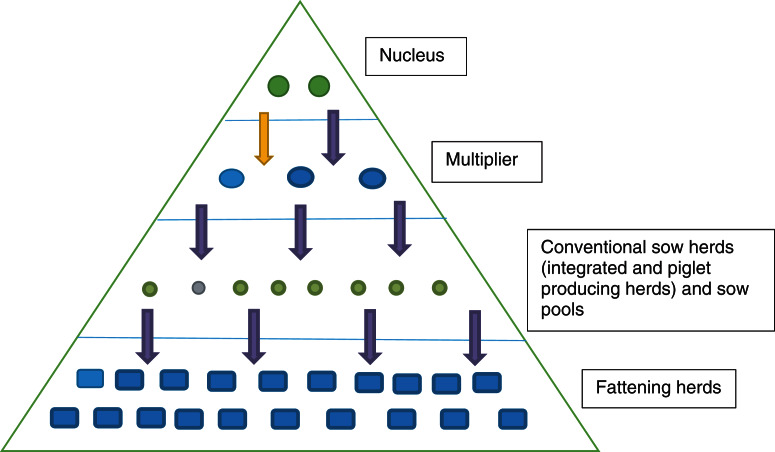
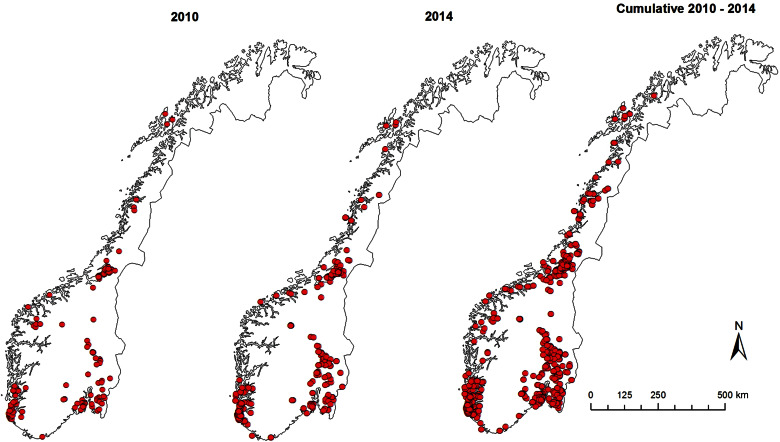
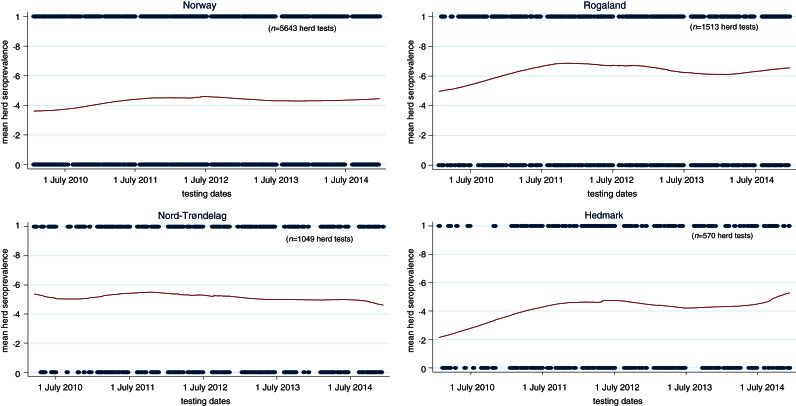
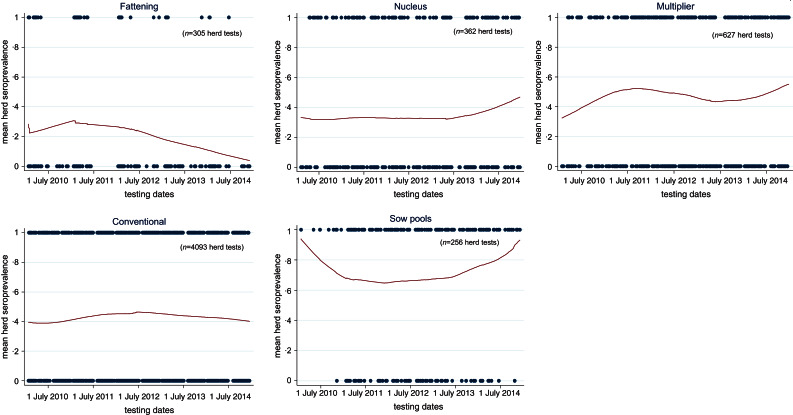
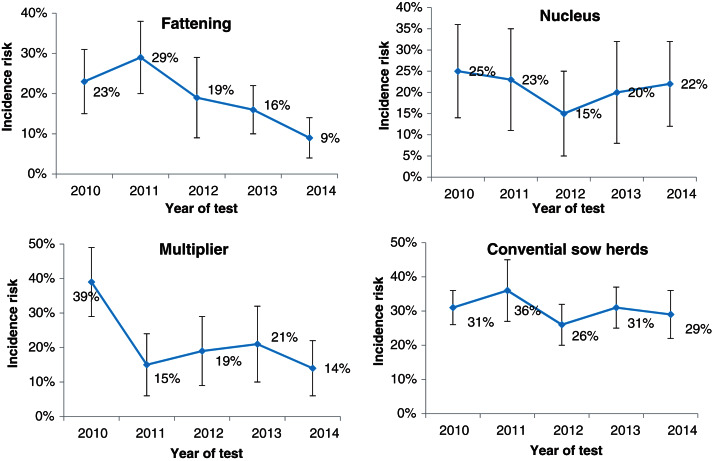
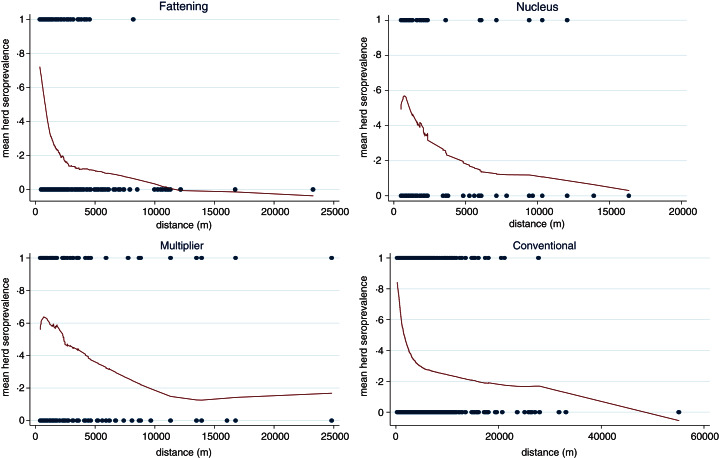
The incursion of influenza A(H1N1)pdm09 virus was detected by Norway's active serosurveillance of its pig population in 2009. Since then, surveillance data from 2010 to 2014 revealed that 54% of 5643 herd tests involving 1567 pig herds and 28% of 23 036 blood samples screened positive for antibodies against influenza A virus. Positive herds were confirmed to have influenza A(H1N1)pdm09 virus infection by haemagglutination inhibition test. In 50% of positive herd tests, ⩾60% of the sampled pigs in each herd had antibodies against influenza A(H1N1)pdm09 virus. This within-herd animal seroprevalence did not vary for type of production, herd size or year of test. The overall running mean of national herd seroprevalence, and annual herd incidence risks fluctuated narrowly around the means of 45% and 32%, respectively, with the highest levels recorded in the three densest pig-producing counties. The probability of a herd being seropositive varied in the five production classes, which were sow pools, multiplier herds, conventional sow herds, nucleus herds, and fattening herds in descending order of likelihood. Large herds were more likely to be seropositive. Seropositive herds were highly likely to be seropositive the following year. The study shows that influenza A(H1N1)pdm09 virus is established in the Norwegian pig population with recurrent and new herd infections every year with the national herd seroprevalence in 2014 hovering at around 43% (95% confidence interval 40-46%).
2009年,挪威通过对猪群进行主动血清监测,检测到甲型H1N1pdm09流感病毒的侵入。自那时起,2010年至2014年的监测数据显示,在涉及1567个猪群的5643次畜群检测中,54%检测呈阳性,在23036份血液样本中,28%针对甲型流感病毒的抗体检测呈阳性。通过血凝抑制试验确认阳性畜群感染了甲型H1N1pdm09流感病毒。在50%的阳性畜群检测中,每个畜群中⩾60%的采样猪具有针对甲型H1N1pdm09流感病毒的抗体。这种畜群内动物血清阳性率在生产类型、畜群规模或检测年份方面没有差异。全国畜群血清阳性率的总体移动平均值以及年度畜群发病风险分别在45%和32%的平均值附近小幅波动,在三个养猪最密集的县记录到最高水平。在五个生产类别中,畜群血清呈阳性的概率各不相同,这五个类别按可能性从高到低依次为母猪群、扩繁群、传统母猪群、核心群和育肥群。大型畜群更有可能血清呈阳性。血清呈阳性的畜群次年极有可能仍为血清阳性。该研究表明甲型H1N1pdm09流感病毒在挪威猪群中已确立,每年都有反复出现的新畜群感染,2014年全国畜群血清阳性率徘徊在约43%(95%置信区间40 - 46%)。