Li Zhen, An Xing-Kui, Liu Yu-Di, Hou Mao-Lin
State Key Laboratory for Biology of Plant Diseases and Insect Pests, Institute of Plant Protection, Chinese Academy of Agricultural Sciences, No. 2, West Yuan Ming Yuan Road, Beijing 100193, China.
PLoS One. 2016 Jul 14;11(7):e0159393. doi: 10.1371/journal.pone.0159393. eCollection 2016.
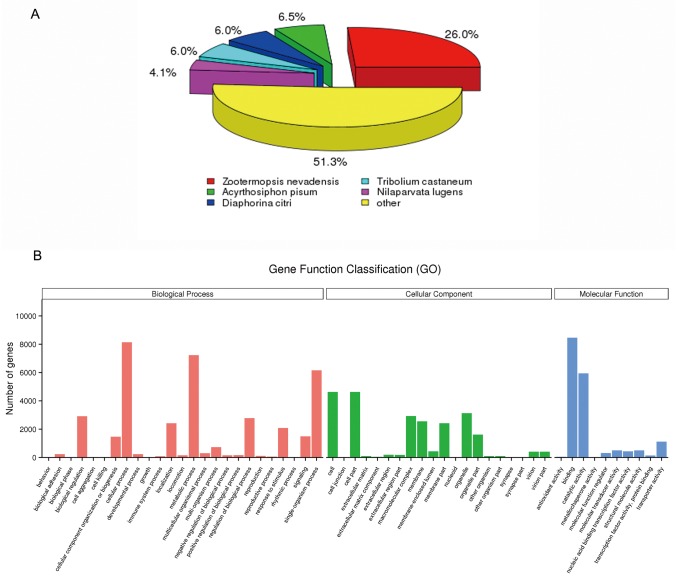
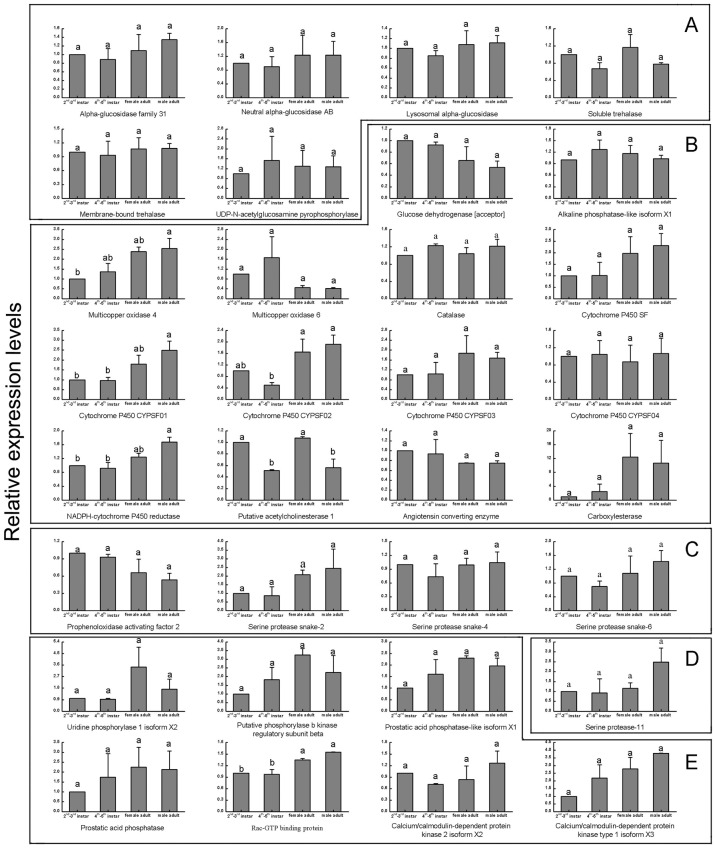
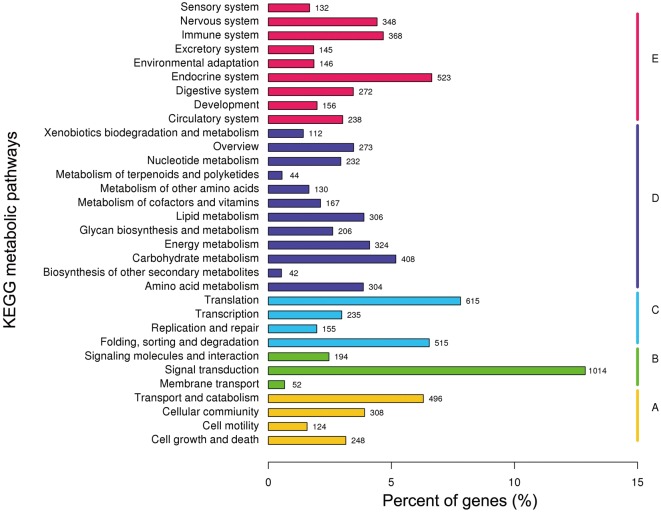
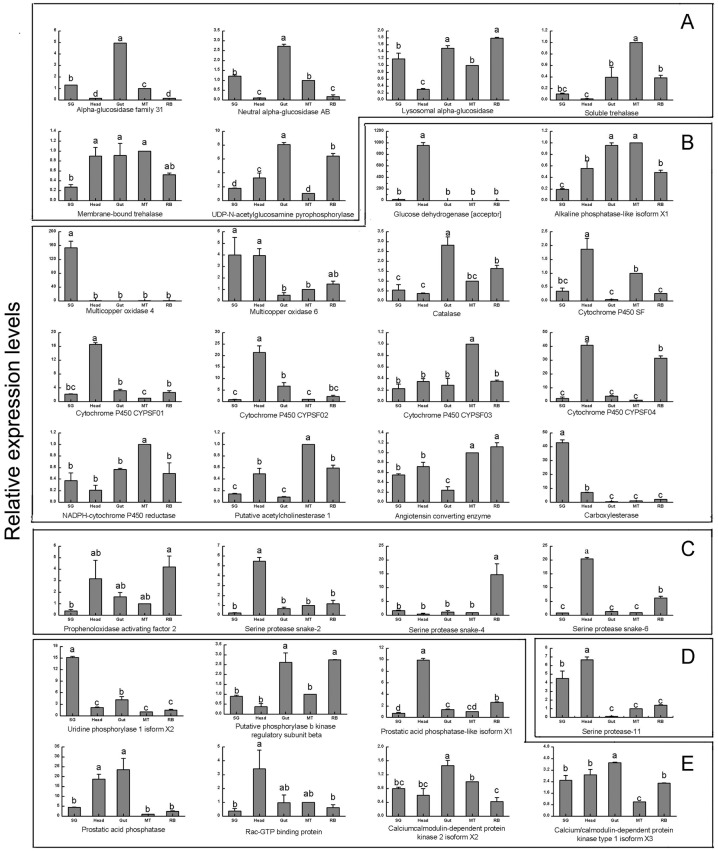
The white-backed planthopper (WBPH), Sogatella furcifera (Horváth), is one of the serious rice pests because of its destructive feeding. The salivary glands of the WBPH play an important role in the feeding behaviour. Currently, however, very little is known about the salivary glands at the molecular level. We sequenced the salivary gland transcriptome (sialotranscripome) of adult WBPHs using the Illumina sequencing. A total of 65,595 transcripts and 51,842 unigenes were obtained from salivary glands. According to annotations against the Nr database, many of the unigenes identified were associated with the most studied enzymes in hemipteran saliva. In the present study, we identified 32 salivary protein genes from the WBPH sialotranscripome, which were categorized as those involved in sugar metabolism, detoxification, suppression of plant defense responses, immunity-related responses, general digestion, and other phytophagy processes. Tissue expression profiles analysis revealed that four of 32 salivary protein genes (multicopper oxidase 4, multicopper oxidase 6, carboxylesterase and uridine phosphorylase 1 isform X2) were primarily expressed in the salivary gland, suggesting that they played putative role in insect-rice interactions. 13 of 32 salivary protein genes were primarily expressed in gut, which might play putative role in digestive and detoxify mechanism. Development expression profiles analysis revealed that the expression level of 26 of 32 salivary protein genes had no significant difference, suggesting that they may play roles in every developmental stages of salivary gland of WBPH. The other six genes have a high expression level in the salivary gland of adult. 31 of 32 genes (except putative acetylcholinesterase 1) have no significant difference in male and female adult, suggesting that their expression level have no difference between sexes. This report analysis of the sialotranscripome for the WBPH, and the transcriptome provides a foundational list of the genes involved in feeding. Our data will be useful to investigate the mechanisms of interaction between the WBPH and the host plant.
白背飞虱(Sogatella furcifera (Horváth))因其具有破坏性的取食行为,是严重危害水稻的害虫之一。白背飞虱的唾液腺在其取食行为中起着重要作用。然而,目前在分子水平上对唾液腺的了解非常有限。我们使用Illumina测序技术对白背飞虱成虫的唾液腺转录组(唾液转录组)进行了测序。从唾液腺中总共获得了65,595个转录本和51,842个单基因。根据与Nr数据库的比对注释,鉴定出的许多单基因与半翅目唾液中研究最多的酶相关。在本研究中,我们从白背飞虱唾液转录组中鉴定出32个唾液蛋白基因,这些基因被归类为参与糖代谢、解毒、抑制植物防御反应、免疫相关反应、一般消化和其他植食过程的基因。组织表达谱分析表明,32个唾液蛋白基因中的4个(多铜氧化酶4、多铜氧化酶6、羧酸酯酶和尿苷磷酸化酶1异构体X2)主要在唾液腺中表达,这表明它们在昆虫与水稻的相互作用中可能发挥作用。32个唾液蛋白基因中的13个主要在肠道中表达,这可能在消化和解毒机制中发挥作用。发育表达谱分析表明,32个唾液蛋白基因中的26个表达水平没有显著差异,这表明它们可能在白背飞虱唾液腺的每个发育阶段都发挥作用。其他6个基因在成虫唾液腺中表达水平较高。32个基因中的31个(推测的乙酰胆碱酯酶1除外)在成年雌雄个体中没有显著差异,这表明它们的表达水平在性别之间没有差异。本报告对白背飞虱的唾液转录组进行了分析,该转录组提供了参与取食的基因的基础列表。我们的数据将有助于研究白背飞虱与寄主植物之间相互作用的机制。