Zhou H, Telonis A G, Jing Y, Xia N L, Biederman L, Jimbo M, Blanco F, Londin E, Brody J R, Rigoutsos I
Computational Medicine Center, Sidney Kimmel Medical College, Thomas Jefferson University, 1020 Locust Street Philadelphia, PA 19107, USA.
Department of Neuroscience and The Farber Institute for Neuroscience, Thomas Jefferson University, 900 Walnut Street, Philadelphia, PA 19107, USA.
Cell Death Dis. 2016 Jul 14;7(7):e2294. doi: 10.1038/cddis.2016.169.
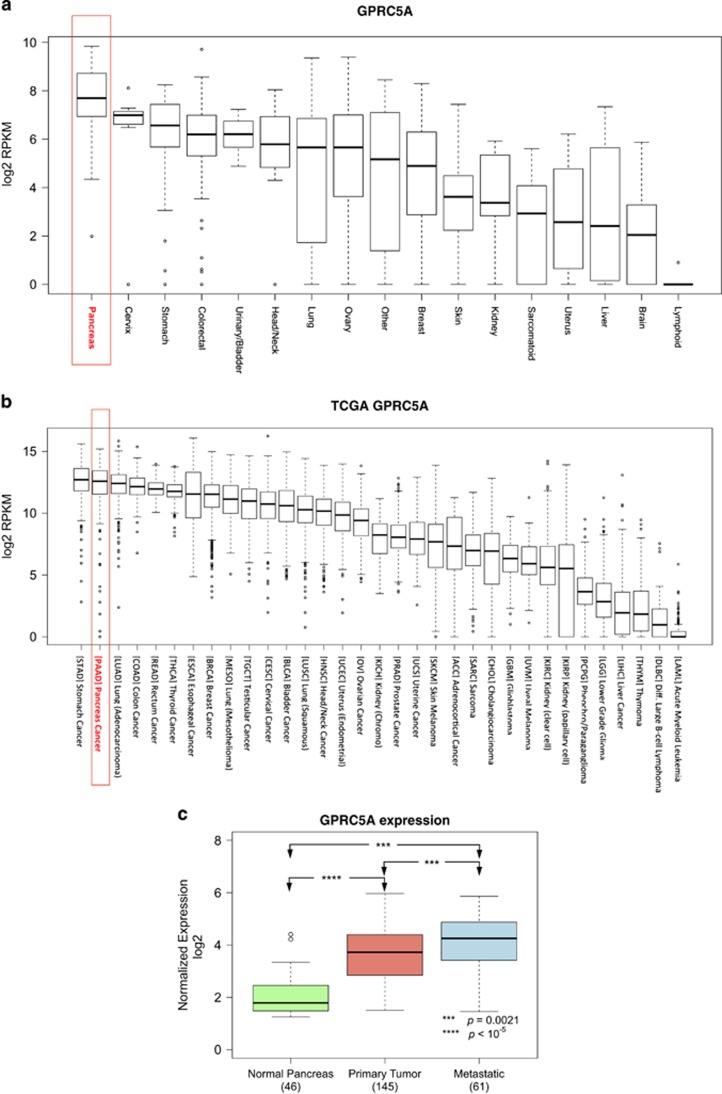
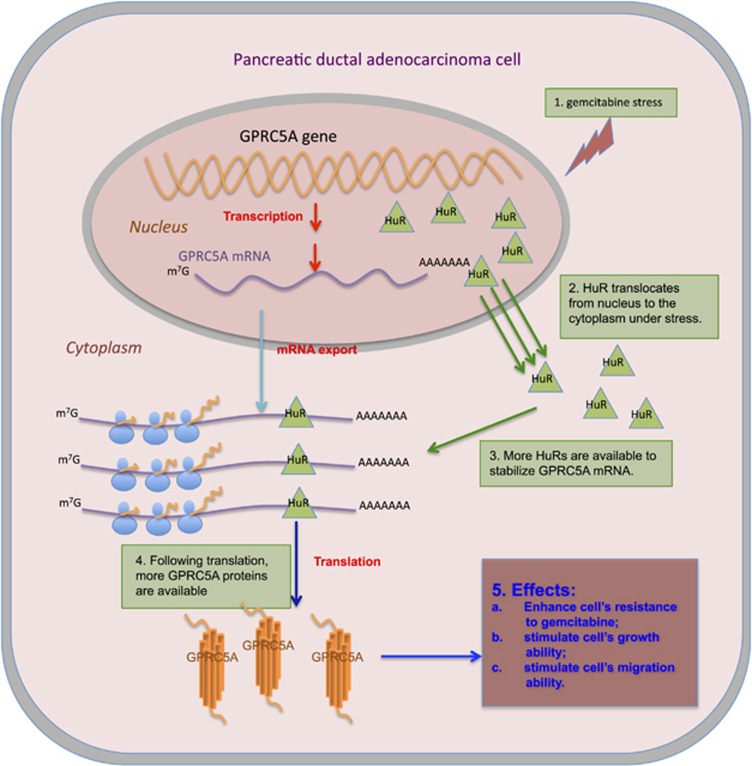
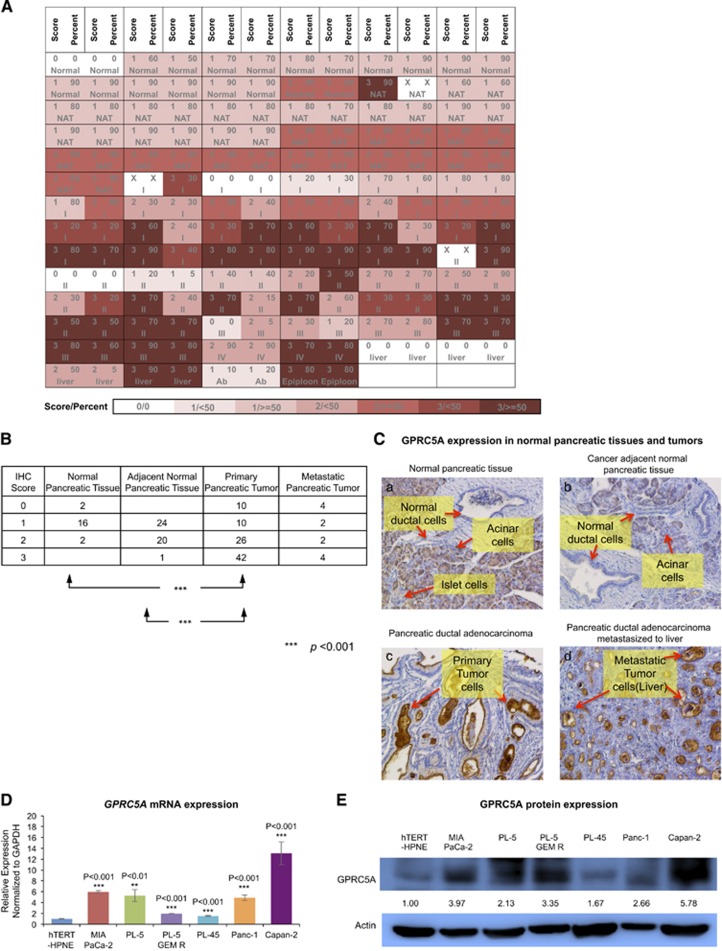
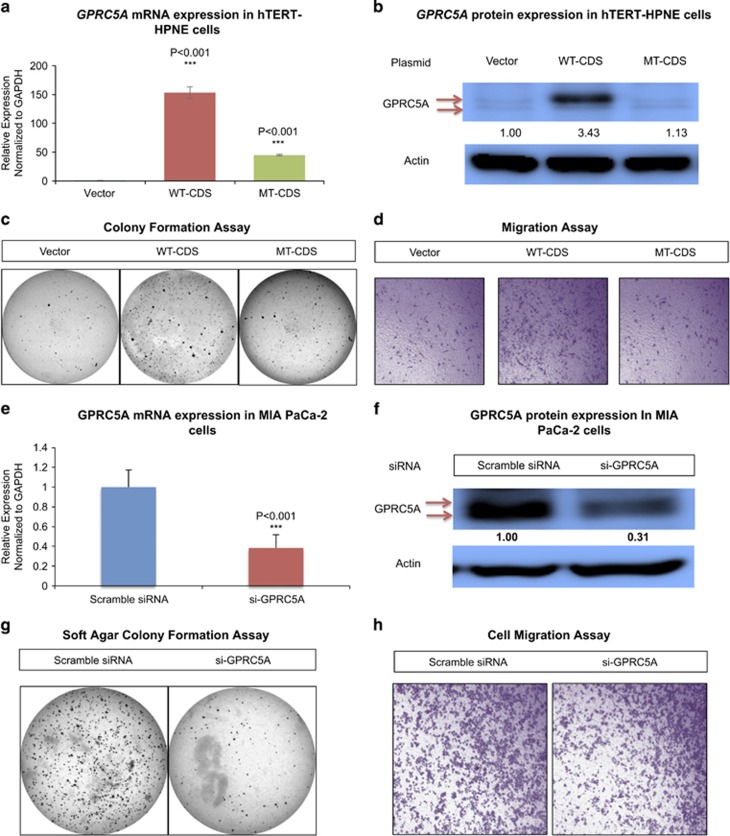
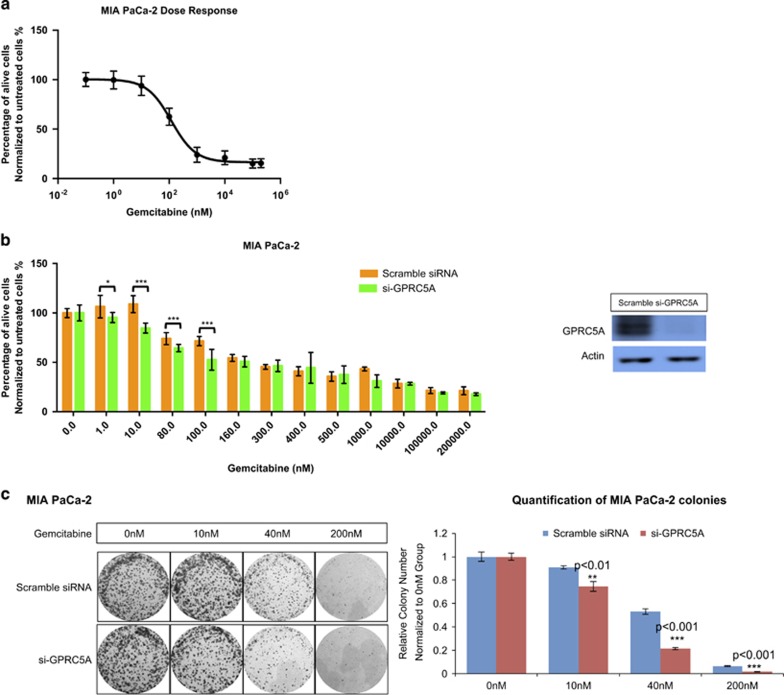
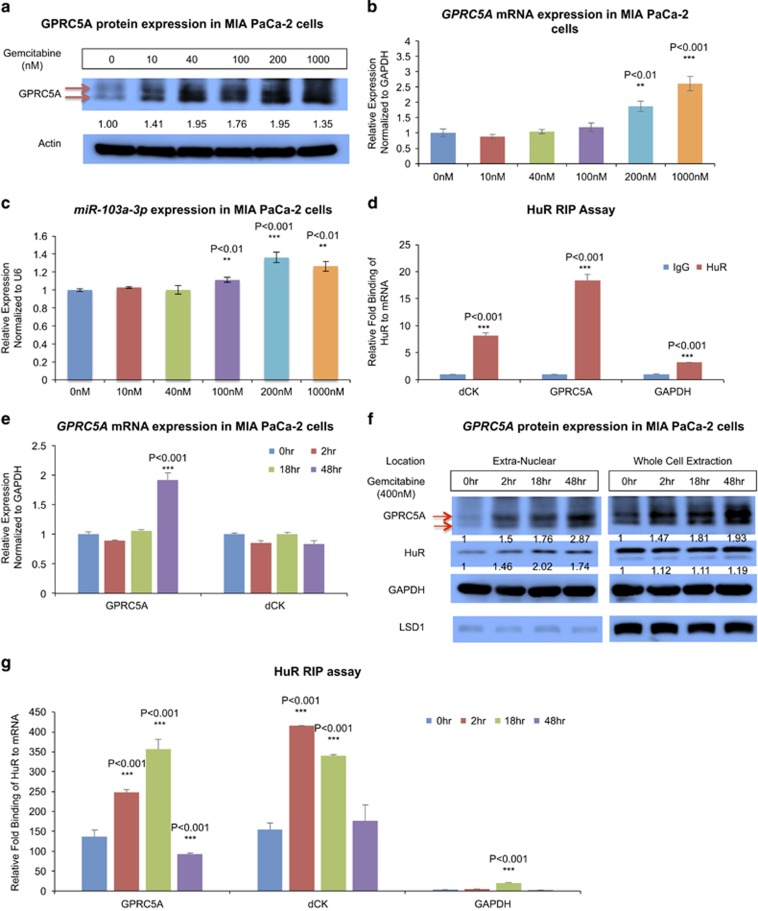
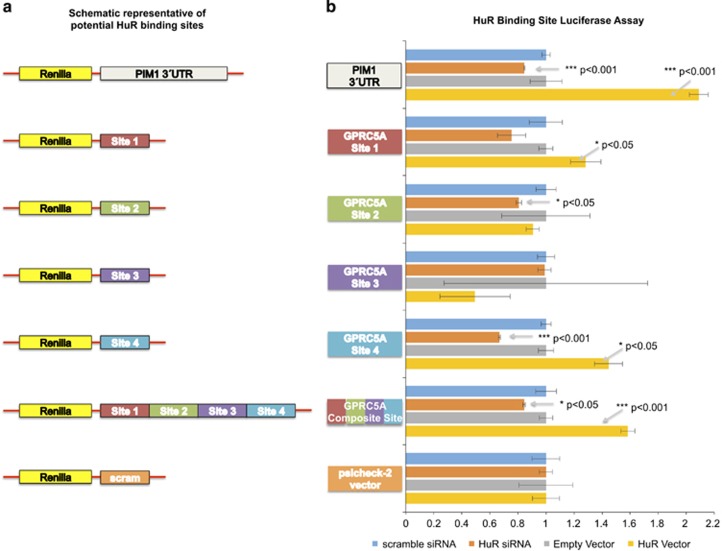
GPRC5A is an orphan G-protein coupled receptor with an intriguing dual behavior, acting as an oncogene in some cancers and as a tumor suppressor in other cancers. In the pancreatic cancer context, very little is known about GPRC5A. By analyzing messenger RNA (mRNA) expression data from 675 human cancer cell lines and 10 609 samples from The Cancer Genome Atlas (TCGA) we found that GPRC5A's abundance in pancreatic cancer is highest (cell lines) or second highest (TCGA) among all tissues and cancer types. Further analyses of an independent set of 252 pancreatic normal and cancer samples showed GPRC5A mRNA to be more than twofold upregulated in primary tumor samples compared with normal pancreas (P-value<10(-5)), and even further upregulated in pancreatic cancer metastases to various organs (P-value=0.0021). Immunostaining of 208 cores (103 samples) of a tissue microarray showed generally low expression of GPRC5A protein in normal pancreatic ductal cells; on the other hand, in primary and metastatic samples, GPRC5A protein levels were dramatically increased in pancreatic ductal cells. In vitro studies of multiple pancreatic cancer cell lines showed that an increase in GPRC5A protein levels promoted pancreatic cancer cell growth and migration. Unexpectedly, when we treated pancreatic cancer cell lines with gemcitabine (2',2'-difluorodeoxycytidine), we observed an increase in GPRC5A protein abundance. On the other hand, when we knocked down GPRC5A we sensitized pancreatic cancer cells to gemcitabine. Through further experimentation we showed that the monotonic increase in GPRC5A protein levels that we observe for the first 18 h following gemcitabine treatment results from interactions between GPRC5A's mRNA and the RNA-binding protein HuR, which is an established key mediator of gemcitabine's efficacy in cancer cells. As we discovered, the interaction between GPRC5A and HuR is mediated by at least one HuR-binding site in GPRC5A's mRNA. Our findings indicate that GPRC5A is part of a complex molecular axis that involves gemcitabine and HuR, and, possibly, other genes. Further work is warranted before it can be established unequivocally that GPRC5A is an oncogene in the pancreatic cancer context.
GPRC5A是一种孤儿G蛋白偶联受体,具有有趣的双重行为,在某些癌症中作为癌基因起作用,而在其他癌症中作为肿瘤抑制因子起作用。在胰腺癌背景下,人们对GPRC5A知之甚少。通过分析来自675个人类癌细胞系和癌症基因组图谱(TCGA)的10609个样本的信使核糖核酸(mRNA)表达数据,我们发现GPRC5A在胰腺癌中的丰度在所有组织和癌症类型中是最高的(在癌细胞系中)或第二高的(在TCGA样本中)。对另外一组252个胰腺正常和癌症样本的进一步分析表明,与正常胰腺相比,原发性肿瘤样本中GPRC5A mRNA上调了两倍多(P值<10⁻⁵),而在胰腺癌转移到各个器官的样本中上调得更多(P值=0.0021)。对一个组织芯片的208个芯块(103个样本)进行免疫染色显示,正常胰腺导管细胞中GPRC5A蛋白的表达普遍较低;另一方面,在原发性和转移性样本中,胰腺导管细胞中GPRC5A蛋白水平显著升高。对多个胰腺癌细胞系的体外研究表明,GPRC5A蛋白水平的增加促进了胰腺癌细胞的生长和迁移。出乎意料的是,当我们用吉西他滨(2',2'-二氟脱氧胞苷)处理胰腺癌细胞系时,我们观察到GPRC5A蛋白丰度增加。另一方面,当我们敲低GPRC5A时,胰腺癌细胞对吉西他滨变得敏感。通过进一步的实验我们表明吉西他滨处理后最初18小时内我们观察到的GPRC5A蛋白水平的单调增加是由于GPRC5A的mRNA与RNA结合蛋白HuR之间的相互作用,HuR是吉西他滨在癌细胞中疗效的一个既定关键介质。正如我们所发现的,GPRC5A与HuR之间的相互作用是由GPRC5A的mRNA中至少一个HuR结合位点介导的。我们的研究结果表明,GPRC5A是一个复杂分子轴的一部分,该分子轴涉及吉西他滨和HuR,可能还涉及其他基因。在明确确定GPRC5A在胰腺癌背景下是否为癌基因之前,还需要进一步的研究。