Zhong Weimin, Liu Feng, Wilson Jason R, Holiday Crystal, Li Zhu-Nan, Bai Yaohui, Tzeng Wen-Pin, Stevens James, York Ian A, Levine Min Z
Influenza Division , National Center for Immunization and Respiratory Diseases, Centers for Disease Control and Prevention , Atlanta, Georgia.
Open Forum Infect Dis. 2016 May 18;3(2):ofw102. doi: 10.1093/ofid/ofw102. eCollection 2016 Apr.
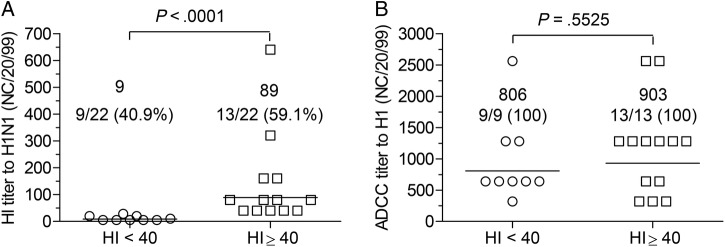
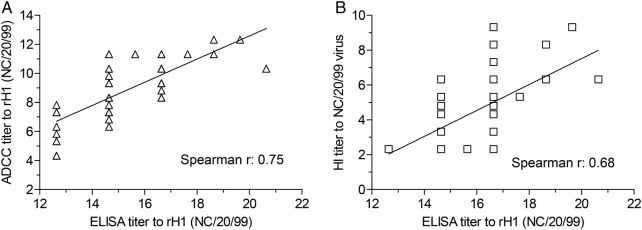
Background. Detection of neutralizing antibodies (nAbs) to influenza A virus hemagglutinin (HA) antigens by conventional serological assays is currently the main immune correlate of protection for influenza vaccines However, current prepandemic avian influenza vaccines are poorly immunogenic in inducing nAbs despite considerable protection conferred. Recent studies show that Ab-dependent cell-mediated cytotoxicity (ADCC) to HA antigens are readily detectable in the sera of healthy individuals and patients with influenza infection. Methods. Virus neutralization and ADCC activities of serum samples from individuals who received either seasonal or a stock-piled H5N1 avian influenza vaccine were evaluated by hemagglutination inhibition assay, microneutralization assay, and an improved ADCC natural killer (NK) cell activation assay. Results. Immunization with inactivated seasonal influenza vaccine led to strong expansion of both nAbs and ADCC-mediating antibodies (adccAbs) to H3 antigen of the vaccine virus in 24 postvaccination human sera. In sharp contrast, 18 individuals vaccinated with the adjuvanted H5N1 avian influenza vaccine mounted H5-specific antibodies with strong ADCC activities despite moderate virus neutralization capacity. Strength of HA-specific ADCC activities is largely associated with the titers of HA-binding antibodies and not with the fine antigenic specificity of anti-HA nAbs. Conclusions. Detection of both nAbs and adccAbs may better reflect protective capacity of HA-specific antibodies induced by avian influenza vaccines.
背景。通过传统血清学检测法检测甲型流感病毒血凝素(HA)抗原的中和抗体(nAbs)是目前流感疫苗保护作用的主要免疫相关指标。然而,尽管目前的大流行前禽流感疫苗能提供相当程度的保护,但诱导产生nAbs的免疫原性较差。最近的研究表明,在健康个体和流感感染患者的血清中很容易检测到针对HA抗原的抗体依赖性细胞介导的细胞毒性(ADCC)。方法。通过血凝抑制试验、微量中和试验和改良的ADCC自然杀伤(NK)细胞激活试验,评估接种季节性或储备H5N1禽流感疫苗个体血清样本的病毒中和及ADCC活性。结果。接种灭活季节性流感疫苗后,在24份接种后人体血清中,针对疫苗病毒H3抗原的nAbs和ADCC介导抗体(adccAbs)均显著增加。形成鲜明对比的是,18名接种了佐剂H5N1禽流感疫苗的个体,尽管病毒中和能力中等,但产生了具有强大ADCC活性的H5特异性抗体。HA特异性ADCC活性的强度在很大程度上与HA结合抗体的滴度相关,而与抗HA nAbs的精细抗原特异性无关。结论。检测nAbs和adccAbs可能更好地反映禽流感疫苗诱导的HA特异性抗体的保护能力。