Han Bingying, Fu Lili, Zhang Dan, He Xiuquan, Chen Qiang, Peng Ming, Zhang Jiaming
Institute of Tropical Bioscience and Biotechnology, Key Laboratory of Tropical Crops Biology and Genetic Resources, Ministry of Agriculture, Hainan Bioenergy Center, Chinese Academy of Tropical Agricultural Sciences (CATAS), Xueyuan Road 4, Haikou 571101, China.
Int J Mol Sci. 2016 Jul 13;17(7):1077. doi: 10.3390/ijms17071077.
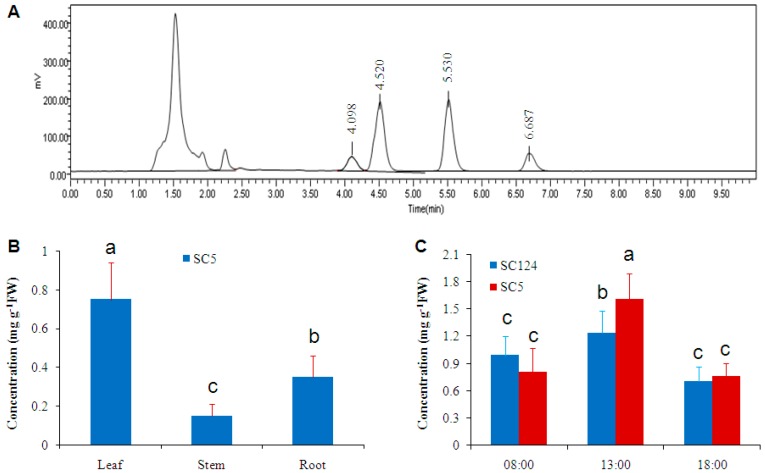
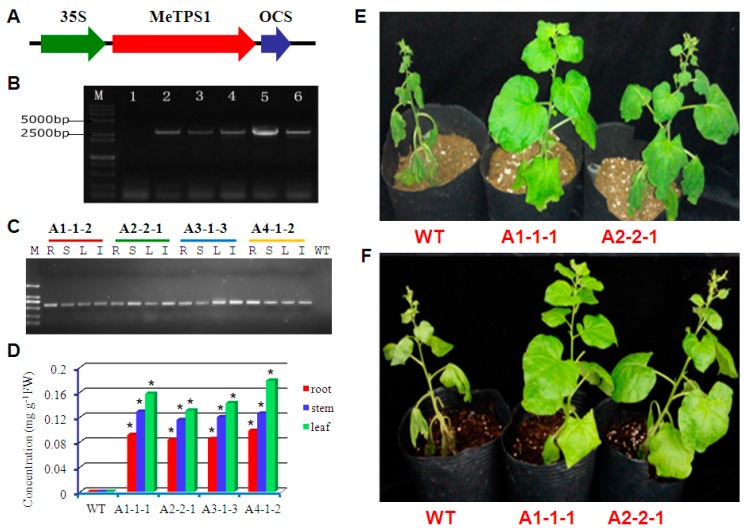
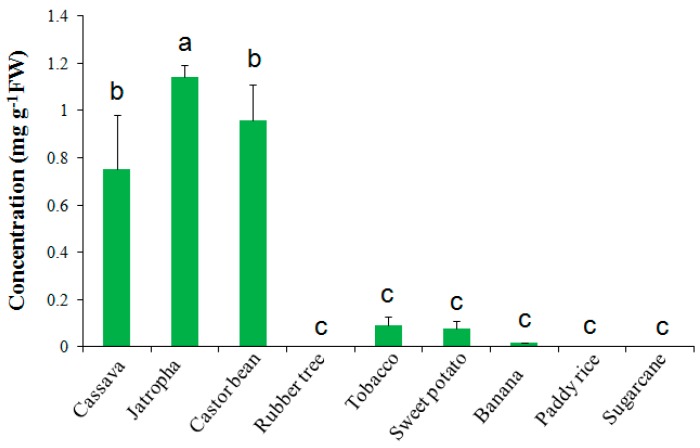
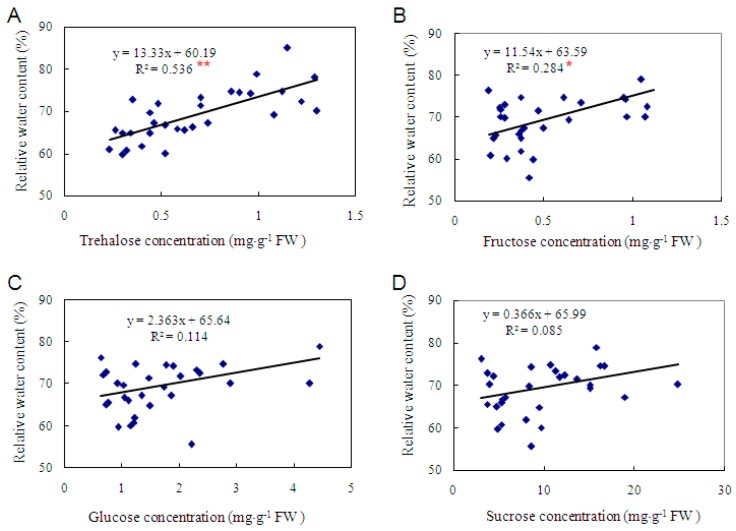
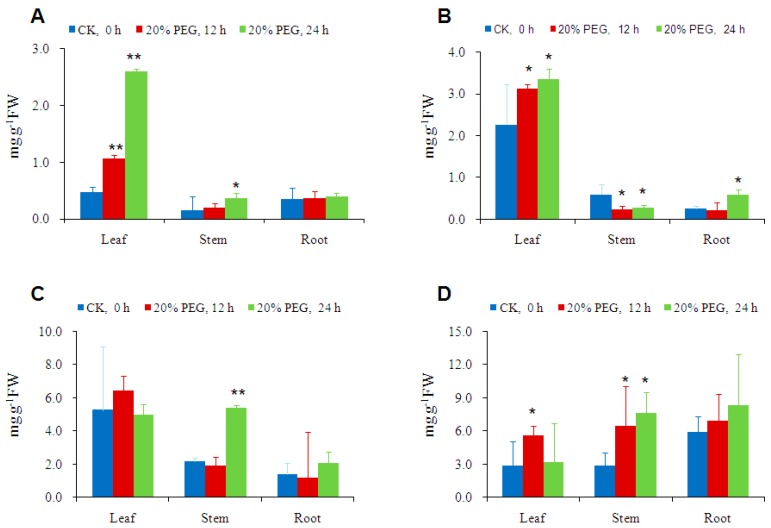
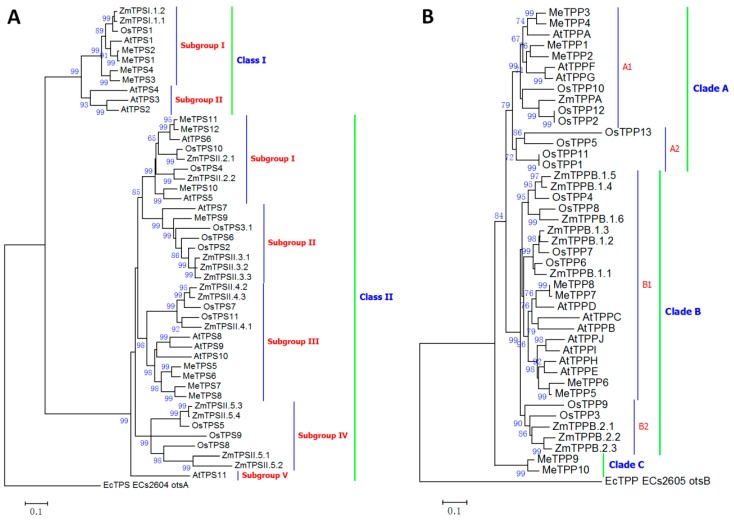
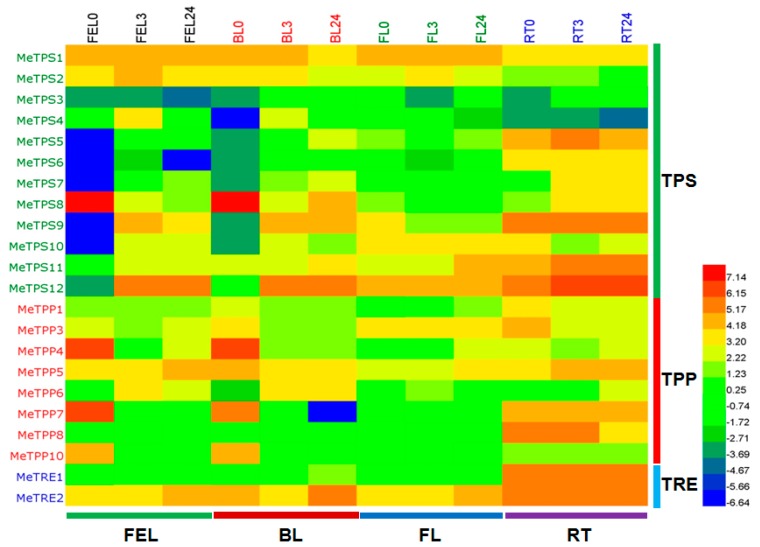
Trehalose is a nonreducing α,α-1,1-disaccharide in a wide range of organisms, and has diverse biological functions that range from serving as an energy source to acting as a protective/signal sugar. However, significant amounts of trehalose have rarely been detected in higher plants, and the function of trehalose in the drought-tolerant crop cassava (Manihot esculenta Crantz) is unclear. We measured soluble sugar concentrations of nine plant species with differing levels of drought tolerance and 41 cassava varieties using high-performance liquid chromatography with evaporative light-scattering detector (HPLC-ELSD). Significantly high amounts of trehalose were identified in drought-tolerant crops cassava, Jatropha curcas, and castor bean (Ricinus communis). All cassava varieties tested contained high amounts of trehalose, although their concentrations varied from 0.23 to 1.29 mg·g(-1) fresh weight (FW), and the trehalose level was highly correlated with dehydration stress tolerance of detached leaves of the varieties. Moreover, the trehalose concentrations in cassava leaves increased 2.3-5.5 folds in response to osmotic stress simulated by 20% PEG 6000. Through database mining, 24 trehalose pathway genes, including 12 trehalose-6-phosphate synthases (TPS), 10 trehalose-6-phosphate phosphatases (TPP), and two trehalases were identified in cassava. Phylogenetic analysis indicated that there were four cassava TPS genes (MeTPS1-4) that were orthologous to the solely active TPS gene (AtTPS1 and OsTPS1) in Arabidopsis and rice, and a new TPP subfamily was identified in cassava, suggesting that the trehalose biosynthesis activities in cassava had potentially been enhanced in evolutionary history. RNA-seq analysis indicated that MeTPS1 was expressed at constitutionally high level before and after osmotic stress, while other trehalose pathway genes were either up-regulated or down-regulated, which may explain why cassava accumulated high level of trehalose under normal conditions. MeTPS1 was then transformed into tobacco (Nicotiana benthamiana). Results indicated that transgenic tobacco lines accumulated significant level of trehalose and possessed improved drought stress tolerance. In conclusion, cassava accumulated significantly high amount of trehalose under normal conditions due to multiplied trehalose biosynthesis gene families and constant expression of the active MeTPS1 gene. High levels of trehalose subsequently contributed to high drought stress tolerance.
海藻糖是一种非还原性的α,α-1,1-二糖,广泛存在于多种生物体中,具有多种生物学功能,从作为能量来源到充当保护/信号糖。然而,在高等植物中很少检测到大量的海藻糖,海藻糖在耐旱作物木薯(Manihot esculenta Crantz)中的功能尚不清楚。我们使用配备蒸发光散射检测器的高效液相色谱法(HPLC-ELSD)测量了9种耐旱性不同的植物物种和41个木薯品种的可溶性糖浓度。在耐旱作物木薯、麻疯树和蓖麻中发现了大量的海藻糖。所有测试的木薯品种都含有大量的海藻糖,尽管其浓度在0.23至1.29 mg·g(-1)鲜重(FW)之间变化,并且海藻糖水平与这些品种离体叶片的脱水胁迫耐受性高度相关。此外,在20% PEG 6000模拟的渗透胁迫下,木薯叶片中的海藻糖浓度增加了2.3-5.5倍。通过数据库挖掘,在木薯中鉴定出24个海藻糖途径基因,包括12个海藻糖-6-磷酸合酶(TPS)、10个海藻糖-6-磷酸磷酸酶(TPP)和2个海藻糖酶。系统发育分析表明,有4个木薯TPS基因(MeTPS1-4)与拟南芥和水稻中唯一活跃的TPS基因(AtTPS1和OsTPS1)直系同源,并且在木薯中鉴定出一个新的TPP亚家族,这表明木薯中海藻糖生物合成活性在进化历史中可能得到了增强。RNA测序分析表明,MeTPS1在渗透胁迫前后均以较高的水平组成性表达,而其他海藻糖途径基因则上调或下调,这可能解释了木薯在正常条件下积累高水平海藻糖的原因。然后将MeTPS1转化到烟草(Nicotiana benthamiana)中。结果表明,转基因烟草品系积累了大量的海藻糖,并具有提高的干旱胁迫耐受性。总之,由于海藻糖生物合成基因家族的增加和活跃的MeTPS1基因的持续表达,木薯在正常条件下积累了大量的海藻糖。高水平的海藻糖随后导致了高耐旱性。