National Key Laboratory of Rice Biology, China National Rice Research Institute, Hangzhou 310006, China.
Nanchong Academy of Agricultural Sciences, Nanchong 637000, China.
Int J Mol Sci. 2022 Sep 13;23(18):10615. doi: 10.3390/ijms231810615.
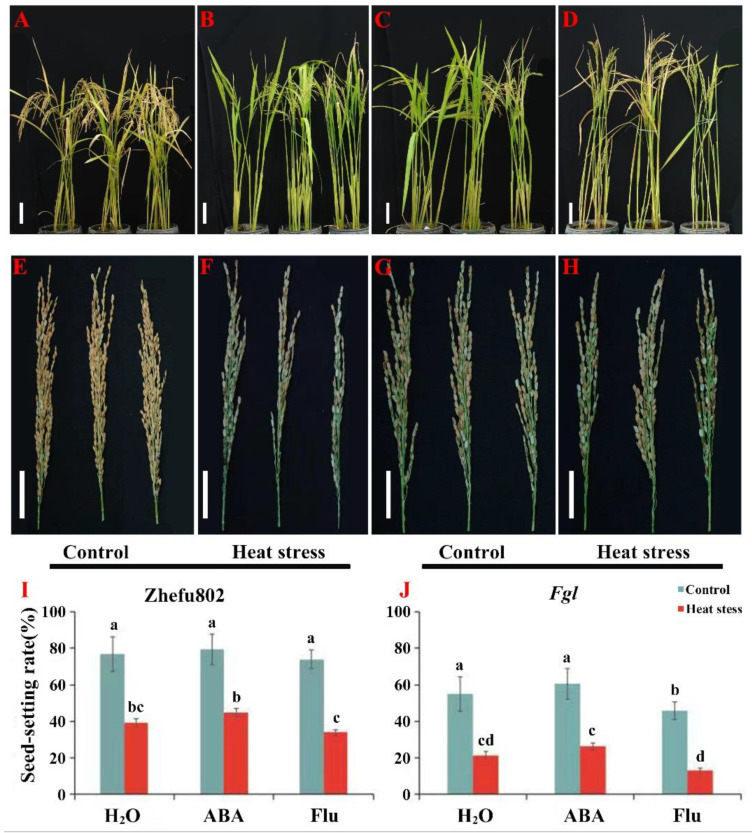
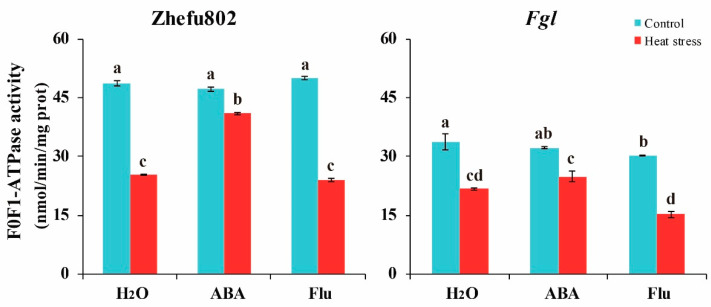
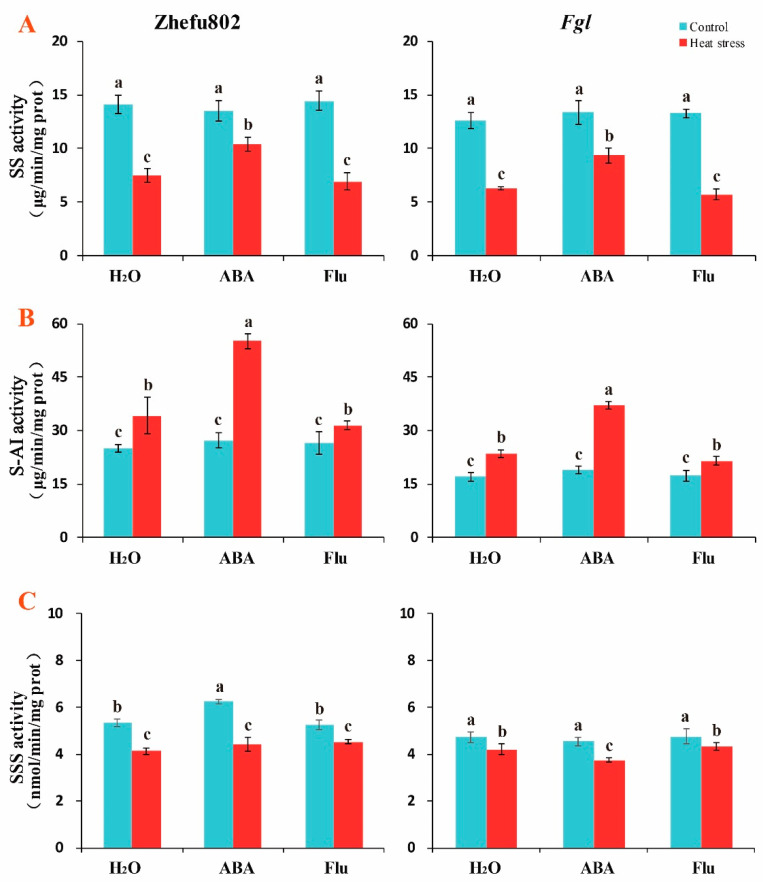
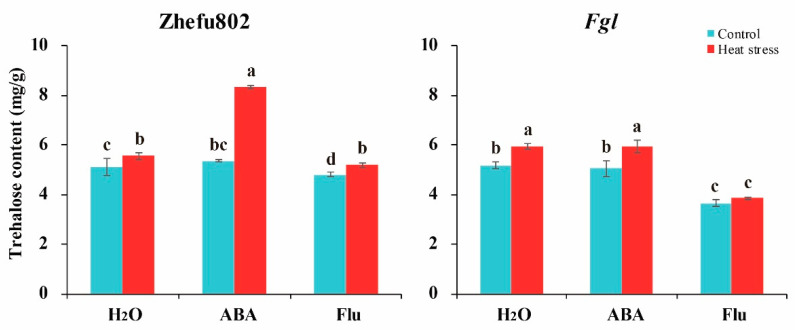
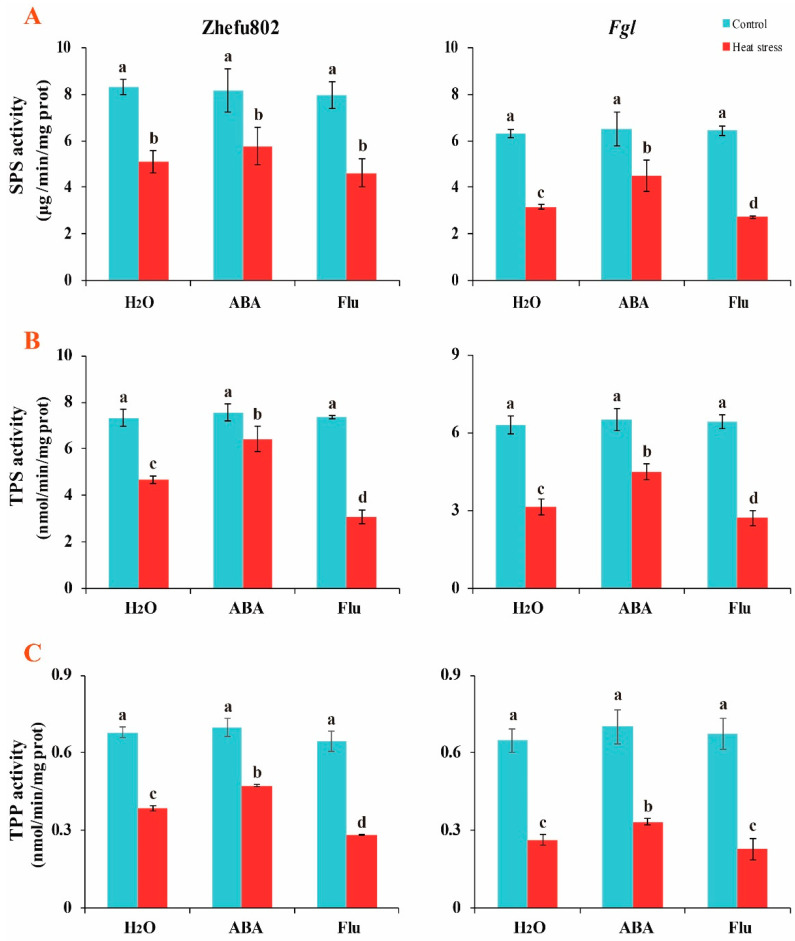
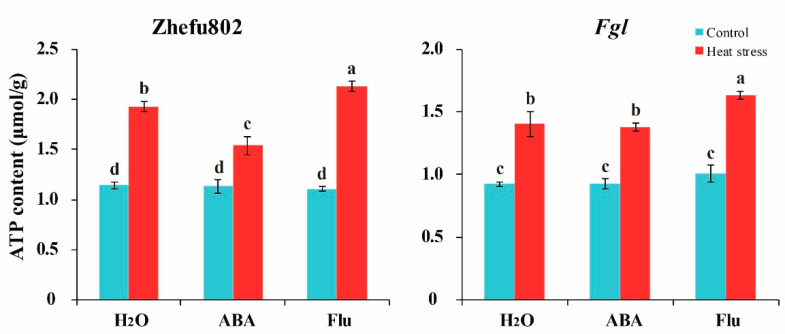
Heat stress that occurs during the flowering stage severely decreases the rice ( L.) seed-setting rate. This damage can be reversed by abscisic acid (ABA), through effects on reactive oxygen species, carbohydrate metabolism, and heat shock proteins, but the exact role of trehalose and ATP in this process remains unclear. Two rice genotypes, namely, Zhefu802 (heat-resistant plant, a recurrent parent) and its near-isogenic line (, heat-sensitive plant), were subjected to 38 °C heat stress after being sprayed with ABA or its biosynthetic inhibitor, fluridone (Flu), at the flowering stage. The results showed that exogenous ABA significantly increased the seed-setting rate of rice under heat stress, by 14.31 and 22.40% in Zhefu802 and , respectively, when compared with the HO treatment. Similarly, exogenous ABA increased trehalose content, key enzyme activities of trehalose metabolism, ATP content, and F1Fo-ATPase activity. Importantly, the opposite results were observed in plants treated with Flu. Therefore, ABA may improve rice thermo-tolerance by affecting trehalose metabolism and ATP consumption.
在开花期发生的热应激会严重降低水稻(L.)的结实率。脱落酸(ABA)可以通过对活性氧、碳水化合物代谢和热休克蛋白的影响来逆转这种损伤,但海藻糖和 ATP 在这个过程中的确切作用仍不清楚。对两种水稻基因型,即浙辐 802(耐热植物,轮回亲本)及其近等基因系(,热敏植物),在开花期喷施 ABA 或其生物合成抑制剂氟啶酮(Flu)后,进行 38°C 的热应激处理。结果表明,与 HO 处理相比,外源 ABA 可显著提高水稻在热胁迫下的结实率,在浙辐 802 和 中的分别提高了 14.31%和 22.40%。类似地,外源 ABA 增加了海藻糖的含量、海藻糖代谢的关键酶活性、ATP 含量和 F1Fo-ATP 酶活性。重要的是,在用 Flu 处理的植物中观察到了相反的结果。因此,ABA 可能通过影响海藻糖代谢和 ATP 消耗来提高水稻的耐热性。