Bingul Murat, Tan Owen, Gardner Christopher R, Sutton Selina K, Arndt Greg M, Marshall Glenn M, Cheung Belamy B, Kumar Naresh, Black David StC
School of Chemistry, The University of New South Wales Australia, Sydney, NSW 2052, Australia.
Children's Cancer Institute Australia for Medical Research, Lowy Cancer Research Centre, The University of New South Wales Australia, Sydney, NSW 2031, Australia.
Molecules. 2016 Jul 14;21(7):916. doi: 10.3390/molecules21070916.
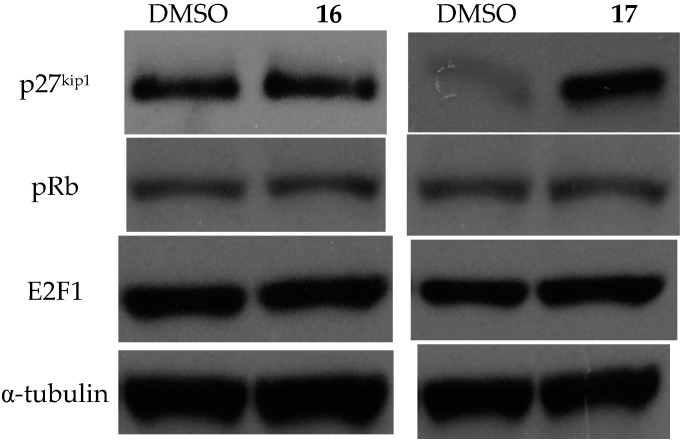
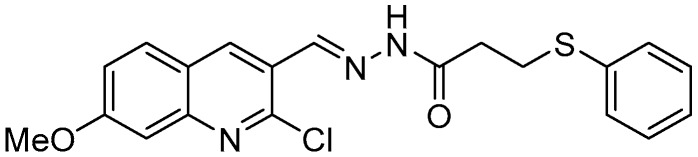
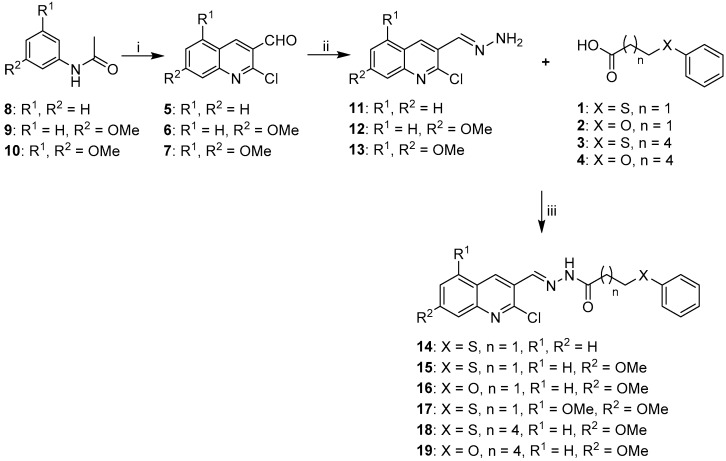
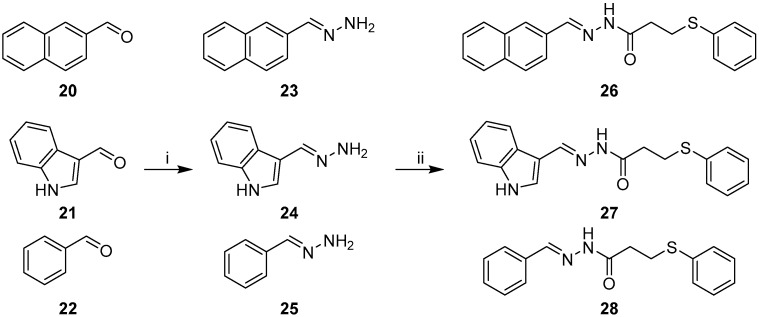
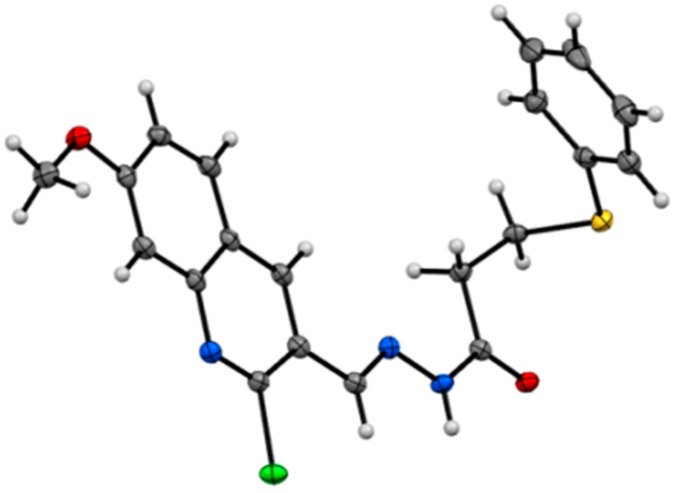
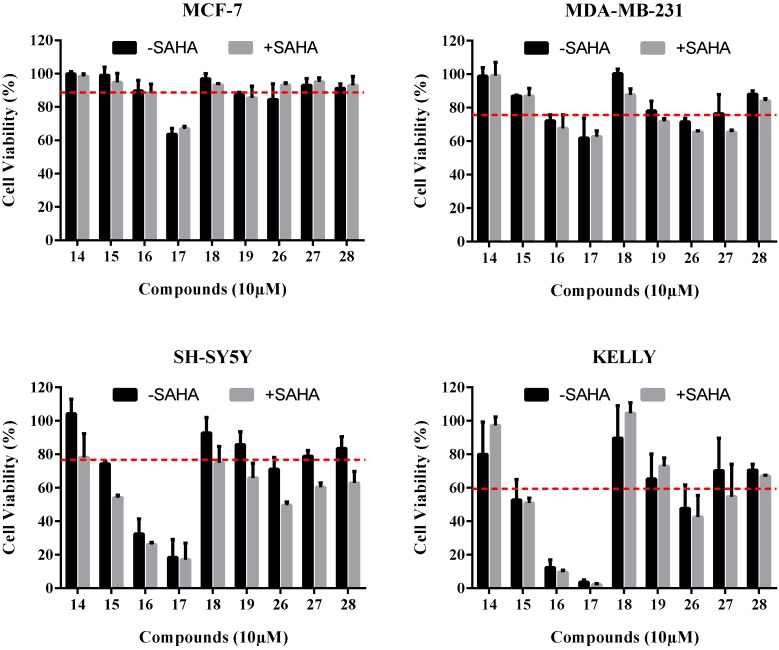
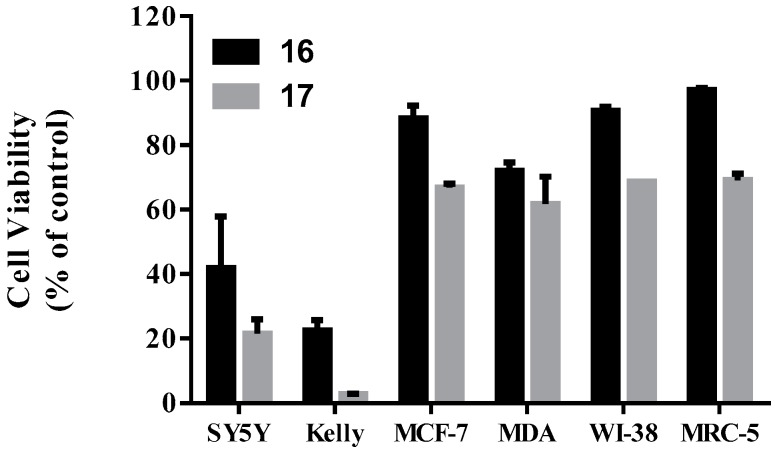
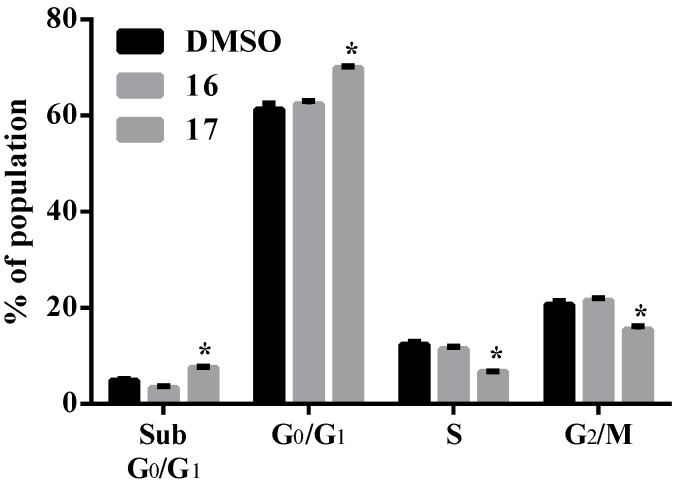
Identification of the novel (E)-N'-((2-chloro-7-methoxyquinolin-3-yl)methylene)-3-(phenylthio)propanehydrazide scaffold 18 has led to the development of a new series of biologically active hydrazide compounds. The parent compound 18 and new quinoline derivatives 19-26 were prepared from the corresponding quinoline hydrazones and substituted carboxylic acids using EDC-mediated peptide coupling reactions. Further modification of the parent compound 18 was achieved by replacement of the quinoline moiety with other aromatic systems. All the newly synthesized compounds were evaluated for their anti-cancer activity against the SH-SY5Y and Kelly neuroblastoma cell lines, as well as the MDA-MB-231 and MCF-7 breast adenocarcinoma cell lines. Analogues 19 and 22 significantly reduced the cell viability of neuroblastoma cancer cells with micromolar potency and significant selectivity over normal cells. The quinoline hydrazide 22 also induced G₁ cell cycle arrest, as well as upregulation of the p27(kip1) cell cycle regulating protein.
新型(E)-N'-((2-氯-7-甲氧基喹啉-3-基)亚甲基)-3-(苯硫基)丙酰肼支架18的鉴定促使了一系列新型生物活性酰肼化合物的开发。母体化合物18以及新的喹啉衍生物19 - 26是通过使用EDC介导的肽偶联反应,由相应的喹啉腙和取代羧酸制备而成。通过用其他芳香体系取代喹啉部分,对母体化合物18进行了进一步修饰。对所有新合成的化合物针对SH - SY5Y和凯利神经母细胞瘤细胞系以及MDA - MB - 231和MCF - 7乳腺腺癌细胞系进行了抗癌活性评估。类似物19和22以微摩尔效力显著降低了神经母细胞瘤癌细胞的细胞活力,并且对正常细胞具有显著的选择性。喹啉酰肼22还诱导了G₁期细胞周期停滞以及p27(kip1)细胞周期调节蛋白的上调。