Zhong Leilei, Huang Xiaobin, Karperien Marcel, Post Janine N
Developmental BioEngineering, MIRA Institute for Biomedical Technology and Technical Medicine, Faculty of Science and Technology, University of Twente, P.O. Box 217, 7500 AE Enschede, The Netherlands.
Int J Mol Sci. 2016 Jul 14;17(7):1126. doi: 10.3390/ijms17071126.
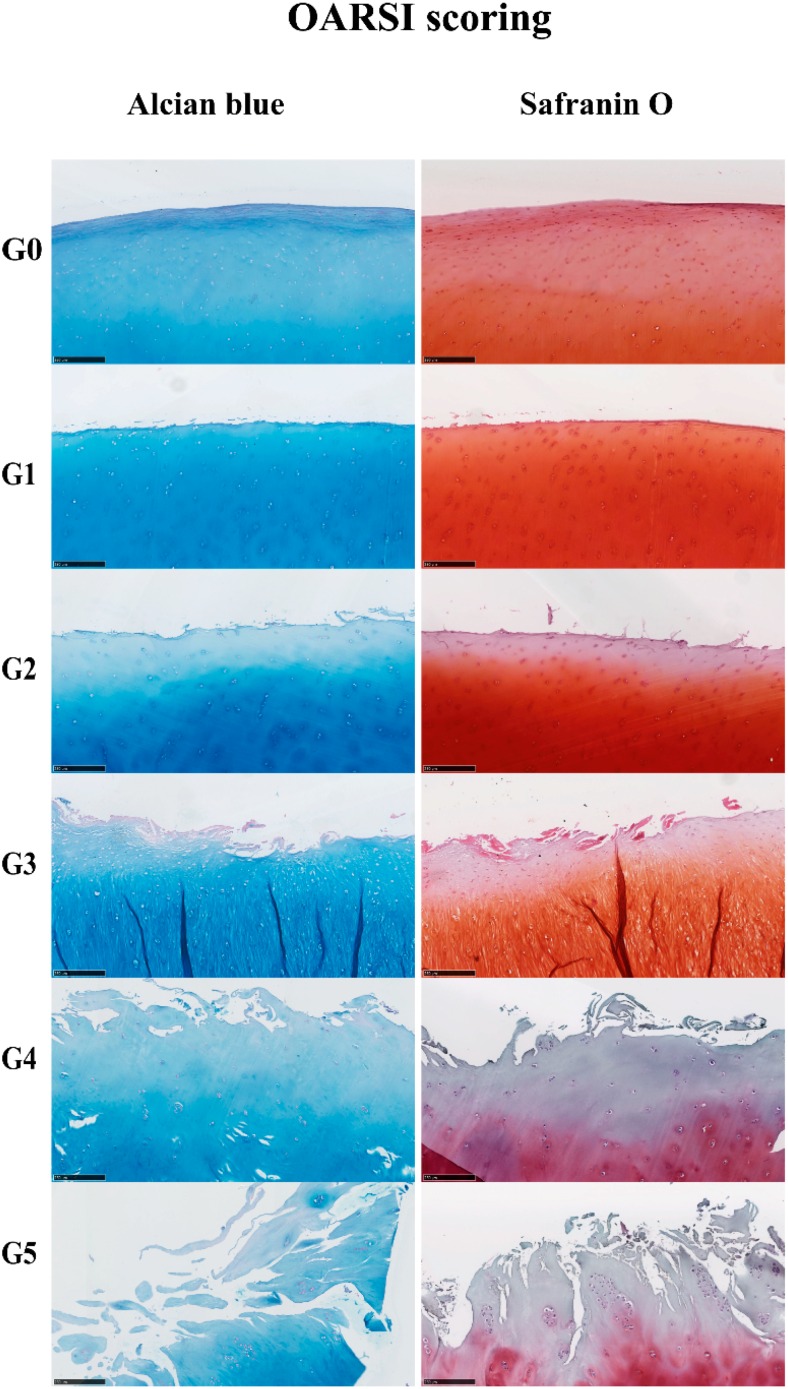
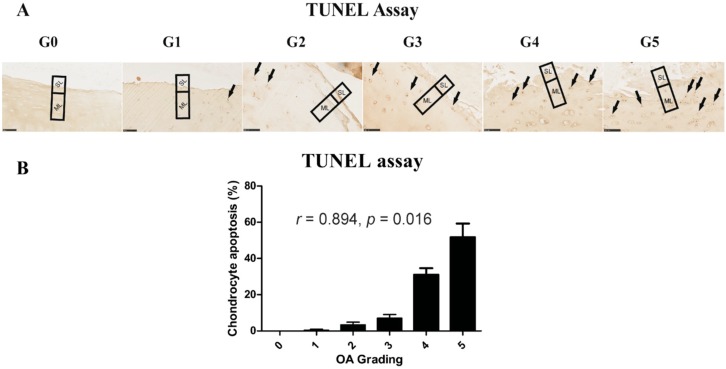
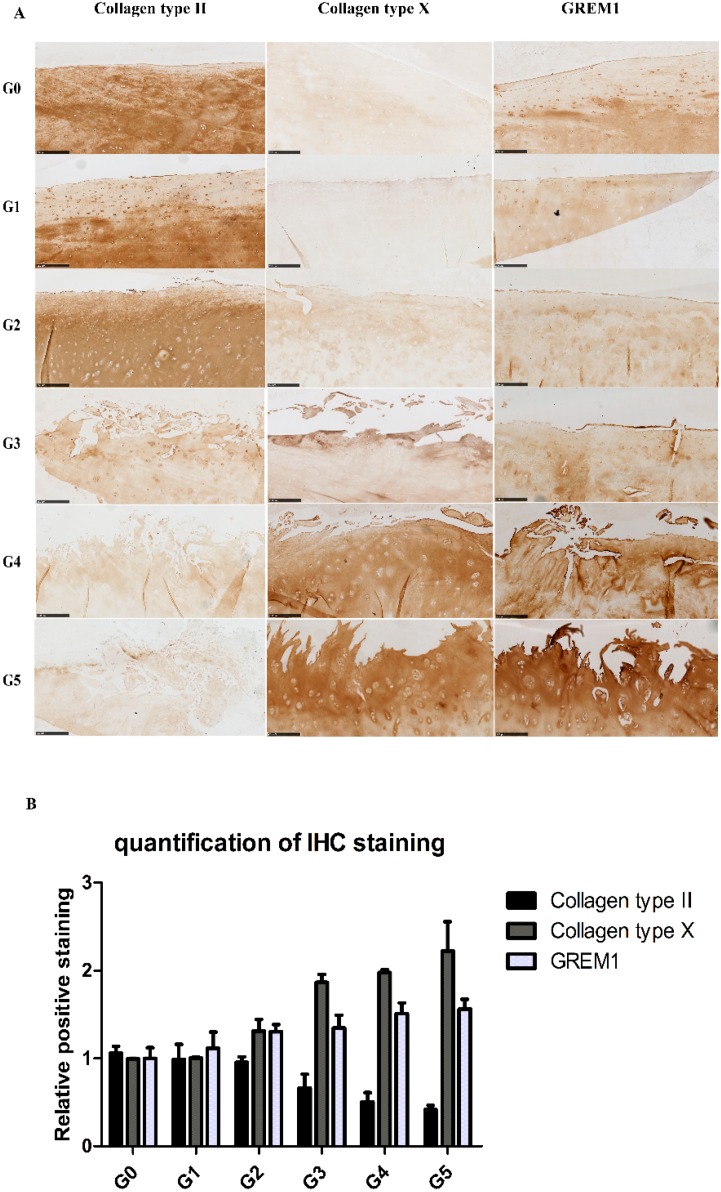
Osteoarthritis (OA) is a multifactorial disease characterized by gradual degradation of joint cartilage. This study aimed to quantify major pathogenetic factors during OA progression in human cartilage. Cartilage specimens were isolated from OA patients and scored 0-5 according to the Osteoarthritis Research Society International (OARSI) guidelines. Protein and gene expressions were measured by immunohistochemistry and qPCR, respectively. Terminal deoxynucleotidyl transferase dUTP nick end labeling (TUNEL) assays were used to detect apoptotic cells. Cartilage degeneration in OA is a gradual progress accompanied with gradual loss of collagen type II and a gradual decrease in mRNA expression of SOX9, ACAN and COL2A1. Expression of WNT antagonists DKK1 and FRZB was lost, while hypertrophic markers (RUNX2, COL10A1 and IHH) increased during OA progression. Moreover, DKK1 and FRZB negatively correlated with OA grading, while RUNX2 and IHH showed a significantly positive correlation with OA grading. The number of apoptotic cells was increased with the severity of OA. Taken together, our results suggested that genetic profiling of the gene expression could be used as markers for staging OA at the molecular level. This helps to understand the molecular pathology of OA and may lead to the development of therapies based on OA stage.
骨关节炎(OA)是一种以关节软骨逐渐退化为特征的多因素疾病。本研究旨在量化人类软骨OA进展过程中的主要致病因素。从OA患者中分离软骨标本,并根据国际骨关节炎研究学会(OARSI)指南进行0-5分评分。分别通过免疫组织化学和qPCR检测蛋白质和基因表达。采用末端脱氧核苷酸转移酶dUTP缺口末端标记(TUNEL)法检测凋亡细胞。OA中的软骨退变是一个渐进过程,伴随着II型胶原蛋白的逐渐丢失以及SOX9、ACAN和COL2A1 mRNA表达的逐渐降低。WNT拮抗剂DKK1和FRZB的表达丧失,而肥大标记物(RUNX2、COL10A1和IHH)在OA进展过程中增加。此外,DKK1和FRZB与OA分级呈负相关,而RUNX2和IHH与OA分级呈显著正相关。凋亡细胞数量随OA严重程度增加。综上所述,我们的结果表明基因表达的遗传谱分析可作为OA分子水平分期的标志物。这有助于理解OA的分子病理学,并可能导致基于OA阶段的治疗方法的发展。