Zeng Yingjian, Weng Guangyang, Fan Jiaxin, Li Zhangqiu, Wu Jianwei, Li Yuanming, Zheng Rong, Xia Pingfang, Guo Kunyuan
Department of Hematology, Affiliated Jiangmen Traditional Chinese Medical Hospital of Jinan University, Jiangmen, Guangdong 529000, P.R. China.
Deparment of Hematology, Shenzhen Second People's Hospital, The First Affiliated Hospital of Shenzhen University, Shenzhen 518000, P.R. China.
Oncol Rep. 2016 Sep;36(3):1233-42. doi: 10.3892/or.2016.4944. Epub 2016 Jul 15.
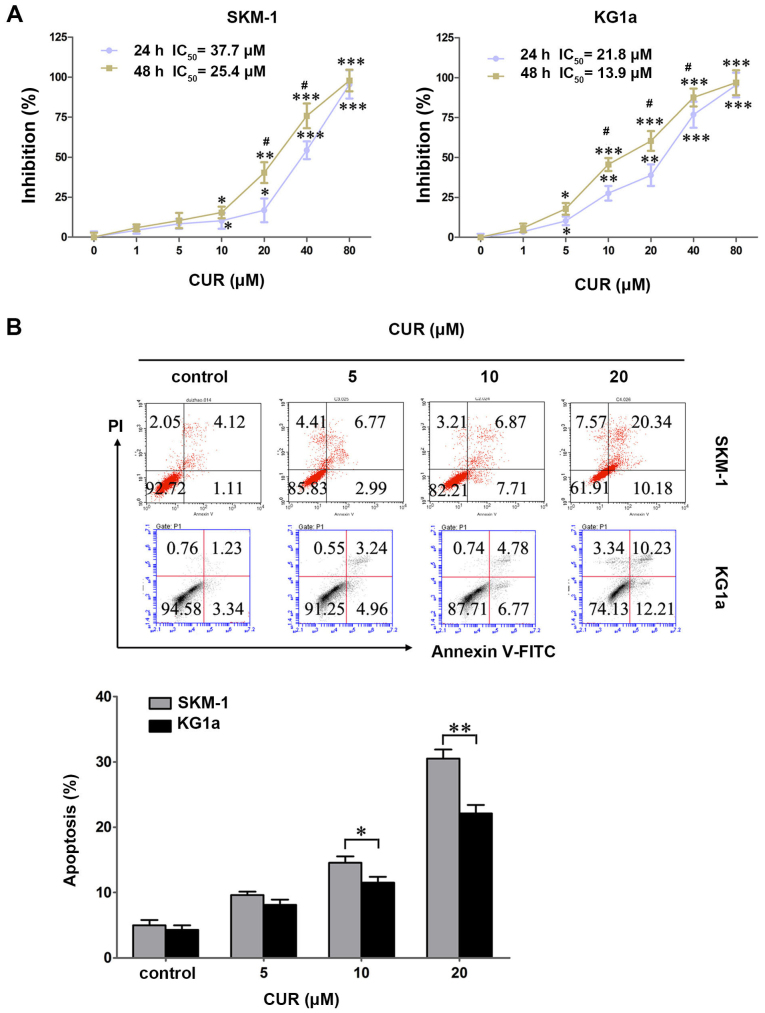
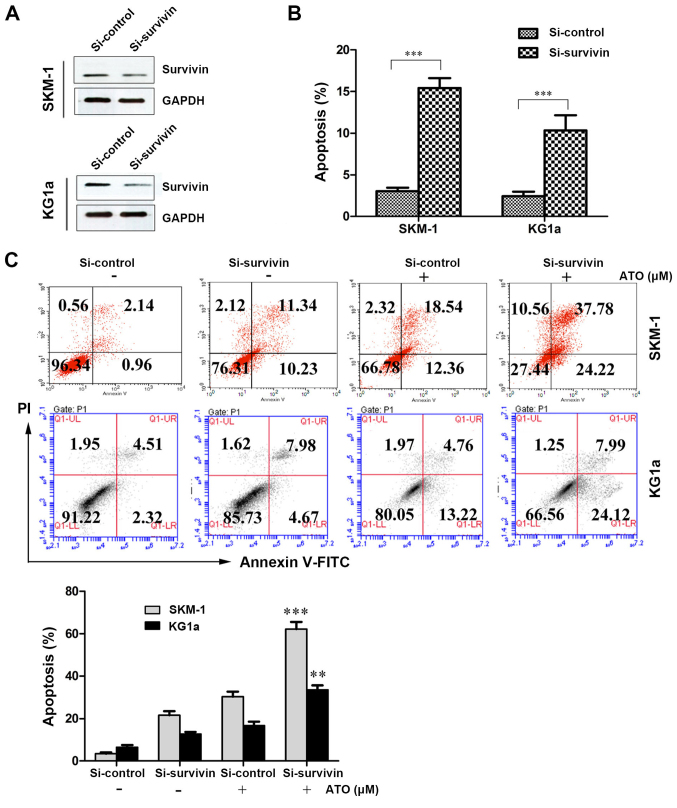
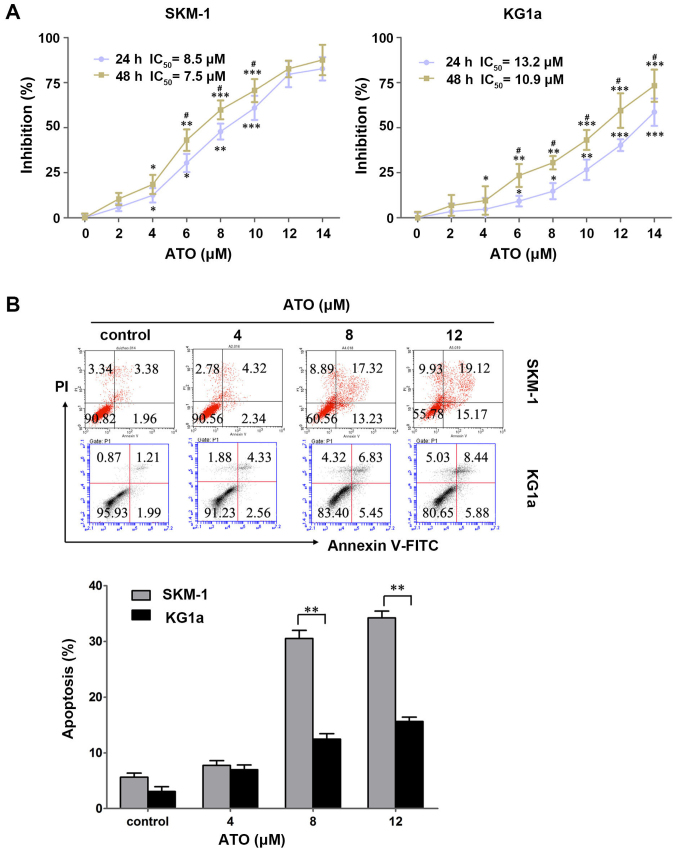
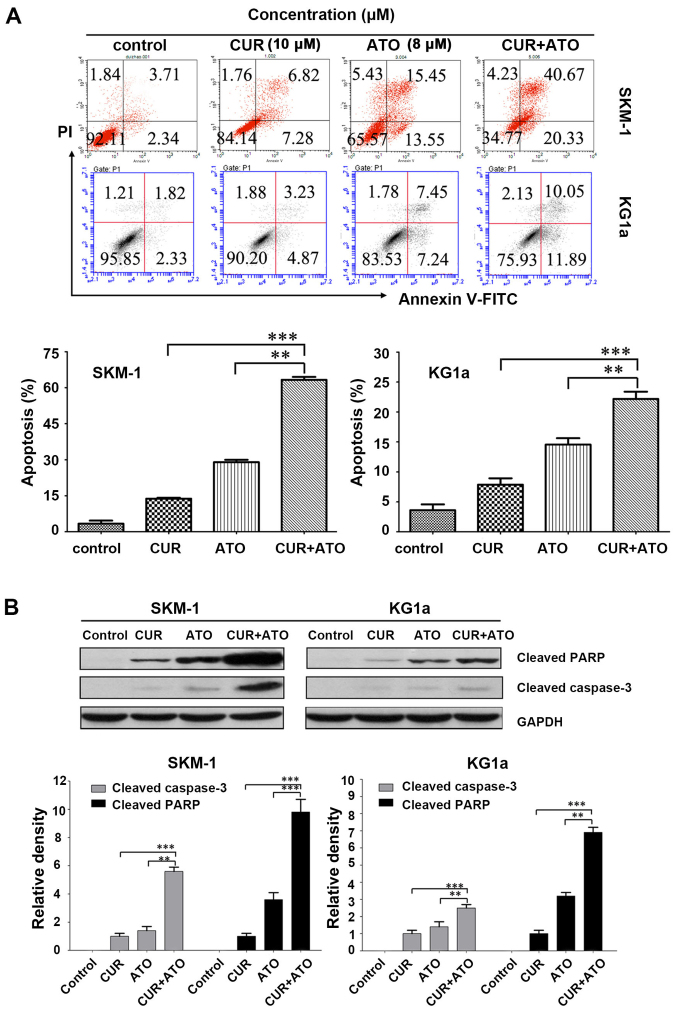
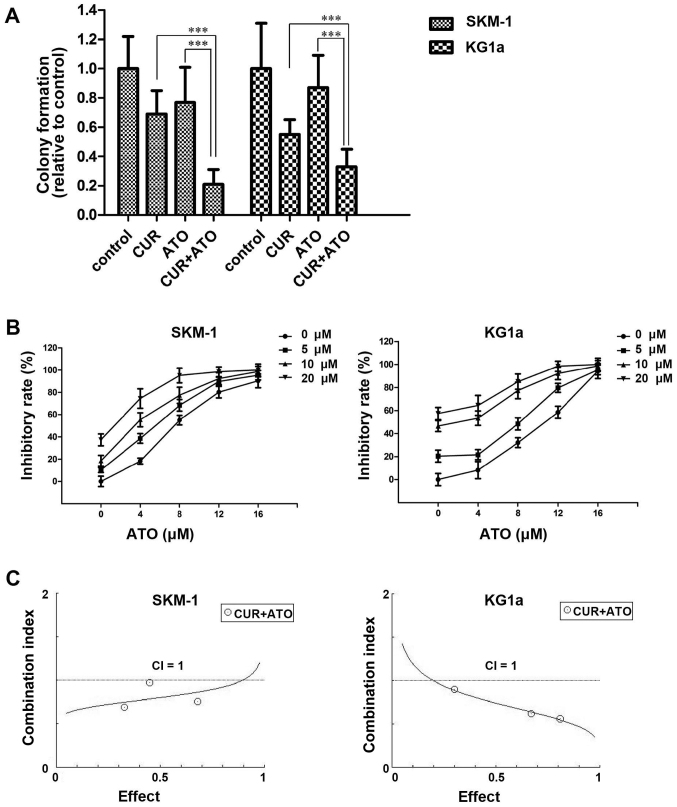
Low response, treatment-related complications and relapse due to the low sensitivity of myelodysplastic syndrome (MDS) and leukemia stem cells (LSCs) or pre‑LSCs to arsenic trioxide (ATO), represent the main problems following treatment with ATO alone in patients with MDS. To solve these problems, a chemosensitization agent can be applied to increase the susceptibility of these cells to ATO. Curcumin (CUR), which possesses a wide range of anticancer activities, is a commonly used chemosensitization agent for various types of tumors, including hematopoietic malignancies. In the present study, we investigated the cytotoxic effects and potential mechanisms in MDS-SKM-1 and leukemia stem-like KG1a cells treated with CUR and ATO alone or in combination. CUR and ATO exhibited growth inhibition detected by MTT assays and apoptosis analyzed by Annexin V/PI analyses in both SKM-1 and KG1a cells. Apoptosis of SKM-1 and KG1a cells determined by Annexin V/PI was significantly enhanced in the combination groups compared with the groups treated with either agent alone. Further evaluation was performed by western blotting for two hallmark markers of apoptosis, caspase-3 and cleaved-PARP. Co-treatment of the cells with CUR and ATO resulted in significant synergistic effects. In SKM-1 and KG1a cells, 31 and 13 proteins analyzed by protein array assays were modulated, respectively. Notably, survivin protein expression levels were downregulated in both cell lines treated with CUR alone and in combination with ATO, particularly in the latter case. Susceptibility to apoptosis was significantly increased in SKM-1 and KG1a cells treated with siRNA-survivin and ATO. These results suggested that CUR increased the sensitivity of SKM-1 and KG1a cells to ATO by downregulating the expression of survivin.
骨髓增生异常综合征(MDS)和白血病干细胞(LSCs)或白血病前期干细胞(pre-LSCs)对三氧化二砷(ATO)敏感性较低,导致反应欠佳、出现治疗相关并发症以及复发,这是MDS患者单纯使用ATO治疗后的主要问题。为解决这些问题,可应用化学增敏剂来提高这些细胞对ATO的敏感性。姜黄素(CUR)具有广泛的抗癌活性,是用于包括血液系统恶性肿瘤在内的各类肿瘤的常用化学增敏剂。在本研究中,我们调查了单独或联合使用CUR和ATO处理的MDS-SKM-1细胞和白血病干细胞样KG1a细胞的细胞毒性作用及潜在机制。MTT法检测显示,CUR和ATO对SKM-1和KG1a细胞均有生长抑制作用,Annexin V/PI分析表明二者均可诱导细胞凋亡。与单独使用任一药物处理的组相比,联合处理组中通过Annexin V/PI检测的SKM-1和KG1a细胞凋亡显著增强。通过蛋白质印迹法对凋亡的两个标志性标志物caspase-3和裂解的PARP进行了进一步评估。CUR和ATO联合处理细胞产生了显著的协同效应。蛋白质芯片分析显示,在SKM-1和KG1a细胞中分别有31种和13种蛋白质受到调控。值得注意的是,单独使用CUR以及联合ATO处理的两种细胞系中,生存素蛋白表达水平均下调,尤其是后者。用siRNA-生存素和ATO处理的SKM-1和KG1a细胞对凋亡的敏感性显著增加。这些结果表明,CUR通过下调生存素的表达提高了SKM-1和KG1a细胞对ATO的敏感性。