Lenz Tobias L, Spirin Victor, Jordan Daniel M, Sunyaev Shamil R
Division of Genetics, Department of Medicine, Brigham and Women's Hospital, Harvard Medical School Evolutionary Immunogenomics, Department of Evolutionary Ecology, Max Planck Institute for Evolutionary Biology, Plön, Germany
Division of Genetics, Department of Medicine, Brigham and Women's Hospital, Harvard Medical School.
Mol Biol Evol. 2016 Oct;33(10):2555-64. doi: 10.1093/molbev/msw127. Epub 2016 Jun 28.
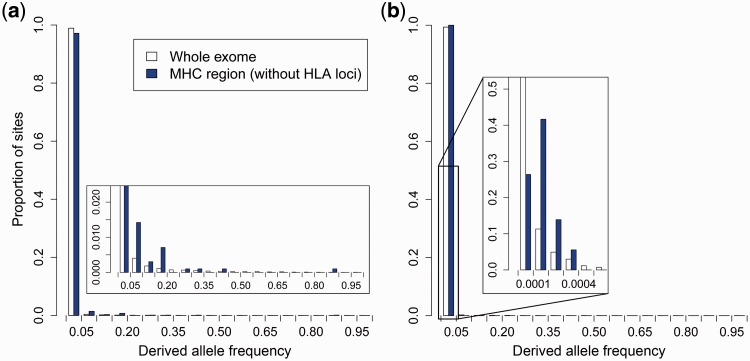
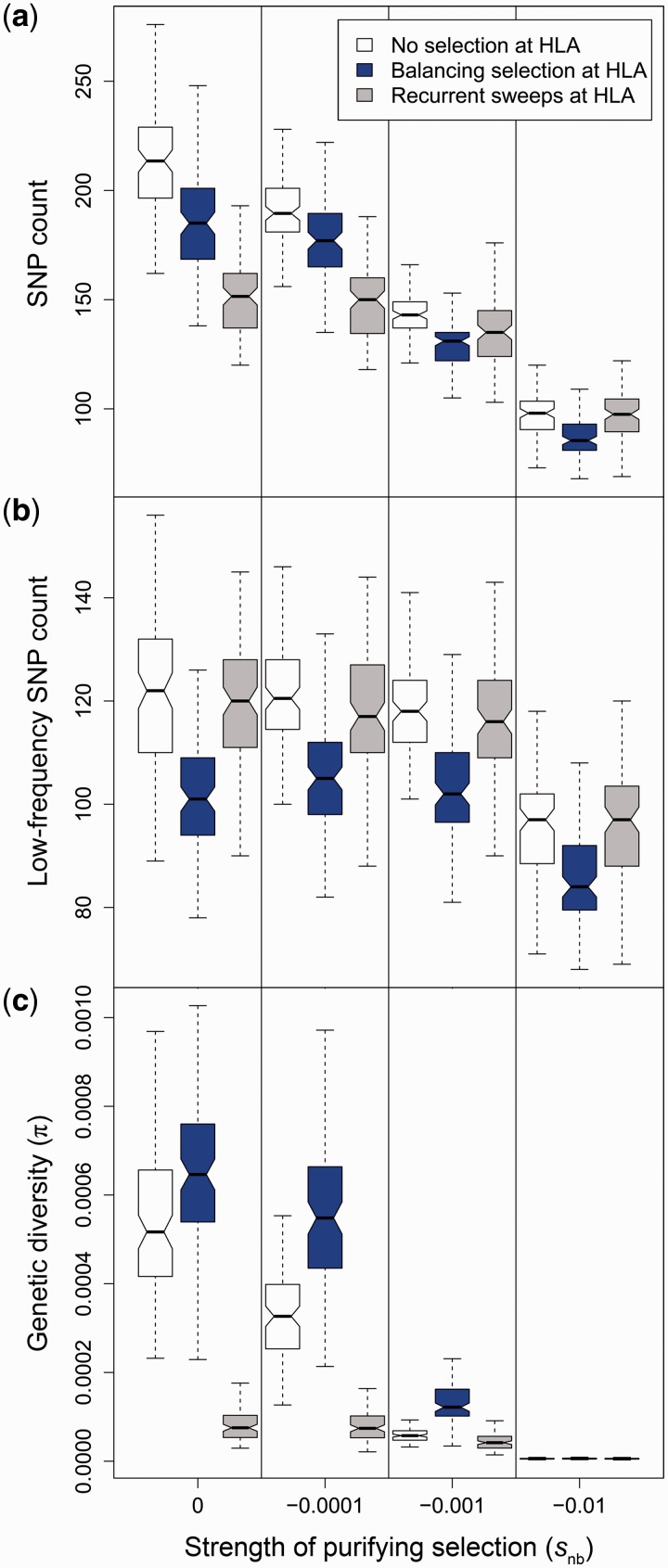
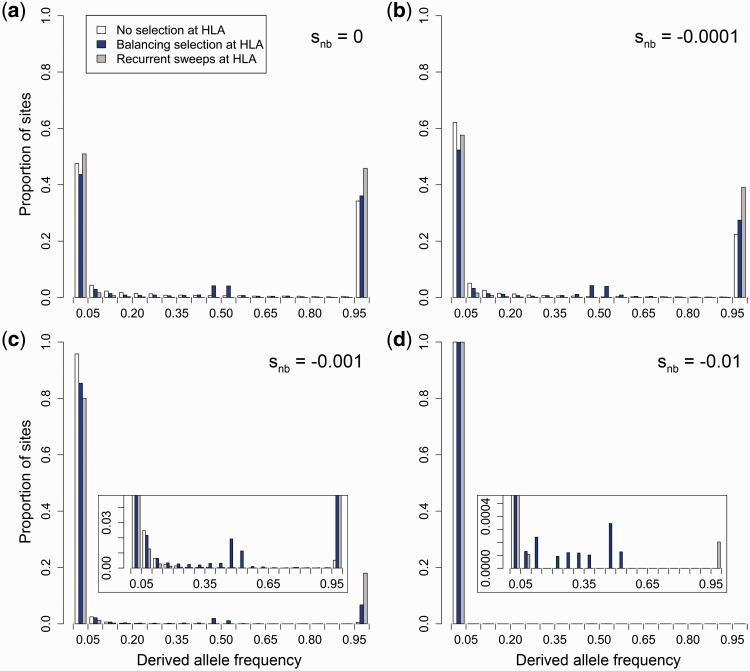
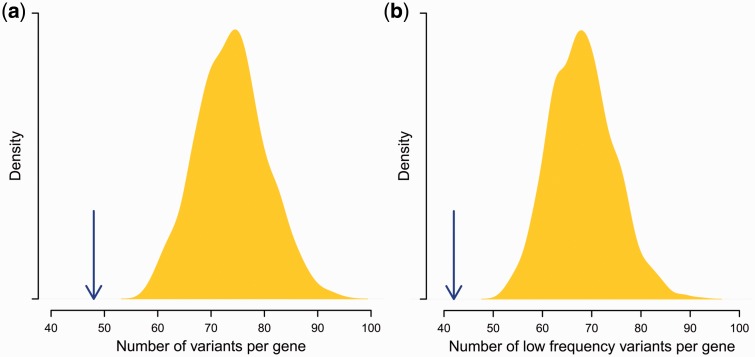
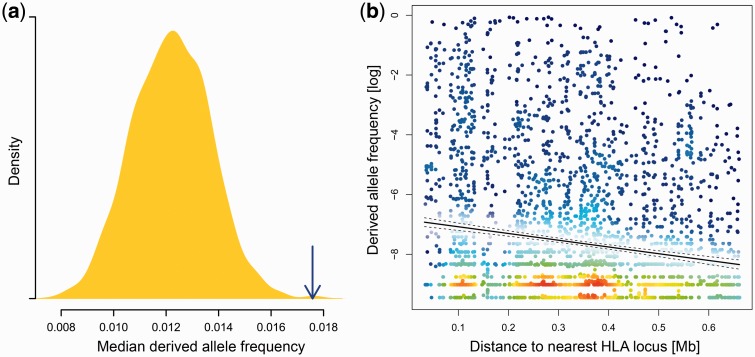
Deleterious mutations are expected to evolve under negative selection and are usually purged from the population. However, deleterious alleles segregate in the human population and some disease-associated variants are maintained at considerable frequencies. Here, we test the hypothesis that balancing selection may counteract purifying selection in neighboring regions and thus maintain deleterious variants at higher frequency than expected from their detrimental fitness effect. We first show in realistic simulations that balancing selection reduces the density of polymorphic sites surrounding a locus under balancing selection, but at the same time markedly increases the population frequency of the remaining variants, including even substantially deleterious alleles. To test the predictions of our simulations empirically, we then use whole-exome sequencing data from 6,500 human individuals and focus on the most established example for balancing selection in the human genome, the major histocompatibility complex (MHC). Our analysis shows an elevated frequency of putatively deleterious coding variants in nonhuman leukocyte antigen (non-HLA) genes localized in the MHC region. The mean frequency of these variants declined with physical distance from the classical HLA genes, indicating dependency on genetic linkage. These results reveal an indirect cost of the genetic diversity maintained by balancing selection, which has hitherto been perceived as mostly advantageous, and have implications both for the evolution of recombination and also for the epidemiology of various MHC-associated diseases.
有害突变预计会在负选择下进化,通常会从种群中清除。然而,有害等位基因在人类种群中分离,一些与疾病相关的变异以相当高的频率维持着。在这里,我们检验这样一个假设:平衡选择可能会抵消相邻区域的纯化选择,从而使有害变异以高于其有害适应度效应预期的频率维持下去。我们首先在实际模拟中表明,平衡选择会降低平衡选择位点周围多态性位点的密度,但同时会显著提高其余变异的种群频率,甚至包括相当有害的等位基因。为了通过实验检验我们模拟的预测,我们随后使用了来自6500个人类个体的全外显子测序数据,并聚焦于人类基因组中最确定的平衡选择例子——主要组织相容性复合体(MHC)。我们的分析表明,位于MHC区域的非人类白细胞抗原(非HLA)基因中,推定有害的编码变异频率升高。这些变异的平均频率随着与经典HLA基因的物理距离而下降,表明其对遗传连锁的依赖性。这些结果揭示了平衡选择所维持的遗传多样性的间接代价,平衡选择迄今大多被视为是有利的,这对重组的进化以及各种MHC相关疾病的流行病学都有影响。