Yoshikawa Takanori, Tanaka Shin-Ya, Masumoto Yuuki, Nobori Naoya, Ishii Hiroto, Hibara Ken-Ichiro, Itoh Jun-Ichi, Tanisaka Takatoshi, Taketa Shin
School of Agricultural Regional Vitalization, Kibi International University , Minamiawaji, Hyogo 656-0484 , Japan.
Graduate School of Agricultural and Life Sciences, University of Tokyo , Tokyo 113-8657 , Japan.
Breed Sci. 2016 Jun;66(3):416-24. doi: 10.1270/jsbbs.16019. Epub 2016 May 20.
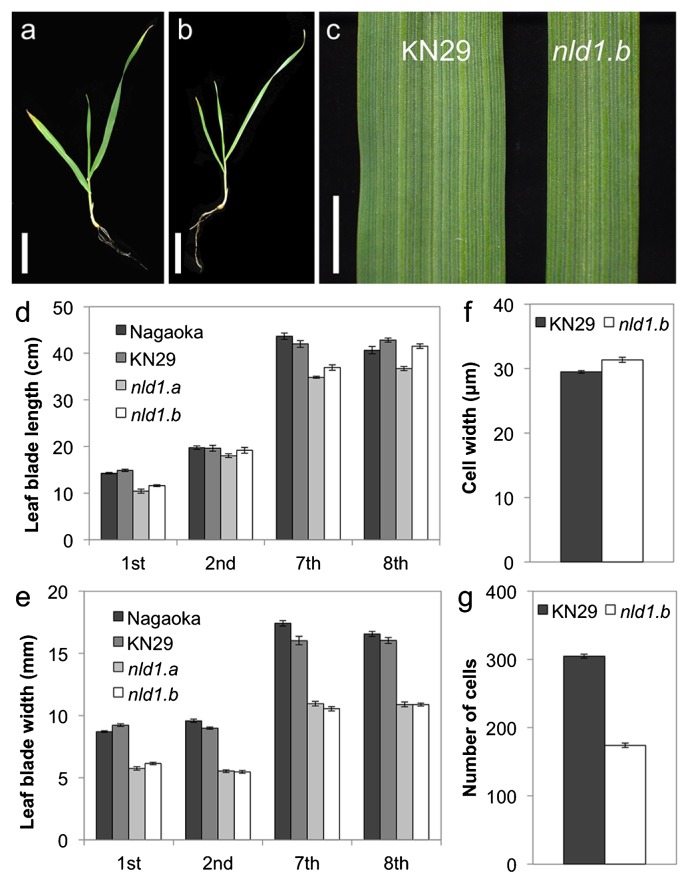
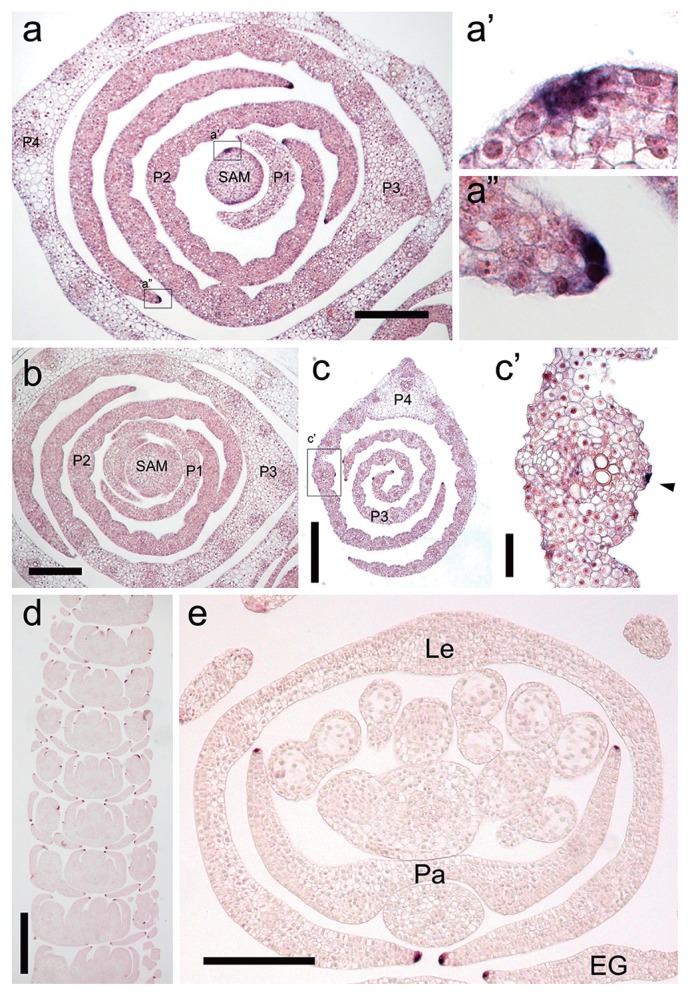
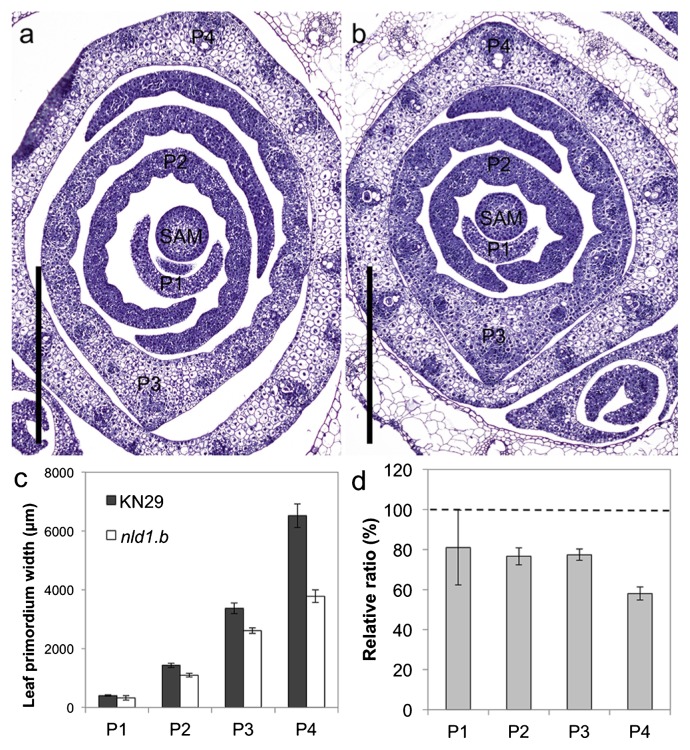
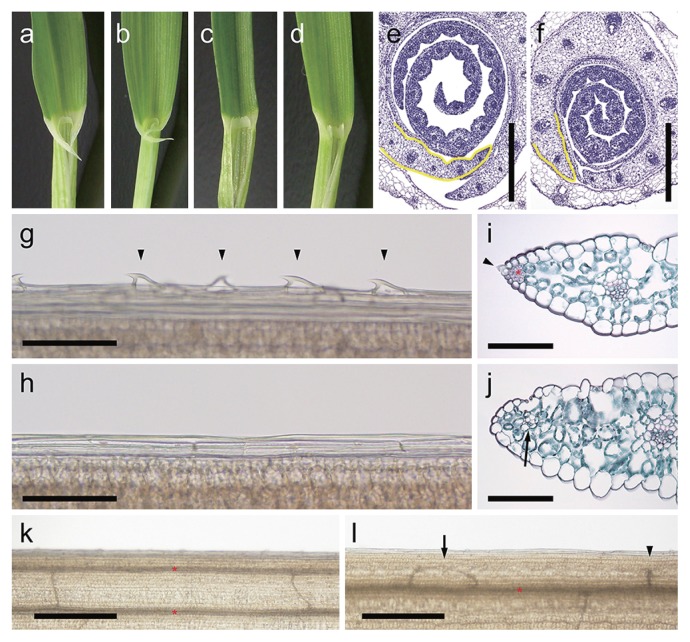
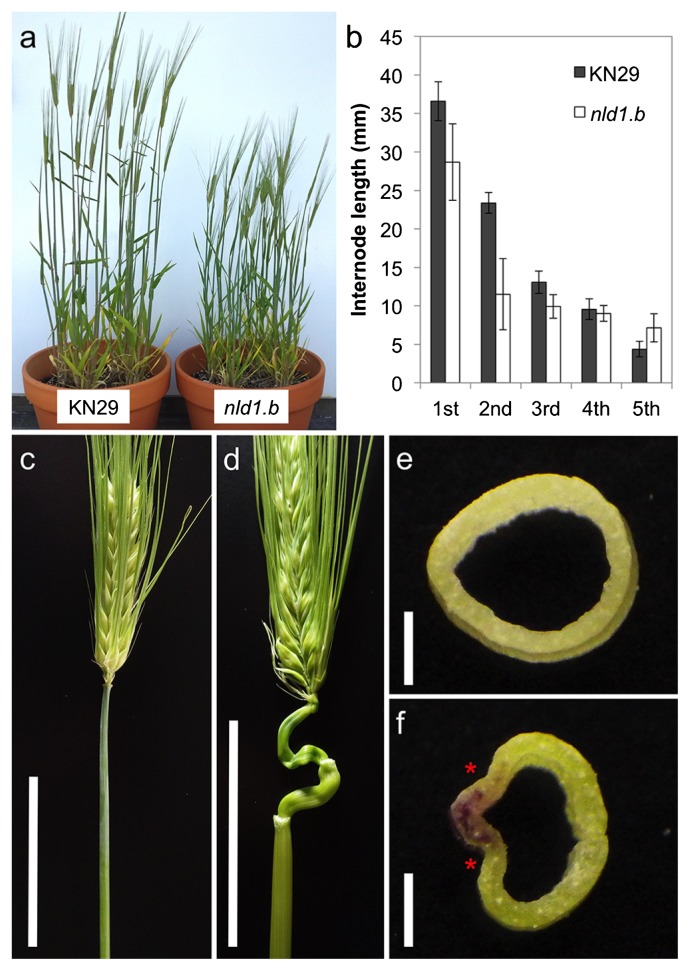
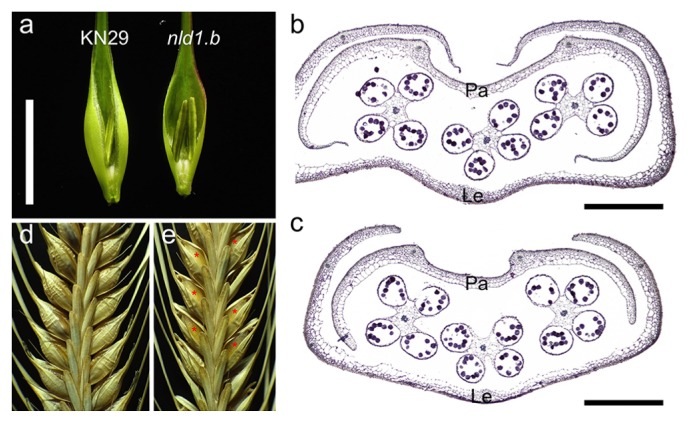
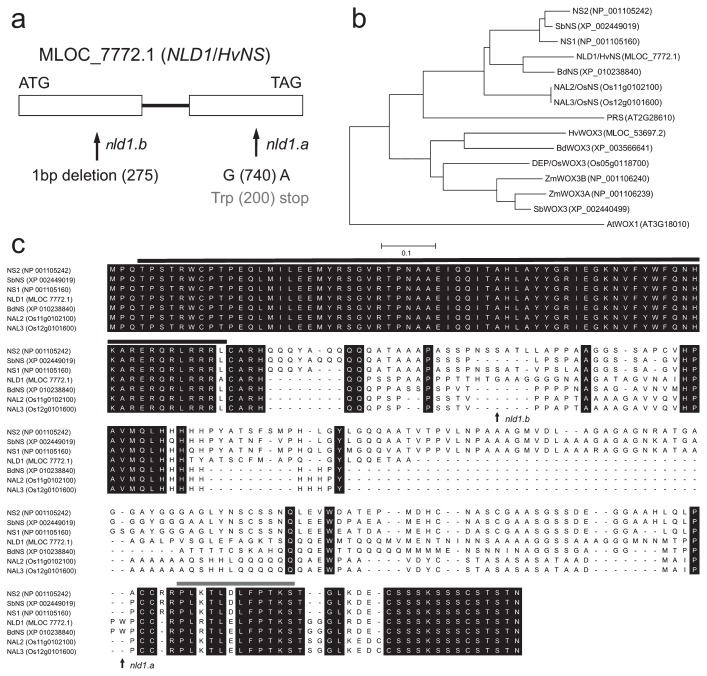
Barley (Hordeum vulgare L.) is the fourth most-produced cereal in the world and is mainly utilized as animal feed and malts. Recently barley attracts considerable attentions as healthy food rich in dietary fiber. However, limited knowledge is available about developmental aspects of barley leaves. In the present study, we investigated barley narrow leafed dwarf1 (nld1) mutants, which exhibit thin leaves accompanied by short stature. Detailed histological analysis revealed that leaf marginal tissues, such as sawtooth hairs and sclerenchymatous cells, were lacked in nld1, suggesting that narrowed leaf of nld1 was attributable to the defective development of the marginal regions in the leaves. The defective marginal developments were also appeared in internodes and glumes in spikelets. Map-based cloning revealed that NLD1 encodes a WUSCHEL-RELATED HOMEOBOX 3 (WOX3), an ortholog of the maize NARROW SHEATH genes. In situ hybridization showed that NLD1 transcripts were localized in the marginal edges of leaf primordia from the initiating stage. From these results, we concluded that NLD1 plays pivotal role in the increase of organ width and in the development of marginal tissues in lateral organs in barley.
大麦(Hordeum vulgare L.)是世界上第四大产量的谷物,主要用作动物饲料和麦芽。最近,大麦作为富含膳食纤维的健康食品受到了相当大的关注。然而,关于大麦叶片发育方面的知识有限。在本研究中,我们调查了大麦窄叶矮化1(nld1)突变体,其表现出叶片薄且植株矮小。详细的组织学分析表明,nld1缺乏叶边缘组织,如锯齿状毛和厚壁细胞,这表明nld1叶片变窄归因于叶片边缘区域发育缺陷。节间和小穗颖片中也出现了边缘发育缺陷。基于图谱的克隆表明,NLD1编码一个与WUSCHEL相关的同源异型盒3(WOX3),是玉米窄叶鞘基因的直系同源物。原位杂交表明,NLD1转录本从起始阶段就定位在叶原基的边缘。从这些结果中,我们得出结论,NLD1在大麦侧生器官的器官宽度增加和边缘组织发育中起关键作用。