Yurist-Doutsch Sophie, Arrieta Marie-Claire, Tupin Audrey, Valdez Yanet, Antunes L Caetano M, Yen Ryan, Finlay B Brett
Michael Smith Laboratories, University of British Columbia, Vancouver, BC, V6T 1Z4, Canada.
Department of Microbiology & Immunology, University of British Columbia, Vancouver, BC, V6T 1Z3, Canada.
PLoS One. 2016 Jul 20;11(7):e0159676. doi: 10.1371/journal.pone.0159676. eCollection 2016.
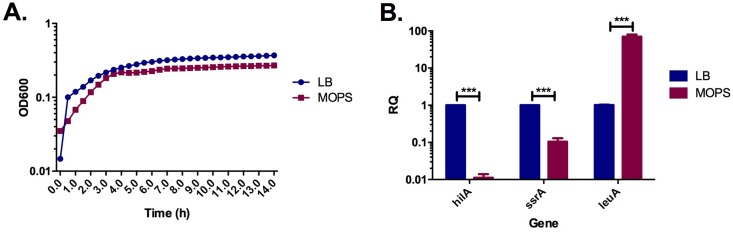
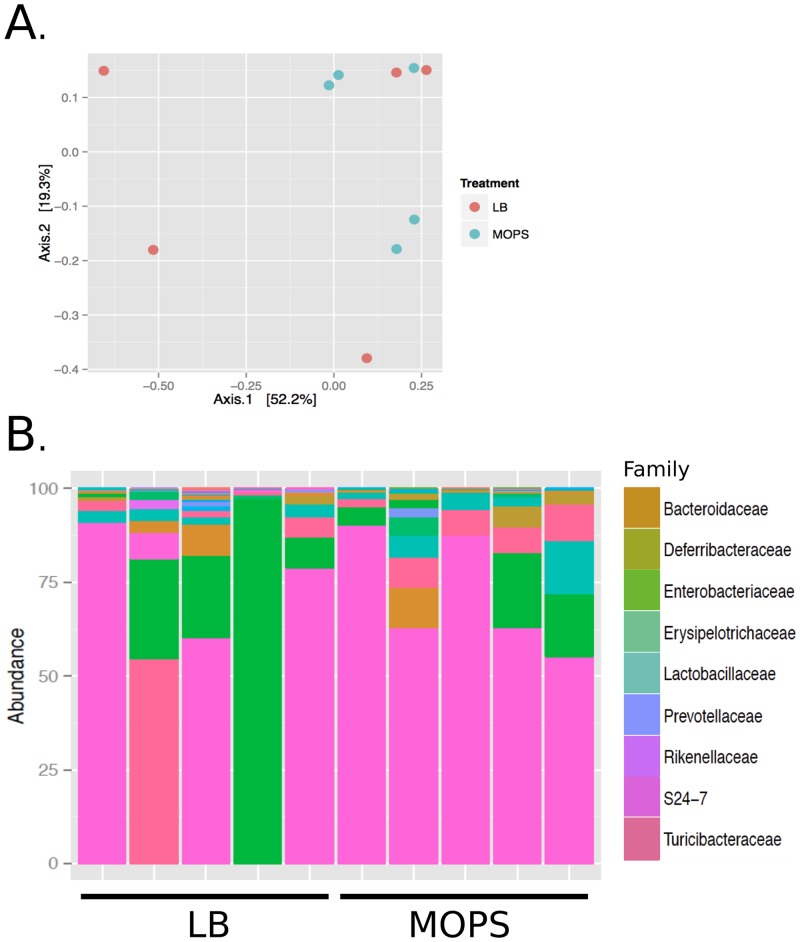
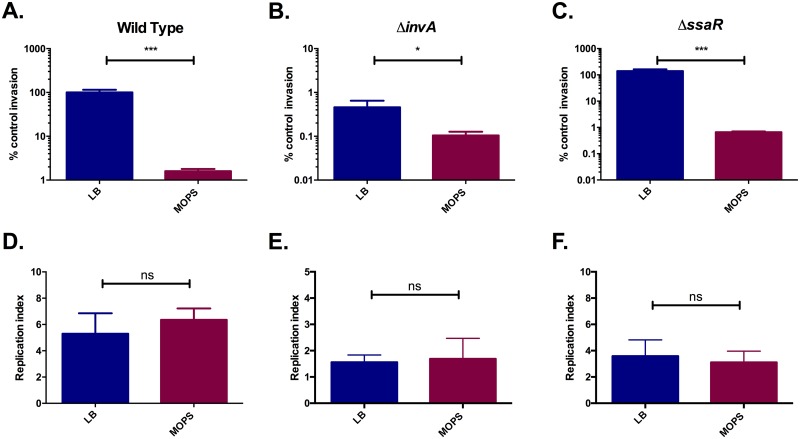
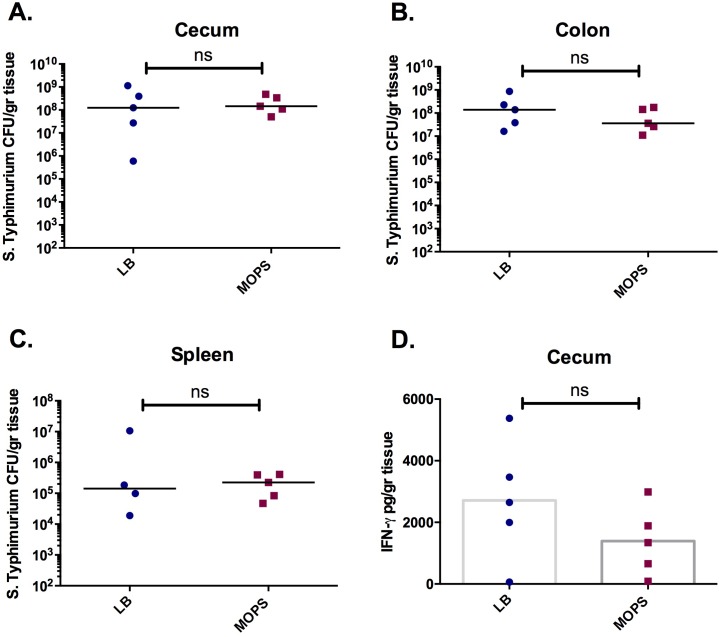
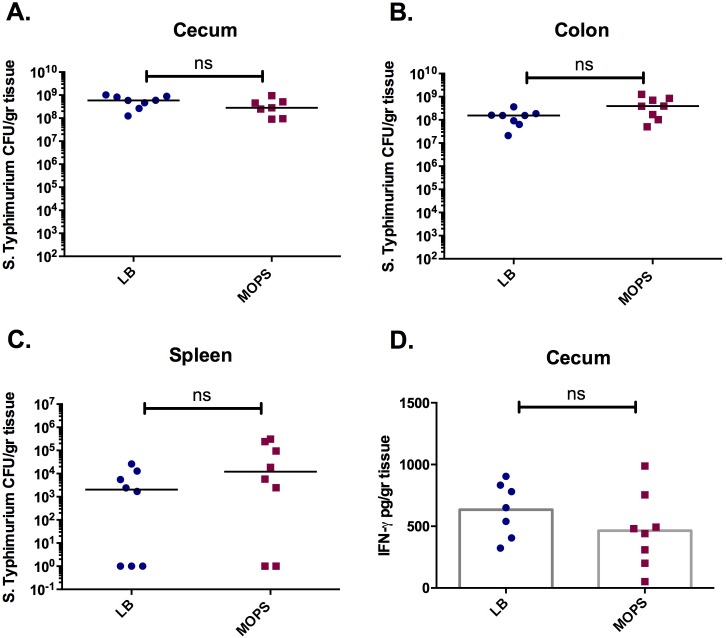
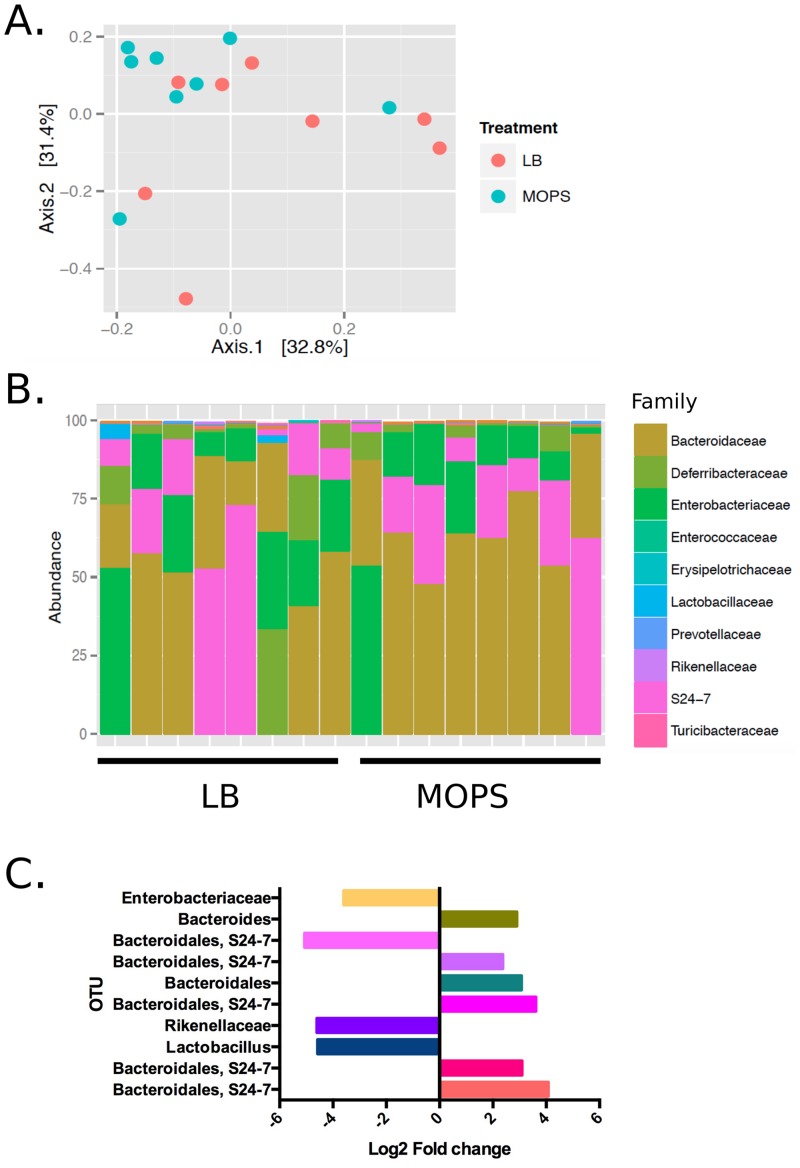
Salmonella enterica serovar Typhimurium (S. Typhimurium) is a foodborne enteric pathogen and a major cause of gastroenteritis in humans. It is known that molecules derived from the human fecal microbiota downregulate S. Typhimurium virulence gene expression and induce a starvation-like response. In this study, S. Typhimurium was cultured in minimal media to mimic starvation conditions such as that experienced by S. Typhimurium in the human intestinal tract, and the pathogen's virulence in vitro and in vivo was measured. S. Typhimurium cultured in minimal media displayed a reduced ability to invade human epithelial cells in a manner that was at least partially independent of the Salmonella Pathogenicity Island 1 (SPI-1) type III secretion system. Nutrient deprivation did not, however, alter the ability of S. Typhimurium to replicate and survive inside epithelial cells. In a murine model of S. Typhimurium-induced gastroenteritis, prior cultivation in minimal media did not alter the pathogen's ability to colonize mice, nor did it affect levels of gastrointestinal inflammation. Upon examining the post-infection fecal gastrointestinal microbiota, we found that specifically in the 129Sv/ImJ murine strain S. Typhimurium cultured in minimal media induced differential microbiota compositional shifts compared to that of S. Typhimurium cultured in rich media. Together these findings demonstrate that S. Typhimurium remains a potent pathogen even in the face of nutritional deprivation, but nevertheless that nutrient deprivation encountered in this environment elicits significant changes in the bacterium genetic programme, as well as its capacity to alter host microbiota composition.
肠炎沙门氏菌鼠伤寒血清型(鼠伤寒沙门氏菌)是一种食源性肠道病原体,也是人类肠胃炎的主要病因。已知源自人类粪便微生物群的分子会下调鼠伤寒沙门氏菌毒力基因的表达,并诱导类似饥饿的反应。在本研究中,将鼠伤寒沙门氏菌在基本培养基中培养,以模拟其在人类肠道中所经历的饥饿条件,并测定该病原体在体外和体内的毒力。在基本培养基中培养的鼠伤寒沙门氏菌侵袭人类上皮细胞的能力降低,且这种降低至少部分独立于沙门氏菌致病岛1(SPI-1)III型分泌系统。然而,营养剥夺并未改变鼠伤寒沙门氏菌在上皮细胞内复制和存活的能力。在鼠伤寒沙门氏菌诱导的肠胃炎小鼠模型中,预先在基本培养基中培养并未改变该病原体在小鼠体内定殖的能力,也未影响胃肠道炎症水平。在检查感染后粪便中的胃肠道微生物群时,我们发现,特别是在129Sv/ImJ小鼠品系中,与在丰富培养基中培养的鼠伤寒沙门氏菌相比,在基本培养基中培养的鼠伤寒沙门氏菌会诱导不同的微生物群组成变化。这些发现共同表明,即使面对营养剥夺,鼠伤寒沙门氏菌仍然是一种强效病原体,但在这种环境中遇到的营养剥夺会引发细菌遗传程序的显著变化,以及其改变宿主微生物群组成的能力。