Jaiswal Vandana, Gahlaut Vijay, Meher Prabina Kumar, Mir Reyazul Rouf, Jaiswal Jai Prakash, Rao Atmakuri Ramakrishna, Balyan Harindra Singh, Gupta Pushpendra Kumar
Department of Genetics and Plant Breeding, Ch. Charan Singh University, Meerut, India.
Centre for Agricultural Bioinformatics, Indian Agricultural Statistics Research Institute, New Delhi, India.
PLoS One. 2016 Jul 21;11(7):e0159343. doi: 10.1371/journal.pone.0159343. eCollection 2016.
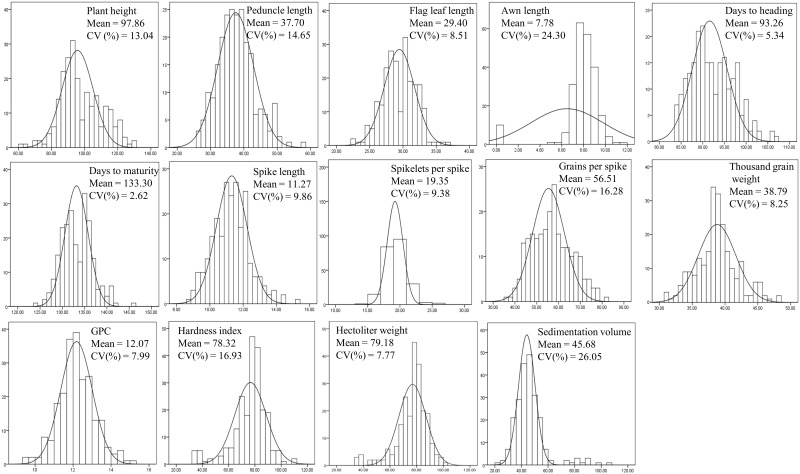
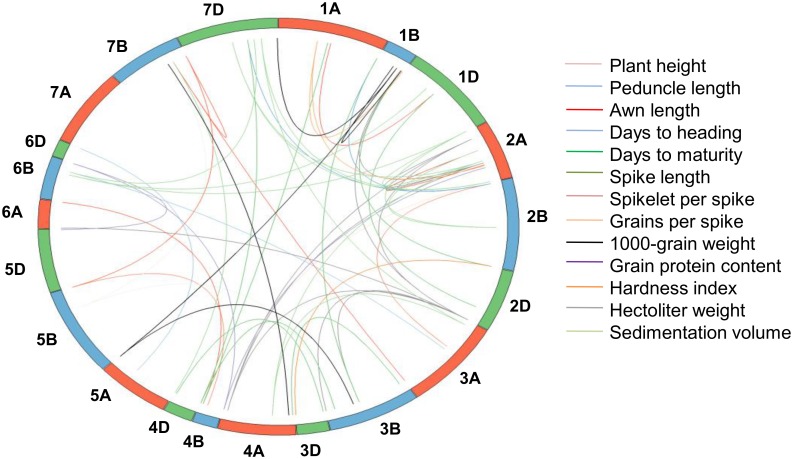
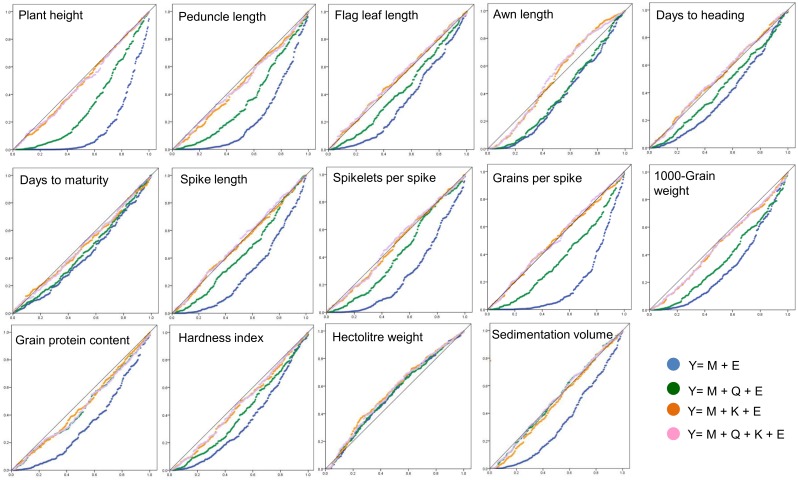
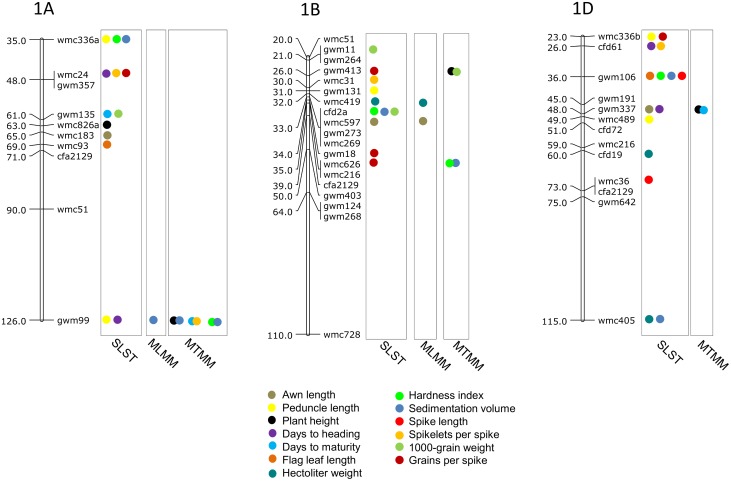
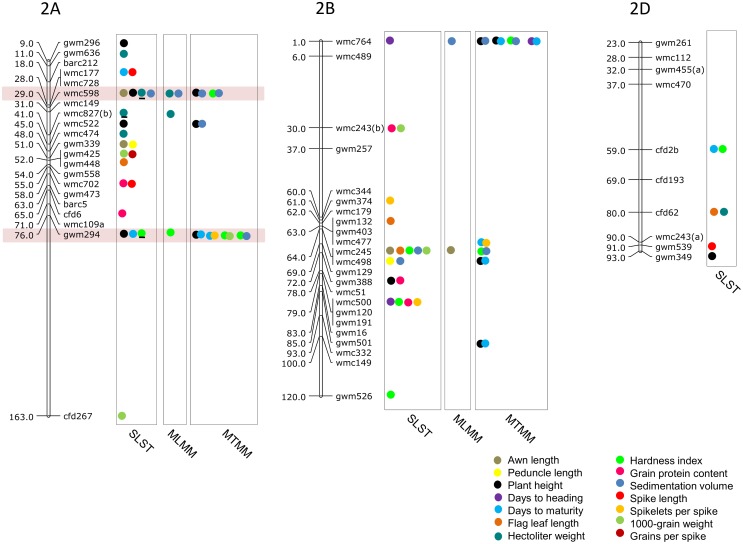
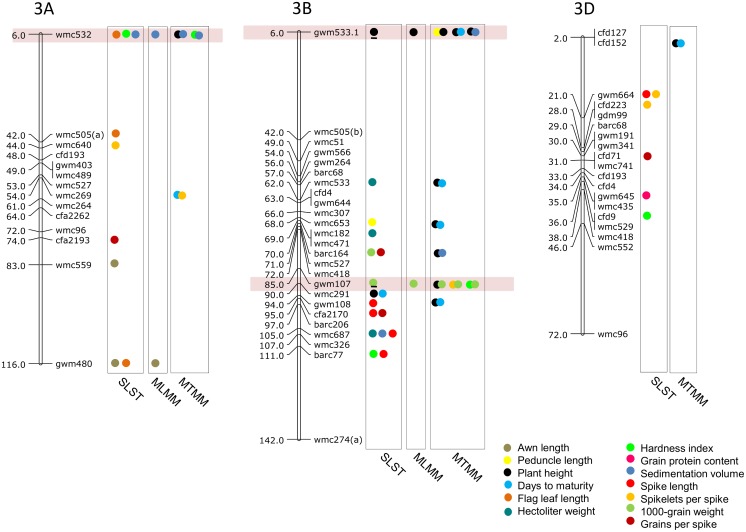
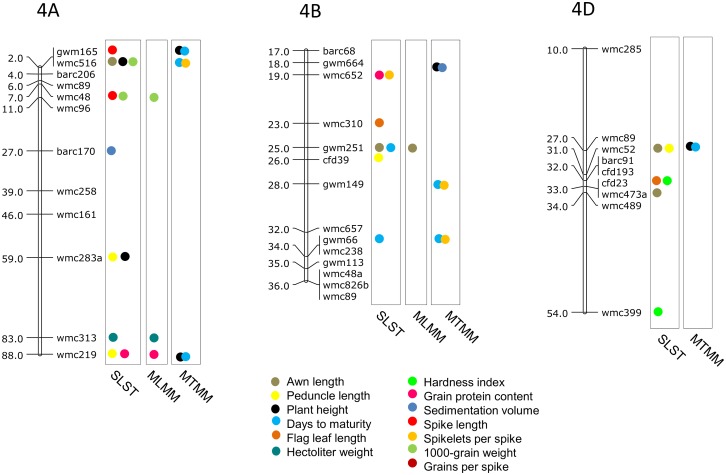
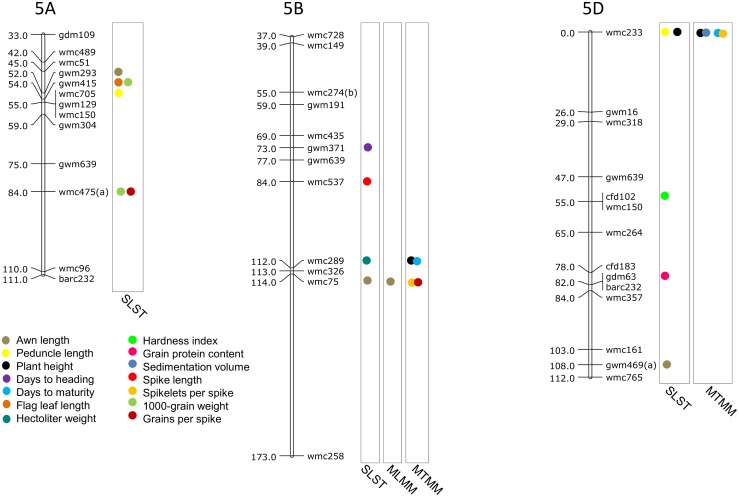
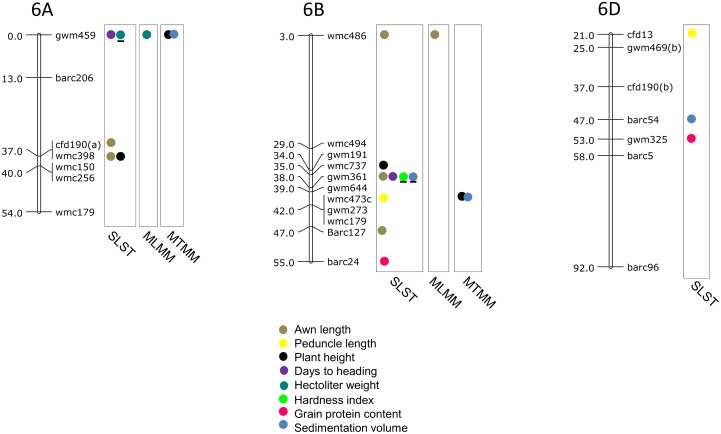
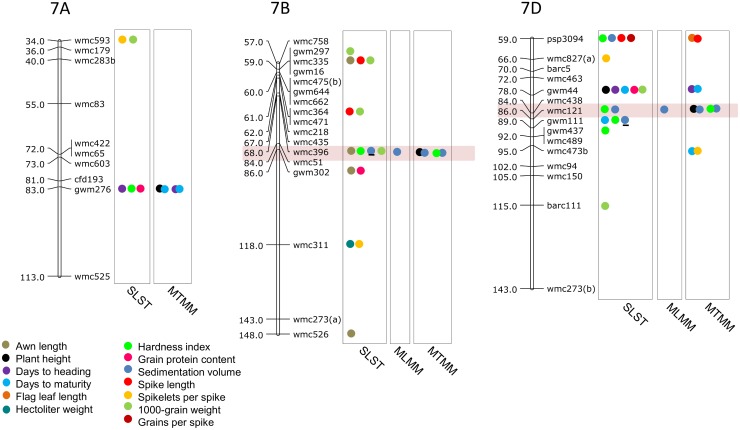
Genome wide association study (GWAS) was conducted for 14 agronomic traits in wheat following widely used single locus single trait (SLST) approach, and two recent approaches viz. multi locus mixed model (MLMM), and multi-trait mixed model (MTMM). Association panel consisted of 230 diverse Indian bread wheat cultivars (released during 1910-2006 for commercial cultivation in different agro-climatic regions in India). Three years phenotypic data for 14 traits and genotyping data for 250 SSR markers (distributed across all the 21 wheat chromosomes) was utilized for GWAS. Using SLST, as many as 213 MTAs (p ≤ 0.05, 129 SSRs) were identified for 14 traits, however, only 10 MTAs (~9%; 10 out of 123 MTAs) qualified FDR criteria; these MTAs did not show any linkage drag. Interestingly, these genomic regions were coincident with the genomic regions that were already known to harbor QTLs for same or related agronomic traits. Using MLMM and MTMM, many more QTLs and markers were identified; 22 MTAs (19 QTLs, 21 markers) using MLMM, and 58 MTAs (29 QTLs, 40 markers) using MTMM were identified. In addition, 63 epistatic QTLs were also identified for 13 of the 14 traits, flag leaf length (FLL) being the only exception. Clearly, the power of association mapping improved due to MLMM and MTMM analyses. The epistatic interactions detected during the present study also provided better insight into genetic architecture of the 14 traits that were examined during the present study. Following eight wheat genotypes carried desirable alleles of QTLs for one or more traits, WH542, NI345, NI170, Sharbati Sonora, A90, HW1085, HYB11, and DWR39 (Pragati). These genotypes and the markers associated with important QTLs for major traits can be used in wheat improvement programs either using marker-assisted recurrent selection (MARS) or pseudo-backcrossing method.
采用广泛使用的单基因座单性状(SLST)方法以及两种最新方法,即多基因座混合模型(MLMM)和多性状混合模型(MTMM),对小麦的14个农艺性状进行了全基因组关联研究(GWAS)。关联群体由230个不同的印度面包小麦品种组成(于1910年至2006年间发布,用于印度不同农业气候区的商业种植)。利用14个性状的三年表型数据和250个SSR标记(分布在所有21条小麦染色体上)的基因分型数据进行GWAS。使用SLST方法,针对14个性状鉴定出多达213个显著关联位点(p≤0.05,129个SSR),然而,只有10个显著关联位点(约9%;123个显著关联位点中的10个)符合错误发现率标准;这些显著关联位点未表现出任何连锁累赘。有趣的是,这些基因组区域与已知含有相同或相关农艺性状QTL的基因组区域重合。使用MLMM和MTMM方法,鉴定出了更多的QTL和标记;使用MLMM鉴定出22个显著关联位点(19个QTL,21个标记),使用MTMM鉴定出58个显著关联位点(29个QTL,40个标记)。此外,还针对14个性状中的13个鉴定出63个上位性QTL,旗叶长度(FLL)是唯一的例外。显然,由于MLMM和MTMM分析,关联作图的功效得到了提高。本研究中检测到的上位性相互作用也为研究的14个性状的遗传结构提供了更好的见解。以下8个小麦基因型携带一个或多个性状的QTL的理想等位基因,即WH542、NI345、NI170、沙巴蒂索诺拉、A90、HW1085、HYB11和DWR39(普拉加蒂)。这些基因型以及与主要性状重要QTL相关的标记可用于小麦改良计划,采用标记辅助轮回选择(MARS)或伪回交方法。