Di Marco Elyse, Gray Stephen P, Kennedy Kit, Szyndralewiez Cedric, Lyle Alicia N, Lassègue Bernard, Griendling Kathy K, Cooper Mark E, Schmidt Harald H H W, Jandeleit-Dahm Karin A M
Diabetic Complications Division, Baker IDI Heart & Diabetes Institute, Melbourne, Australia; Department of Medicine, Monash University, Melbourne, Australia.
Diabetic Complications Division, Baker IDI Heart & Diabetes Institute, Melbourne, Australia.
Free Radic Biol Med. 2016 Aug;97:556-567. doi: 10.1016/j.freeradbiomed.2016.07.013. Epub 2016 Jul 19.
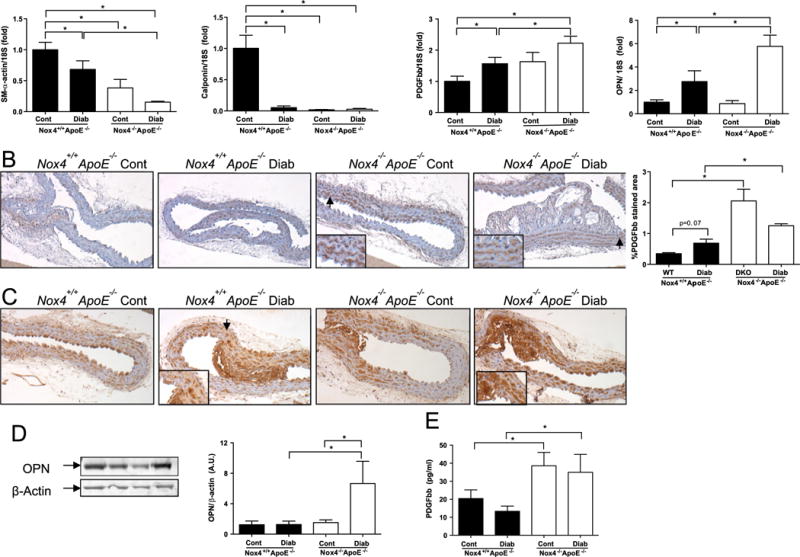
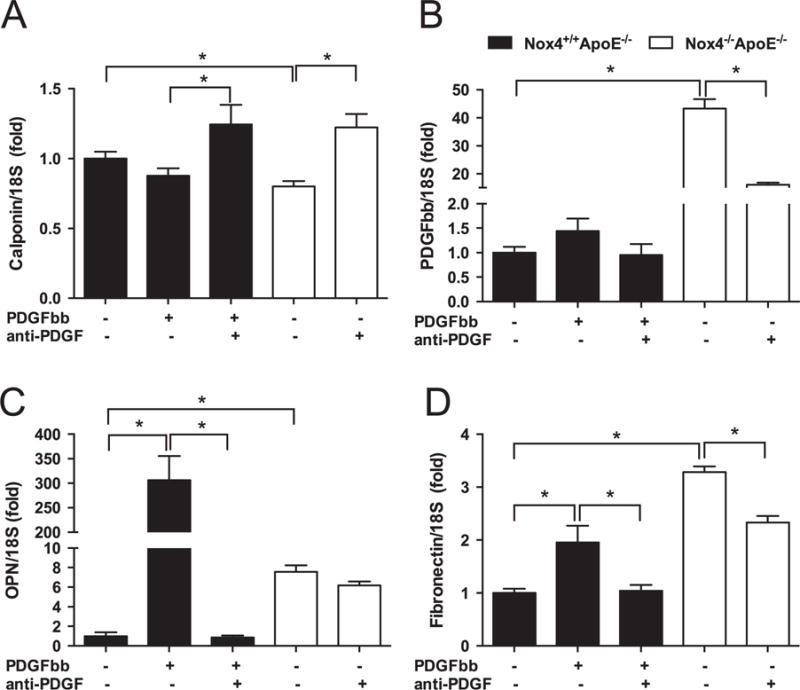
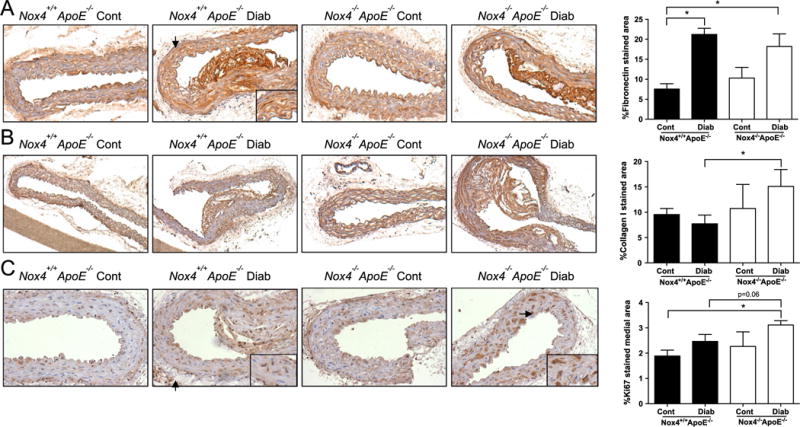
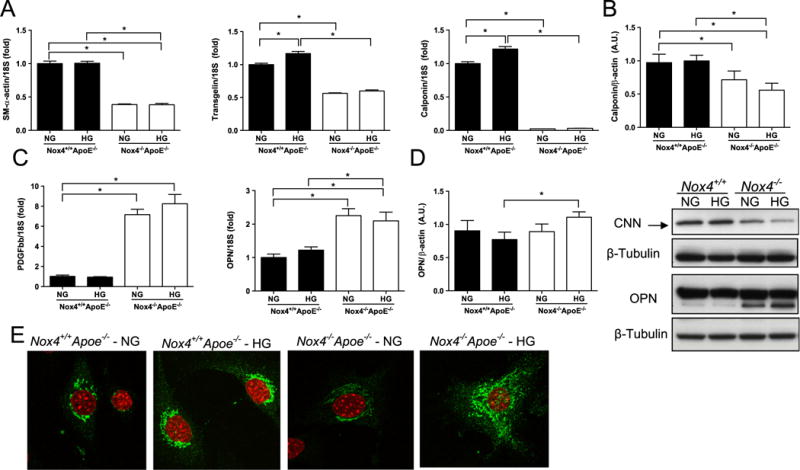
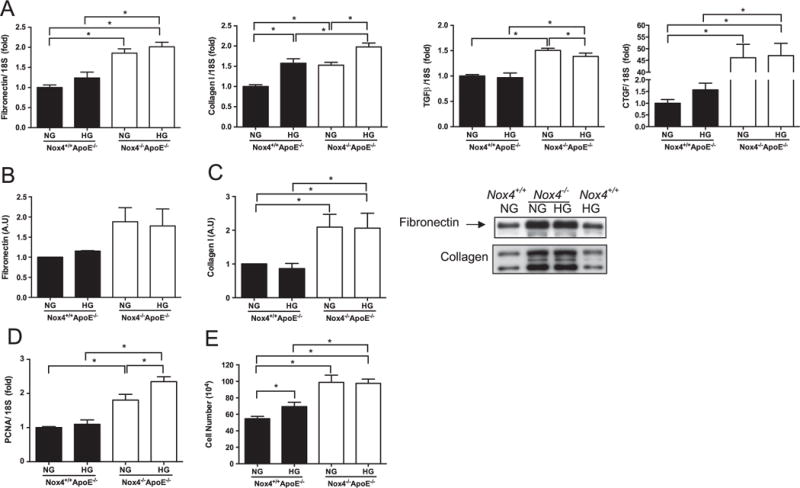
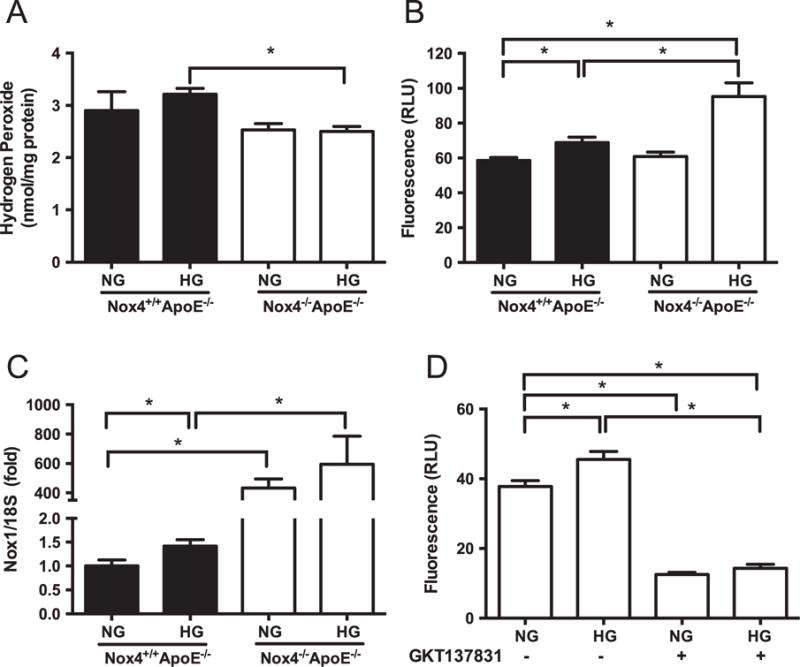
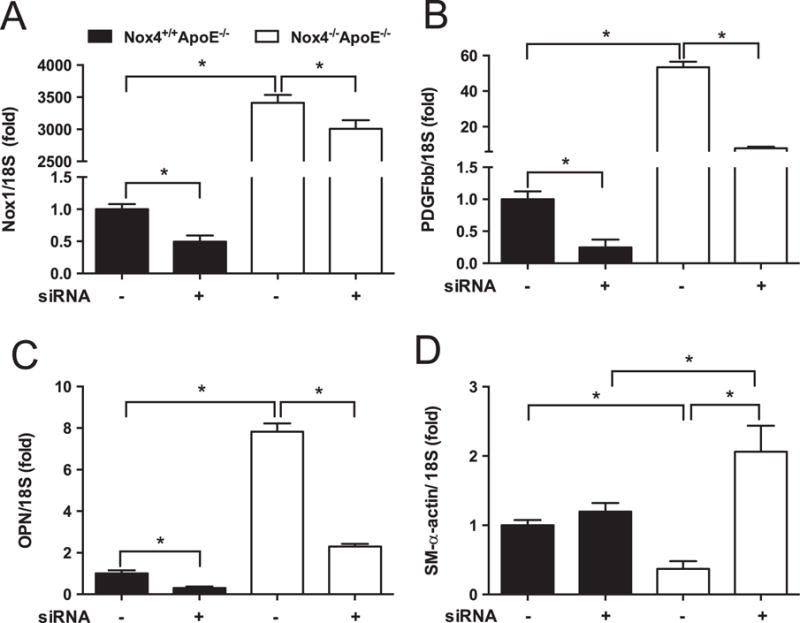
Smooth muscle cell (SMC) proliferation and fibrosis contribute to the development of advanced atherosclerotic lesions. Oxidative stress caused by increased production or unphysiological location of reactive oxygen species (ROS) is a known major pathomechanism. However, in atherosclerosis, in particular under hyperglycaemic/diabetic conditions, the hydrogen peroxide-producing NADPH oxidase type 4 (NOX4) is protective. Here we aim to elucidate the mechanisms underlying this paradoxical atheroprotection of vascular smooth muscle NOX4 under conditions of normo- and hyperglycaemia both in vivo and ex vivo. Following 20-weeks of streptozotocin-induced diabetes, Apoe(-/-) mice showed a reduction in SM-alpha-actin and calponin gene expression with concomitant increases in platelet-derived growth factor (PDGF), osteopontin (OPN) and the extracellular matrix (ECM) protein fibronectin when compared to non-diabetic controls. Genetic deletion of Nox4 (Nox4(-/)(-)Apoe(-/-)) exacerbated diabetes-induced expression of PDGF, OPN, collagen I, and proliferation marker Ki67. Aortic SMCs isolated from NOX4-deficient mice exhibited a dedifferentiated phenotype including loss of contractile gene expression, increased proliferation and ECM production as well as elevated levels of NOX1-associated ROS. Mechanistic studies revealed that elevated PDGF signalling in NOX4-deficient SMCs mediated the loss of calponin and increase in fibronectin, while the upregulation of NOX1 was associated with the increased expression of OPN and markers of proliferation. These findings demonstrate that NOX4 actively regulates SMC pathophysiological responses in diabetic Apoe(-/-) mice and in primary mouse SMCs through the activities of PDGF and NOX1.
平滑肌细胞(SMC)增殖和纤维化促进晚期动脉粥样硬化病变的发展。由活性氧(ROS)产生增加或非生理性定位引起的氧化应激是一种已知的主要发病机制。然而,在动脉粥样硬化中,尤其是在高血糖/糖尿病条件下,产生过氧化氢的4型烟酰胺腺嘌呤二核苷酸磷酸氧化酶(NOX4)具有保护作用。在这里,我们旨在阐明在体内和体外正常血糖和高血糖条件下,血管平滑肌NOX4这种矛盾的抗动脉粥样硬化保护作用的潜在机制。在链脲佐菌素诱导的糖尿病20周后,与非糖尿病对照组相比,Apoe(-/-)小鼠的平滑肌α-肌动蛋白和钙调蛋白基因表达降低,同时血小板衍生生长因子(PDGF)、骨桥蛋白(OPN)和细胞外基质(ECM)蛋白纤连蛋白增加。Nox4基因缺失(Nox4(-/-)Apoe(-/-))加剧了糖尿病诱导的PDGF、OPN、I型胶原蛋白和增殖标志物Ki67的表达。从NOX4缺陷小鼠分离的主动脉SMC表现出一种去分化表型,包括收缩基因表达丧失、增殖和ECM产生增加以及与NOX1相关的ROS水平升高。机制研究表明,NOX4缺陷的SMC中PDGF信号升高介导了钙调蛋白的丧失和纤连蛋白的增加,而NOX1的上调与OPN表达增加和增殖标志物有关。这些发现表明,NOX4通过PDGF和NOX1的活性积极调节糖尿病Apoe(-/-)小鼠和原代小鼠SMC中的SMC病理生理反应。