Chung Taemoon, Na Juri, Kim Young-Il, Chang Da-Young, Kim Young Il, Kim Hyeonjin, Moon Ho Eun, Kang Keon Wook, Lee Dong Soo, Chung June-Key, Kim Sung-Soo, Suh-Kim Haeyoung, Paek Sun Ha, Youn Hyewon
1. Department of Nuclear Medicine, Seoul National University College of Medicine, Seoul, Korea.; 2. Department of Biomedical Sciences, Seoul National University College of Medicine, Seoul, Korea.; 3. Cancer Research Institute, Seoul National University College of Medicine, Seoul, Korea.; 4. Institute of Radiation Medicine, Seoul National University Medical Research Center, Seoul, Korea.
1. Department of Nuclear Medicine, Seoul National University College of Medicine, Seoul, Korea.; 5. Department of Molecular Medicine and Biopharmaceutical Sciences, Seoul National University, Seoul, Korea.
Theranostics. 2016 Jun 17;6(10):1477-90. doi: 10.7150/thno.14158. eCollection 2016.
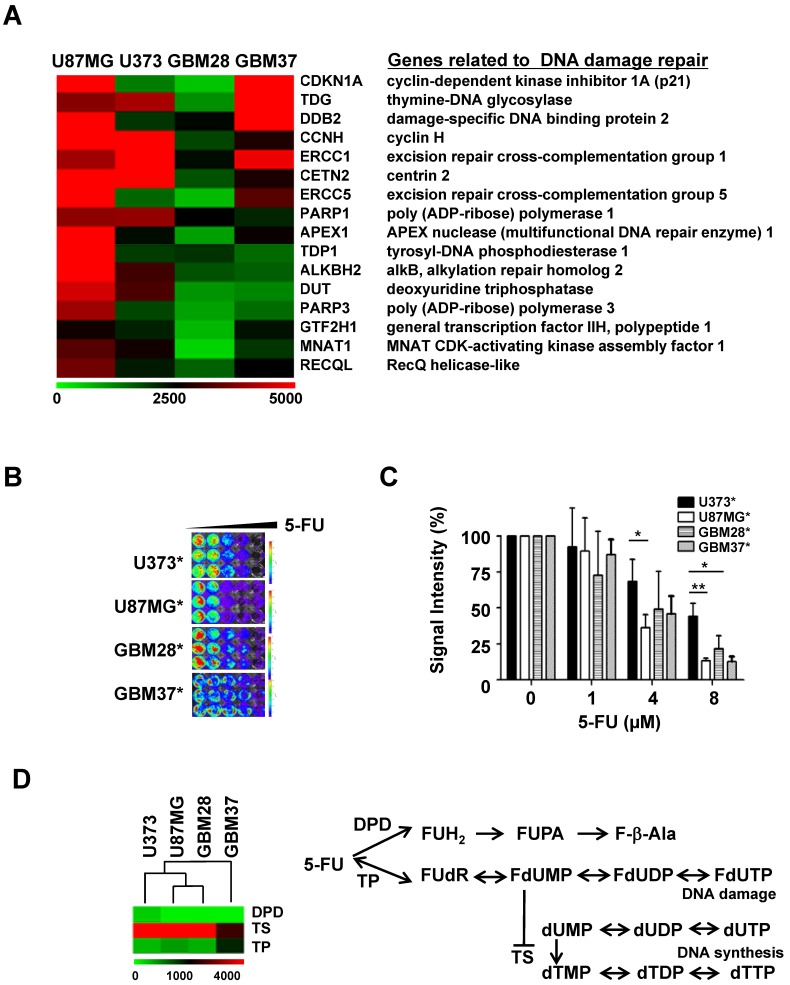
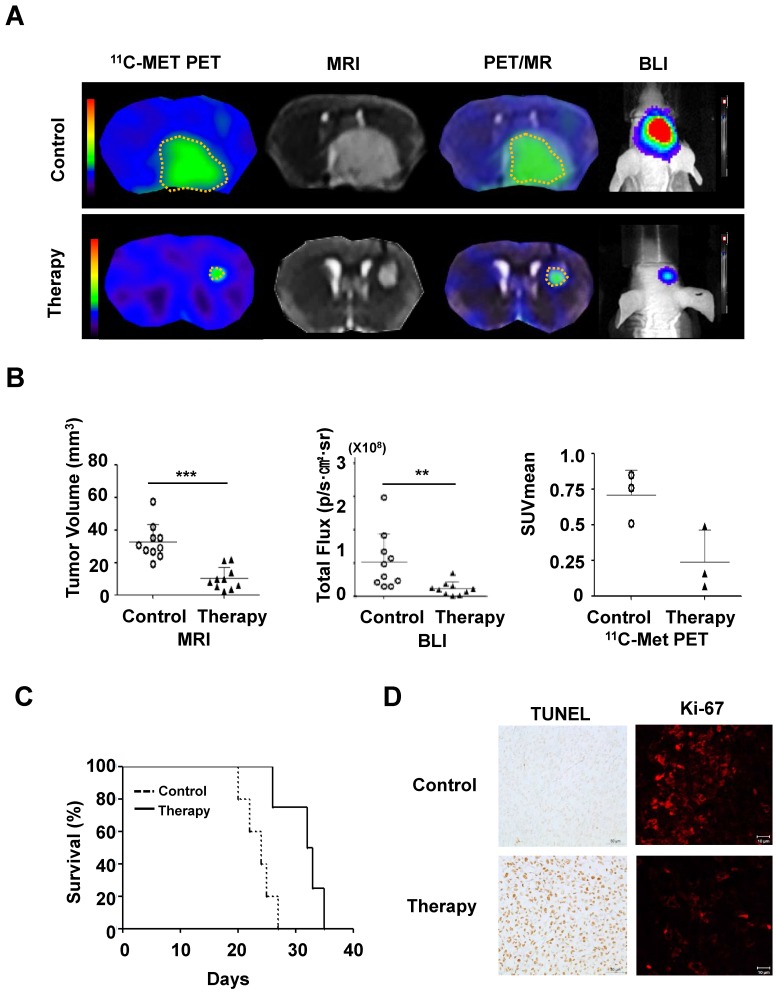
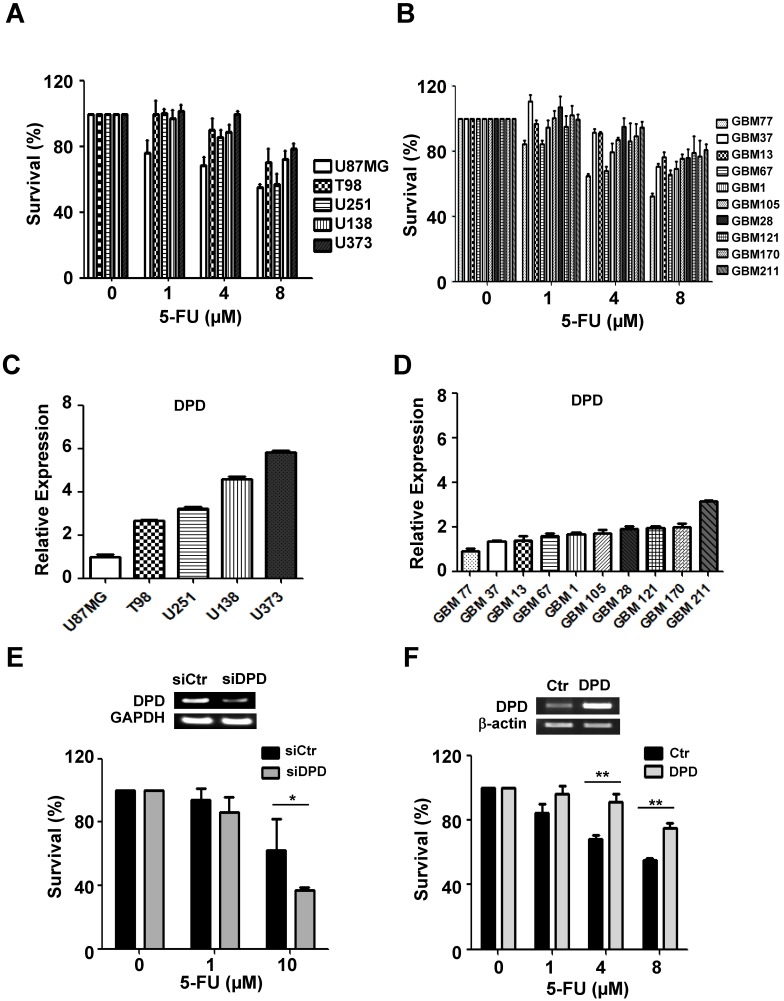
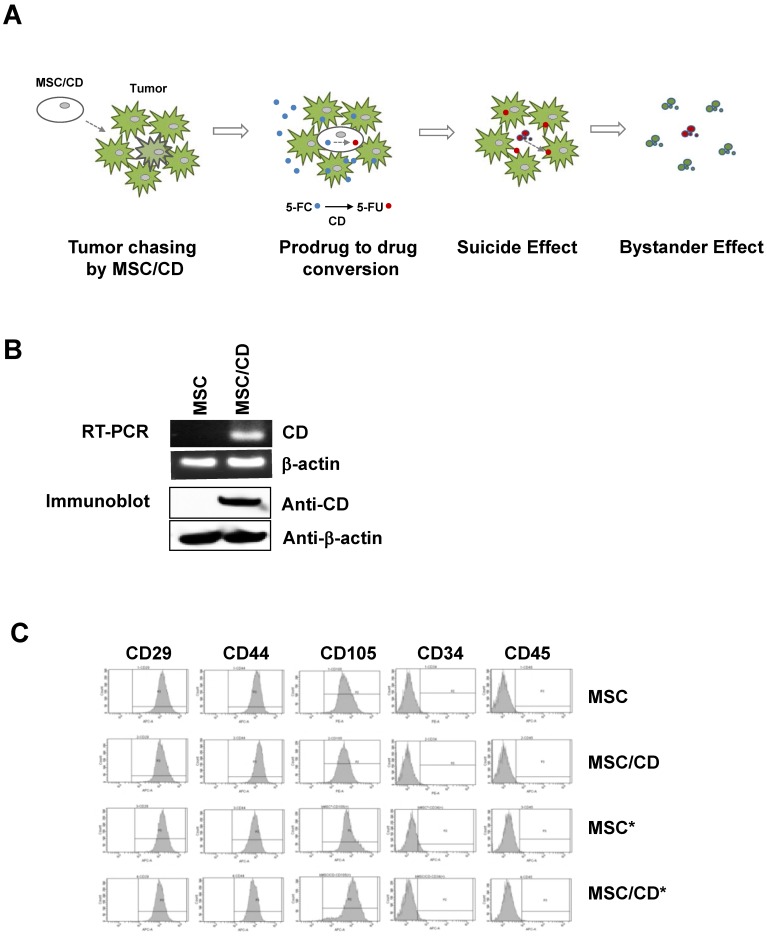
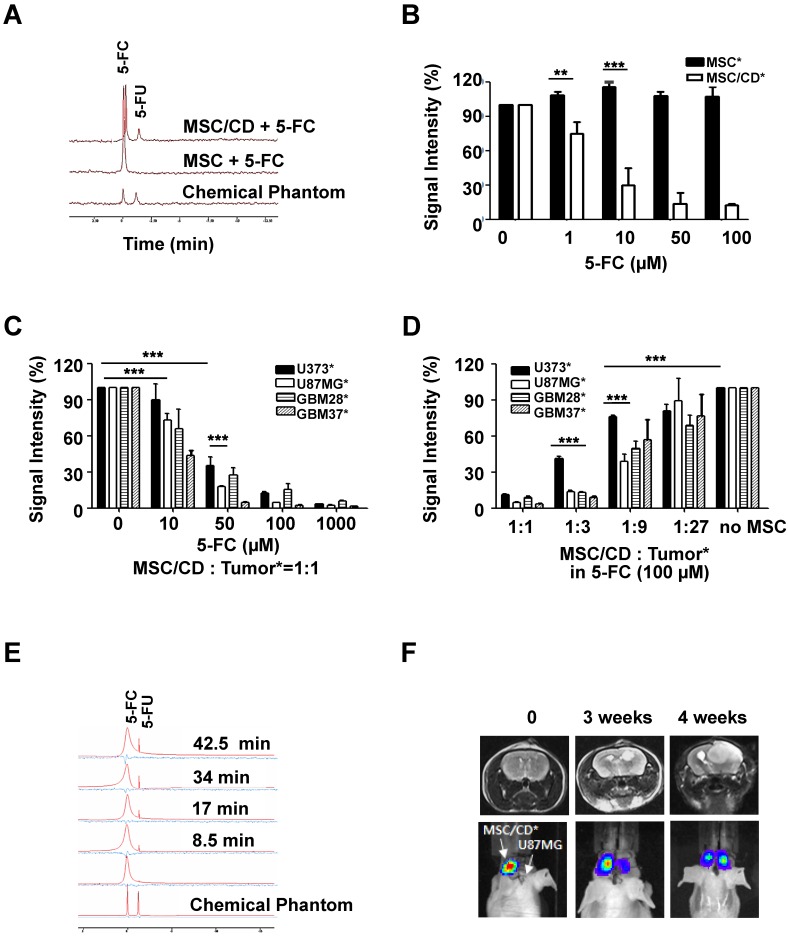
We investigated a therapeutic strategy for recurrent malignant gliomas using mesenchymal stem cells (MSC), expressing cytosine deaminase (CD), and prodrug 5-Fluorocytosine (5-FC) as a more specific and less toxic option. MSCs are emerging as a novel cell therapeutic agent with a cancer-targeting property, and CD is considered a promising enzyme in cancer gene therapy which can convert non-toxic 5-FC to toxic 5-Fluorouracil (5-FU). Therefore, use of prodrug 5-FC can minimize normal cell toxicity. Analyses of microarrays revealed that targeting DNA damage and its repair is a selectable option for gliomas after the standard chemo/radio-therapy. 5-FU is the most frequently used anti-cancer drug, which induces DNA breaks. Because dihydropyrimidine dehydrogenase (DPD) was reported to be involved in 5-FU metabolism to block DNA damage, we compared the survival rate with 5-FU treatment and the level of DPD expression in 15 different glioma cell lines. DPD-deficient cells showed higher sensitivity to 5-FU, and the regulation of DPD level by either siRNA or overexpression was directly related to the 5-FU sensitivity. For MSC/CD with 5-FC therapy, DPD-deficient cells such as U87MG, GBM28, and GBM37 showed higher sensitivity compared to DPD-high U373 cells. Effective inhibition of tumor growth was also observed in an orthotopic mouse model using DPD- deficient U87MG, indicating that DPD gene expression is indeed closely related to the efficacy of MSC/CD-mediated 5-FC therapy. Our results suggested that DPD can be used as a biomarker for selecting glioma patients who may possibly benefit from this therapy.
我们研究了一种针对复发性恶性胶质瘤的治疗策略,即使用表达胞嘧啶脱氨酶(CD)的间充质干细胞(MSC)和前体药物5-氟胞嘧啶(5-FC),这是一种更具特异性且毒性较小的选择。MSC正作为一种具有癌症靶向特性的新型细胞治疗剂出现,而CD被认为是癌症基因治疗中有前景的酶,它可将无毒的5-FC转化为有毒的5-氟尿嘧啶(5-FU)。因此,使用前体药物5-FC可将正常细胞毒性降至最低。微阵列分析显示,在标准化学/放射治疗后,针对DNA损伤及其修复进行靶向治疗是胶质瘤的一种可选方案。5-FU是最常用的抗癌药物,可诱导DNA断裂。由于据报道二氢嘧啶脱氢酶(DPD)参与5-FU代谢以阻断DNA损伤,我们比较了15种不同胶质瘤细胞系在5-FU治疗后的存活率以及DPD表达水平。缺乏DPD的细胞对5-FU表现出更高的敏感性,通过小干扰RNA(siRNA)或过表达对DPD水平的调节与5-FU敏感性直接相关。对于采用5-FC治疗的MSC/CD,与DPD高表达的U373细胞相比,缺乏DPD的细胞如U87MG、GBM28和GBM37表现出更高的敏感性。在使用缺乏DPD的U87MG构建的原位小鼠模型中也观察到了对肿瘤生长的有效抑制,这表明DPD基因表达确实与MSC/CD介导的5-FC治疗的疗效密切相关。我们的结果表明,DPD可作为一种生物标志物,用于选择可能从该治疗中获益的胶质瘤患者。