Yang Q, Zheng C, Cao J, Cao G, Shou P, Lin L, Velletri T, Jiang M, Chen Q, Han Y, Li F, Wang Y, Cao W, Shi Y
Key Laboratory of Stem Cell Biology, Institute of Health Sciences, Shanghai Jiao Tong University School of Medicine (SJTUSM), Shanghai Institutes for Biological Sciences (SIBS), Chinese Academy of Sciences (CAS), Shanghai 200025, China.
The First Affiliated Hospital of Soochow University, Institutes for Translational Medicine, Soochow University, Suzhou, China.
Cell Death Differ. 2016 Nov 1;23(11):1850-1861. doi: 10.1038/cdd.2016.71. Epub 2016 Jul 22.
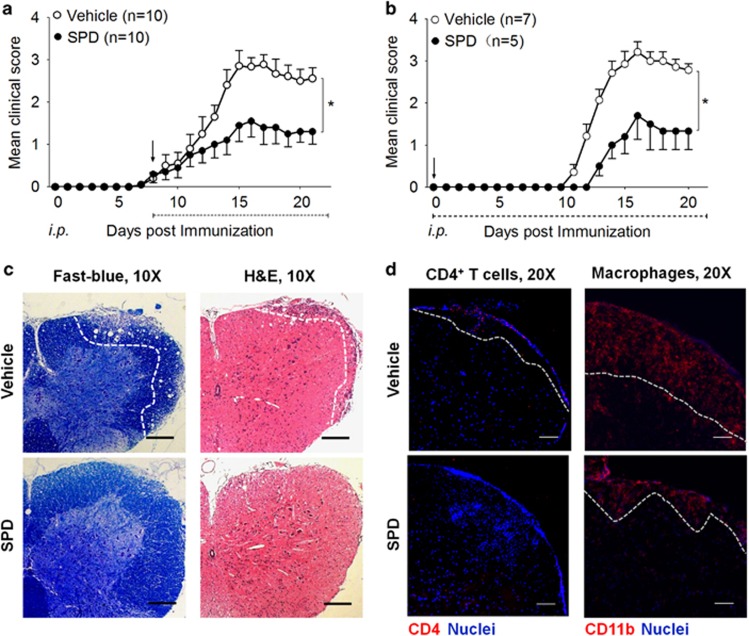
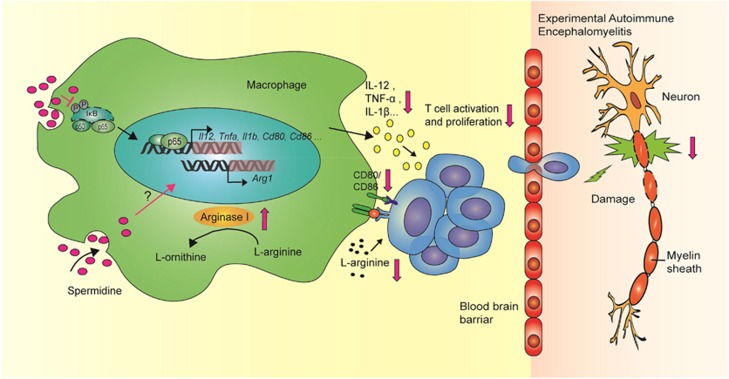
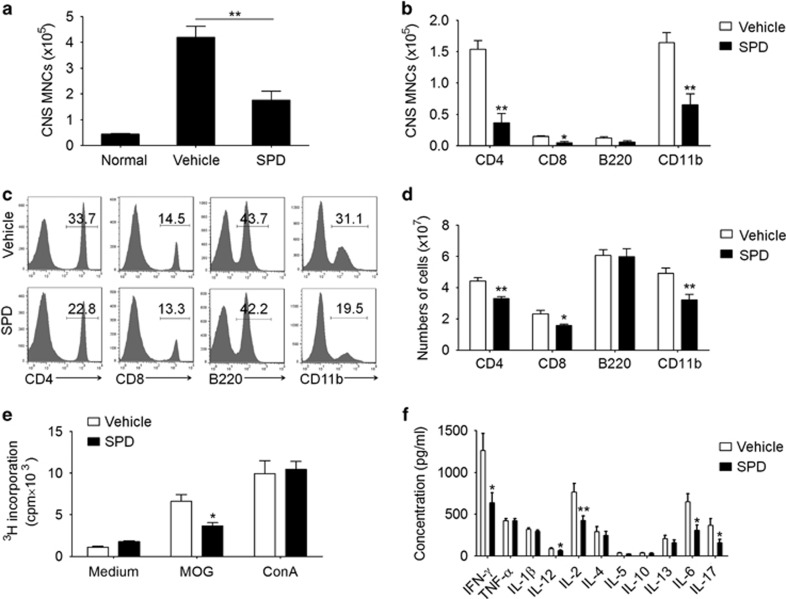
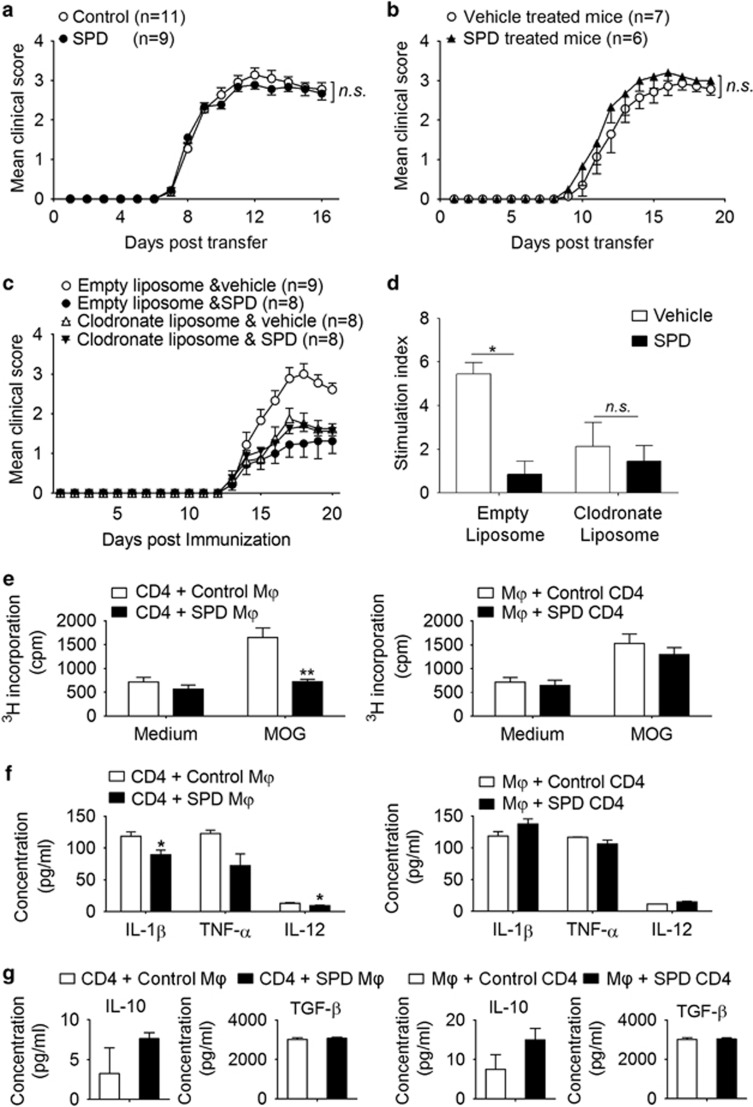
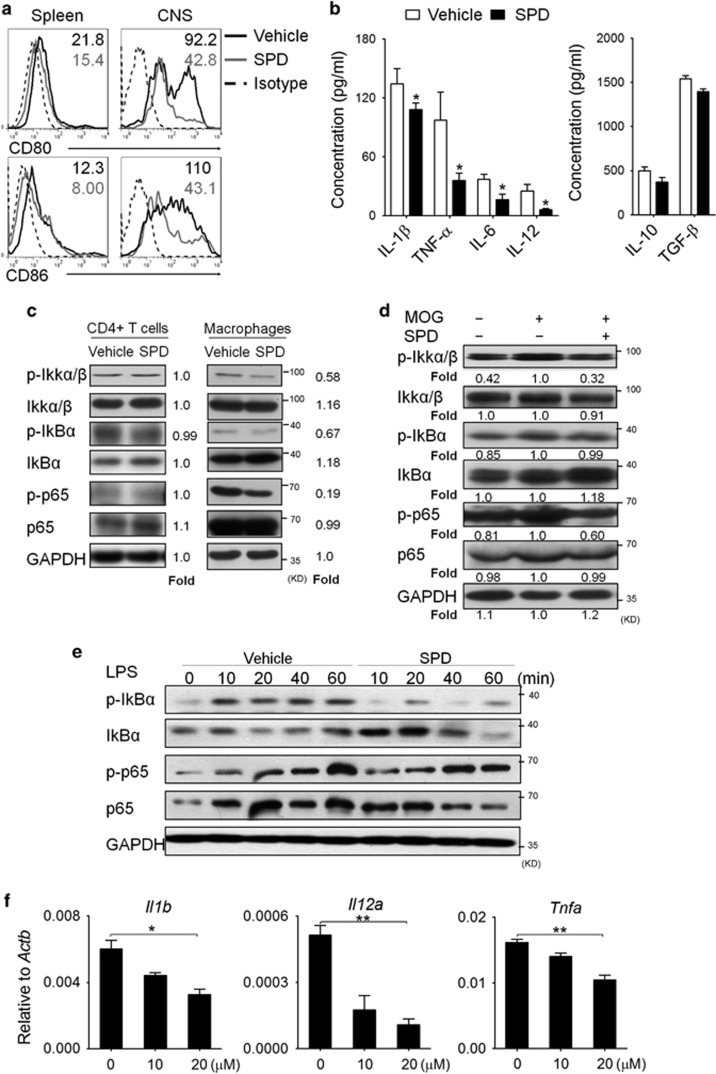
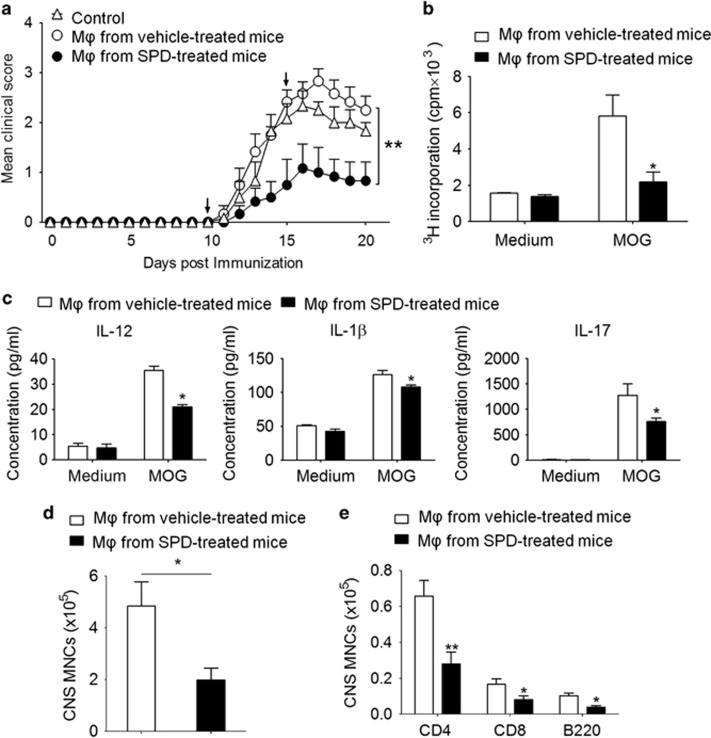
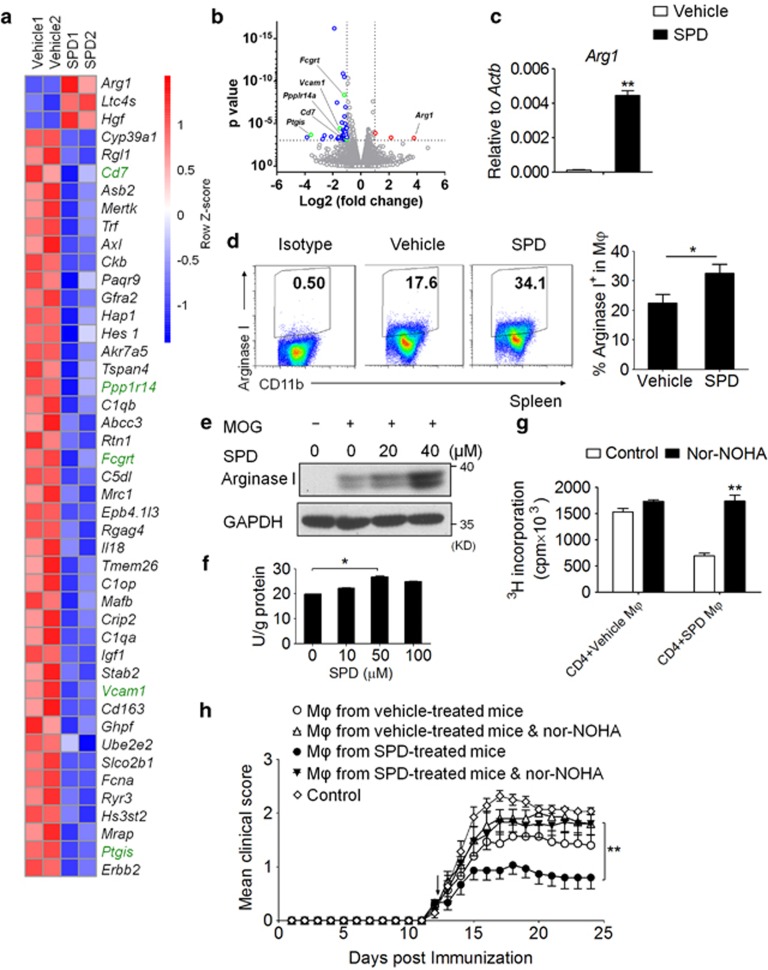
Multiple sclerosis (MS) is a chronic and debilitating autoimmune disease, characterized by chronic inflammatory demyelination in the nervous tissue and subsequent neurological dysfunction. Spermidine, a natural polyamine, has been shown to affect inflammation in some experimental models. We show here that spermidine could alleviate experimental autoimmune encephalomyelitis (EAE), a model for MS, through regulating the infiltration of CD4 T cells and macrophages in central nervous system. Unexpectedly, we found that spermidine treatment of MOG-specific T cells did not affect their pathogenic potency upon adaptive transfer; however, spermidine diminished the ability of macrophages in activating MOG-specific T cells ex vivo. Depletion of macrophages in diseased mice completely abolished the therapeutic effect of spermidine, indicating a critical role of spermidine-activated macrophages. Mechanistically, spermidine was found to specifically suppress the expression of interleukin-1beta (IL-1β), IL-12 and CD80 while enhance the expression of arginase 1 in macrophages. Interestingly, macrophages from spermidine-treated mice could also reverse EAE progression, while pretreatment of those macrophages with the arginase 1 inhibitor abrogated the therapeutic effect. Therefore, our studies revealed a critical role of macrophages in spermidine-mediated treatment on EAE and provided novel information for better management of MS.
多发性硬化症(MS)是一种慢性致残性自身免疫性疾病,其特征为神经组织中的慢性炎症性脱髓鞘及随后的神经功能障碍。亚精胺是一种天然多胺,在一些实验模型中已显示出对炎症有影响。我们在此表明,亚精胺可通过调节中枢神经系统中CD4 T细胞和巨噬细胞的浸润来减轻实验性自身免疫性脑脊髓炎(EAE,一种MS模型)。出乎意料的是,我们发现用亚精胺处理髓鞘少突胶质细胞糖蛋白(MOG)特异性T细胞在适应性转移后并不影响其致病能力;然而,亚精胺在体外降低了巨噬细胞激活MOG特异性T细胞的能力。耗竭患病小鼠体内的巨噬细胞完全消除了亚精胺的治疗效果,表明亚精胺激活的巨噬细胞起关键作用。从机制上讲,发现亚精胺可特异性抑制巨噬细胞中白细胞介素-1β(IL-1β)、IL-12和CD80的表达,同时增强精氨酸酶1的表达。有趣的是,来自用亚精胺处理过的小鼠的巨噬细胞也能逆转EAE的进展,而用精氨酸酶1抑制剂对这些巨噬细胞进行预处理则消除了治疗效果。因此,我们的研究揭示了巨噬细胞在亚精胺介导的EAE治疗中的关键作用,并为更好地治疗MS提供了新信息。