Shannan Batool, Watters Andrea, Chen Quan, Mollin Stefan, Dörr Markus, Meggers Eric, Xu Xiaowei, Gimotty Phyllis A, Perego Michela, Li Ling, Benci Joseph, Krepler Clemens, Brafford Patricia, Zhang Jie, Wei Zhi, Zhang Gao, Liu Qin, Yin Xiangfan, Nathanson Katherine L, Herlyn Meenhard, Vultur Adina
Program of Cellular and Molecular Oncogenesis, Melanoma Research Center, The Wistar Institute, Philadelphia, PA, USA.
Department of Dermatology, University Hospital Essen, Essen, Germany.
Oncotarget. 2016 Aug 23;7(34):54897-54912. doi: 10.18632/oncotarget.10703.
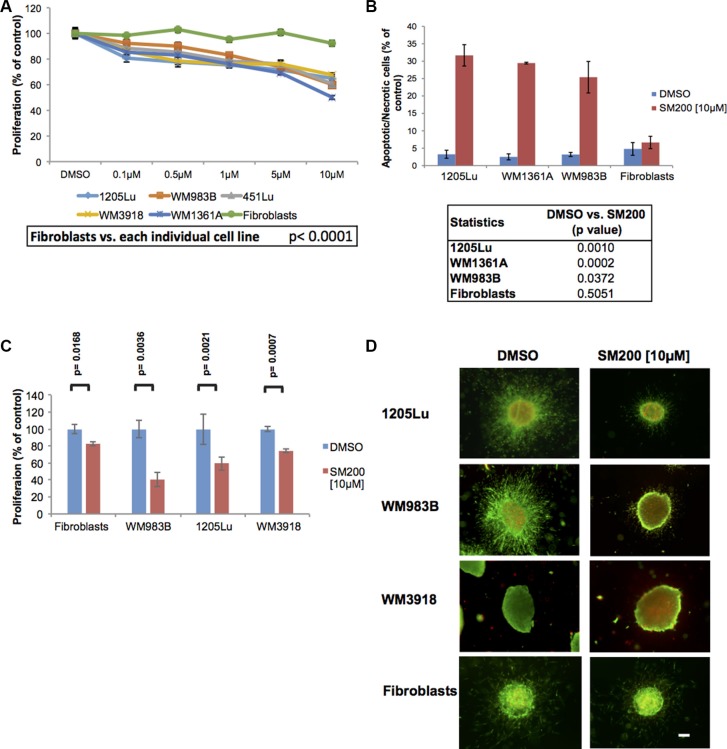
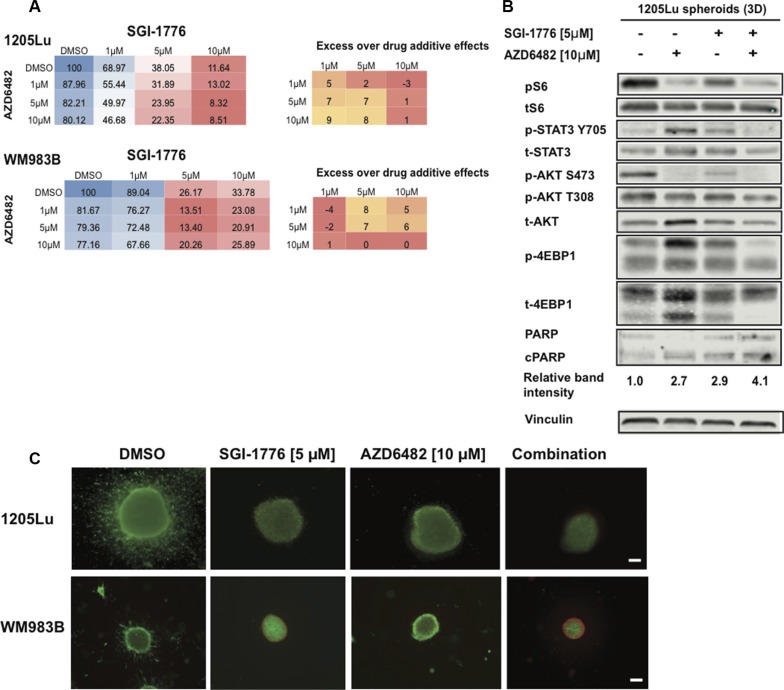
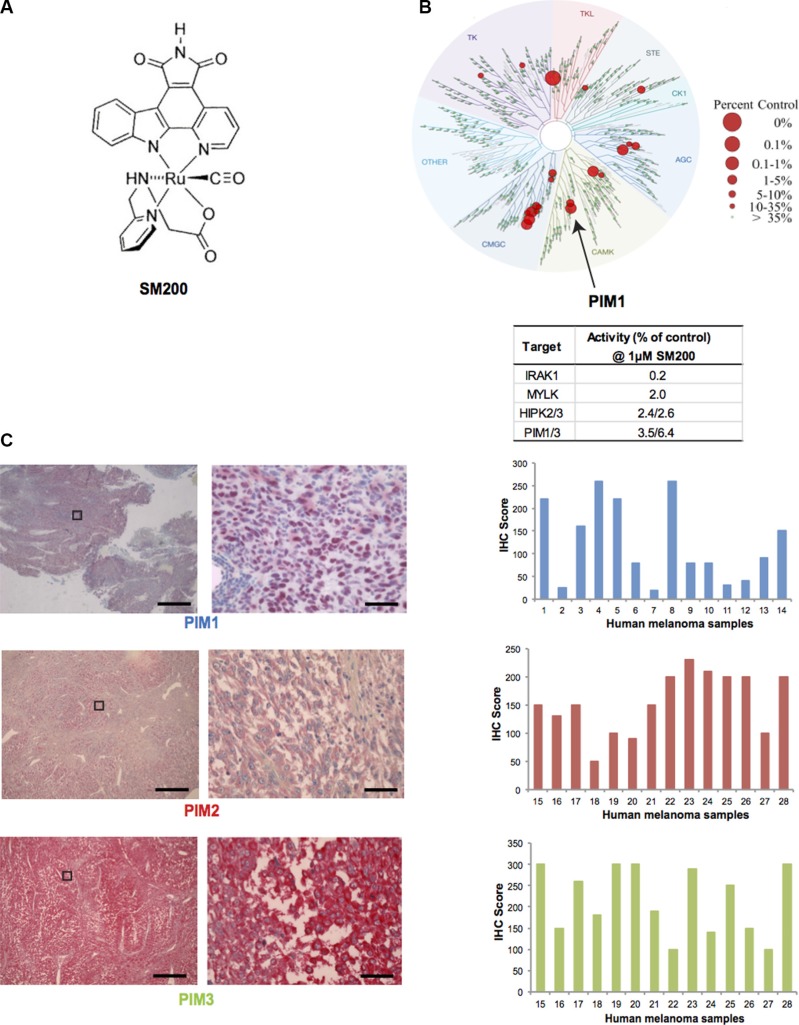
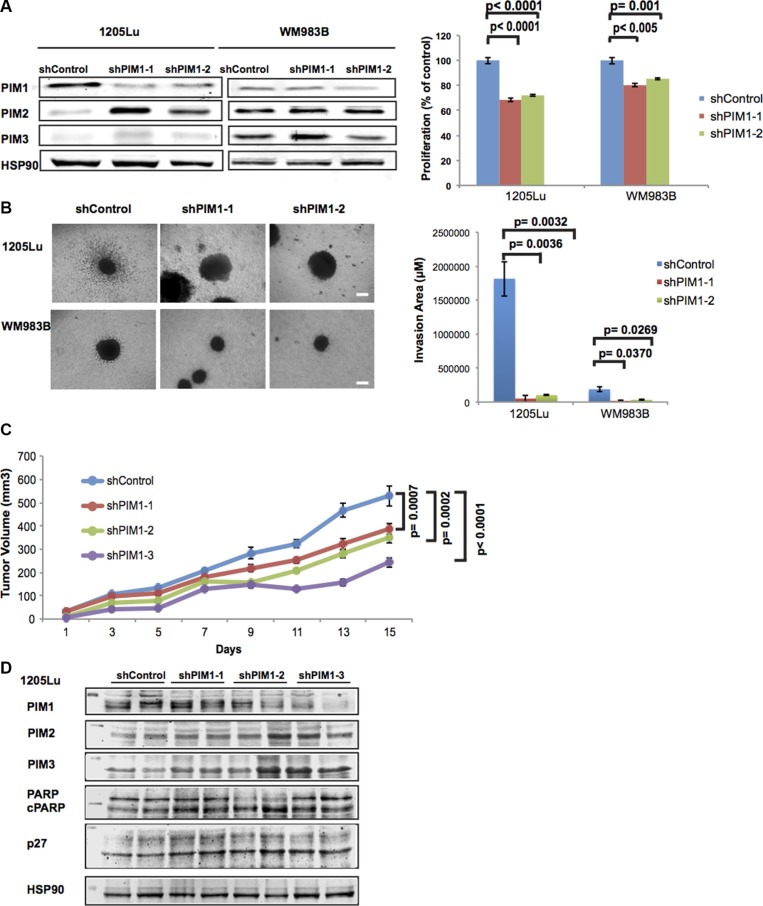
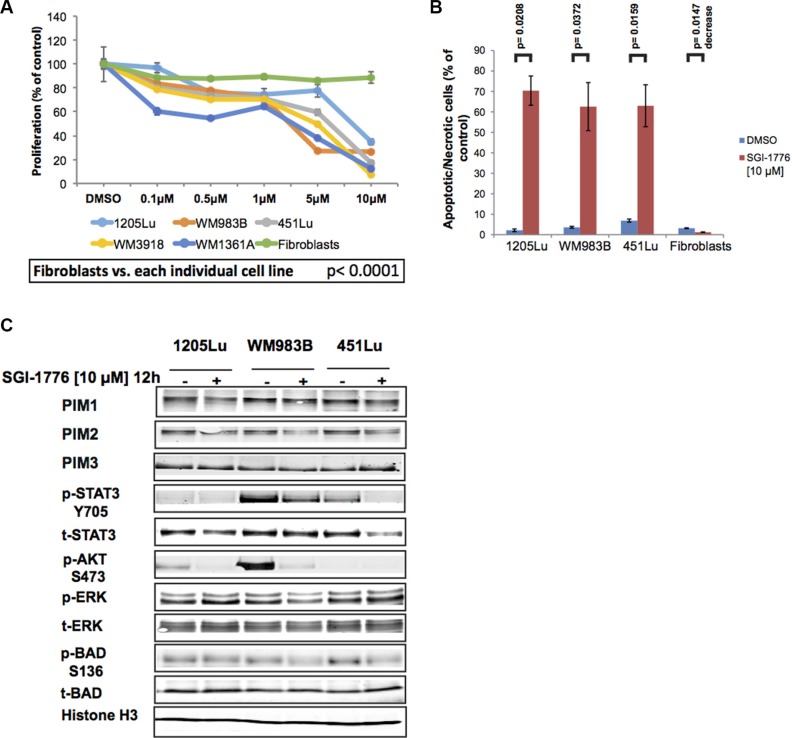
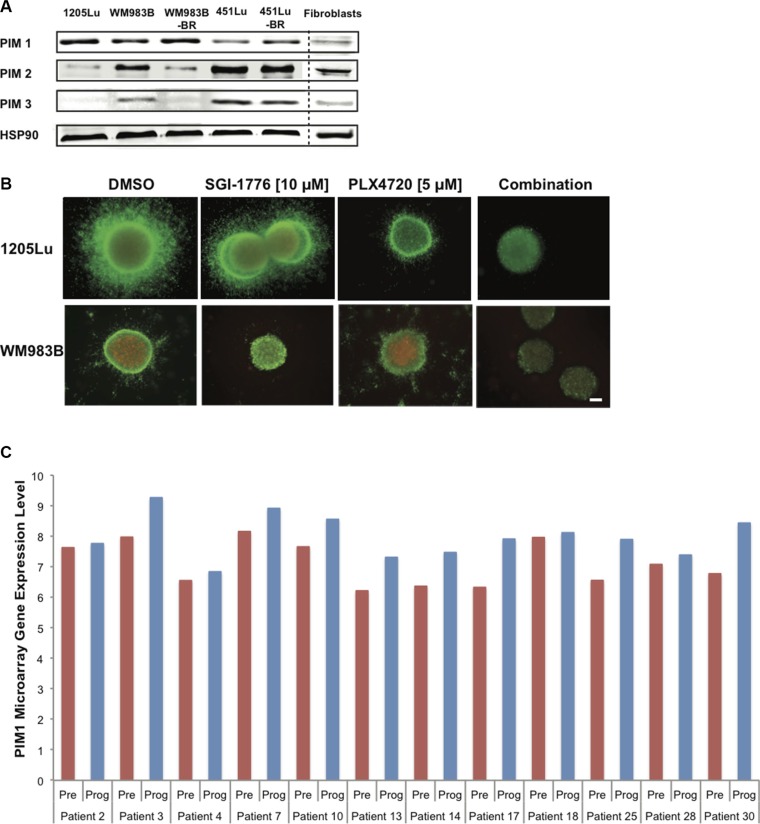
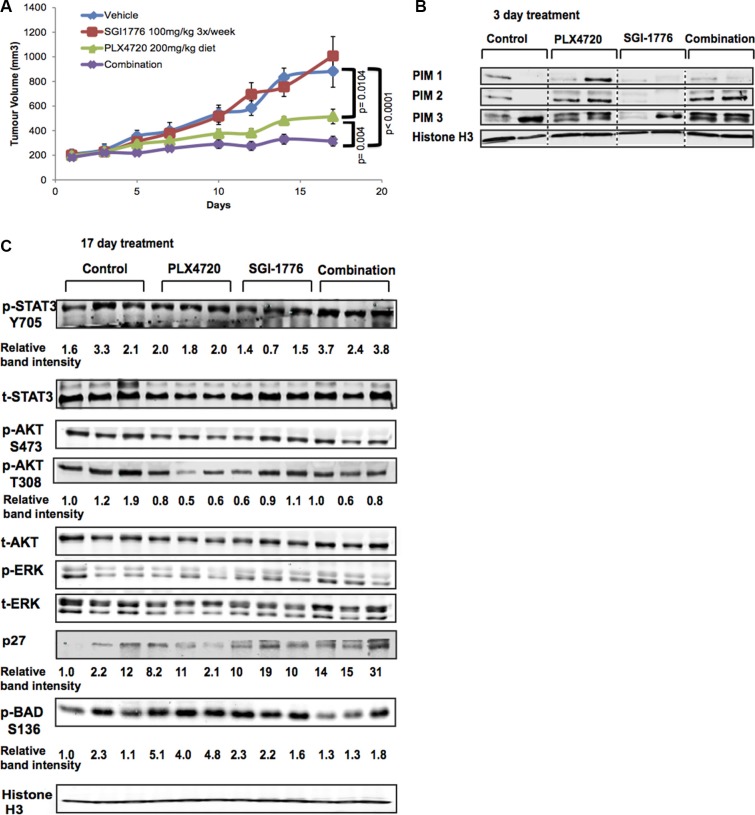
Therapeutic strategies for the treatment of metastatic melanoma show encouraging results in the clinic; however, not all patients respond equally and tumor resistance still poses a challenge. To identify novel therapeutic targets for melanoma, we screened a panel of structurally diverse organometallic inhibitors against human-derived normal and melanoma cells. We observed that a compound that targets PIM kinases (a family of Ser/Thr kinases) preferentially inhibited melanoma cell proliferation, invasion, and viability in adherent and three-dimensional (3D) melanoma models. Assessment of tumor tissue from melanoma patients showed that PIM kinases are expressed in pre- and post-treatment tumors, suggesting PIM kinases as promising targets in the clinic. Using knockdown studies, we showed that PIM1 contributes to melanoma cell proliferation and tumor growth in vivo; however, the presence of PIM2 and PIM3 could also influence the outcome. The inhibition of all PIM isoforms using SGI-1776 (a clinically-available PIM inhibitor) reduced melanoma proliferation and survival in preclinical models of melanoma. This was potentiated in the presence of the BRAF inhibitor PLX4720 and in the presence of PI3K inhibitors. Our findings suggest that PIM inhibitors provide promising additions to the targeted therapies available to melanoma patients.
转移性黑色素瘤的治疗策略在临床上显示出令人鼓舞的结果;然而,并非所有患者的反应都相同,肿瘤耐药性仍然是一个挑战。为了确定黑色素瘤的新型治疗靶点,我们筛选了一组结构多样的有机金属抑制剂,用于处理人源正常细胞和黑色素瘤细胞。我们观察到,一种靶向PIM激酶(丝氨酸/苏氨酸激酶家族)的化合物在贴壁和三维(3D)黑色素瘤模型中优先抑制黑色素瘤细胞的增殖、侵袭和活力。对黑色素瘤患者肿瘤组织的评估表明,PIM激酶在治疗前和治疗后的肿瘤中均有表达,这表明PIM激酶是临床上有前景的靶点。通过基因敲低研究,我们表明PIM1在体内促进黑色素瘤细胞增殖和肿瘤生长;然而,PIM2和PIM3的存在也可能影响结果。使用SGI-1776(一种临床可用的PIM抑制剂)抑制所有PIM异构体可降低黑色素瘤临床前模型中的黑色素瘤增殖和存活率。在BRAF抑制剂PLX4720存在以及PI3K抑制剂存在的情况下,这种作用得到增强。我们的研究结果表明,PIM抑制剂为黑色素瘤患者现有的靶向治疗提供了有前景的补充。