Department of Experimental Hematology, Institute of Hematology and Transfusion Medicine, Warsaw, Poland.
Department of Soft Tissue/Bone Sarcoma and Melanoma, Maria Sklodowska-Curie National Research Institute of Oncology, Warsaw, Poland.
Mol Oncol. 2020 Aug;14(8):1817-1832. doi: 10.1002/1878-0261.12695. Epub 2020 May 19.
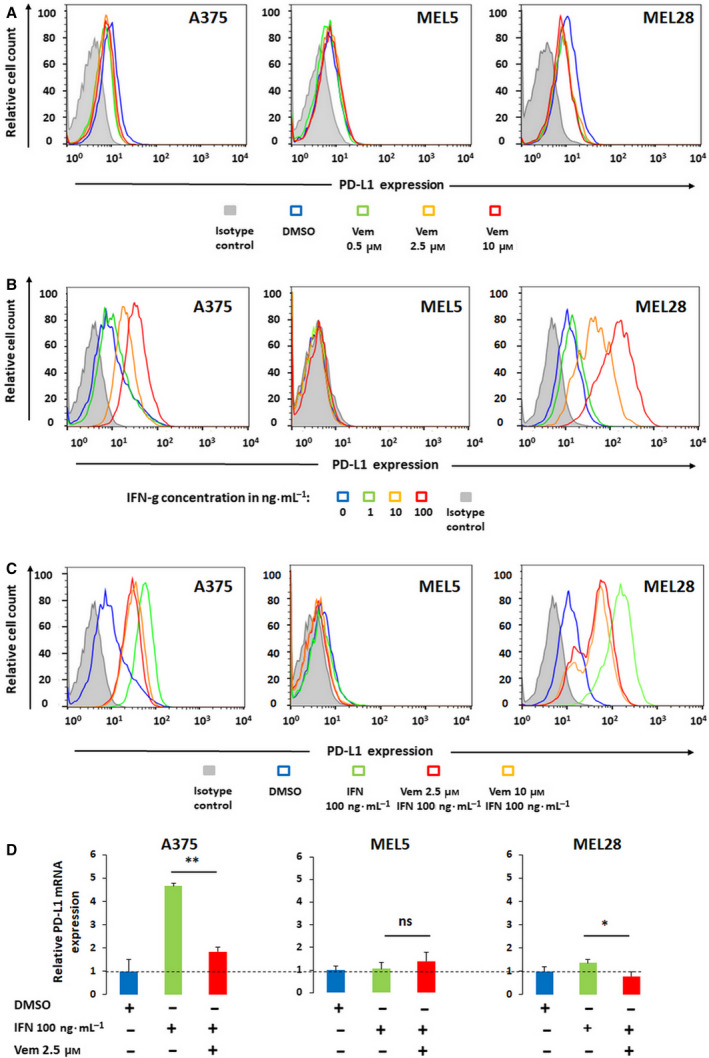
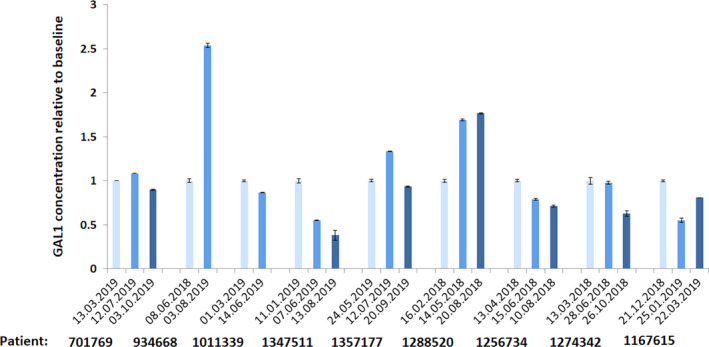
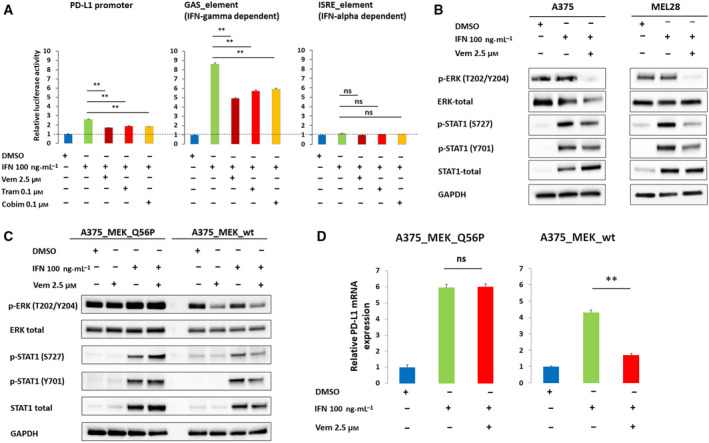
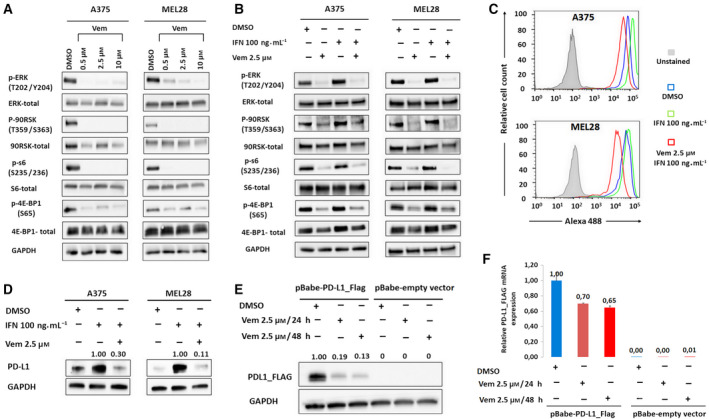
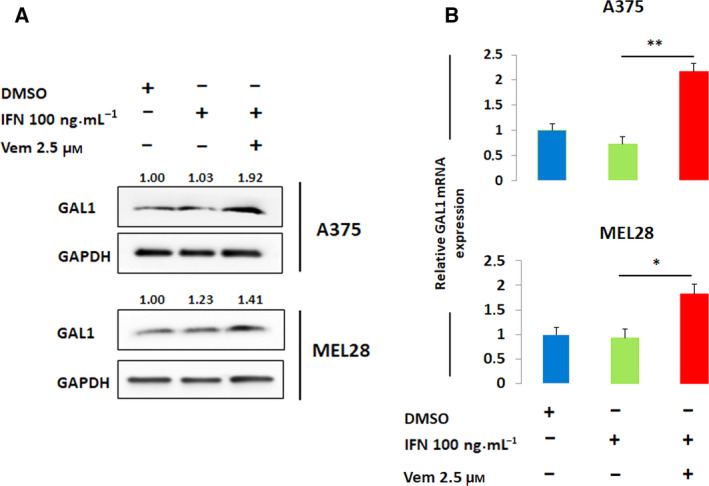
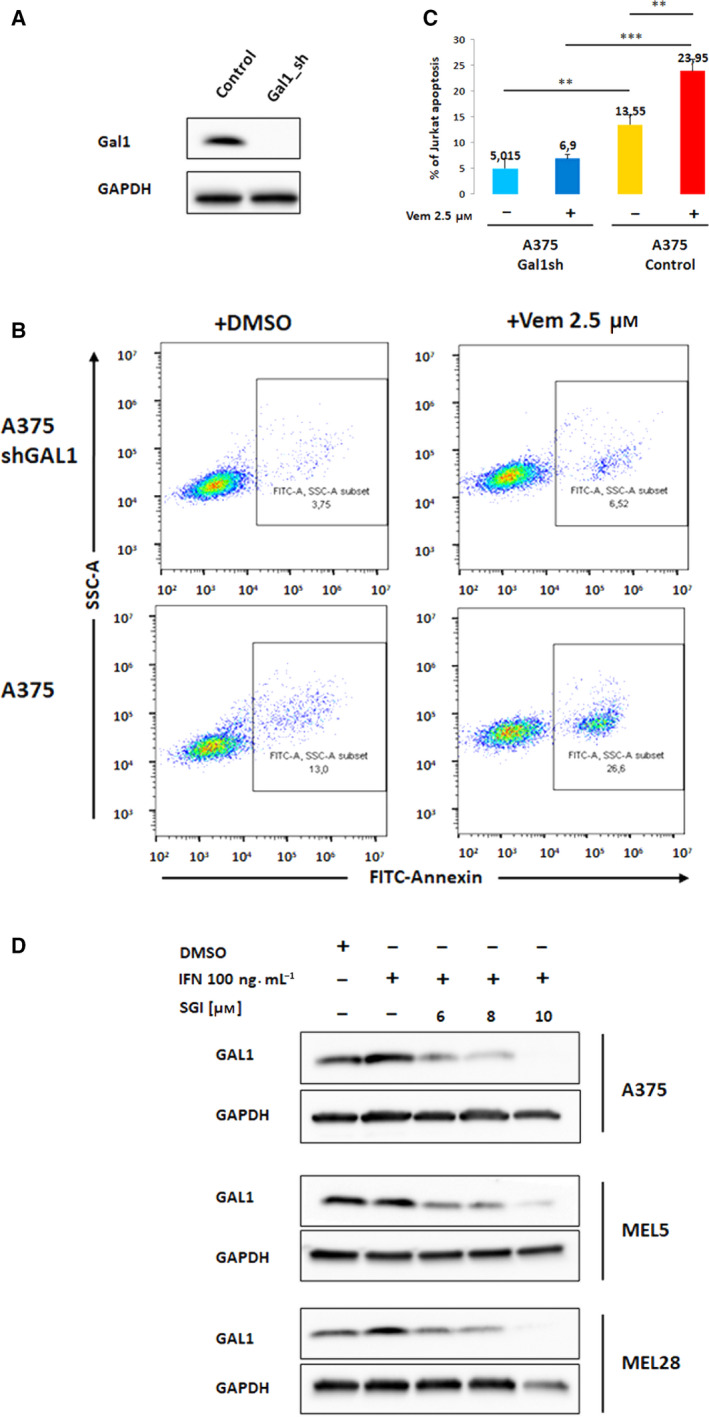
Although melanoma is considered one of the most immunogenic malignancies, spontaneous T-cell responses to melanoma antigens are ineffective due to tumor cell-intrinsic or microenvironment-driven immune evasion mechanisms. For example, oncogenic BRAF V600E mutation in melanoma cells fosters tumor immune escape by modulating cell immunogenicity and microenvironment composition. BRAF inhibition has been shown to increase melanoma cell immunogenicity, but these effects are transient and long-term responses are uncommon. For these reasons, we aimed to further characterize the role of BRAF-V600E mutation in the modulation of PD-L1, a known immunoregulatory molecule, and galectin-1 (Gal-1), a potent immunoregulatory lectin involved in melanoma immune privilege. We report herein that vemurafenib downregulates IFN-γ-induced PD-L1 expression by interfering with STAT1 activity and by decreasing PD-L1 protein translation. Surprisingly, melanoma cells exposed to vemurafenib expressed higher levels of Gal-1. In coculture experiments, A375 melanoma cells pretreated with vemurafenib induced apoptosis of interacting Jurkat T cells, whereas genetic inhibition of Gal-1 in these cells restored the viability of cocultured T lymphocytes, indicating that Gal-1 contributes to tumor immune escape. Importantly, Gal-1 plasma concentration increased in patients progressing on BRAF/MEK inhibitor treatment, but remained stable in responding patients. Taken together, these results suggest a two-faceted nature of BRAF inhibition-associated immunomodulatory effects: an early immunostimulatory activity, mediated at least in part by decreased PD-L1 expression, and a delayed immunosuppressive effect associated with Gal-1 induction. Importantly, our observations suggest that Gal-1 might be utilized as a potential biomarker and a putative therapeutic target in melanoma patients.
尽管黑色素瘤被认为是最具免疫原性的恶性肿瘤之一,但由于肿瘤细胞内在或微环境驱动的免疫逃避机制,自发的 T 细胞对黑色素瘤抗原的反应是无效的。例如,黑色素瘤细胞中的致癌 BRAF V600E 突变通过调节细胞免疫原性和微环境组成促进肿瘤免疫逃逸。已经表明 BRAF 抑制可增加黑色素瘤细胞的免疫原性,但这些效应是短暂的,长期反应并不常见。出于这些原因,我们旨在进一步表征 BRAF-V600E 突变在调节 PD-L1(一种已知的免疫调节分子)和半乳糖凝集素-1(Gal-1)中的作用,Gal-1 是一种参与黑色素瘤免疫特权的有效免疫调节凝集素。我们在此报告,vemurafenib 通过干扰 STAT1 活性和降低 PD-L1 蛋白翻译来下调 IFN-γ诱导的 PD-L1 表达。令人惊讶的是,暴露于 vemurafenib 的黑色素瘤细胞表达更高水平的 Gal-1。在共培养实验中,用 vemurafenib 预处理的 A375 黑色素瘤细胞诱导相互作用的 Jurkat T 细胞凋亡,而这些细胞中 Gal-1 的遗传抑制恢复了共培养 T 淋巴细胞的活力,表明 Gal-1 有助于肿瘤免疫逃逸。重要的是,在接受 BRAF/MEK 抑制剂治疗进展的患者中,Gal-1 的血浆浓度增加,但在有反应的患者中保持稳定。总之,这些结果表明 BRAF 抑制相关免疫调节效应具有两面性:早期的免疫刺激活性,至少部分通过降低 PD-L1 表达介导,以及与 Gal-1 诱导相关的延迟免疫抑制效应。重要的是,我们的观察结果表明 Gal-1 可能被用作黑色素瘤患者的潜在生物标志物和潜在治疗靶点。