Center for Individualized Medicine, Mayo Clinic, Rochester, MN, USA.
Departments of Medical Oncology, Mayo Clinic, Rochester, MN, USA.
Mol Oncol. 2019 Feb;13(2):132-152. doi: 10.1002/1878-0261.12414. Epub 2018 Dec 21.
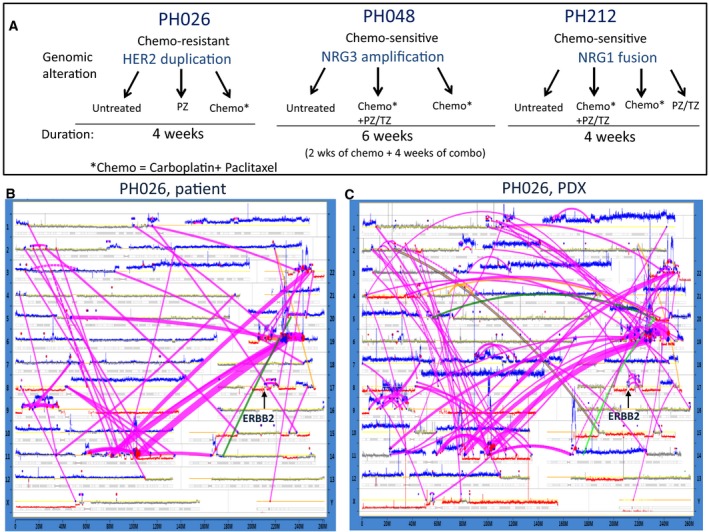
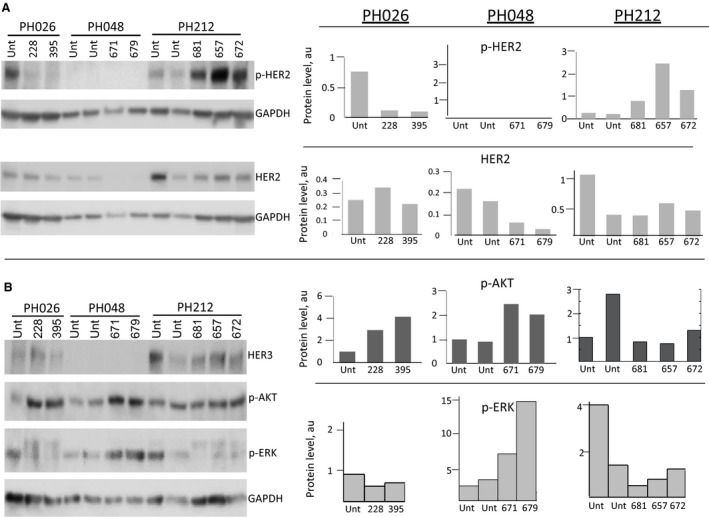
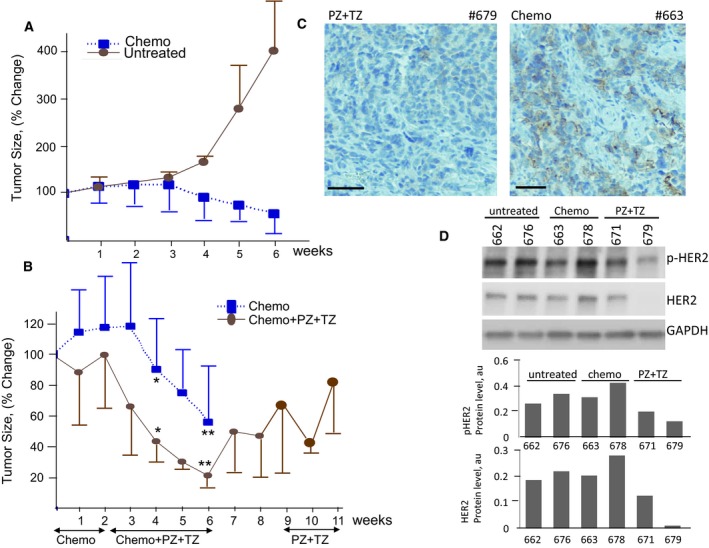
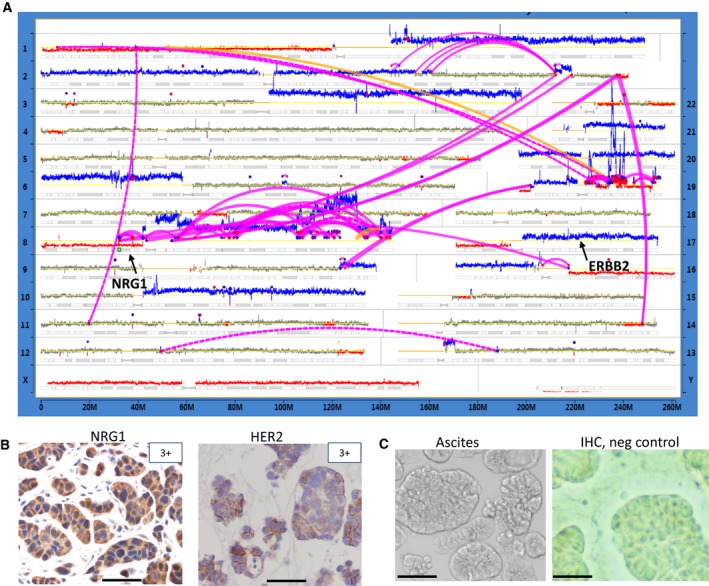
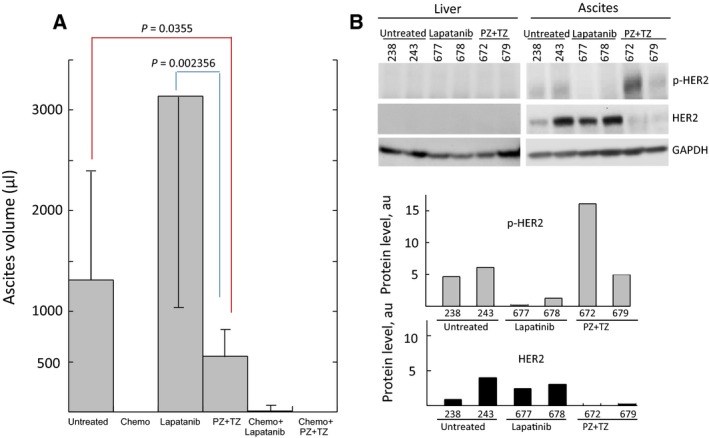
Ovarian cancer is the most lethal gynecologic malignancy. About 75% of ovarian cancer patients relapse and/or develop chemo-resistant disease after initial response to standard-of-care treatment with platinum-based therapies. HER2 amplifications and overexpression in ovarian cancer are reported to vary, and responses to HER2 inhibitors have been poor. Next generation sequencing technologies in conjunction with testing using patient-derived xenografts (PDX) allow validation of personalized treatments. Using a whole-genome mate-pair next generation sequencing (MPseq) protocol, we identified several high grade serous ovarian cancers (HGS-OC) with DNA alterations in genes encoding members of the ERBB2 pathway. The efficiency of anti-HER2 therapy was tested in three different PDX lines with the identified alterations and high levels of HER2 protein expression. Treatment responses to pertuzumab or pertuzumab/trastuzumab were compared in each PDX line WITH standard carboplatin and paclitaxel combination treatment. In all three PDX models, HER2-targeted therapy resulted in significant inhibition of tumor growth compared with untreated controls. However, the responses in each case were inferior to those to chemotherapy, even for chemo-resistant lines. When chemotherapy and HER2-targeted therapy were administered together, a significant regression of tumor was observed after 6 weeks of treatment compared with chemotherapy alone. Post-treatment analysis of these tissues revealed that inhibition of the ERBB2 pathway occurred at the level of phosphorylation and expression of downstream targets. In conclusion, while targeting of presumably activated ERBB2 pathway alone in HGS-OC results in a modest treatment benefit, a combination therapy including both chemotherapy drugs and HER2 inhibitors provides a far better response. Further studies are needed to address development of recurrence and sensitivity of recurrent disease to HER2-targeted therapy.
卵巢癌是最致命的妇科恶性肿瘤。约 75%的卵巢癌患者在初始标准治疗(铂类药物治疗)后复发和/或出现化疗耐药疾病。据报道,卵巢癌中的 HER2 扩增和过表达存在差异,并且对 HER2 抑制剂的反应不佳。下一代测序技术与使用患者来源异种移植物(PDX)的测试相结合,允许验证个性化治疗。使用全基因组配对下一代测序(MPseq)方案,我们在具有 DNA 改变的高级别浆液性卵巢癌(HGS-OC)中鉴定了几种基因编码 ERBB2 途径成员的基因。在具有鉴定的改变和高水平 HER2 蛋白表达的三种不同 PDX 系中测试了抗 HER2 治疗的效率,并与标准卡铂和紫杉醇联合治疗进行了比较。在所有三种 PDX 模型中,与未处理的对照组相比,HER2 靶向治疗导致肿瘤生长明显抑制。然而,在每种情况下,反应都不如化疗,即使是化疗耐药的细胞系也是如此。当化疗和 HER2 靶向治疗一起给予时,与单独化疗相比,在治疗 6 周后观察到肿瘤明显消退。对这些组织的治疗后分析表明,在磷酸化和下游靶标表达水平上发生了 ERBB2 途径的抑制。总之,虽然在 HGS-OC 中单独靶向假定激活的 ERBB2 途径可导致适度的治疗益处,但包括化疗药物和 HER2 抑制剂的联合治疗可提供更好的反应。需要进一步的研究来解决复发和复发性疾病对 HER2 靶向治疗的敏感性问题。