Cromeens Barrett P, Liu Yanchun, Stathopoulos Johnathan, Wang Yijie, Johnson Jed, Besner Gail E
Department of General Pediatric Surgery, Nationwide Children's Hospital, Columbus, Ohio.
Nanofiber Solutions, Inc, Columbus, Ohio.
J Surg Res. 2016 Jul;204(1):164-75. doi: 10.1016/j.jss.2016.02.030. Epub 2016 Mar 3.
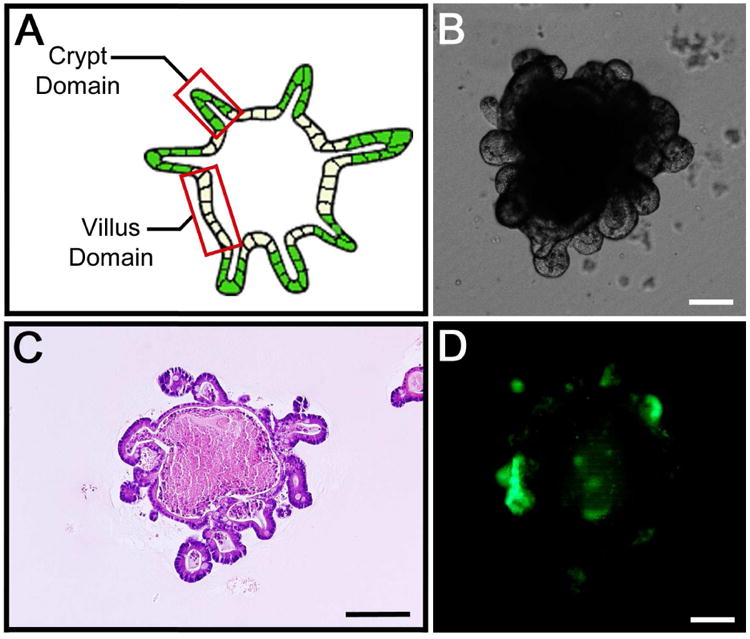
Short bowel syndrome is a life-threatening condition with few solutions. Tissue-engineered intestine (TEI) is a potential treatment, but donor intestine is a limiting factor. Expanded epithelial surrogates termed enteroids may serve as a potential donor source.
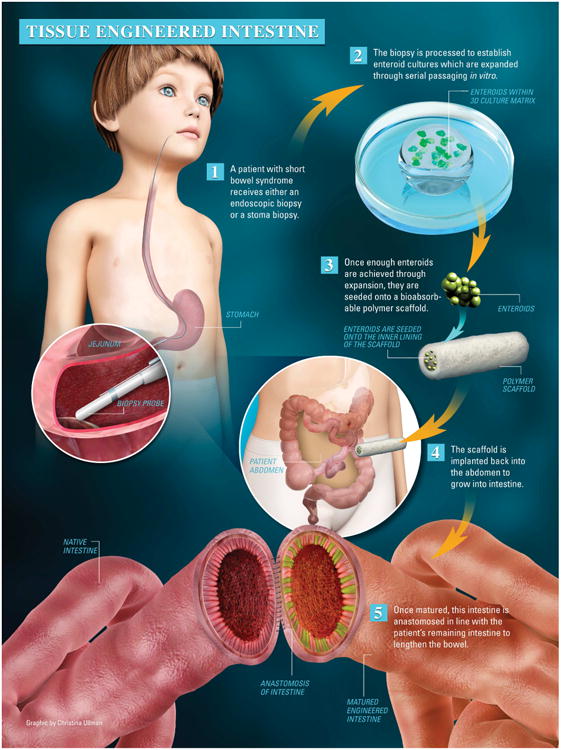
To produce TEI from enteroids, crypts were harvested from mice and enteroid cultures established. Enteroids were seeded onto polymer scaffolds using Matrigel or culture medium and implanted in immunosuppressed mice for 4 wk. Histology was analyzed using Periodic acid-Schiff staining and immunofluorescence. Neomucosa was quantified using ImageJ software. To determine whether TEI could be produced from enteroids established from small intestinal biopsies, 2 × 2-mm pieces of jejunum were processed for enteroid culture, enteroids were expanded and seeded onto scaffolds, and scaffolds implanted for 4 wk.
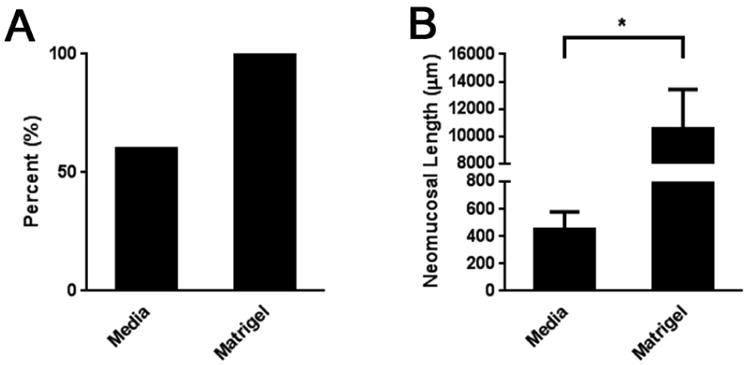
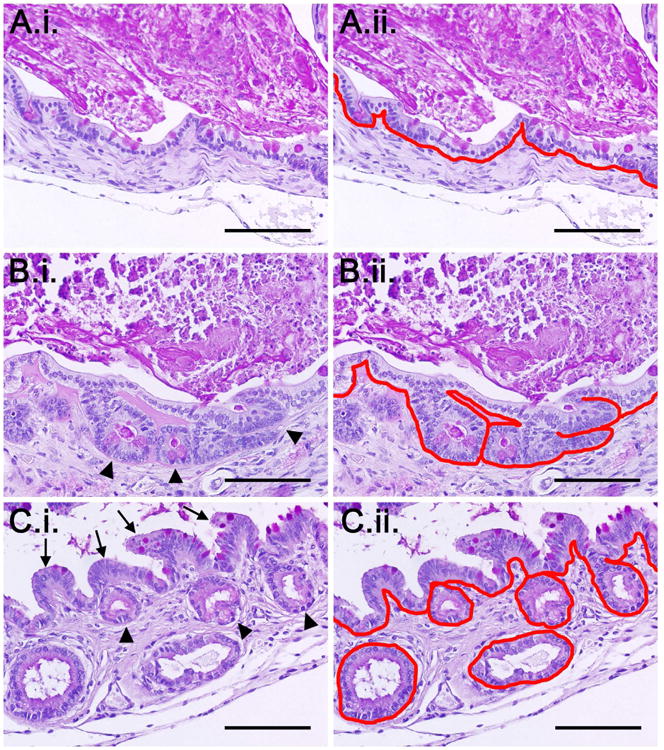
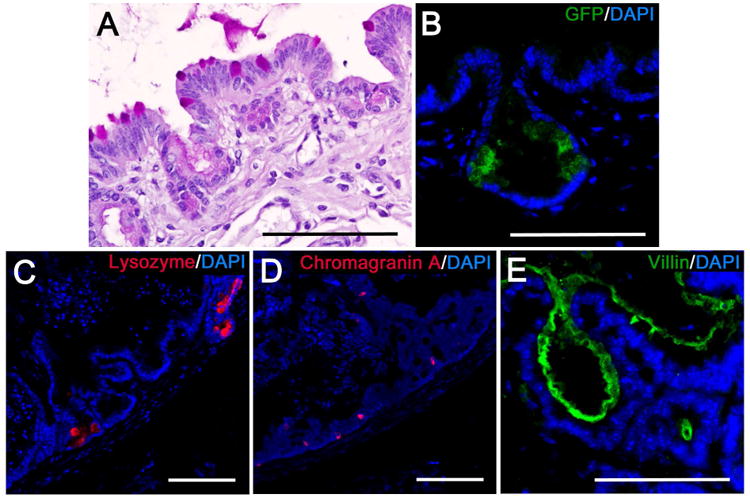
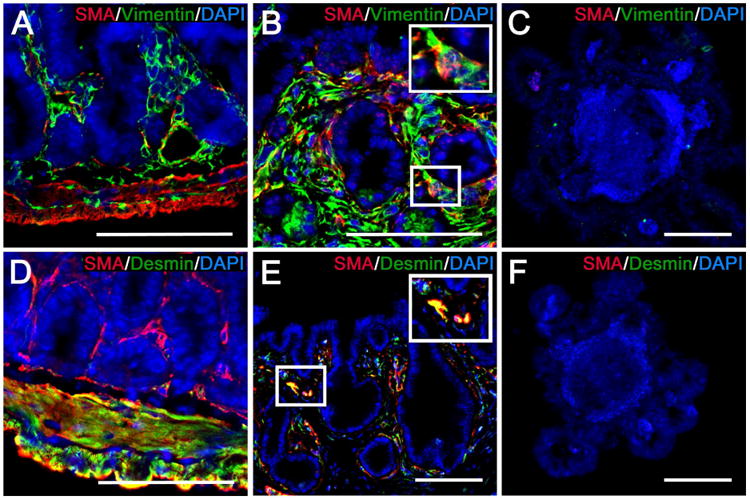
Enteroids in Matrigel produced TEI in 15 of 15 scaffolds, whereas enteroids in medium produced TEI in 9 of 15 scaffolds. Use of Matrigel led to more neomucosal surface area compared to media (10,520 ± 2905 μm versus 450 ± 127 μm, P < 0.05). Histologic examination confirmed the presence of crypts and blunted villi, normal intestinal epithelial lineages, intestinal subepithelial myofibroblasts, and smooth muscle cells. Crypts obtained from biopsies produced an average of 192 ± 71 enteroids. A single passage produced 685 ± 58 enteroids, which was adequate for scaffold seeding. TEI was produced in 8 of 9 scaffolds seeded with expanded enteroids.
Enteroids can be obtained from minimal starting material, expanded ex vivo, and implanted to produce TEI. This method shows promise as a solution to the limited donor intestine available for TEI production in patients with short bowel syndrome.
短肠综合征是一种危及生命的疾病,治疗方案有限。组织工程小肠(TEI)是一种潜在的治疗方法,但供体小肠是一个限制因素。称为肠类器官的扩增上皮替代物可能成为潜在的供体来源。
为了从肠类器官制备TEI,从小鼠体内获取隐窝并建立肠类器官培养体系。使用基质胶或培养基将肠类器官接种到聚合物支架上,并植入免疫抑制小鼠体内4周。采用过碘酸希夫染色和免疫荧光分析组织学情况。使用ImageJ软件对新黏膜进行定量分析。为了确定能否从小肠活检组织建立的肠类器官制备TEI,将2×2毫米的空肠组织块进行肠类器官培养,扩增肠类器官并接种到支架上,然后将支架植入4周。
在15个支架中,15个接种于基质胶的肠类器官产生了TEI,而接种于培养基的肠类器官在15个支架中有9个产生了TEI。与培养基相比,使用基质胶导致更多的新黏膜表面积(10,520±2905μm对450±127μm,P<0.05)。组织学检查证实存在隐窝和钝性绒毛、正常的肠上皮谱系、肠上皮下肌成纤维细胞和平滑肌细胞。从活检组织获得的隐窝平均产生192±71个肠类器官。单次传代产生685±58个肠类器官,足以接种到支架上。接种扩增后的肠类器官的9个支架中有8个产生了TEI。
肠类器官可从极少的起始材料中获得,在体外扩增,并植入以产生TEI。该方法有望解决短肠综合征患者中用于制备TEI的供体小肠有限的问题。