Li Lingyu, Xiao Lina, Hou Yanghao, He Qi, Zhu Jin, Li Yixin, Wu Jingxian, Zhao Jing, Yu Shanshan, Zhao Yong
Department of Pathology, Chongqing Medical University, Chongqing, People's Republic of China.
Institute of Neuroscience, Chongqing Medical University, Chongqing, PR China.
Sci Rep. 2016 Jul 25;6:30272. doi: 10.1038/srep30272.
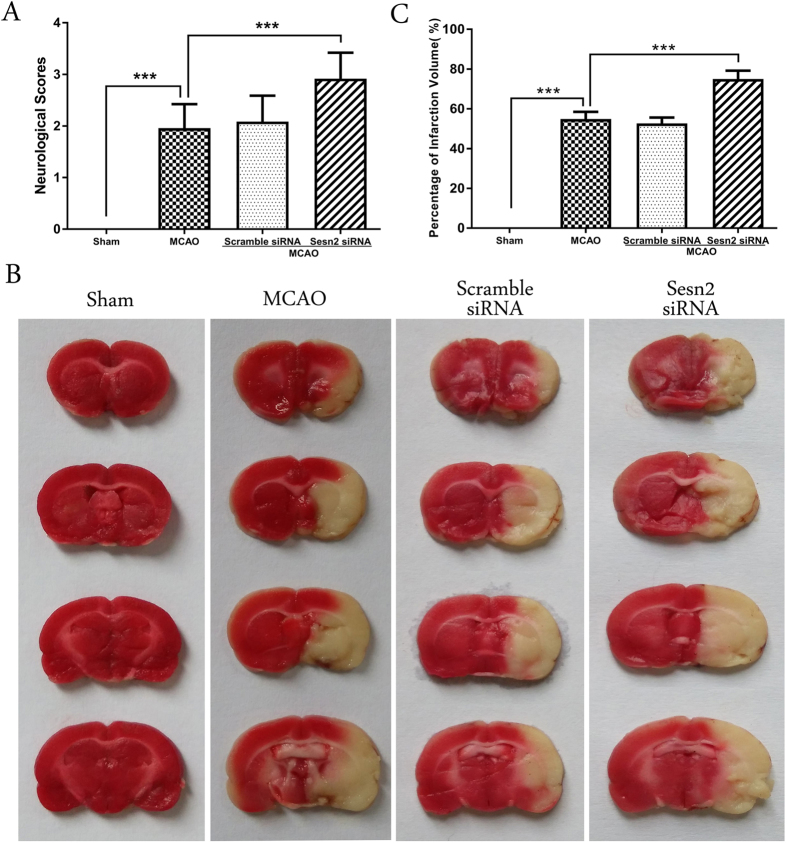
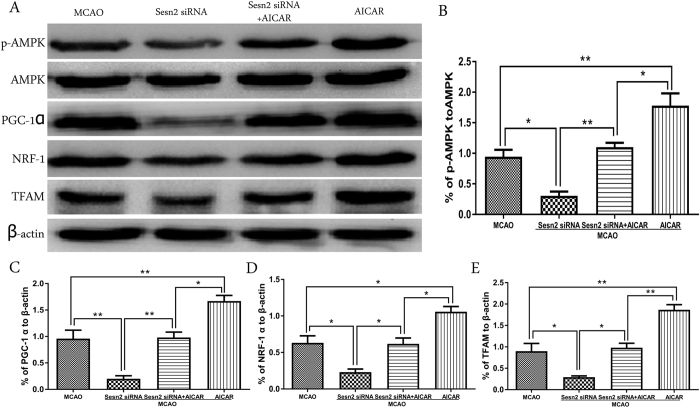
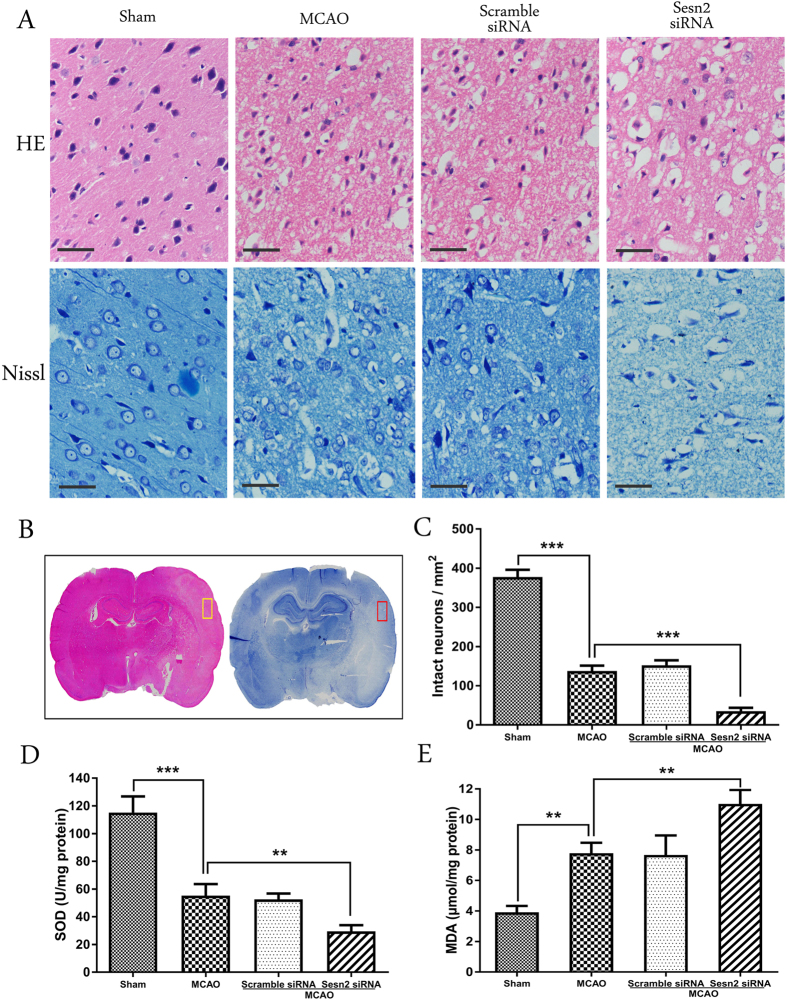
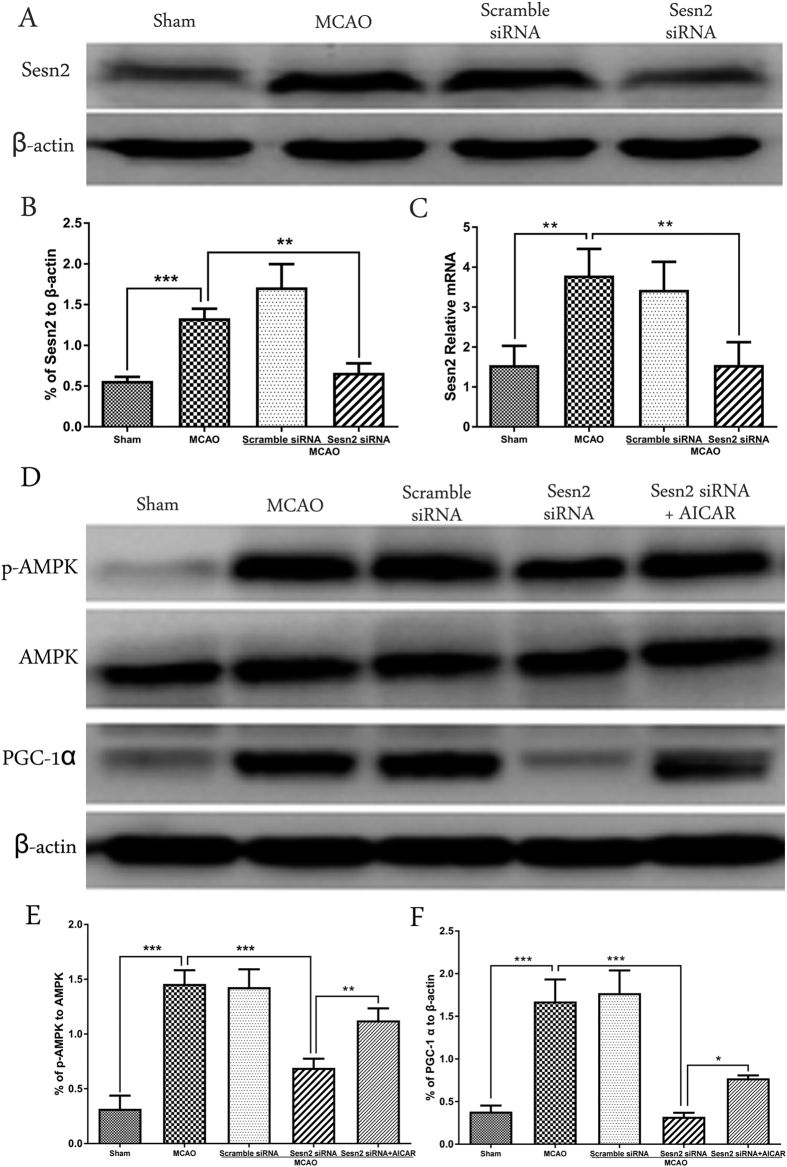
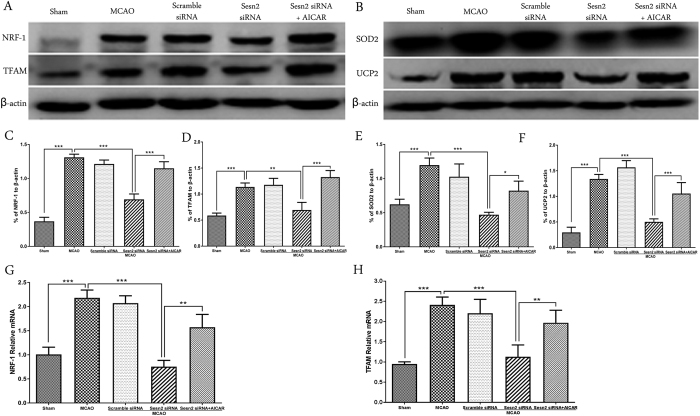
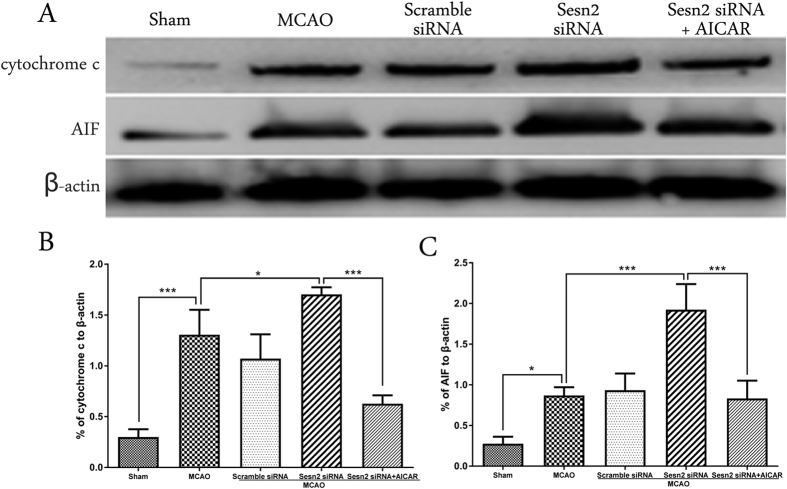
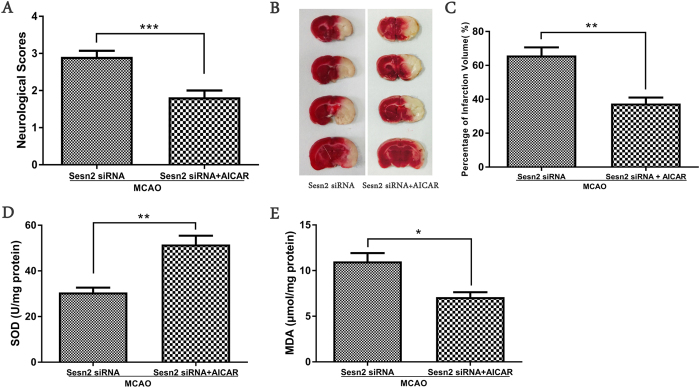
Sestrin2 (Sesn2) exerts neuroprotective properties in some neurodegenerative diseases. However, the role of Sesn2 in stroke is unclear. The AMP-activated protein kinase/peroxisome proliferator-activated receptor γ coactivator-1α (AMPK/PGC-1α) pathway plays an important role in regulating mitochondrial biogenesis, which helps prevent cerebral ischemia/reperfusion (I/R) injury. Here, we aimed to determine whether Sesn2 alleviated I/R damage by regulating mitochondrial biogenesis through the AMPK/PGC-1α signaling pathway. To be able to test this, Sprague-Dawley rats were subjected to middle cerebral artery occlusion (MCAO) for 1 h with Sesn2 silencing. At 24 h after reperfusion, we found that neurological deficits were exacerbated, infarct volume was enlarged, and oxidative stress and neuronal damage were greater in the Sesn2 siRNA group than in the MCAO group. To explore protective mechanisms, an AMPK activator was used. Expression levels of Sesn2, p-AMPK, PGC-1α, NRF-1, TFAM, SOD2, and UCP2 were significantly increased following cerebral I/R. However, upregulation of these proteins was prevented by Sesn2 small interfering RNA (siRNA). In contrast, activation of AMPK with 5'-aminoimidazole-4-carboxamide riboside weakened the effects of Sesn2 siRNA. These results suggest that Sesn2 silencing may suppress mitochondrial biogenesis, reduce mitochondrial biological activity, and finally aggravate cerebral I/R injury through inhibiting the AMPK/PGC-1α pathway.
sestrin2(Sesn2)在某些神经退行性疾病中发挥神经保护作用。然而,Sesn2在中风中的作用尚不清楚。AMP激活的蛋白激酶/过氧化物酶体增殖物激活受体γ共激活因子-1α(AMPK/PGC-1α)途径在调节线粒体生物合成中起重要作用,这有助于预防脑缺血/再灌注(I/R)损伤。在此,我们旨在确定Sesn2是否通过AMPK/PGC-1α信号通路调节线粒体生物合成来减轻I/R损伤。为了验证这一点,对Sprague-Dawley大鼠进行大脑中动脉闭塞(MCAO)1小时并沉默Sesn2。再灌注24小时后,我们发现Sesn2 siRNA组的神经功能缺损加剧,梗死体积增大,氧化应激和神经元损伤比MCAO组更严重。为了探索保护机制,使用了AMPK激活剂。脑I/R后,Sesn2、p-AMPK、PGC-1α、NRF-1、TFAM、SOD2和UCP2的表达水平显著增加。然而,Sesn2小干扰RNA(siRNA)阻止了这些蛋白质的上调。相反,用5'-氨基咪唑-4-甲酰胺核苷激活AMPK减弱了Sesn2 siRNA的作用。这些结果表明,Sesn2沉默可能通过抑制AMPK/PGC-1α途径抑制线粒体生物合成,降低线粒体生物活性,最终加重脑I/R损伤。