Department of Cardiovascular Surgery, General Hospital of Shenyang Military Area Command, 83 Wenhua Road, Shenyang, Liaoning 110016, China.
Department of Cardiovascular Surgery, Xijing Hospital, The Fourth Military Medical University, 127 Changle West Road, Xi'an 710032, China.
Sci Rep. 2017 Jan 25;7:41337. doi: 10.1038/srep41337.
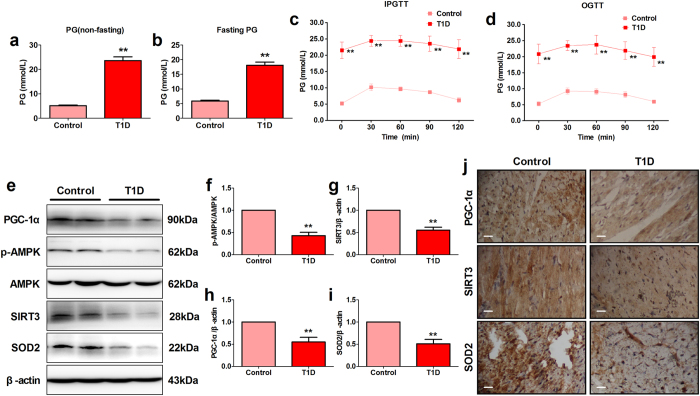
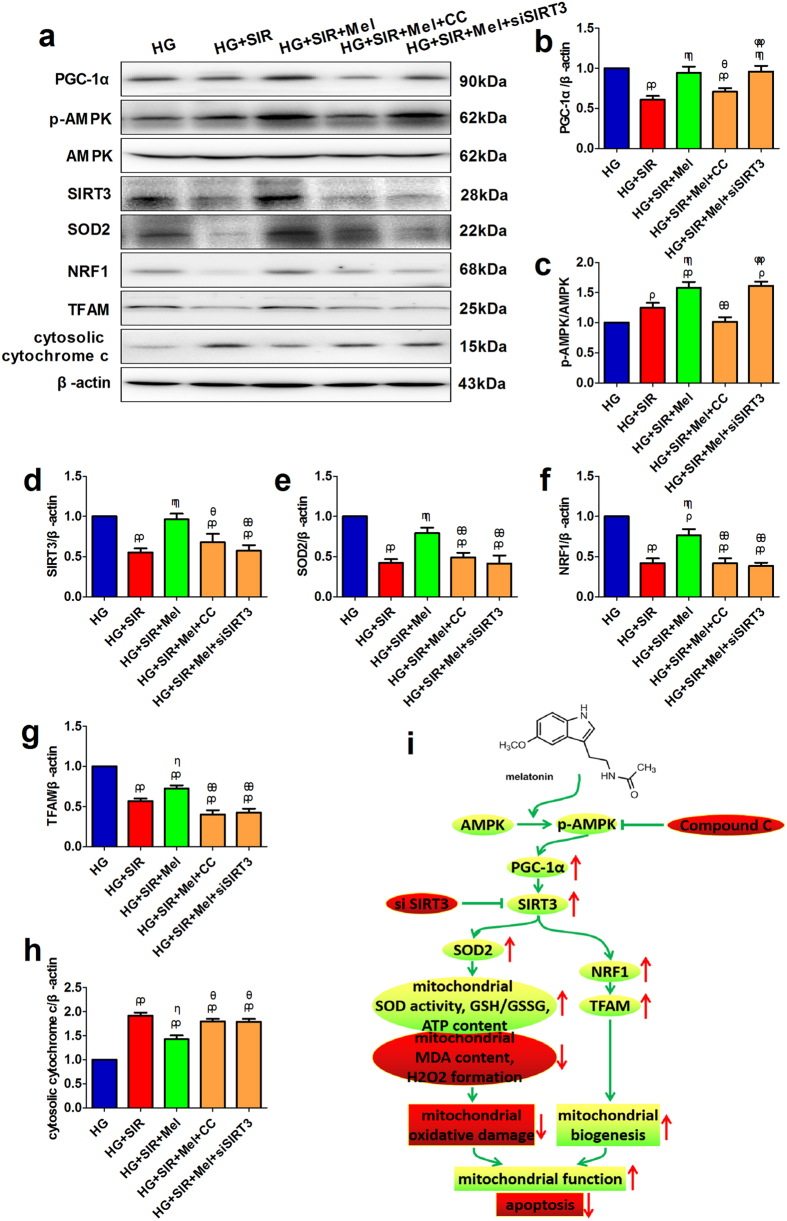
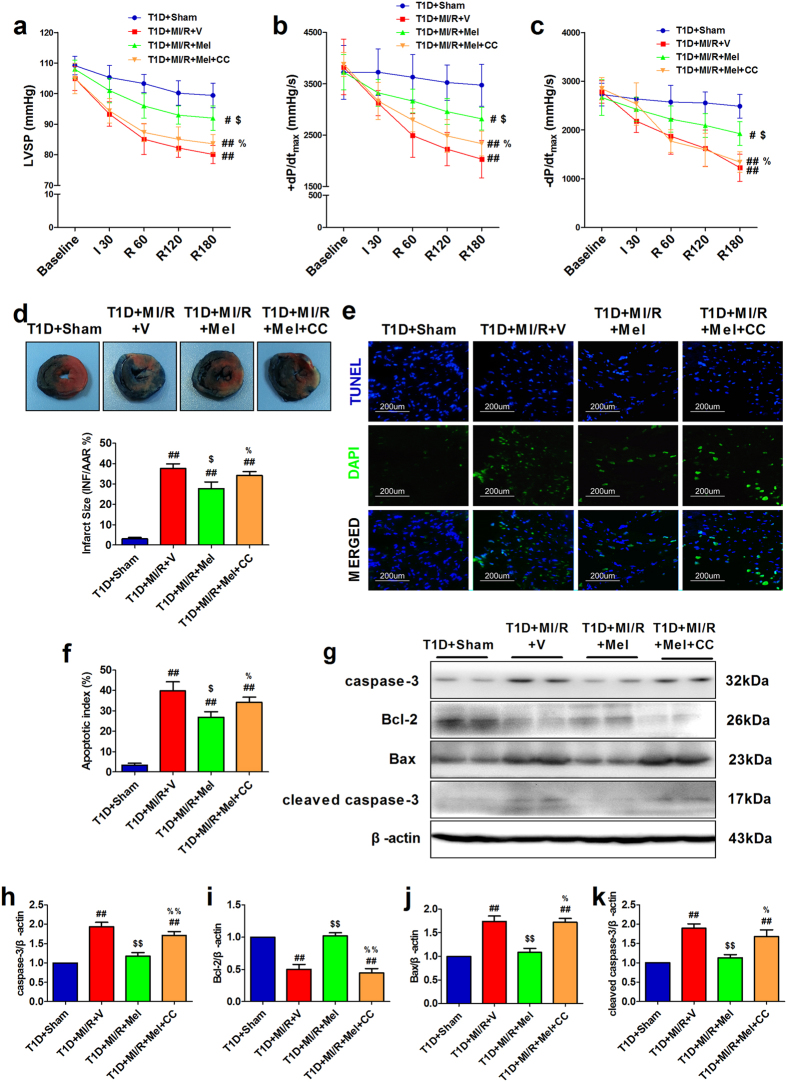
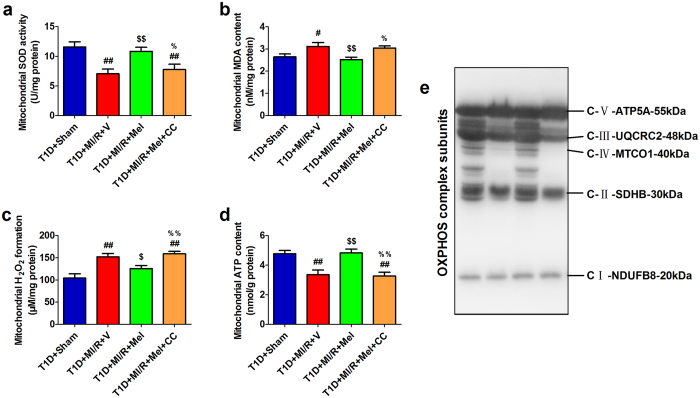
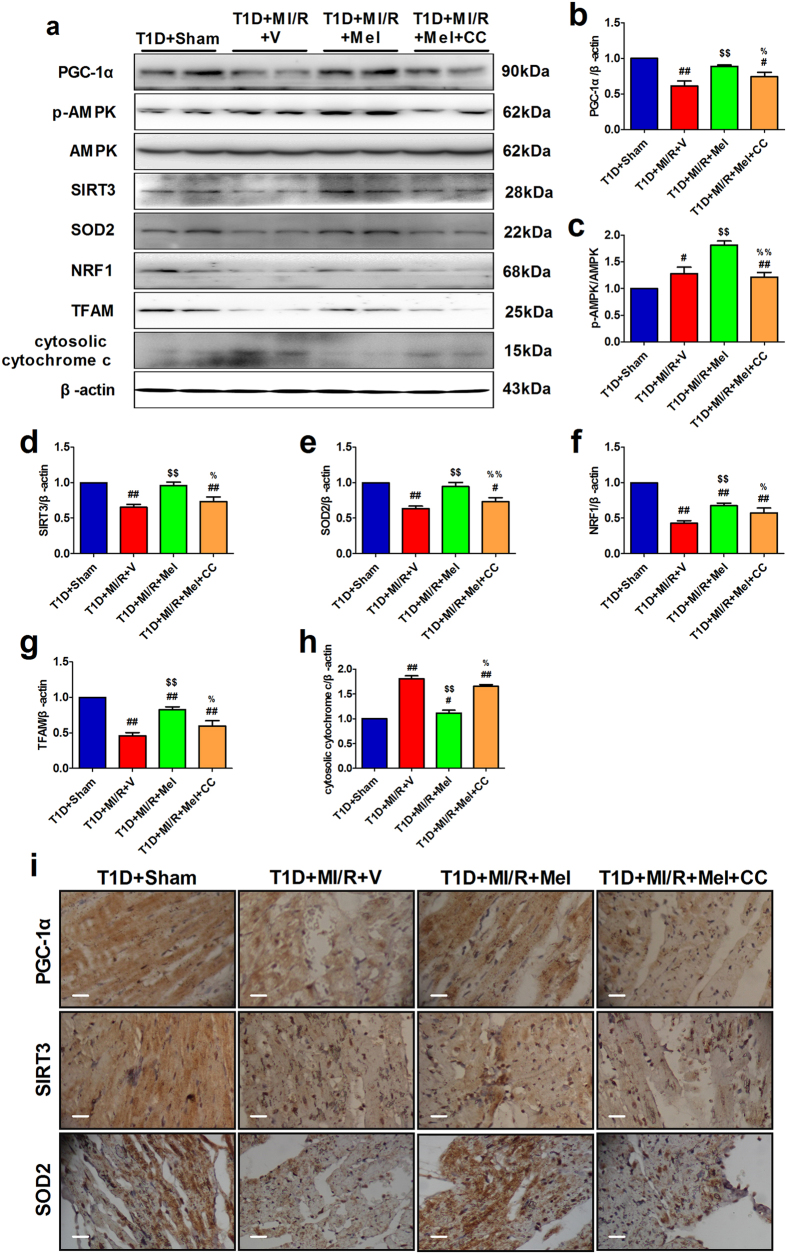
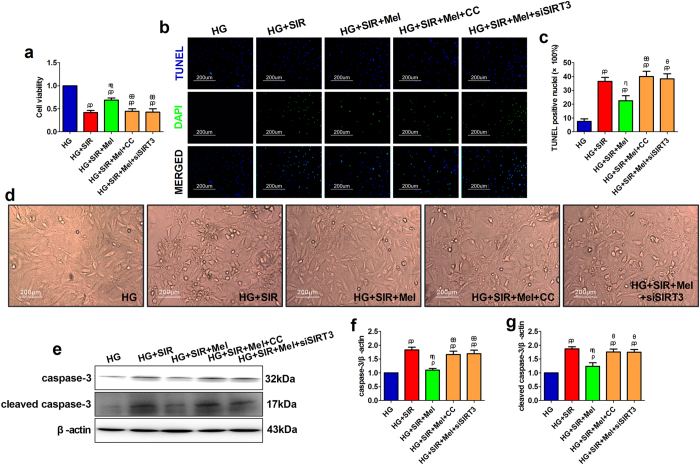
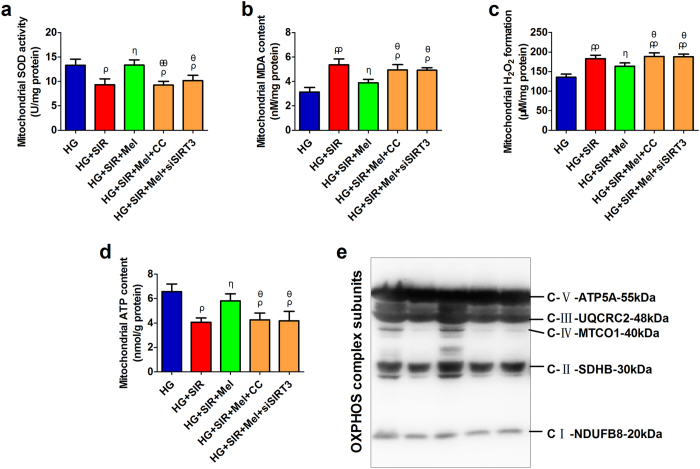
Enhancing mitochondrial biogenesis and reducing mitochondrial oxidative stress have emerged as crucial therapeutic strategies to ameliorate diabetic myocardial ischemia/reperfusion (MI/R) injury. Melatonin has been reported to be a safe and potent cardioprotective agent. However, its role on mitochondrial biogenesis or reactive oxygen species (ROS) production in type 1 diabetic myocardium and the underlying mechanisms remain unknown. We hypothesize that melatonin ameliorates MI/R injury in type 1 diabetic rats by preserving mitochondrial function via AMPK-PGC-1α-SIRT3 signaling pathway. Both our in vivo and in vitro data showed that melatonin reduced MI/R injury by improving cardiac function, enhancing mitochondrial SOD activity, ATP production and oxidative phosphorylation complex (II, III and IV), reducing myocardial apoptosis and mitochondrial MDA, HO generation. Importantly, melatonin also activated AMPK-PGC-1α-SIRT3 signaling and increased SOD2, NRF1 and TFAM expressions. However, these effects were abolished by Compound C (a specific AMPK signaling blocker) administration. Additionally, our cellular experiment showed that SIRT3 siRNA inhibited the cytoprotective effect of melatonin without affecting p-AMPK/AMPK ratio and PGC-1α expression. Taken together, we concluded that melatonin preserves mitochondrial function by reducing mitochondrial oxidative stress and enhancing its biogenesis, thus ameliorating MI/R injury in type 1 diabetic state. AMPK-PGC1α-SIRT3 axis plays an essential role in this process.
促进线粒体生物发生和减少线粒体氧化应激已成为改善糖尿病心肌缺血/再灌注(MI/R)损伤的重要治疗策略。褪黑素已被报道为一种安全有效的心脏保护剂。然而,其在 1 型糖尿病心肌中线粒体生物发生或活性氧(ROS)产生中的作用及其潜在机制尚不清楚。我们假设褪黑素通过 AMPK-PGC-1α-SIRT3 信号通路来保护线粒体功能,从而改善 1 型糖尿病大鼠的 MI/R 损伤。我们的体内和体外数据均表明,褪黑素通过改善心脏功能、增强线粒体 SOD 活性、ATP 生成和氧化磷酸化复合物(II、III 和 IV)、减少心肌细胞凋亡和线粒体 MDA、HO 生成,来减轻 MI/R 损伤。重要的是,褪黑素还激活了 AMPK-PGC-1α-SIRT3 信号通路,并增加了 SOD2、NRF1 和 TFAM 的表达。然而,这些作用被化合物 C(一种特定的 AMPK 信号通路阻断剂)的给药所消除。此外,我们的细胞实验表明,SIRT3 siRNA 抑制了褪黑素的细胞保护作用,而不影响 p-AMPK/AMPK 比值和 PGC-1α 的表达。综上所述,我们得出结论,褪黑素通过减少线粒体氧化应激和增强其生物发生来保护线粒体功能,从而改善 1 型糖尿病状态下的 MI/R 损伤。AMPK-PGC1α-SIRT3 轴在这个过程中起着至关重要的作用。