Graf Brittany L, Rojas-Silva Patricio, Rojo Leonel E, Delatorre-Herrera Jose, Baldeón Manuel E, Raskin Ilya
Dept. of Plant Biology and Pathology, Rutgers Univ., 59 Dudley Rd., New Brunswick, NJ 08901, U.S.A.
Facultad de Ciencias de la Salud, Univ. Arturo Prat, Casilla 121, Iquique, Chile.
Compr Rev Food Sci Food Saf. 2015 Jul;14(4):431-445. doi: 10.1111/1541-4337.12135. Epub 2015 Apr 10.
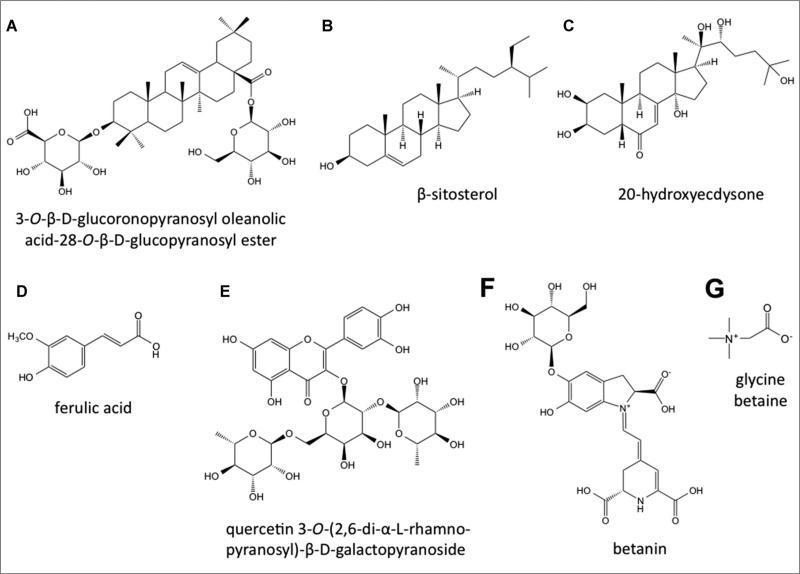
Quinoa ( Willd., Amaranthaceae) is a grain-like, stress-tolerant food crop that has provided subsistence, nutrition, and medicine for Andean indigenous cultures for thousands of years. Quinoa contains a high content of health-beneficial phytochemicals, including amino acids, fiber, polyunsaturated fatty acids, vitamins, minerals, saponins, phytosterols, phytoecdysteroids, phenolics, betalains, and glycine betaine. Over the past 2 decades, numerous food and nutraceutical products and processes have been developed from quinoa. Furthermore, 4 clinical studies have demonstrated that quinoa supplementation exerts significant, positive effects on metabolic, cardiovascular, and gastrointestinal health in humans. However, vast challenges and opportunities remain within the scientific, agricultural, and development sectors to optimize quinoa's role in the promotion of global human health and nutrition.
藜麦(藜科,学名:Chenopodium quinoa Willd.)是一种类似谷物、耐胁迫的粮食作物,数千年来一直为安第斯本土文化提供生计、营养和医药。藜麦含有大量有益健康的植物化学物质,包括氨基酸、纤维、多不饱和脂肪酸、维生素、矿物质、皂苷、植物甾醇、植物蜕皮甾类、酚类、甜菜碱和甘氨酸甜菜碱。在过去20年里,人们开发了许多以藜麦为原料的食品和营养保健品及加工工艺。此外,4项临床研究表明,补充藜麦对人类的代谢、心血管和胃肠道健康有显著的积极影响。然而,在科学、农业和发展领域,要优化藜麦在促进全球人类健康和营养方面的作用,仍存在巨大挑战和机遇。