Basith Shaherin, Cui Minghua, Hong Sunhye, Choi Sun
National Leading Research Laboratory (NLRL) of Molecular Modeling & Drug Design, College of Pharmacy and Graduate School of Pharmaceutical Sciences, Ewha Womans University, Seoul 03760, Korea.
Molecules. 2016 Jul 23;21(8):966. doi: 10.3390/molecules21080966.
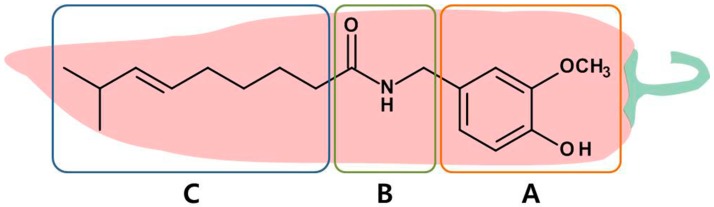
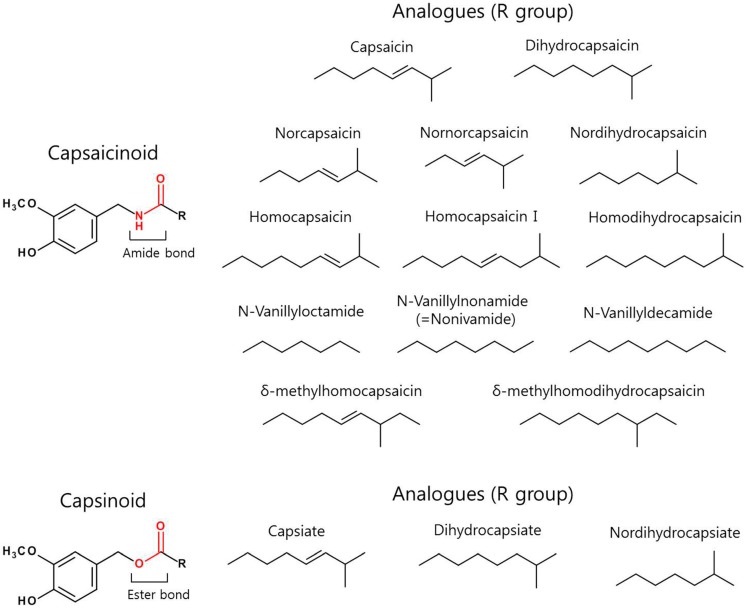
Capsaicin is the most predominant and naturally occurring alkamide found in Capsicum fruits. Since its discovery in the 19th century, the therapeutic roles of capsaicin have been well characterized. The potential applications of capsaicin range from food flavorings to therapeutics. Indeed, capsaicin and few of its analogues have featured in clinical research covered by more than a thousand patents. Previous records suggest pleiotropic pharmacological activities of capsaicin such as an analgesic, anti-obesity, anti-pruritic, anti-inflammatory, anti-apoptotic, anti-cancer, anti-oxidant, and neuro-protective functions. Moreover, emerging data indicate its clinical significance in treating vascular-related diseases, metabolic syndrome, and gastro-protective effects. The dearth of potent drugs for management of such disorders necessitates the urge for further research into the pharmacological aspects of capsaicin. This review summarizes the historical background, source, structure and analogues of capsaicin, and capsaicin-triggered TRPV1 signaling and desensitization processes. In particular, we will focus on the therapeutic roles of capsaicin and its analogues in both normal and pathophysiological conditions.
辣椒素是辣椒果实中最主要的天然存在的酰胺类化合物。自19世纪被发现以来,辣椒素的治疗作用已得到充分表征。辣椒素的潜在应用范围从食品调味剂到治疗药物。事实上,辣椒素及其少数类似物已出现在一千多项专利涵盖的临床研究中。先前的记录表明辣椒素具有多效药理活性,如镇痛、抗肥胖、止痒、抗炎、抗凋亡、抗癌、抗氧化和神经保护功能。此外,新出现的数据表明其在治疗血管相关疾病、代谢综合征和胃保护作用方面的临床意义。用于管理此类疾病的有效药物的缺乏促使人们迫切需要进一步研究辣椒素的药理学方面。本综述总结了辣椒素的历史背景、来源、结构和类似物,以及辣椒素触发的TRPV1信号传导和脱敏过程。特别是,我们将重点关注辣椒素及其类似物在正常和病理生理条件下的治疗作用。