Minnings Kailey, Fiore Madeline, Mosco Martha, Ferguson Ryan, Leatherman Sarah, Kerns Eric, Kaufman James, Fiore Melissa, Brooks Daniel, Amador Juan Jose, Paulsen Hillary, Ernstberger Zachary, Trejo Bricia, Sullivan Elyse, Lichtman Amos, Nobil Keriann, Lawlor Matthew, Parker Cassandra, Parekh Rulan, Fiore Louis
University of Toronto Faculty of Medicine, 1 King's College Circle, Toronto, ON, M5S 1A8, Canada.
UMass Medical School, 55 N Lake Ave, Chestnut St. Apt 21, Worcester, MA 01604 34, UK.
BMC Nephrol. 2016 Jul 25;17:93. doi: 10.1186/s12882-016-0320-9.
A lack of advanced healthcare information systems and validated scientific cohorts in Nicaragua makes it difficult to estimate disease prevalences and other public health statistics. Although there is concern of an "epidemic" of chronic kidney disease (CKD) in this country, statistics regarding its magnitude are derived from only a small number of non-representative studies. Budgetary constraints and the logistical problems of maintaining a study cohort make longitudinal studies difficult. The Rivas Cohort was created to measure disease burden of CKD and other public health priorities in the Department of Rivas, Nicaragua. Using primarily volunteer research students and technologic innovation including GPS, digital photography and point of care biochemical analysis, the ability to establish a longitudinal chronic disease cohort is demonstrated.
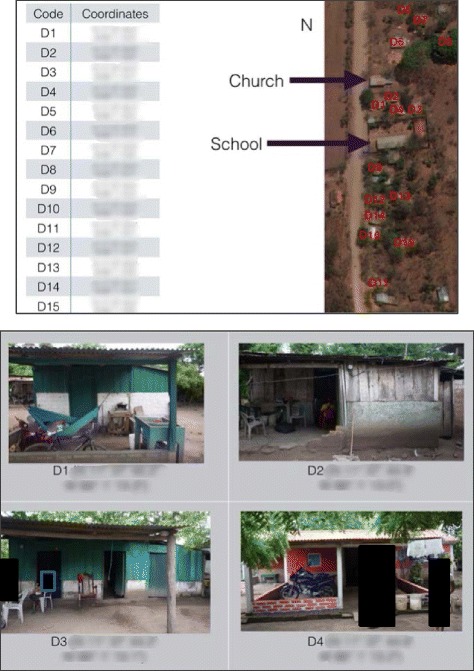
Subjects were recruited from consecutive adjacent households in thirty-two randomly selected communities in the ten municipalities that comprise the Department of Rivas in southern Pacific coastal Nicaragua. The study was conducted in two phases. In the first phase, subjects were enrolled into the cohort and consented for future re-contact. In Phase II, conducted two years later, attempts were made to re-contact 400 of these subjects for additional data collection. Demographic, lifestyle, occupational, exposure and health data was collected for both phases of the study. Blood and urine testing and height, weight and blood pressure measurements were also performed. GPS coordinates of homes were recorded and maps of remote communities created.
Of 1397 adults living in 533 households approached for participation a total of 1242 (89 %) were enrolled in the cohort. The median age is 41 years and 43 % are male, demographics in agreement with Nicaraguan census data for the Department of Rivas. During Phase II we attempted to re-contact 400 subjects for a follow-up study of CKD. It was possible to re-contact 84 % of these participants and of those re-contacted 95 % agreed to participate in the follow-up study. Of subjects that were not successfully re-contacted the majority had either moved (32) or were not at home (22) at the time of the study team visits.
The Rivas Cohort Study enrolled a representative sample of 1242 adults living in the Department of Rivas, Nicaragua. The high re-contact and participation rates at two years suggests that the cohort is suitable for long-term studies and presents opportunities for investigations of disease prevalence, incidence, treatment and other public health matters. GPS coordinates and maps are available for future researchers who wish to use the cohort for additional studies.
尼加拉瓜缺乏先进的医疗信息系统和经过验证的科学队列,这使得难以估计疾病患病率和其他公共卫生统计数据。尽管该国存在对慢性肾脏病(CKD)“流行”的担忧,但其规模的统计数据仅来自少数非代表性研究。预算限制和维持研究队列的后勤问题使得纵向研究困难重重。里瓦斯队列的创建是为了衡量尼加拉瓜里瓦斯省CKD的疾病负担以及其他公共卫生重点问题。通过主要使用志愿研究学生以及包括全球定位系统(GPS)、数码摄影和即时护理生化分析在内的技术创新,证明了建立纵向慢性病队列的能力。
研究对象从尼加拉瓜太平洋沿岸南部里瓦斯省的10个市中随机选择的32个社区中连续相邻的家庭招募。该研究分两个阶段进行。在第一阶段,研究对象被纳入队列并同意未来再次联系。在两年后进行的第二阶段,试图再次联系其中400名研究对象以收集更多数据。在研究的两个阶段都收集了人口统计学、生活方式、职业、暴露和健康数据。还进行了血液和尿液检测以及身高、体重和血压测量。记录了家庭的GPS坐标并绘制了偏远社区的地图。
在接触的533户家庭中的1397名成年人中,共有1242人(89%)被纳入队列。中位年龄为41岁,43%为男性,这些人口统计学数据与里瓦斯省的尼加拉瓜人口普查数据一致。在第二阶段,我们试图再次联系400名研究对象以进行CKD的随访研究。有可能再次联系到这些参与者中的84%,在那些被再次联系的人中,95%同意参加随访研究。在未成功再次联系的研究对象中,大多数在研究团队访问时要么已经搬走(32人),要么不在家(22人)。
里瓦斯队列研究纳入了尼加拉瓜里瓦斯省1242名成年人的代表性样本。两年时的高再次联系率和参与率表明该队列适合进行长期研究,并为疾病患病率、发病率、治疗及其他公共卫生问题的调查提供了机会。GPS坐标和地图可供希望使用该队列进行更多研究的未来研究人员使用。