Chen Jun, Deng Linhong, Dreymüller Daniela, Jiang Xuemei, Long Jiaoyue, Duan Yiyuan, Wang Yue, Luo Mingzhi, Lin Feng, Mao Lizhen, Müller Bernd, Koller Garrit, Bartsch Jörg W
Changzhou Key Laboratory of Respiratory Medical Engineering, Institute of Biomedical Engineering and Health Sciences, Changzhou University, Changzhou, Jiangsu, China.
Key Lab of Biorheological Science and Technology, Ministry of Education, Bioengineering College, Chongqing University, Chongqing, China.
Sci Rep. 2016 Jul 26;6:30451. doi: 10.1038/srep30451.
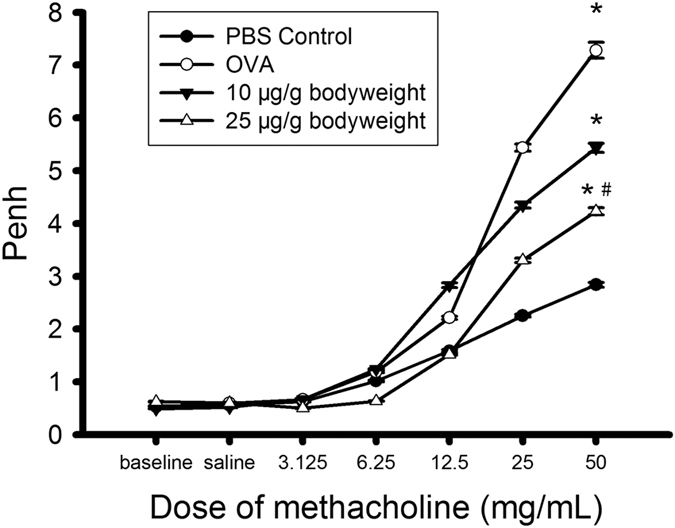
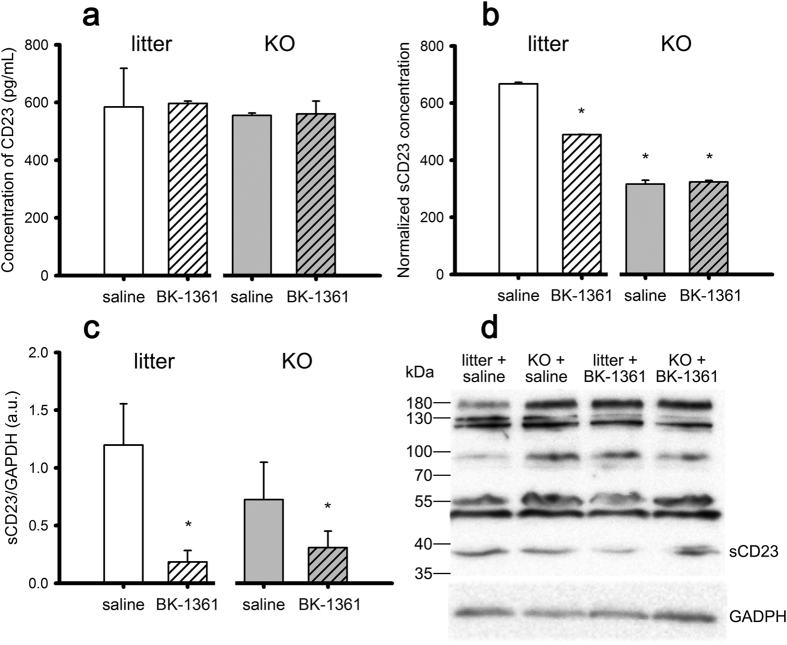
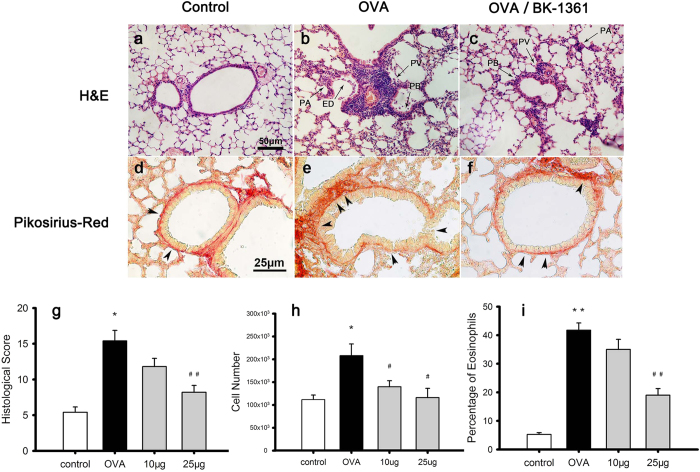
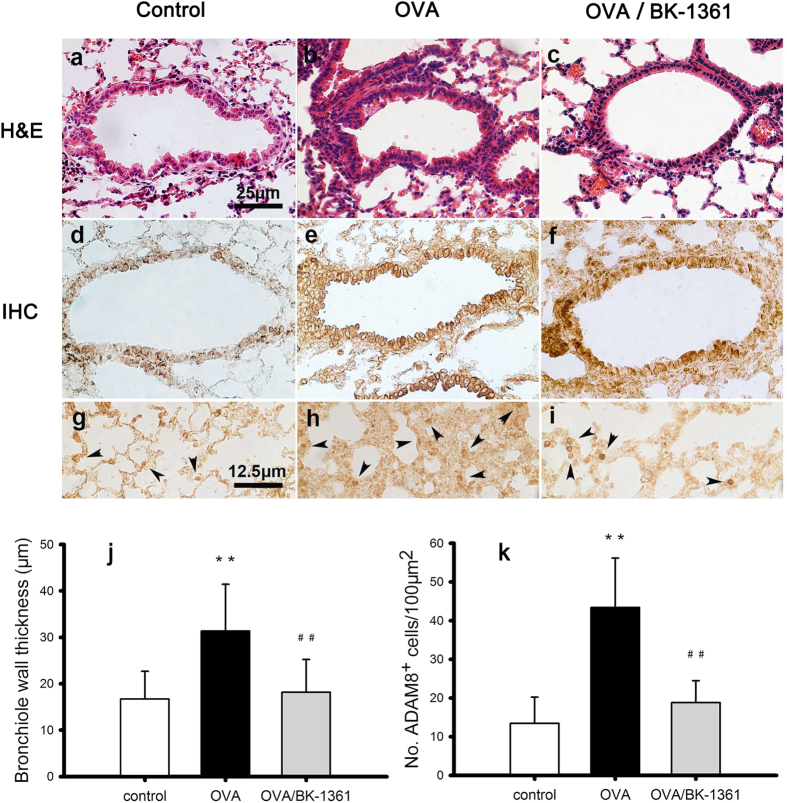
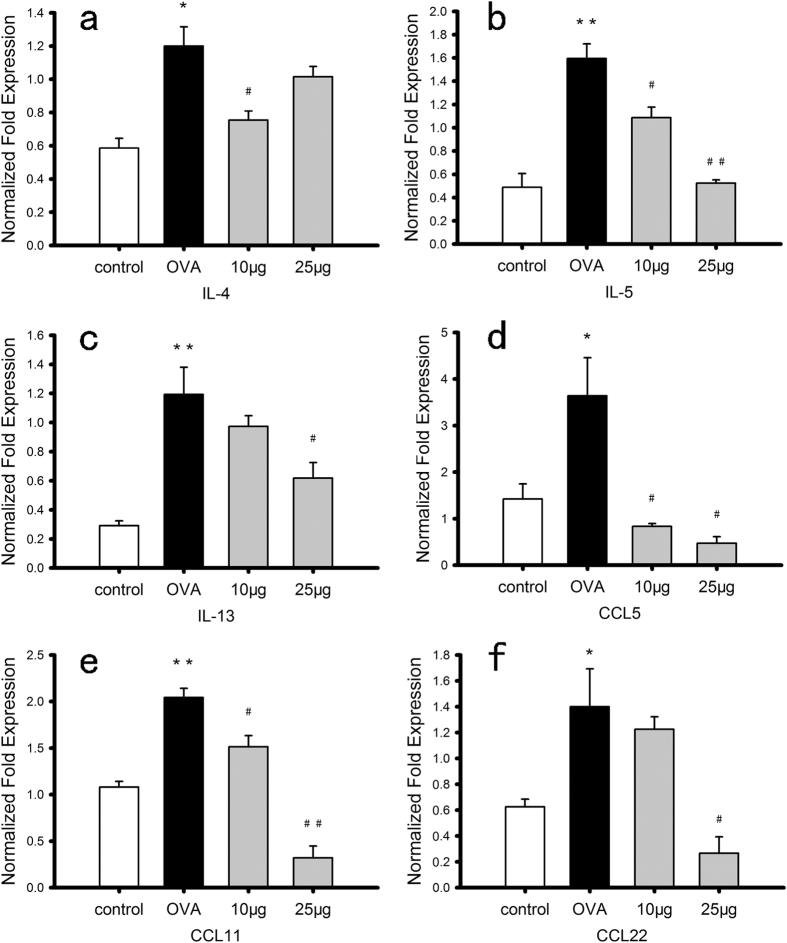
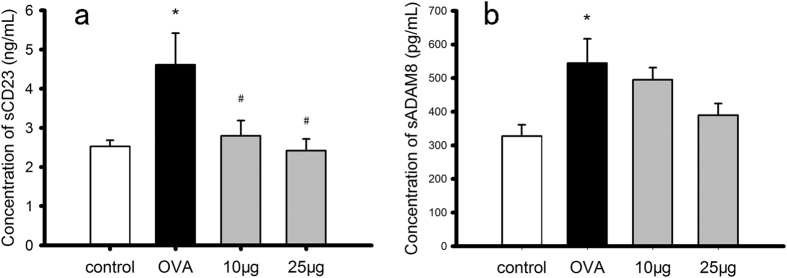
A disintegrin and metalloproteinase 8 (ADAM8) has been identified as a signature gene associated with moderate and severe asthma. Studies in mice have demonstrated that the severity of asthma can be reduced by either transgenic knock-out or by antibodies blocking ADAM8 function, highlighting ADAM8 as potential drug target for asthma therapy. Here, we examined the therapeutic effect of an ADAM8 inhibitor peptide (BK-1361) that specifically blocks cellular ADAM8 activity in ovalbumin-sensitized and challenged Balb/c mice. We found that BK-1361 (25 μg/g body weight) attenuated airway responsiveness to methacholine stimulation by up to 42%, concomitantly reduced tissue remodeling by 50%, and decreased inflammatory cells (e.g. eosinophils down by 54%)/inflammatory factors (e.g. sCD23 down by 50%)/TH2 cytokines (e.g. IL-5 down by 70%)/ADAM8-positive eosinophils (down by 60%) in the lung. We further verified that BK-1361 specifically targets ADAM8 in vivo as the peptide caused significantly reduced levels of soluble CD23 in wild-type but not in ADAM8-deficient mice. These findings suggest that BK-1361 blocks ADAM8-dependent asthma effects in vivo by inhibiting infiltration of eosinophils and TH2 lymphocytes, thus leading to reduction of TH2-mediated inflammation, tissue remodeling and bronchial hyperresponsiveness. Taken together, pharmacological ADAM8 inhibition appears as promising novel therapeutic strategy for the treatment of asthma.
解整合素金属蛋白酶8(ADAM8)已被确定为与中度和重度哮喘相关的标志性基因。对小鼠的研究表明,通过转基因敲除或使用阻断ADAM8功能的抗体均可降低哮喘的严重程度,这突出了ADAM8作为哮喘治疗潜在药物靶点的地位。在此,我们研究了一种ADAM8抑制剂肽(BK - 1361)对卵清蛋白致敏和激发的Balb/c小鼠中细胞ADAM8活性的特异性阻断作用及其治疗效果。我们发现,BK - 1361(25μg/g体重)可使气道对乙酰甲胆碱刺激的反应性降低多达42%,同时使组织重塑减少50%,并减少肺内的炎症细胞(如嗜酸性粒细胞减少54%)/炎症因子(如可溶性CD23减少50%)/TH2细胞因子(如白细胞介素 - 5减少70%)/ADAM8阳性嗜酸性粒细胞(减少60%)。我们进一步证实,BK - 1361在体内特异性靶向ADAM8,因为该肽可使野生型小鼠而非ADAM8缺陷型小鼠的可溶性CD23水平显著降低。这些发现表明,BK - 1361通过抑制嗜酸性粒细胞和TH2淋巴细胞的浸润,在体内阻断ADAM8依赖性哮喘效应,从而导致TH2介导的炎症、组织重塑和支气管高反应性的减轻。综上所述,药理学上抑制ADAM8似乎是一种有前景的哮喘治疗新策略。