Schwingshackl Lukas, Chaimani Anna, Bechthold Angela, Iqbal Khalid, Stelmach-Mardas Marta, Hoffmann Georg, Schwedhelm Carolina, Schlesinger Sabrina, Boeing Heiner
German Institute of Human Nutrition Potsdam-Rehbruecke (DIfE), Arthur-Scheunert-Allee 114-116, 14558, Nuthetal, Germany.
Department of Hygiene and Epidemiology University of Ioannina School of Medicine, Medical School Campus, University of Ioannina, Ioannina, 45110, Greece.
Syst Rev. 2016 Jul 27;5(1):125. doi: 10.1186/s13643-016-0302-9.
There is a lack of systematic and comprehensive evaluations whether food intakes lower or increase risk of chronic diseases. In this network meta-analysis of prospective cohort studies, we aim to evaluate the effects of different foods on risk of chronic diseases.
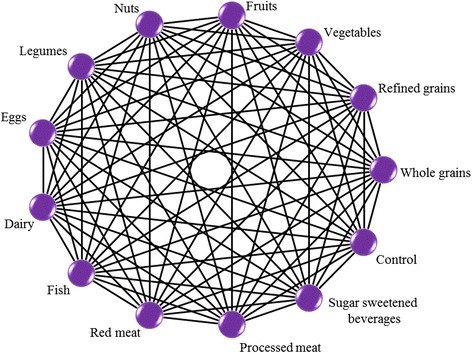
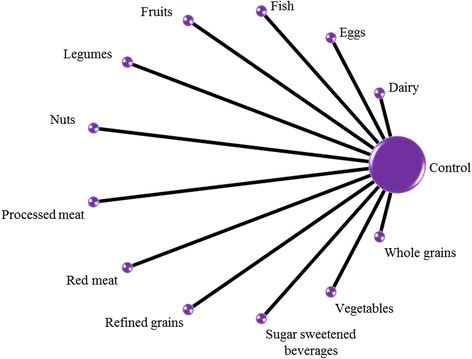
METHODS/DESIGN: We will search PubMed and EMBASE. This will be supplemented by a hand search and author contacts. Citations, abstracts, and relevant papers will be screened for eligibility by two reviewers independently. Prospective cohort studies will be included if they meet the following criteria: (1) evaluate the association of single food or food groups with all-cause mortality, cardiovascular diseases (incidence and mortality), cancer (incidence and mortality) or risk of type 2 diabetes. The following food groups will be evaluated: whole grains, refined grains, vegetables, fruits, nuts, legumes, eggs, dairy products, fish, red meat, processed meat and sugar-sweetened beverages; (2) include participants ≥18 years of age; and (3) study population were free of outcome(s) of interest at the onset of the study. To assess study quality, we will extract the following characteristics: study size, duration of follow-up, dietary assessment method, assessment of outcome and adjustment factors. If the identified studies appear sufficiently similar within and across the different comparisons between pairs of food groups, we will estimate summary-relative effects using random effects network meta-analysis. Subgroup and meta-regression analyses will be performed stratified by different follow-up cut-points, geographical region and sex.
This is a presentation of the study protocol only. Results and conclusions are pending completion of this study. Our systematic review will be of great value to national and international authorities for evidence-based nutritional recommendation/guidelines, regarding the implementation of food-based dietary guidelines for prevention of chronic diseases. Moreover, our results can be implemented to develop new diet quality indices/scores.
PROSPERO CRD42016037069.
目前缺乏关于食物摄入量是降低还是增加慢性病风险的系统而全面的评估。在这项前瞻性队列研究的网络荟萃分析中,我们旨在评估不同食物对慢性病风险的影响。
方法/设计:我们将检索PubMed和EMBASE。此外还将进行手工检索并与作者联系。两名评审员将独立筛选文献、摘要和相关论文以确定其是否符合条件。符合以下标准的前瞻性队列研究将被纳入:(1)评估单一食物或食物类别与全因死亡率、心血管疾病(发病率和死亡率)、癌症(发病率和死亡率)或2型糖尿病风险之间的关联。将评估以下食物类别:全谷物、精制谷物、蔬菜、水果、坚果、豆类、鸡蛋、乳制品、鱼类、红肉、加工肉类和含糖饮料;(2)纳入年龄≥18岁的参与者;(3)研究人群在研究开始时没有感兴趣的结局。为了评估研究质量,我们将提取以下特征:研究规模、随访时间、饮食评估方法、结局评估和调整因素。如果在不同食物类别对之间的不同比较中,所纳入的研究在内部和相互之间看起来足够相似,我们将使用随机效应网络荟萃分析来估计汇总相对效应。将按不同的随访切点、地理区域和性别进行亚组分析和荟萃回归分析。
这只是研究方案的介绍。结果和结论有待本研究完成。我们的系统评价对于国家和国际权威机构制定基于证据的营养建议/指南,以实施基于食物的膳食指南来预防慢性病具有重要价值。此外,我们的结果可用于开发新的饮食质量指数/评分。
PROSPERO CRD42016037069。