Sheng Ke, Fang Weidong, Zhu Yingcheng, Shuai Guangying, Zou Dezhi, Su Meilan, Han Yu, Cheng Oumei
Department of Internal Medicine, The University Hospital, Chongqing University Chongqing, China.
Department of Radiology, the First Affiliated Hospital, Chongqing Medical University Chongqing, China.
Front Aging Neurosci. 2016 Jul 12;8:165. doi: 10.3389/fnagi.2016.00165. eCollection 2016.
HIGHLIGHTS Eighteen EOPD, 21 LOPD and 37 age-matched normal control subjects participated in the resting state fMRI scans.Age at onset of PD modulates the distribution of cerebral regional homogeneity during resting state.Disproportionate putamen alterations are more prominent in PD patients with a younger age of onset.
Early-onset Parkinson's disease (EOPD) is distinct from late-onset PD (LOPD) as it relates to the clinical profile and response to medication. The objective of current paper is to investigate whether characteristics of spontaneous brain activity in the resting state are associated with the age of disease onset.
We assessed the correlation between neural activity and age-at-onset in a sample of 39 PD patients (18 EOPD and 21 LOPD) and 37 age-matched normal control subjects. Regional homogeneity (ReHo) approaches were employed using ANOVA with two factors: PD and age.
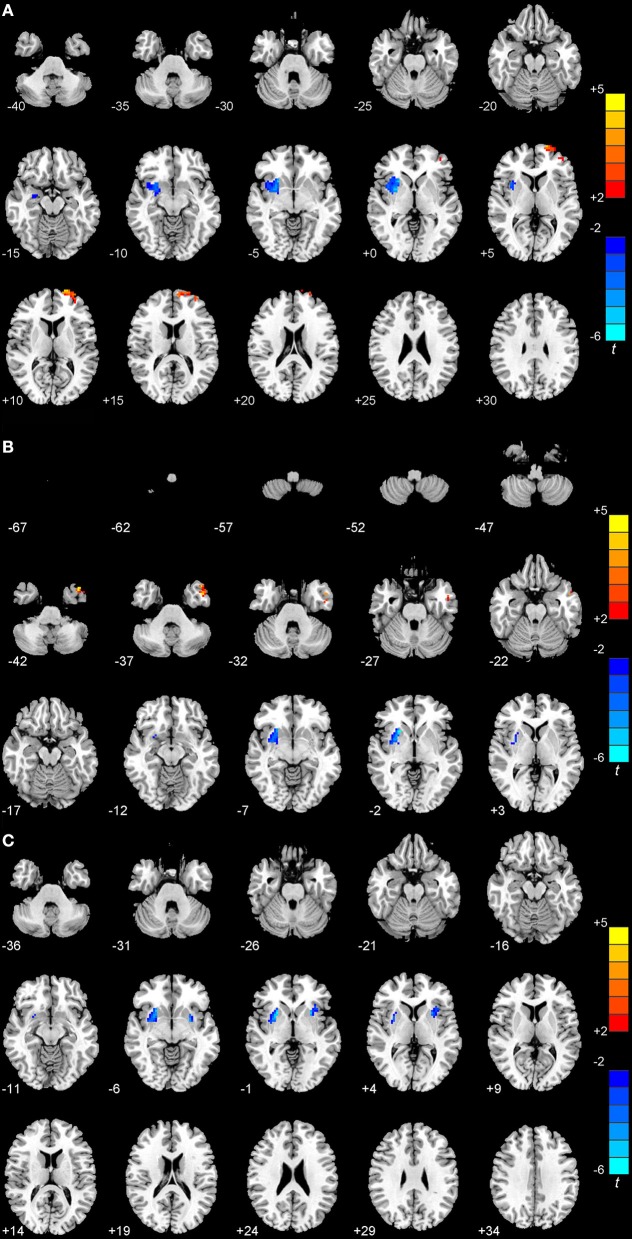
In the comparisons between LOPD and EOPD, EOPD revealed lower ReHo values in the right putamen and higher ReHo values in the left superior frontal gyrus. Compared with age-matched control subjects, EOPD exhibited lower ReHo values in the right putamen and higher ReHo values in the left inferior temporal gyrus; However, LOPD showed lower ReHo values in the right putamen and left insula. The ReHo values were negatively correlated with the UPDRS total scores in the right putamen in LOPD, but a correlation between the ReHo value and UPDRS score was not detected in EOPD.
Our findings support the notion that age at onset is associated with the distribution of cerebral regional homogeneity in the resting state and suggest that disproportionate putamen alterations are more prominent in patients with a younger age of onset.
要点 18 例早发性帕金森病(EOPD)患者、21 例晚发性帕金森病(LOPD)患者和 37 例年龄匹配的正常对照受试者参与了静息态功能磁共振成像扫描。帕金森病发病年龄调节静息态脑区局部一致性分布。发病年龄较小的帕金森病患者壳核改变更为明显。
早发性帕金森病(EOPD)在临床特征和药物反应方面与晚发性帕金森病(LOPD)不同。本文目的是研究静息态下脑自发活动特征是否与疾病发病年龄相关。
我们评估了 39 例帕金森病患者(18 例 EOPD 和 21 例 LOPD)及 37 例年龄匹配的正常对照受试者样本中神经活动与发病年龄之间的相关性。采用双因素方差分析的局部一致性(ReHo)方法:帕金森病和年龄。
在 LOPD 与 EOPD 的比较中,EOPD 在右侧壳核显示出较低的 ReHo 值,在左侧额上回显示出较高的 ReHo 值。与年龄匹配的对照受试者相比,EOPD 在右侧壳核显示出较低的 ReHo 值,在左侧颞下回显示出较高的 ReHo 值;然而,LOPD 在右侧壳核和左侧岛叶显示出较低的 ReHo 值。LOPD 中右侧壳核的 ReHo 值与统一帕金森病评定量表(UPDRS)总分呈负相关,但在 EOPD 中未检测到 ReHo 值与 UPDRS 评分之间的相关性。
我们的研究结果支持发病年龄与静息态脑区局部一致性分布相关这一观点,并表明发病年龄较小的患者壳核改变更为明显。