Eichenfield Dawn Z, Troutman Ty Dale, Link Verena M, Lam Michael T, Cho Han, Gosselin David, Spann Nathanael J, Lesch Hanna P, Tao Jenhan, Muto Jun, Gallo Richard L, Evans Ronald M, Glass Christopher K
Department of Cellular and Molecular Medicine, University of California, San Diego, San Diego, United States.
Biomedical Sciences Graduate Program, University of California, San Diego, San Diego, United States.
Elife. 2016 Jul 27;5:e13024. doi: 10.7554/eLife.13024.
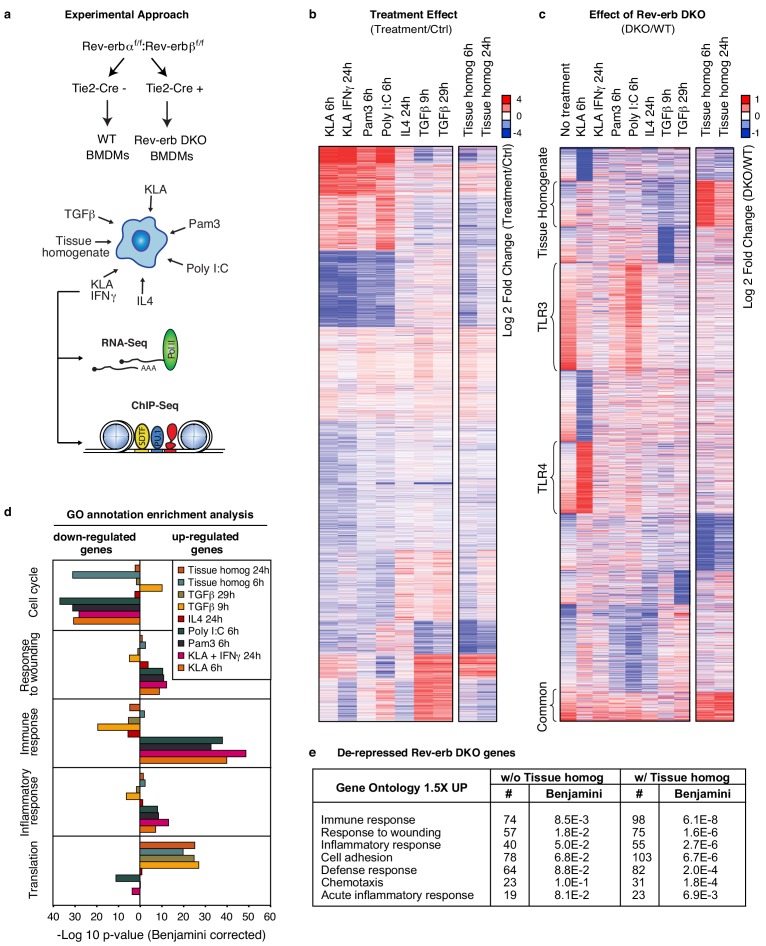
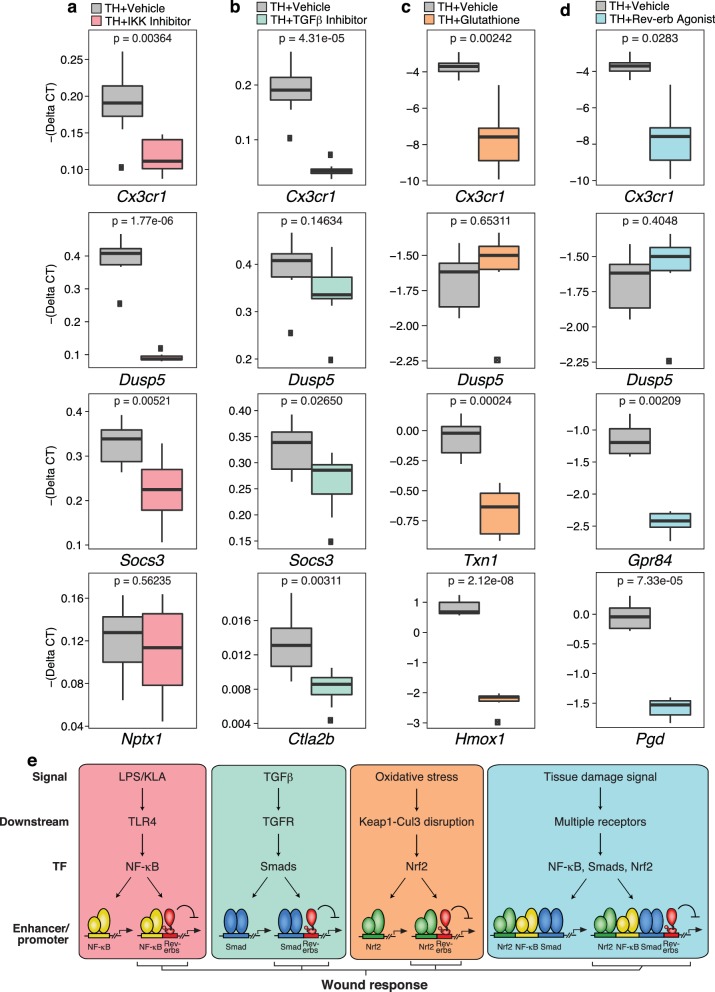
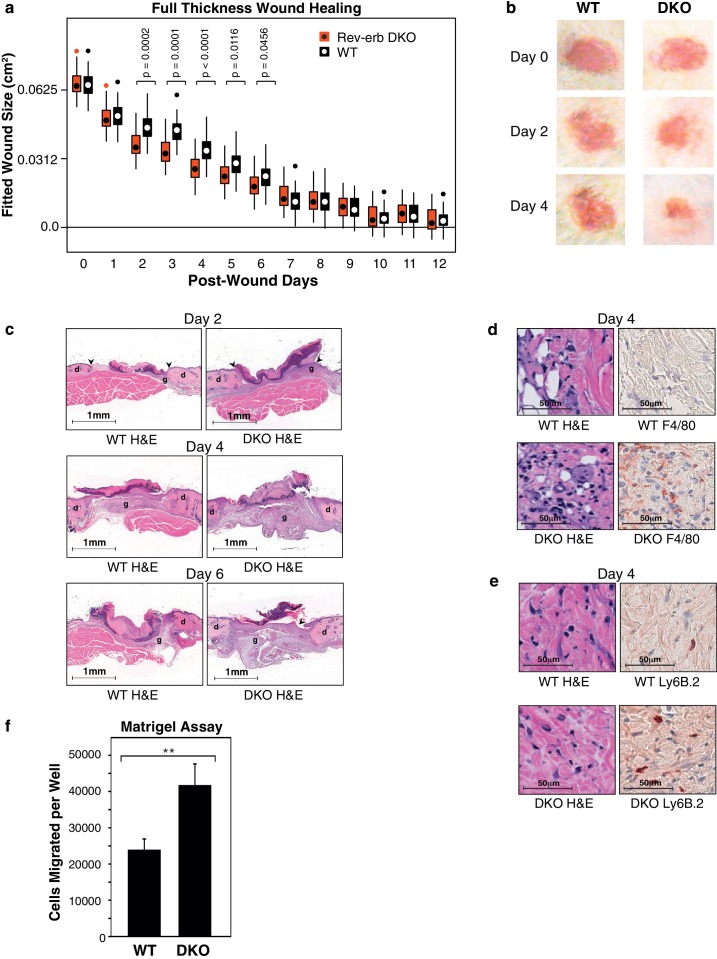
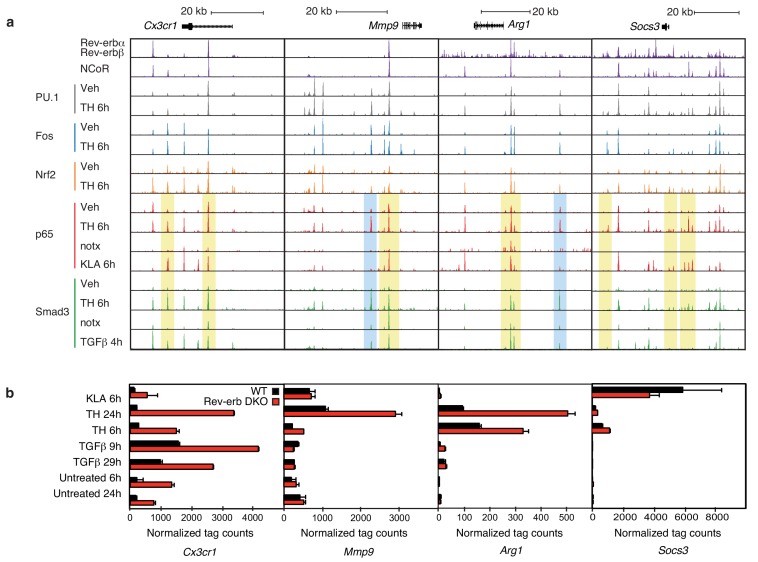
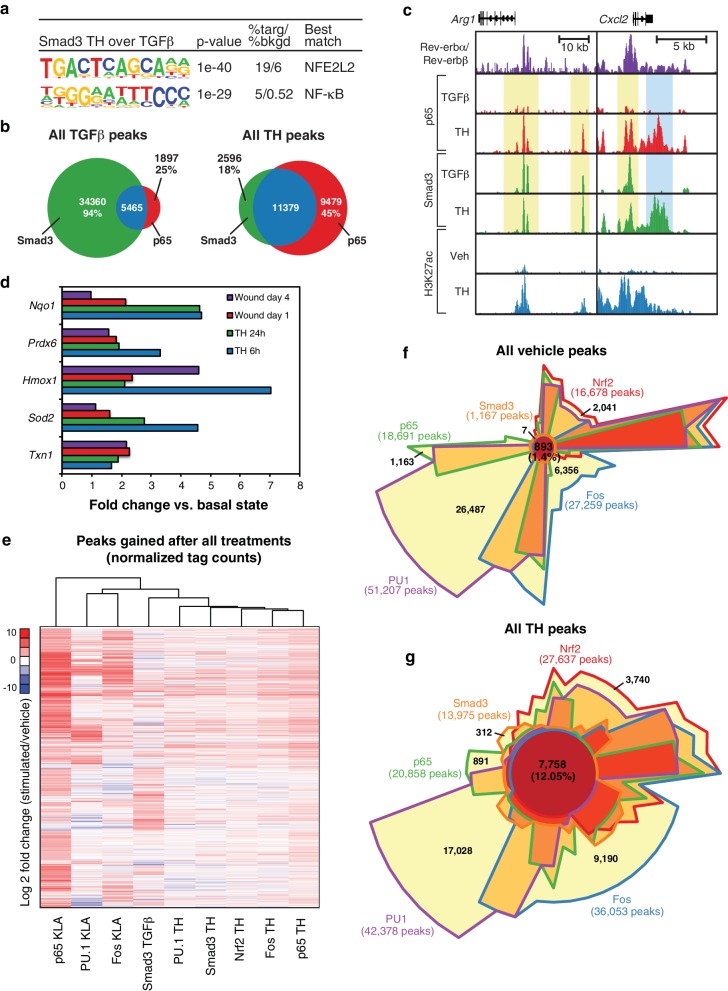
Although macrophages can be polarized to distinct phenotypes in vitro with individual ligands, in vivo they encounter multiple signals that control their varied functions in homeostasis, immunity, and disease. Here, we identify roles of Rev-erb nuclear receptors in regulating responses of mouse macrophages to complex tissue damage signals and wound repair. Rather than reinforcing a specific program of macrophage polarization, Rev-erbs repress subsets of genes that are activated by TLR ligands, IL4, TGFβ, and damage-associated molecular patterns (DAMPS). Unexpectedly, a complex damage signal promotes co-localization of NF-κB, Smad3, and Nrf2 at Rev-erb-sensitive enhancers and drives expression of genes characteristic of multiple polarization states in the same cells. Rev-erb-sensitive enhancers thereby integrate multiple damage-activated signaling pathways to promote a wound repair phenotype.
尽管巨噬细胞在体外可通过单个配体极化为不同的表型,但在体内它们会遇到多种信号,这些信号控制着它们在稳态、免疫和疾病中的多种功能。在此,我们确定了Rev-erb核受体在调节小鼠巨噬细胞对复杂组织损伤信号和伤口修复反应中的作用。Rev-erbs并非加强巨噬细胞极化的特定程序,而是抑制由TLR配体、IL4、TGFβ和损伤相关分子模式(DAMPs)激活的基因子集。出乎意料的是,一种复杂的损伤信号促进了NF-κB、Smad3和Nrf2在Rev-erb敏感增强子处的共定位,并驱动同一细胞中多种极化状态特征基因的表达。Rev-erb敏感增强子从而整合多种损伤激活的信号通路,以促进伤口修复表型。