Abbai Ragavendran, Mathiyalagan Ramya, Markus Josua, Kim Yeon-Ju, Wang Chao, Singh Priyanka, Ahn Sungeun, Farh Mohamed El-Agamy, Yang Deok Chun
Ginseng Bank, Graduate School of Biotechnology.
Department of Oriental Medicinal Biotechnology, College of Life Sciences, Kyung Hee University, Yongin, Republic of Korea.
Int J Nanomedicine. 2016 Jul 11;11:3131-43. doi: 10.2147/IJN.S108549. eCollection 2016.
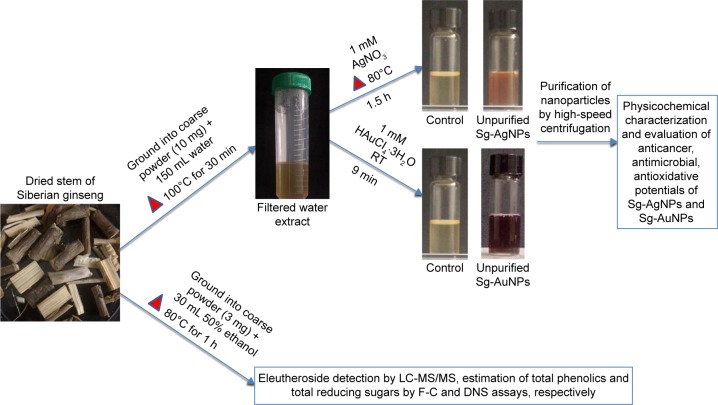
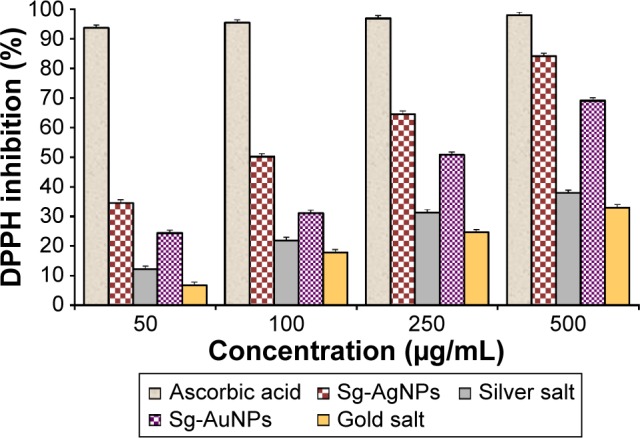
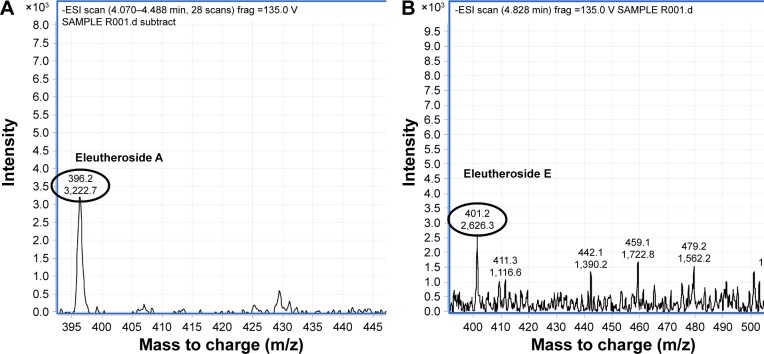
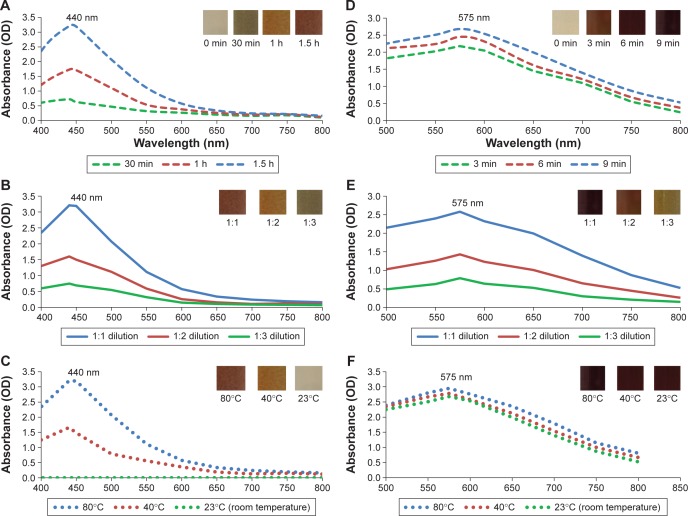
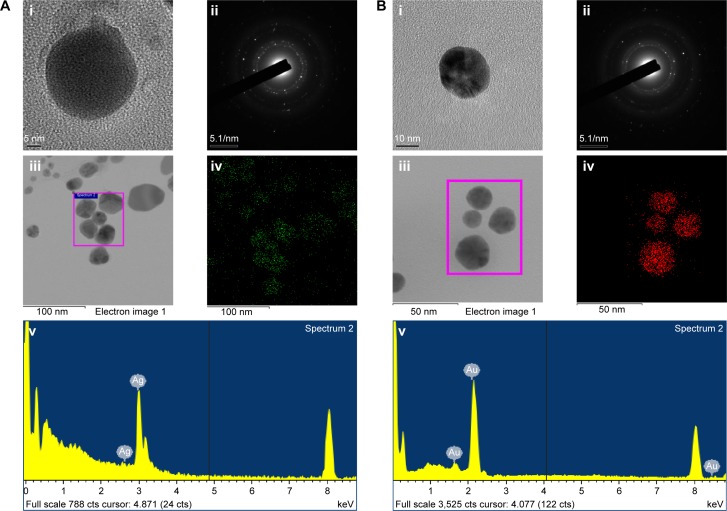
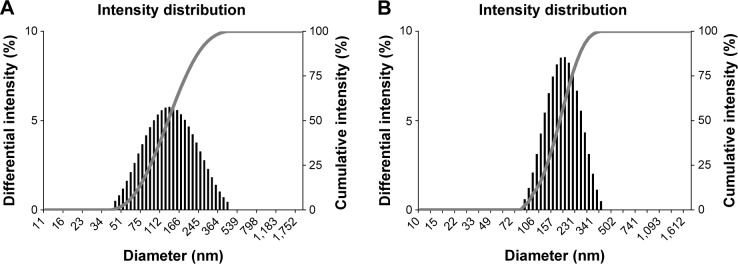
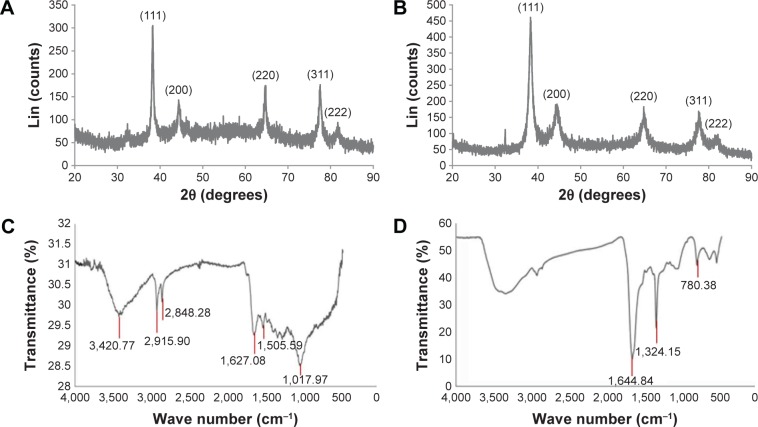
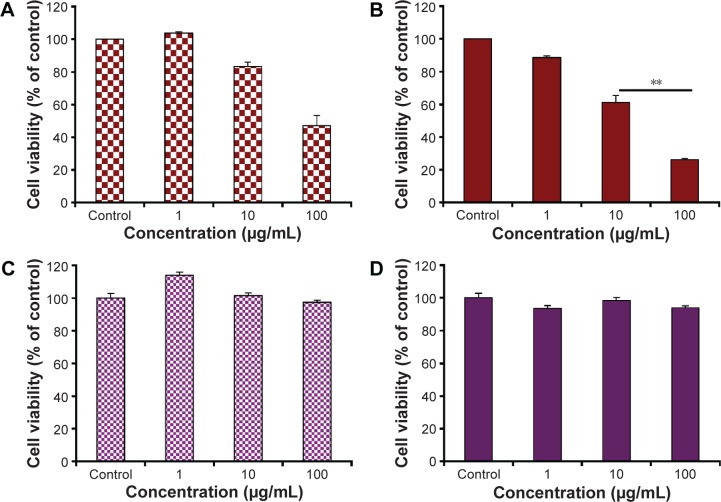
Pharmacologically active stem of the oriental herbal adaptogen, Siberian ginseng, was employed for the ecofriendly synthesis of Siberian ginseng silver nanoparticles (Sg-AgNPs) and Siberian ginseng gold nanoparticles (Sg-AuNPs). First, for metabolic characterization of the sample, liquid chromatography-tandem mass spectrometry analysis (indicated the presence of eleutherosides A and E), total phenol content, and total reducing sugar were analyzed. Second, the water extract of the sample mediated the biological synthesis of both Sg-AgNPs and Sg-AuNPs that were crystalline face-centered cubical structures with a Z-average hydrodynamic diameter of 126 and 189 nm, respectively. Moreover, Fourier transform infrared analysis indicated that proteins and aromatic hydrocarbons play a key role in the formation and stabilization of Sg-AgNPs, whereas phenolic compounds accounted for the synthesis and stability of Sg-AuNPs. 3-(4,5-Dimethyl-2-thiazolyl)-2,5-diphenyl-2H tetrazolium bromide (MTT) assay determined that Sg-AgNPs conferred strong cytotoxicity against MCF7 (human breast cancer cell line) and was only slightly toxic to HaCaT (human keratinocyte cell line) at 10 µg⋅mL(-1). However, Sg-AuNPs did not display cytotoxic effects against both of the cell lines. The disc diffusion assay indicated a dose-dependent increase in the zone of inhibition of Staphylococcus aureus (ATCC 6538), Bacillus anthracis (NCTC 10340), Vibrio parahaemolyticus (ATCC 33844), and Escherichia coli (BL21) treated with Sg-AgNPs, whereas Sg-AuNPs did not show inhibitory activity. In addition, the 2,2-diphenyl-1-picrylhydrazyl assay demonstrated that both Sg-AgNPs and Sg-AuNPs possess strong antioxidant activity. To the best of our knowledge, this is the first report unraveling the potential of Eleutherococcus senticosus for silver and gold nanoparticle synthesis along with its biological applications, which in turn would promote widespread usage of the endemic Siberian ginseng.
东方草药适应原西伯利亚人参的药理活性茎干被用于西伯利亚人参银纳米颗粒(Sg-AgNPs)和西伯利亚人参金纳米颗粒(Sg-AuNPs)的绿色合成。首先,为了对样品进行代谢特征分析,进行了液相色谱-串联质谱分析(表明存在刺五加苷A和E)、总酚含量和总还原糖分析。其次,样品的水提取物介导了Sg-AgNPs和Sg-AuNPs的生物合成,它们均为面心立方晶体结构,Z平均流体动力学直径分别为126和189 nm。此外,傅里叶变换红外分析表明,蛋白质和芳香烃在Sg-AgNPs的形成和稳定中起关键作用,而酚类化合物则对Sg-AuNPs的合成和稳定性起作用。3-(4,5-二甲基-2-噻唑基)-2,5-二苯基-2H四唑溴盐(MTT)试验确定,Sg-AgNPs对MCF7(人乳腺癌细胞系)具有很强的细胞毒性,而在10 μg·mL(-1)时对HaCaT(人角质形成细胞系)只有轻微毒性。然而,Sg-AuNPs对这两种细胞系均未显示出细胞毒性作用。纸片扩散试验表明,用Sg-AgNPs处理的金黄色葡萄球菌(ATCC 6538)、炭疽芽孢杆菌(NCTC 10340)、副溶血性弧菌(ATCC 33844)和大肠杆菌(BL21)的抑菌圈呈剂量依赖性增加,而Sg-AuNPs未显示出抑制活性。此外,2,2-二苯基-1-苦基肼试验表明,Sg-AgNPs和Sg-AuNPs均具有很强的抗氧化活性。据我们所知,这是第一份揭示刺五加在银和金纳米颗粒合成及其生物学应用方面潜力的报告,这反过来将促进当地西伯利亚人参的广泛应用。