Silkstone Gary G A, Silkstone Rebecca S, Wilson Michael T, Simons Michelle, Bülow Leif, Kallberg Kristian, Ratanasopa Khuanpiroon, Ronda Luca, Mozzarelli Andrea, Reeder Brandon J, Cooper Chris E
School of Biological Sciences, University of Essex, Wivenhoe Park, Colchester, Essex CO4 3SQ, U.K.
Department of Pure and Applied Biochemistry, Lund University, Box 124, 221 00 Lund, Sweden.
Biochem J. 2016 Oct 1;473(19):3371-83. doi: 10.1042/BCJ20160243. Epub 2016 Jul 28.
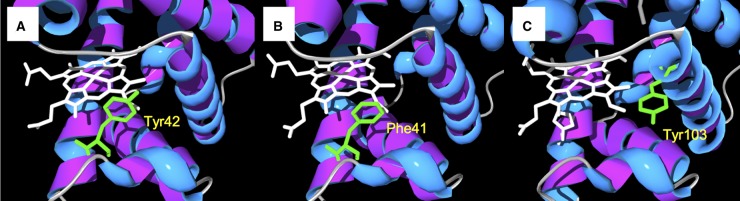
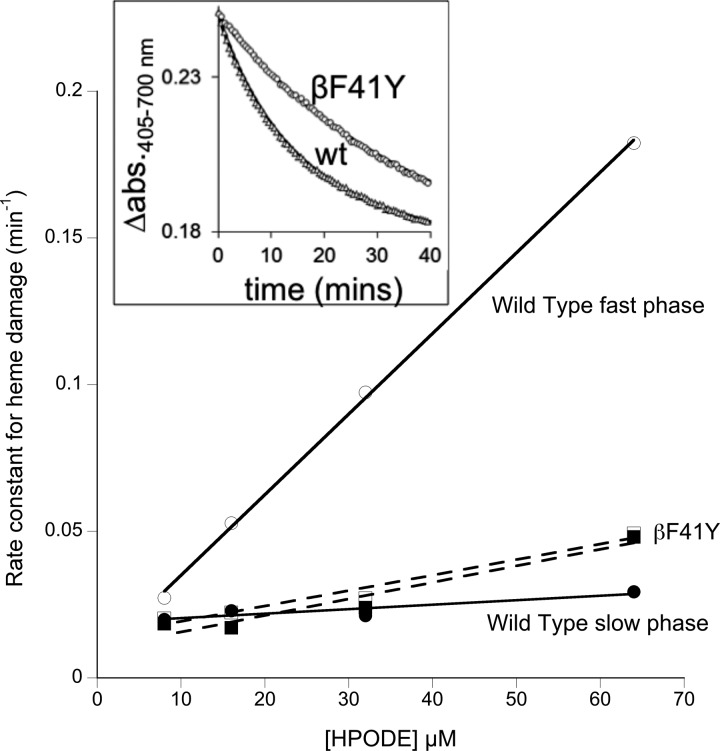
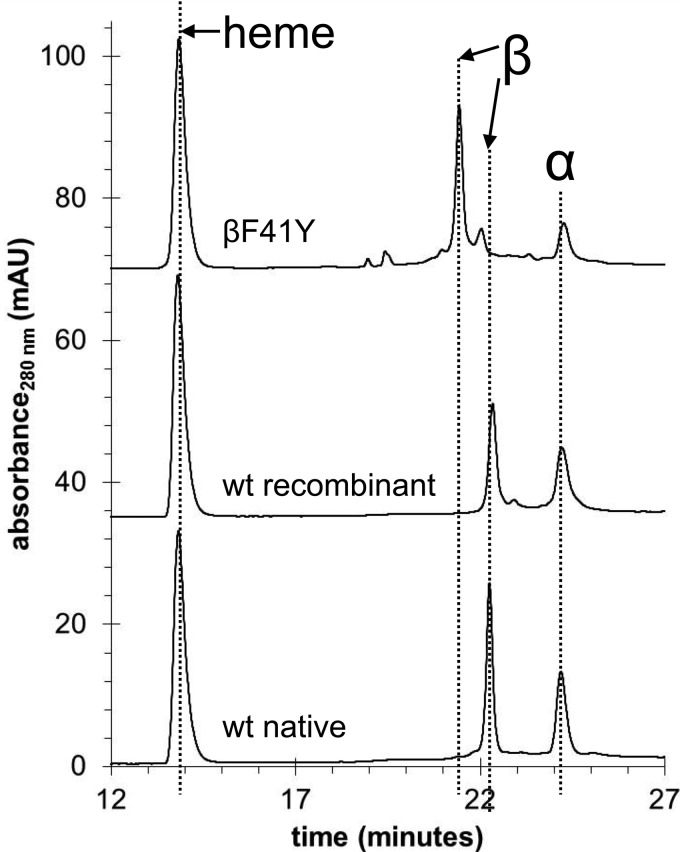
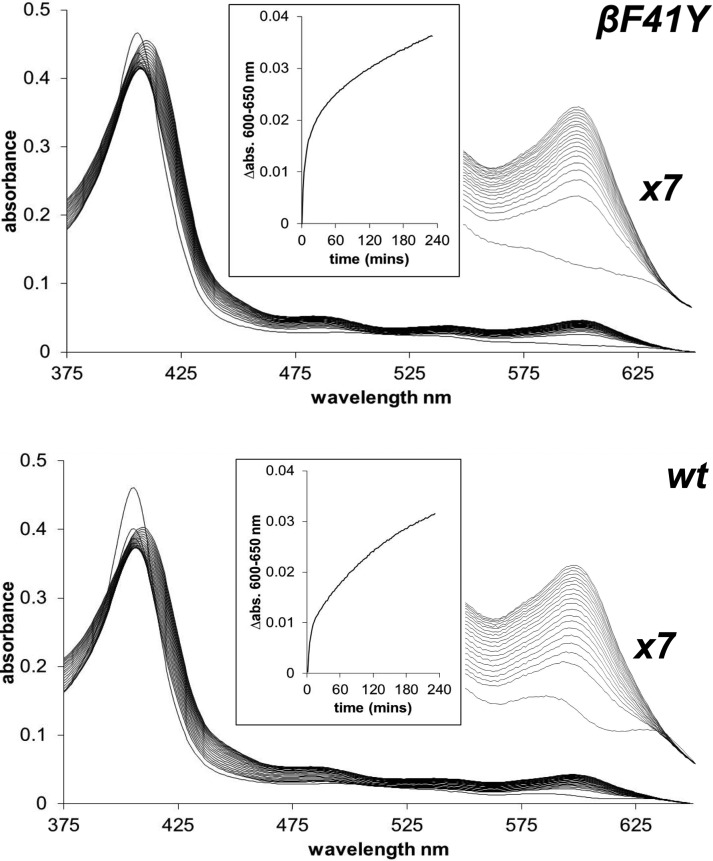
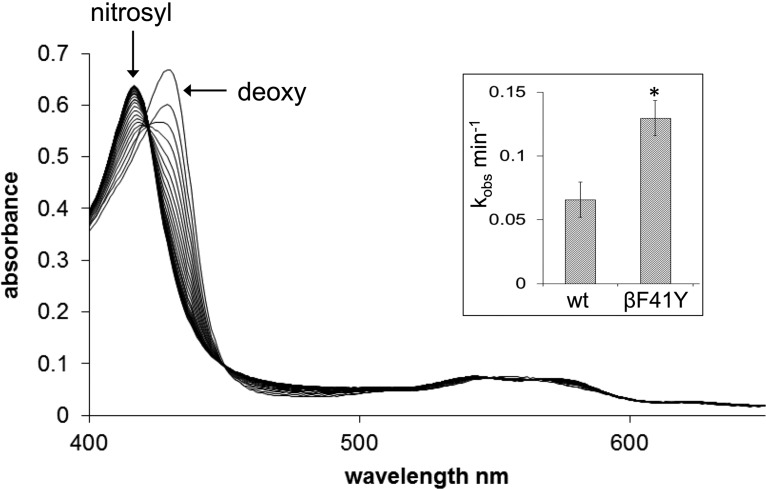
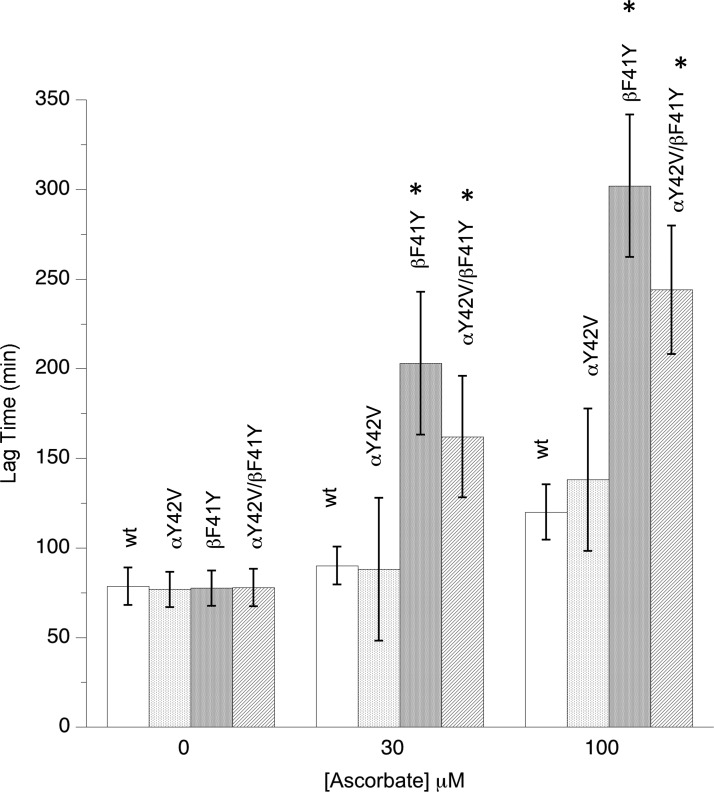
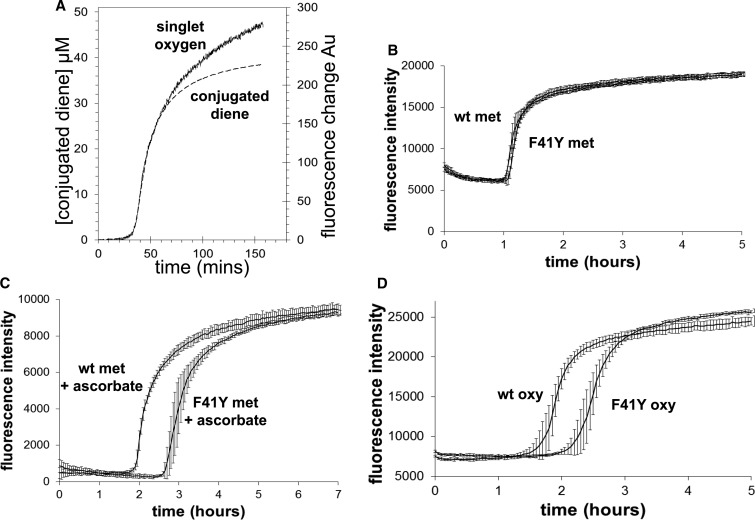
Hemoglobin (Hb)-based oxygen carriers (HBOC) have been engineered to replace or augment the oxygen-carrying capacity of erythrocytes. However, clinical results have generally been disappointing due to adverse side effects linked to intrinsic heme-mediated oxidative toxicity and nitric oxide (NO) scavenging. Redox-active tyrosine residues can facilitate electron transfer between endogenous antioxidants and oxidative ferryl heme species. A suitable residue is present in the α-subunit (Y42) of Hb, but absent from the homologous position in the β-subunit (F41). We therefore replaced this residue with a tyrosine (βF41Y, Hb Mequon). The βF41Y mutation had no effect on the intrinsic rate of lipid peroxidation as measured by conjugated diene and singlet oxygen formation following the addition of ferric(met) Hb to liposomes. However, βF41Y significantly decreased these rates in the presence of physiological levels of ascorbate. Additionally, heme damage in the β-subunit following the addition of the lipid peroxide hydroperoxyoctadecadieoic acid was five-fold slower in βF41Y. NO bioavailability was enhanced in βF41Y by a combination of a 20% decrease in NO dioxygenase activity and a doubling of the rate of nitrite reductase activity. The intrinsic rate of heme loss from methemoglobin was doubled in the β-subunit, but unchanged in the α-subunit. We conclude that the addition of a redox-active tyrosine mutation in Hb able to transfer electrons from plasma antioxidants decreases heme-mediated oxidative reactivity and enhances NO bioavailability. This class of mutations has the potential to decrease adverse side effects as one component of a HBOC product.
基于血红蛋白(Hb)的氧载体(HBOC)已被设计用于替代或增强红细胞的携氧能力。然而,由于与内在血红素介导的氧化毒性和一氧化氮(NO)清除相关的不良副作用,临床结果总体上令人失望。氧化还原活性酪氨酸残基可促进内源性抗氧化剂与氧化高铁血红素物种之间的电子转移。Hb的α亚基(Y42)中存在一个合适的残基,但β亚基的同源位置(F41)中不存在。因此,我们用酪氨酸取代了该残基(βF41Y,Hb梅昆)。βF41Y突变对脂质过氧化的内在速率没有影响,脂质过氧化速率通过向脂质体中添加高铁(高铁)Hb后共轭二烯和单线态氧的形成来测量。然而,在生理水平的抗坏血酸存在下,βF41Y显著降低了这些速率。此外,添加脂质过氧化物氢过氧十八碳二烯酸后,β亚基中的血红素损伤在βF41Y中慢了五倍。βF41Y中NO生物利用度通过NO双加氧酶活性降低20%和亚硝酸还原酶活性速率加倍的组合而提高。高铁血红蛋白血红素损失的内在速率在β亚基中增加了一倍,但在α亚基中没有变化。我们得出结论,在Hb中添加一个能够从血浆抗氧化剂转移电子的氧化还原活性酪氨酸突变可降低血红素介导的氧化反应性并提高NO生物利用度。这类突变有可能作为HBOC产品的一个组成部分来减少不良副作用。