Höfling Corinna, Morawski Markus, Zeitschel Ulrike, Zanier Elisa R, Moschke Katrin, Serdaroglu Alperen, Canneva Fabio, von Hörsten Stephan, De Simoni Maria-Grazia, Forloni Gianluigi, Jäger Carsten, Kremmer Elisabeth, Roßner Steffen, Lichtenthaler Stefan F, Kuhn Peer-Hendrik
Paul Flechsig Institute for Brain Research, University of Leipzig, Leipzig, Germany.
Department of Neuroscience, IRCCS, Istituto di Ricerche Farmacologiche Mario Negri, Milano, Italy.
Aging Cell. 2016 Oct;15(5):953-63. doi: 10.1111/acel.12508. Epub 2016 Jul 29.
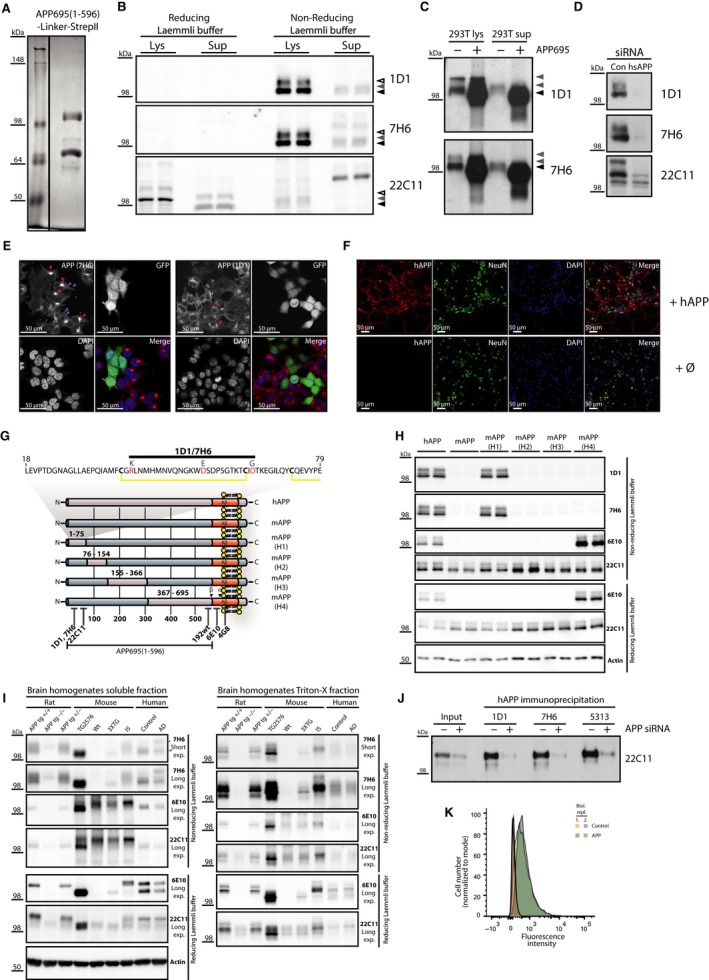
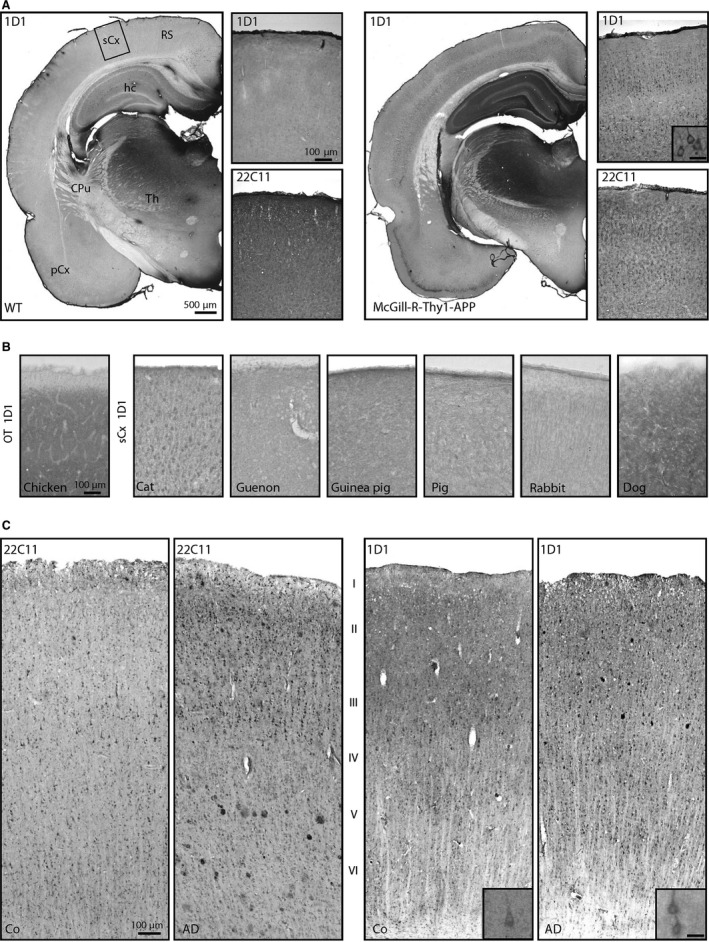
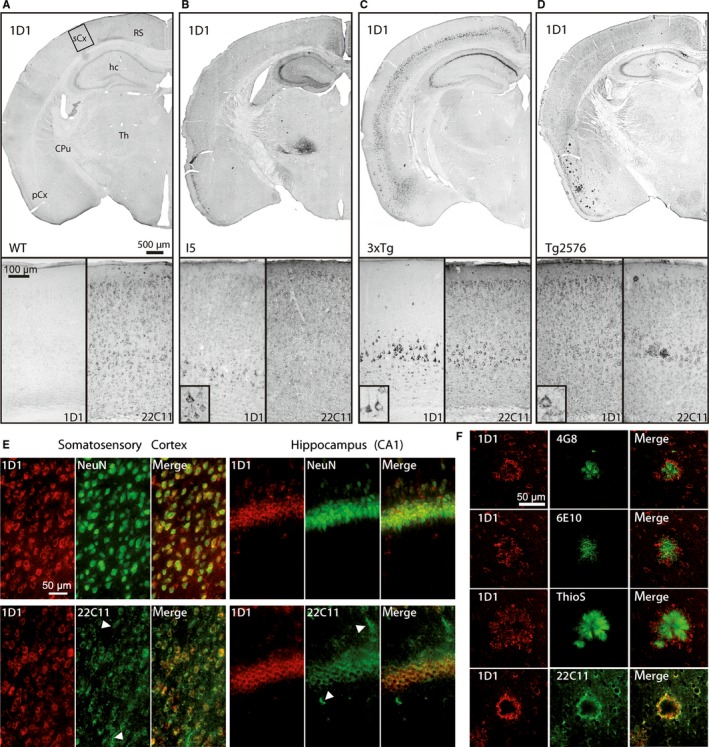
Alzheimer's disease (AD) is histopathologically characterized by neurodegeneration, the formation of intracellular neurofibrillary tangles and extracellular Aβ deposits that derive from proteolytic processing of the amyloid precursor protein (APP). As rodents do not normally develop Aβ pathology, various transgenic animal models of AD were designed to overexpress human APP with mutations favouring its amyloidogenic processing. However, these mouse models display tremendous differences in the spatial and temporal appearance of Aβ deposits, synaptic dysfunction, neurodegeneration and the manifestation of learning deficits which may be caused by age-related and brain region-specific differences in APP transgene levels. Consequentially, a comparative temporal and regional analysis of the pathological effects of Aβ in mouse brains is difficult complicating the validation of therapeutic AD treatment strategies in different mouse models. To date, no antibodies are available that properly discriminate endogenous rodent and transgenic human APP in brains of APP-transgenic animals. Here, we developed and characterized rat monoclonal antibodies by immunohistochemistry and Western blot that detect human but not murine APP in brains of three APP-transgenic mouse and one APP-transgenic rat model. We observed remarkable differences in expression levels and brain region-specific expression of human APP among the investigated transgenic mouse lines. This may explain the differences between APP-transgenic models mentioned above. Furthermore, we provide compelling evidence that our new antibodies specifically detect endogenous human APP in immunocytochemistry, FACS and immunoprecipitation. Hence, we propose these antibodies as standard tool for monitoring expression of endogenous or transfected APP in human cells and APP expression in transgenic animals.
阿尔茨海默病(AD)的组织病理学特征为神经退行性变、细胞内神经原纤维缠结的形成以及细胞外β淀粉样蛋白(Aβ)沉积,后者源自淀粉样前体蛋白(APP)的蛋白水解加工。由于啮齿动物通常不会发生Aβ病理改变,因此设计了各种AD转基因动物模型,以过度表达具有有利于其淀粉样生成加工的突变的人APP。然而,这些小鼠模型在Aβ沉积的空间和时间出现、突触功能障碍、神经退行性变以及学习缺陷的表现方面存在巨大差异,这些差异可能是由APP转基因水平的年龄相关和脑区特异性差异引起的。因此,对小鼠脑中Aβ病理效应进行比较性的时间和区域分析很困难,这使得在不同小鼠模型中验证AD治疗策略变得复杂。迄今为止,尚无能够在APP转基因动物脑内正确区分内源性啮齿动物和转基因人APP的抗体。在此,我们通过免疫组织化学和蛋白质印迹法开发并鉴定了大鼠单克隆抗体,这些抗体能够在三种APP转基因小鼠和一种APP转基因大鼠模型的脑中检测到人APP而非小鼠APP。我们观察到在所研究的转基因小鼠品系中,人APP的表达水平和脑区特异性表达存在显著差异。这可能解释了上述APP转基因模型之间的差异。此外,我们提供了令人信服的证据,证明我们的新抗体在免疫细胞化学、荧光激活细胞分选术(FACS)和免疫沉淀中能够特异性检测内源性人APP。因此,我们建议将这些抗体作为监测人细胞中内源性或转染的APP表达以及转基因动物中APP表达的标准工具。