Melby-Lervåg Monica, Redick Thomas S, Hulme Charles
Department of Special Needs Education, University of Oslo.
Department of Psychological Sciences, Purdue University
Perspect Psychol Sci. 2016 Jul;11(4):512-34. doi: 10.1177/1745691616635612.
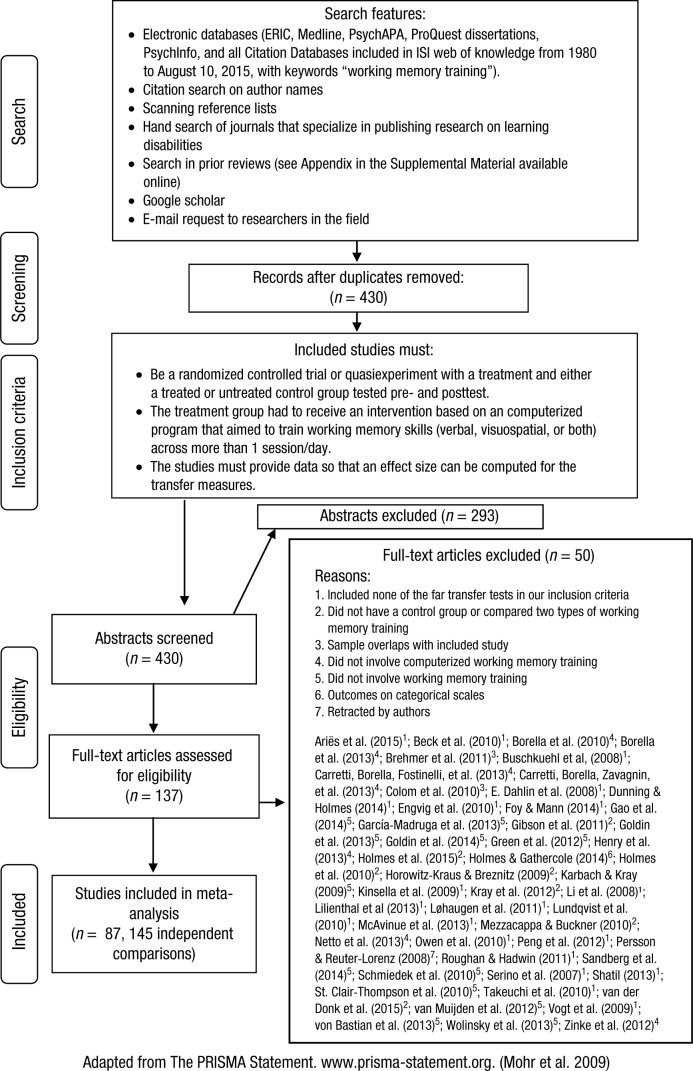
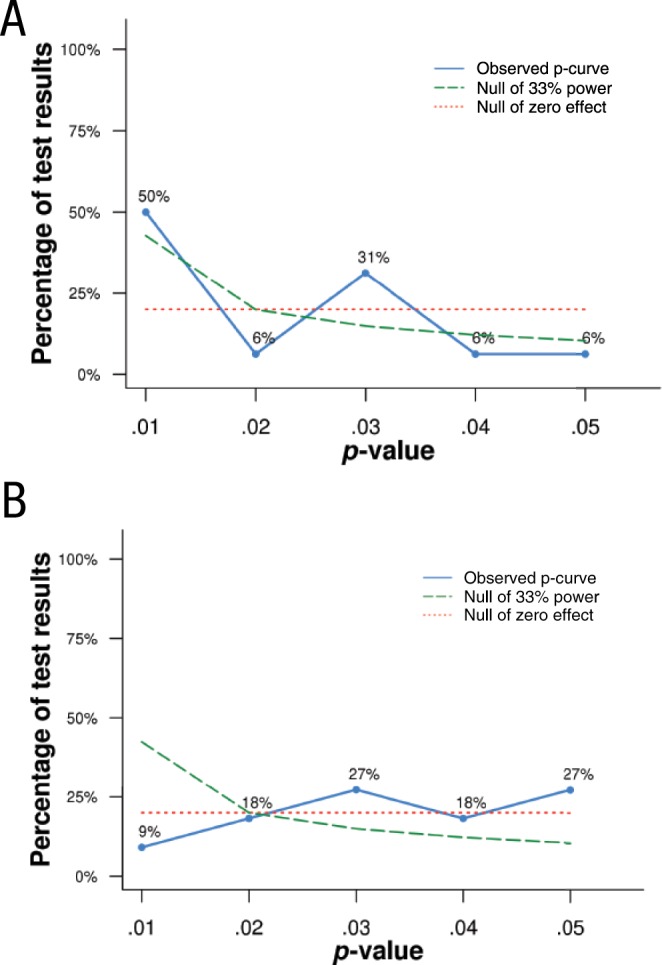
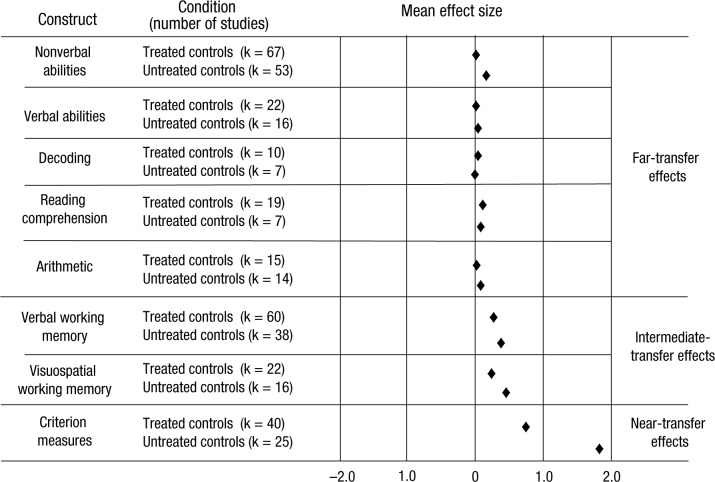
It has been claimed that working memory training programs produce diverse beneficial effects. This article presents a meta-analysis of working memory training studies (with a pretest-posttest design and a control group) that have examined transfer to other measures (nonverbal ability, verbal ability, word decoding, reading comprehension, or arithmetic; 87 publications with 145 experimental comparisons). Immediately following training there were reliable improvements on measures of intermediate transfer (verbal and visuospatial working memory). For measures of far transfer (nonverbal ability, verbal ability, word decoding, reading comprehension, arithmetic) there was no convincing evidence of any reliable improvements when working memory training was compared with a treated control condition. Furthermore, mediation analyses indicated that across studies, the degree of improvement on working memory measures was not related to the magnitude of far-transfer effects found. Finally, analysis of publication bias shows that there is no evidential value from the studies of working memory training using treated controls. The authors conclude that working memory training programs appear to produce short-term, specific training effects that do not generalize to measures of "real-world" cognitive skills. These results seriously question the practical and theoretical importance of current computerized working memory programs as methods of training working memory skills.
有人声称工作记忆训练项目会产生多种有益效果。本文对工作记忆训练研究(采用前测-后测设计和对照组)进行了荟萃分析,这些研究考察了向其他测量指标(非语言能力、语言能力、单词解码、阅读理解或算术;87篇出版物,145项实验比较)的迁移情况。训练后立即在中间迁移测量指标(语言和视觉空间工作记忆)上有可靠的改善。对于远迁移测量指标(非语言能力、语言能力、单词解码、阅读理解、算术),当将工作记忆训练与经过处理的对照条件进行比较时,没有令人信服的证据表明有任何可靠的改善。此外,中介分析表明,在各项研究中,工作记忆测量指标的改善程度与所发现的远迁移效应的大小无关。最后,发表偏倚分析表明,使用经过处理的对照的工作记忆训练研究没有证据价值。作者得出结论,工作记忆训练项目似乎会产生短期的、特定的训练效果,这些效果不会推广到“现实世界”认知技能的测量指标上。这些结果严重质疑了当前计算机化工作记忆程序作为训练工作记忆技能方法的实践和理论重要性。