Torene Rebecca, Nirmala Nanguneri, Obici Laura, Cattalini Marco, Tormey Vincent, Caorsi Roberta, Starck-Schwertz Sandrine, Letzkus Martin, Hartmann Nicole, Abrams Ken, Lachmann Helen, Gattorno Marco
Novartis Institutes for Biomedical Research, Cambridge, Massachusetts, USA.
Amyloid Centre, IRCCS Policlinico San Matteo, Pavia, Italy.
Ann Rheum Dis. 2017 Jan;76(1):303-309. doi: 10.1136/annrheumdis-2016-209335. Epub 2016 Jul 29.
To explore whether gene expression profiling can identify a molecular mechanism for the clinical benefit of canakinumab treatment in patents with tumour necrosis factor receptor-associated periodic syndrome (TRAPS).
Blood samples were collected from 20 patients with active TRAPS who received canakinumab 150 mg every 4 weeks for 4 months in an open-label proof-of-concept phase II study, and from 20 aged-matched healthy volunteers. Gene expression levels were evaluated in whole blood samples by microarray analysis for arrays passing quality control checks.
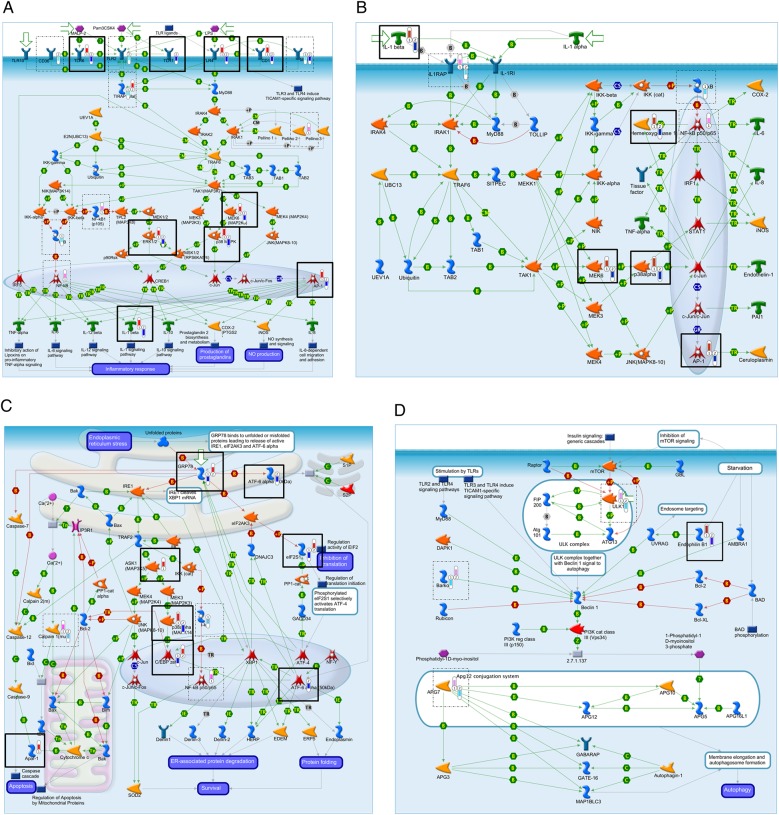
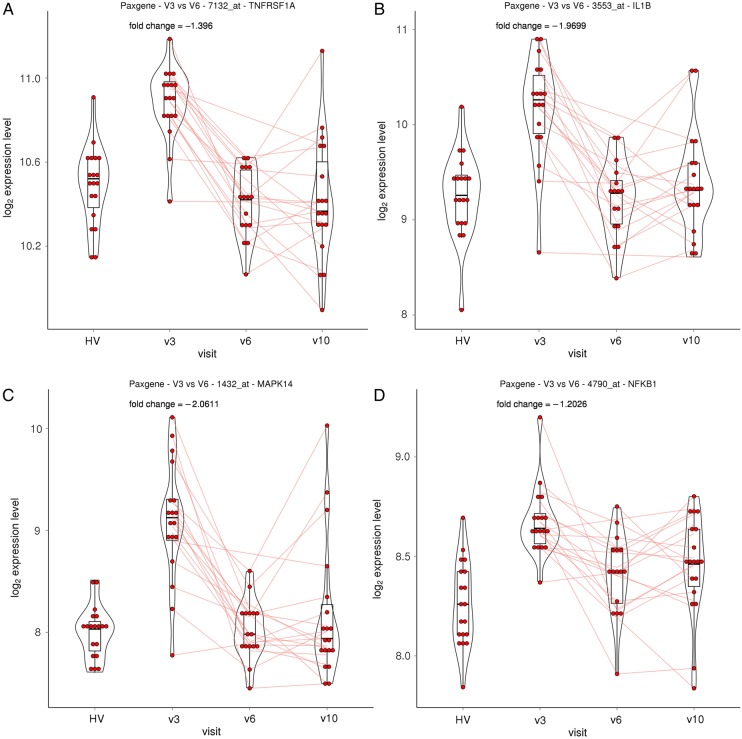
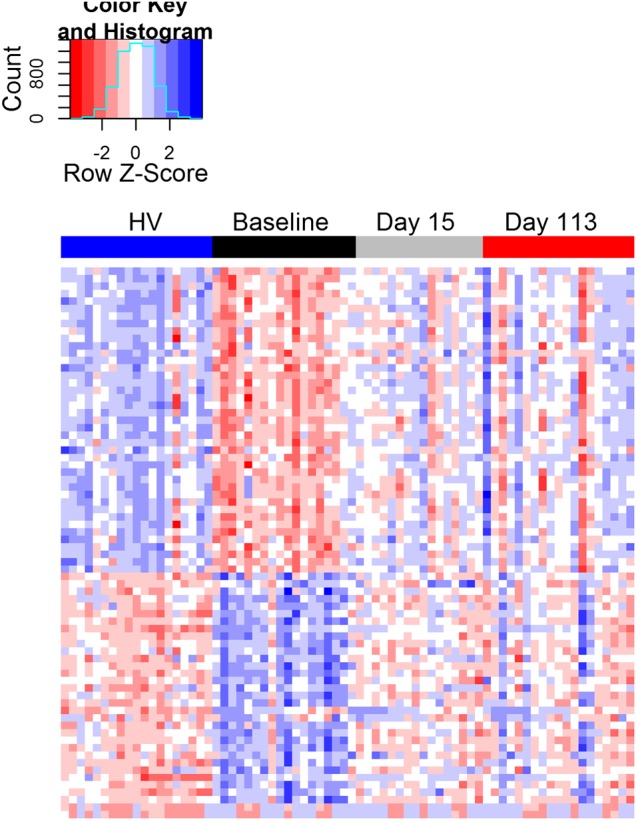
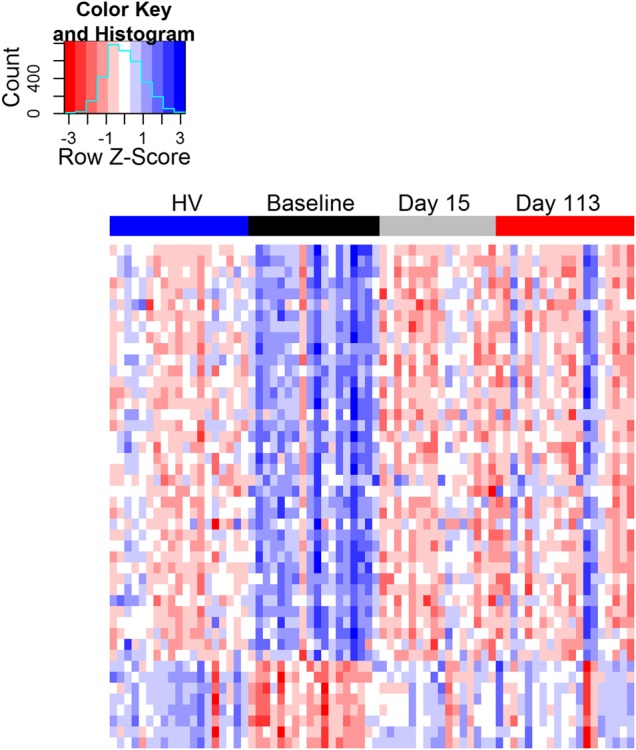
Patients with TRAPS exhibited a gene expression signature in blood that differed from that in healthy volunteers. Upon treatment with canakinumab, many genes relevant to disease pathogenesis moved towards levels seen in the healthy volunteers. Canakinumab downregulated the TRAPS-causing gene (TNF super family receptor 1A (TNFRSF1A)), the drug-target gene (interleukin (IL)-1B) and other inflammation-related genes (eg, MAPK14). In addition, several inflammation-related pathways were evident among the differentially expressed genes. Canakinumab treatment reduced neutrophil counts, but the observed expression differences remained after correction for this.
These gene expression data support a model in which canakinumab produces clinical benefit in TRAPS by increasing neutrophil apoptosis and reducing pro-inflammatory signals resulting from the inhibition of IL-1β. Notably, treatment normalised the overexpression of TNFRSF1A, suggesting that canakinumab has a direct impact on the main pathogenic mechanism in TRAPS.
NCT01242813.
探讨基因表达谱分析能否确定卡那单抗治疗肿瘤坏死因子受体相关周期性综合征(TRAPS)患者临床获益的分子机制。
在一项开放标签的概念验证II期研究中,从20例活动性TRAPS患者中采集血样,这些患者每4周接受150mg卡那单抗治疗,共4个月,同时从20名年龄匹配的健康志愿者中采集血样。通过微阵列分析对经过质量控制检查的全血样本评估基因表达水平。
TRAPS患者血液中的基因表达特征与健康志愿者不同。用卡那单抗治疗后,许多与疾病发病机制相关的基因表达水平向健康志愿者的水平转变。卡那单抗下调了导致TRAPS的基因(肿瘤坏死因子超家族受体1A(TNFRSF1A))、药物靶点基因(白细胞介素(IL)-1B)和其他炎症相关基因(如MAPK14)。此外,在差异表达基因中,几条炎症相关通路明显。卡那单抗治疗降低了中性粒细胞计数,但校正此因素后,观察到的表达差异仍然存在。
这些基因表达数据支持一种模型,即卡那单抗通过增加中性粒细胞凋亡和减少因抑制IL-1β产生的促炎信号,从而在TRAPS中产生临床获益。值得注意的是,治疗使TNFRSF1A的过表达正常化,表明卡那单抗对TRAPS的主要致病机制有直接影响。
NCT01242813。